
Reviewed · HIKING & TREKKING
Kashmir Great Lakes Trek
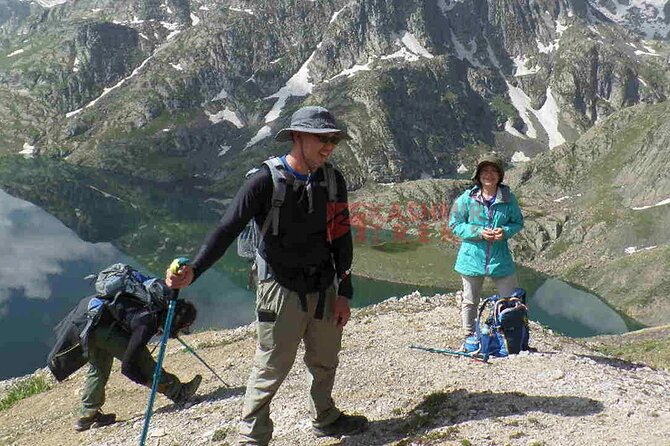
Lakes and passes, all in eight days. This private Kashmir Great Lakes trek takes you from Sonamarg to Naranag along classic pass routes, with an English-speaking guide and most big logistics already handled. I especially love that permits and trek gear are included, so you do not need to hunt for equipment or paperwork. I also like the light-hands approach, with horses carrying your main load while you hike with a small day pack. One drawback to plan for: the days are long at altitude, and you need moderate fitness and a realistic pace.
You start with an 8:00 am pickup in Srinagar, then drive about 100 km to Sonamarg in roughly three hours. Your trek nights are tented mountain camps with full-board meals, and you also get one deluxe night back in Srinagar on a houseboat or in a hotel.
At this listed price of $112, the value comes from bundling the essentials: transport, guide, permits, tents and sleeping gear, cooking with an LPG stove, and horse offloading. Still, the route is weather dependent, and you will feel the altitude and the walking hours in your legs.
In This Review
- Key things that make this trek worth your time
- Sonamarg to Naranag: why this route feels so real
- What the included guide, gear, and horses mean for you
- Day 1, Srinagar to Sonamarg: start with a soft landing
- Day 2, Sonamarg to Nichnai: your first real altitude push
- Day 3, Nichnai to Vishansar Lake via Nichnai Pass
- Day 4, Vishansar Lake to Gadsar via Gadsar Pass
- Day 5, Gadsar to Satsar: a welcome shorter hiking day
- Day 6, Satsar to Gangabal Lakes via Zajibal Pass
- Day 7, Gangabal to Naranag trek, then back to Srinagar
- Day 8, airport or bus stand: wrap-up in about 20 to 30 minutes
- Price and value: what $112 buys on a trek like this
- When to go, and how to judge your own readiness
- Who should book this trek, and who should pause
- Should you book Kashmir Great Lakes Trek with Kashmir Treks?
- FAQ
- What is the duration of the Kashmir Great Lakes Trek?
- Where does the trek start and when do you meet?
- What accommodation is included during the trip?
- Is trekking gear provided?
- Are permits included?
- How is luggage carried during the trek?
- What meals and drinks are included?
- What fitness level do I need?
- Do I need a passport?
- What happens if weather is poor or if I need to cancel?
Key things that make this trek worth your time
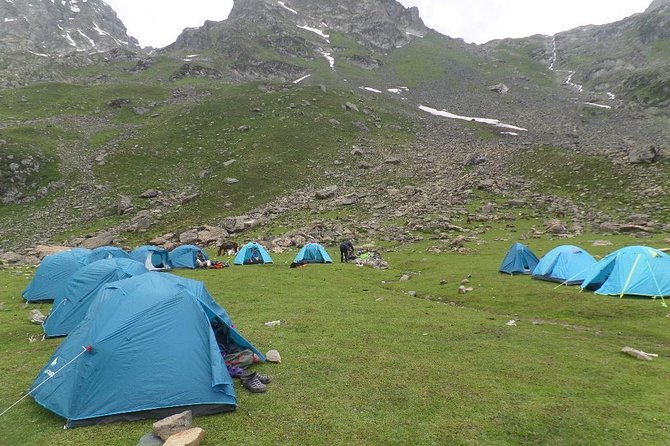
- Gear and permits included so your prep work stays simple
- Horses carry the heavy load, you focus on the trail with a day pack
- High pass days with passes reaching around 4,080m to 4,180m
- Three major alpine lake areas: Vishansar, Gadsar, and Gangabal
- Finish at Naranag Temple after a descent back to around 2,250m
- Srinagar comfort night included as a houseboat or deluxe hotel stay
Sonamarg to Naranag: why this route feels so real
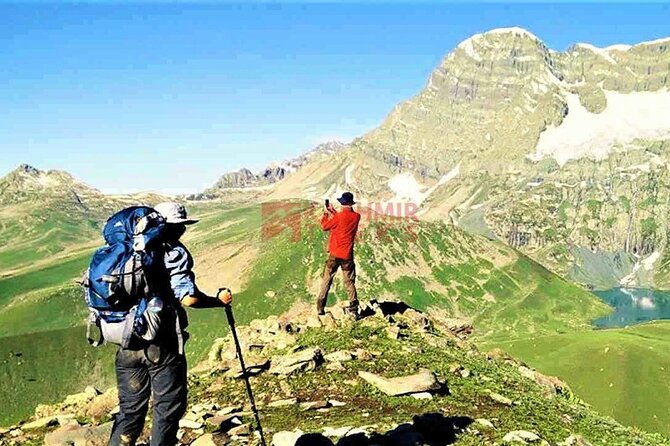
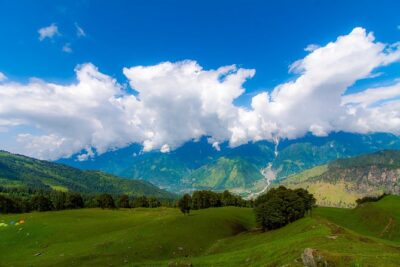
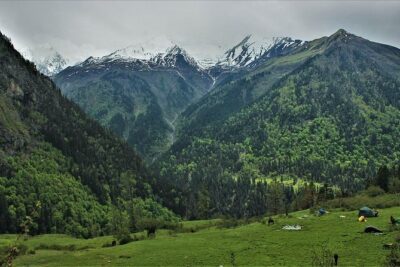
If you want Kashmir that is more than photo stops, this is a solid choice. You are moving through mountain districts from Sonamarg up into a sequence of passes and alpine lake zones, then descending toward Naranag, a Hindu pilgrimage village and temple site.
What I like about the structure is how the trek builds. Day 2 gets you moving up from around 2,610m to the mid 3,000s. After that, you stack pass climbs and lake basins in a way that feels earned, not rushed.
Also, this is private. You are not sharing the trail with an unknown crowd, so your guide can keep an eye on pacing and comfort for your exact group.
A few more Srinagar days to compare
- The Best Monsoon Trek: Kashmir Great Lakes
★ 5.0 · 26 reviews - Kashmir Snow Trek
★ 5.0 · 10 reviews - Kolahoi Glacier Trek
★ 4.5 · 9 reviews
What the included guide, gear, and horses mean for you
This trek is set up to reduce friction. You get a personal English-speaking guide and private transportation. You also get tents, sleeping bags, mats, blankets, and trekking poles, plus poles used for camp setup.
Meals are handled in camp: stove-cooked vegetarian food, served as breakfast, lunch, tea, and dinner across the trek days. You are also provided bottled water and coffee and/or tea, which matters more than it sounds when you are hiking all day and temperatures drop at camp.
The “carry light” part is genuinely important. Horses handle offloading by carrying the bulk of your gear, while you carry only day packs. That changes how the trek feels: you can focus on steady steps instead of wrestling with a heavy backpack on steep grades.
Guides can make or break a mountain trip. I like seeing that this experience has a track record with specific guides people were grateful for, including Wajid and Ali, and with strong Srinagar coordination from staff like Shakeel and guide support like Mudasir. You cannot count on a particular name, but it suggests the operation understands the basics of comfort and safety.
Day 1, Srinagar to Sonamarg: start with a soft landing
Your day starts at 8:00 am with pickup in Srinagar. Then you drive about 100 km, taking around three hours, to reach Sonamarg, sitting near 2,610m.
The first campsite is at Sonamarg, at the Sind riverbank, where you settle in with transport plus tea and dinner included. This is not a “walk all day” start. It is your acclimation and routine day, and that is how you should treat it.
Practical move: use the evening to get organized. Check that your day pack has what you need for the next morning, because the trek itself gets more demanding right away.
Day 2, Sonamarg to Nichnai: your first real altitude push
Day 2 climbs from about 2,610m to roughly 3,450m. You hike around 11 km over about seven hours, stopping for breakfast, lunch, tea, and dinner along the way.
This is the day that teaches you the pace you will keep for the rest of the trek. When your altitude rises, the trail often feels steeper even if the gradient is similar. Your best strategy is slow and consistent rather than fast and breathless.
Since your main gear is offloaded by horses, you should feel freer to settle into a rhythm. Still, this is a long day, so make sure you drink enough water and do not ignore fatigue.
Another way to spend a day in India:
- Kashmir Family Tour – 07 Days Includes Accommodation and Private Transport
★ 5.0 · 164 reviews - 6 Days Private Tour in Kashmir Valley
★ 5.0 · 140 reviews - Private 5-Day Charming Kashmir Package Tour from Srinagar
★ 5.0 · 138 reviews - 5-Days Kashmir tour includes Accommodation and Private Transportation
★ 5.0 · 134 reviews
Day 3, Nichnai to Vishansar Lake via Nichnai Pass
Now you get a classic pass-to-lake day. You hike about 12 km for around seven hours, moving from 3,450m to about 3,650m, with the route touching a higher point near 4,080m at Nichnai Pass.
This kind of day can be mentally tricky. You are not only hiking, you are also anticipating the change in scenery as the pass crests and the lake zone opens up.
Day 3 also tends to be where people start noticing how weather can shift quickly. Even if conditions look fine, plan for colder air at the pass and keep your layers ready. Your meals and tea are included, but you still control how you stay comfortable on the walk.
When you reach camp, the payoff is not just the view. It is the feeling that you earned that elevation through steady work, and you are now living in the alpine zone.
Day 4, Vishansar Lake to Gadsar via Gadsar Pass
Day 4 is longer and higher. You hike about 14 km for roughly eight hours, descending slightly overall from 3,650m down to about 3,550m, but with a tough climb to around 4,180m at Gadsar Pass.
This is the toughest “middle” day on the route. Eight hours at altitude is where smart pacing really matters, especially if you are tempted to push hard for the highest point.
The upside is that it is also a high-reward day. You are transitioning between lake country and another camp basin, so you get more than one type of mountain scenery in a single long push.
Tip that saves you energy: treat the pass approach as a series of small goals. You do not need to sprint to the top, you just need to keep moving until you crest it.
Day 5, Gadsar to Satsar: a welcome shorter hiking day
Day 5 is your lighter-feeling day on paper: about 9 km and around five hours of hiking. Altitude goes from roughly 3,550m to about 3,650m.
That shorter walking time is not a free pass to ignore your body. It is still altitude. But it can help you recover from the longer days before and after.
If you are monitoring how you feel, this is a good day to pay attention. You will likely learn whether you need more breaks, more fluids, and slower steps before you hit the next pass day.
Day 6, Satsar to Gangabal Lakes via Zajibal Pass
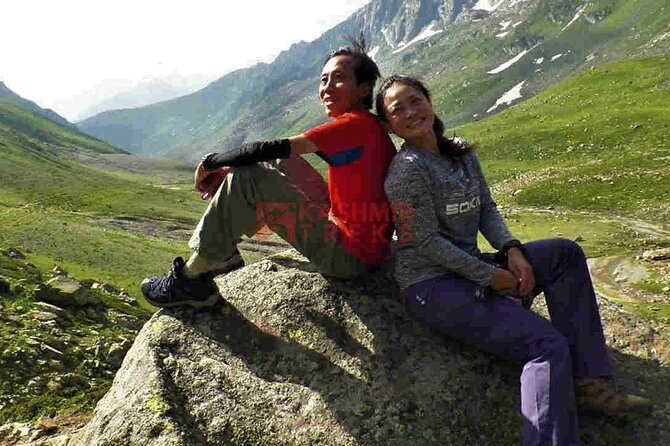
Day 6 is another pass and lake day. You hike about 11 km for around six hours, traveling from around 3,650m down to about 3,580m, with Zajibal Pass reaching around 4,080m.
Gangabal Lakes are a highlight point of the trek, and the route sets you up to reach them after a steady effort. This is the kind of arrival that makes camp feel special, because it is not just “we arrived,” it is “we arrived at lake country.”
Expect cold nights and strong temperature swings. Your trek bedding is included through sleeping bags, mats, and blankets, which is a big plus if you do not want to bring bulky gear.
Also, you are still on a multi-day push. Keep your day pack light and avoid overstuffing, since the walking continues the next morning.
Day 7, Gangabal to Naranag trek, then back to Srinagar
Day 7 brings two changes: you trek out of the high area and you start moving back toward the lower altitude of Srinagar. You hike about 15 km over roughly six hours, descending from around 3,580m down to about 2,250m, then you get transport back to Srinagar.
This day includes breakfast, transport, lunch, and dinner. It is a good one to take seriously because you are switching environments. Your legs may feel heavy after days near 3,500m plus, so a steady pace keeps you comfortable.
The finish point is Naranag Temple, tied to the Hindu pilgrimage site of Naranag. That cultural finish adds meaning to the physical trek. It also gives the trip a natural ending point that is different from just returning to a trailhead.
Day 8, airport or bus stand: wrap-up in about 20 to 30 minutes
On Day 8, after breakfast and transport, you get dropped at Srinagar Airport or the bus stand. The drive is about 5 km to the bus stand, around 20 minutes, or about 12 km to the airport in about 30 minutes.
This is exactly what you want after eight days on the trail, a calm final stretch with no extra hiking required.
Price and value: what $112 buys on a trek like this
At $112 for an approximately eight-day private trek, the value looks strong on paper because most major costs are bundled.
You are getting:
- private transportation from Srinagar into Sonamarg and back out again
- a personal English-speaking guide
- tents and sleeping setup for six nights in mountain camps
- stove-cooked vegetarian meals and tea across days
- permits for trekking and wildlife
- trekking poles and camp support gear
- horse offloading for your main equipment
- one deluxe night in Srinagar as a houseboat or hotel
The only costs you are explicitly responsible for are travel insurance, personal clothing and equipment, and tips.
The practical takeaway: this price can work well if you already know how to pack smart for cold, high-altitude nights and you are comfortable with tent camping. If you want luxury accommodation every night, you will likely find the tent camps a limiting factor.
When to go, and how to judge your own readiness
The trek requires good weather, which matters because pass routes can be affected by conditions. Based on trip timing comments people shared, early March and April are often considered better, while monsoon season can make crossings harder due to bolder, tougher ground.
Your physical fitness matters too. The requirement is moderate fitness. With hiking days around five to eight hours and altitude up to roughly 4,180m, you should be comfortable walking on uneven terrain for several hours at a time.
A simple readiness check I recommend: if you can do a few long local hikes before you go and you are able to keep a steady pace without needing to stop every few minutes, you will likely handle this well.
Finally, plan mentally for the cold. Alpine areas can feel sharp even when the sun is out, and you will appreciate sleeping gear and camp support that is included.
Who should book this trek, and who should pause
This trek fits you if:
- you want a private guided experience rather than a mixed-group scramble
- you prefer being cared for with gear, permits, and meal planning
- you like classic high-pass trekking and alpine lake scenery
- you are okay with tent camping and a return to Srinagar comfort for one night
You might pause if:
- you want short, easy walking days every day
- you have health concerns that altitude might worsen, since the route touches around 4,080m to 4,180m
- you are not ready for weather-dependent scheduling
Should you book Kashmir Great Lakes Trek with Kashmir Treks?
I think you should book if you want a straightforward, guided high-altitude trek where the heavy lifting is handled for you. The combination of included tents and sleeping gear, a cooking setup with LPG, permits, and horse offloading makes it unusually practical for the region.
Before you book, be honest about two things. First, you will hike five to eight hours most trekking days at altitude, so pack patience into your schedule. Second, you need to bring the right personal cold-weather clothing, because what you do not bring is your problem.
If that sounds like your kind of trip, this is a memorable way to connect Sonamarg’s mountain energy to the lake country and end at Naranag Temple.
FAQ
What is the duration of the Kashmir Great Lakes Trek?
It is approximately 8 days.
Where does the trek start and when do you meet?
You meet at 8:00 am in Srinagar for pickup, then travel to Sonamarg to start the trekking portion.
What accommodation is included during the trip?
You get 1 night deluxe houseboat or hotel accommodation in Srinagar, plus 6 nights tented accommodation in mountain camps.
Is trekking gear provided?
Yes. The included gear list covers tents, poles, sleeping bags, mats, blankets, and trekking poles.
Are permits included?
Yes. Trek and wildlife permits are included.
How is luggage carried during the trek?
Horses handle offloading and carry your gear. You carry only a day pack.
What meals and drinks are included?
Full-board meals are included, with breakfast, lunch, tea, and dinner. Bottled water and coffee and/or tea are also included.
What fitness level do I need?
The experience is for travelers with a moderate physical fitness level.
Do I need a passport?
Yes. A current valid passport is required, and you must provide passport name, number, expiry, and country at the time of booking.
What happens if weather is poor or if I need to cancel?
The trek requires good weather. If it is canceled due to poor weather, you are offered a different date or a full refund. If you cancel yourself, you can cancel up to 24 hours in advance for a full refund.
Recently added around Srinagar
- Innova To and Fro Pvt. Airport Transfer from Srinagar / Dal Lake★ 5.0 · 26 reviews
- Srinagar To Leh, Ladakh Taxi (One way Transfer)★ 4.5 · 7 reviews
- Private Sedan Cab to and from Srinagar Airport and Dal Lake★ 5.0 · 46 reviews
- The Best Monsoon Trek: Kashmir Great Lakes★ 5.0 · 26 reviews
- Srinagar Splendors: A Private City Tour★ 4.5 · 12 reviews
- Kashmir Ladakh Tour★ 5.0 · 12 reviews
- Pahalgam Gulmarg Srinagar Tour★ 4.5 · 47 reviews
- Kashmir Tulip Festival★ 5.0 · 43 reviews
Hiking & Trekking, compared.
Mountain Hiking in Munnar (half day) By Munnar Info
Read our review →
Half day trekking (munnar valley Trekking & Tours )
Read our review →
Wild Elephant Anakulam & Waterfalls Tour(munnar valley Trekking)
Read our review →
Browse the lists this tour appears in