
Reviewed · HIKING & TREKKING
Har Ki dun Trek by Himalaya Shelter
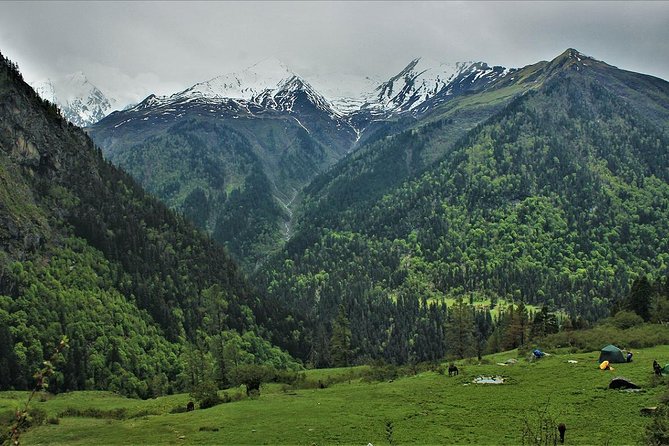
Cold mountain mornings change everything. This 7-day guided Har Ki Dun trek turns Dehradun into a launchpad, then hikes through Osla and Kalkatidhar toward the famous valley views around Har Ki Dun. You get a structured plan with a guide and meals so you spend less time figuring things out and more time looking at the mountains.
What I love most is how meals are included from day 1 dinner to day 7 breakfast, with a cook team that keeps everyone fed on trail. I also like that you get camping equipment rental, so you do not need to bring a tent or sleeping setup from home. The group cap of 11 keeps the experience feeling manageable.
One tradeoff to plan for is the long road travel. You do an 8-hour drive on both day 1 and day 7, and at altitude nights can get seriously cold, so moderate fitness and warm packing matter.
In This Review
- Quick-hit takeaways before you commit
- Why this Har Ki Dun trek feels safer than DIY trekking
- Getting to the mountains: Dehradun to Sankri in one long push
- Day 2: Sankri to Osla (2,700 m) and the first altitude feel
- Day 3: Osla to Kalkatidhar at 3,300 m
- Day 4 is the headline day: Har Ki Dun (3,510 m) and Marinda Tal (3,794 m)
- Day 5: Kalkatidhar back to Osla, and why the return leg helps
- Day 6: Osla to Sankri, then the drive back
- Day 7: Sankri to Dehradun, your long ride home
- Food, tents, and gear rental that actually changes your packing list
- Price and value: what $231 includes, and what it does not
- Altitude, cold nights, and what to pack without overthinking
- Who this trek suits best, and who might want a different plan
- Should you book Har Ki Dun with Himalaya Shelter?
- FAQ
- What time and where does the Har Ki Dun trek meet in Dehradun?
- How long is the trek?
- What is the highest altitude you reach on this itinerary?
- Are meals included during the trek?
- Is camping gear included?
- What transport is included from and back to Dehradun?
- Is insurance included?
- Is free cancellation available?
Quick-hit takeaways before you commit
- Small-group cap of 11 keeps the trek feeling personal and controlled on narrow sections.
- All meals included from day 1 dinner through day 7 breakfast means fewer logistics headaches.
- Camping gear rental helps you travel light, including tents and sleeping setup.
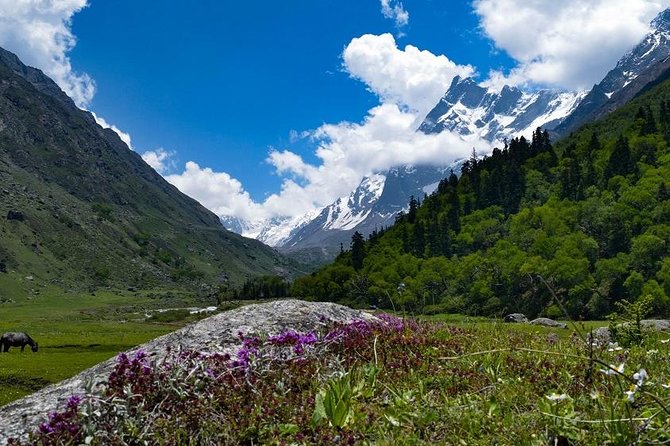
- Har Ki Dun (3,510 m) plus Marinda Tal (3,794 m) gives you a big scenic payoff on the highest day.
- Day 1 and day 7 are heavy road days so you should be ready for long seated time.
Why this Har Ki Dun trek feels safer than DIY trekking
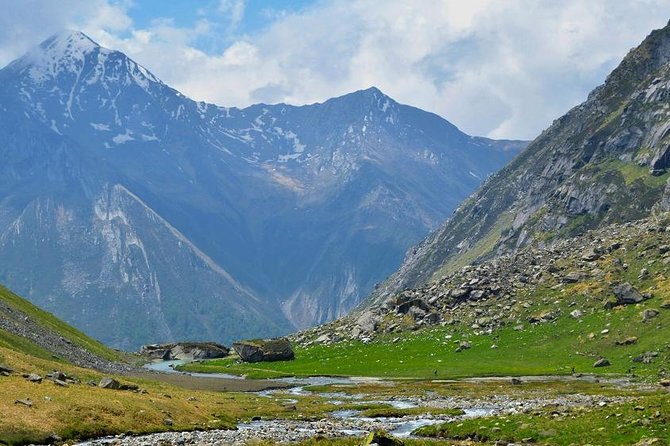
Har Ki Dun is popular, but it is also remote. Having a guide matters when weather shifts, trails narrow, or you need to keep pace for altitude. This is a guided, small-group trek designed for people who want the mountains without turning it into a full-time planning project.
You are also not just paying for a person to walk beside you. The trip is built around a staffed setup, including a cook team and camping arrangements, so your energy goes to the hiking instead of problem-solving. In real terms, that means less time wondering what happens next.
The small size helps too. With a cap of 11 travelers, you get a rhythm that is easier for the guide to manage. It also makes it more realistic to ask questions, adjust pacing, and stay together.
More Hiking Trips in Rishikesh
- Top Tibba Trek – Mussoorie
★ 5.0 · 61 reviews - Chopta Trek
★ 5.0 · 52 reviews - 5 Days Kedarkantha Trek
★ 5.0 · 51 reviews
Getting to the mountains: Dehradun to Sankri in one long push
The trek starts in Dehradun at a meeting point near an egg and maggi stall on Saharanpur Rd, Lakkhi Bagh, with a start time of 6:30 am. Plan on an early morning, because day 1 is mostly a road transfer.
Day 1 is an 8-hour drive to Sankri, which is where you settle before real hiking begins. For many people, that first seated day is the hardest part, not the altitude. I like that the itinerary does not waste time, it gets you out of the city zone and into the trekking zone quickly.
You should also know what is not included. You are responsible for getting to Dehradun on your own, and the package does not include accommodation in Dehradun. If you need a hotel or extra night, you will handle that separately.
Day 2: Sankri to Osla (2,700 m) and the first altitude feel
Day 2 is a mix of driving and hiking: about 1 hour by road, then 5 to 6 hours trekking up to Osla at around 2,700 m. This is a practical altitude starter day. It is not an ultra-sprint, but it is enough to get your legs and breathing tuned.
Osla is your first real altitude overnight on this route. That matters because the body takes time to adjust, and a staged itinerary is one way to reduce stress. If you tend to go too fast on day trips, this day is a good reminder to let the guide set a steady pace.
Bring attention to the small stuff. Use your water habits early, keep your layers ready, and do not treat the first hike like a casual stroll. You are building altitude tolerance for the bigger day ahead.
Day 3: Osla to Kalkatidhar at 3,300 m
Day 3 covers around 3 hours from Osla to Kalkatidhar (3,300 m). It is shorter than some days, which can be a relief if you are managing altitude or just want your hiking rhythm to stay steady.
Kalkatidhar is an important base point on this trek. It is also where you start thinking about the big payoff day, because you are hiking into the higher valley area step by step.
This is also the day where you feel what “guided” really means. You are not just moving from point A to point B, you are following a planned pace with camping support in place for that evening. When you do not have to think about gear logistics, you are free to focus on your footing and breathing.
A few more Rishikesh days to compare
- Sunrise Day Hike in Rishikesh
★ 5.0 · 8 reviews - Mountain Hiking in Munnar (half day) By Munnar Info
★ 5.0 · 390 reviews - Half day trekking (munnar valley Trekking & Tours )
★ 5.0 · 310 reviews - Full day in hiking in Munnar (By Munnar Info)
★ 5.0 · 176 reviews
Day 4 is the headline day: Har Ki Dun (3,510 m) and Marinda Tal (3,794 m)
Day 4 is the reason people book Har Ki Dun. You trek from Kalkatidhar up toward Har Ki Dun (3,510 m) and then on to Marinda Tal (3,794 m), before returning back to Kalkatidhar.
That peak-plus-loop structure is what gives you a “wow” day without needing technical climbing. The altitude rise from Kalkatidhar sets you up to enjoy the views once you crest and start moving through the higher sections.
In the way the trek is often handled, Marinda Tal can also feel like a focused optional or side objective depending on conditions and how the day evolves. Either way, you get the sense that the guide is watching the group, not just ticking off distances. People specifically praised guides for careful pacing and support during the higher sections like Marinda Tal.
It is still a long day in mountain terms, even if the itinerary is compact. Wear grippy shoes, keep your pack weight reasonable, and make sure you eat and hydrate early, not only when you feel wiped out.
Day 5: Kalkatidhar back to Osla, and why the return leg helps
Day 5 goes back down to Osla, with about 3 hours trekking from Kalkatidhar to Osla. This is a smart design choice. After the highest day, you are lowering the stress on your body while still staying in motion.
A return leg also helps you enjoy the route twice in a different way. On the way up, you focus on breath and steps. On the way down, your eyes get freer to pick out details like valley shape, river lines, and village structures.
This is also where you can notice how well the camp setup works. When you know your gear and sleeping setup are taken care of, recovery happens faster, and you will have more energy for the final day trek.
Day 6: Osla to Sankri, then the drive back
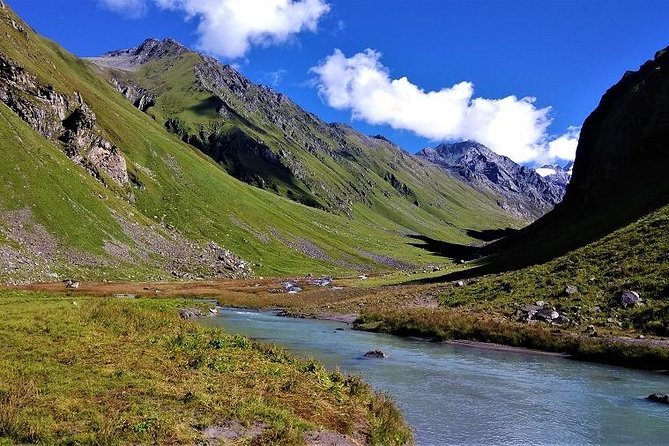
Day 6 includes 4 to 5 hours trekking from Osla to Sankri, plus an about 1-hour drive at the end. This is your descent day plus your final transition back toward the road.
Sankri is repeatedly described as a cozy place to land after the hikes. That matters because your final night feels like a reset point. Instead of pushing nonstop to the city, you get time to come down, eat, and sleep in a more relaxed setting before the long drive.
This day is also a reminder to pace. Even if you feel stronger after the earlier days, rushing the descent is a quick way to make your knees complain. Keep it smooth and steady.
Day 7: Sankri to Dehradun, your long ride home
Day 7 is the bookend: 8-hour drive from Sankri to Dehradun. It is long, but it also closes the loop in a clear way. You start with a road day, you end with a road day, and in between you get a complete trekking story.
Because the trek ends back at the meeting point, you can plan your onward travel from there. Just be realistic about the fatigue factor. One more seated stretch can hit harder than you expect.
If you are connecting onward the same day, I would treat it as a best-case plan, not an ironclad certainty. Give yourself a little buffer if you can.
Food, tents, and gear rental that actually changes your packing list
This is an all-in trek in the practical sense. Meals are included from day 1 dinner through day 7 breakfast. That means you do not need to bring a daily food plan or figure out where you will eat on each leg.
Sleeping setup is also handled for you through camping equipment rental. People have noted that the tents and sleeping bags are made to handle very cold nights, with some feedback mentioning temperatures as low as -10°C being manageable with the provided gear.
You still need to use the gear correctly. Keep your thermals on at night, use your sleeping bag the way it was intended, and avoid the common mistake of leaving layers in your pack because you think you will be fine. In these mountains, “fine” can turn fast.
Guide and cook support is a standout part of the experience. Names that come up include guides like Surendra Rana and Sonu, and a chef such as Sanju. That does not guarantee you will get the exact same people, but it does tell you the operation runs on a real team, not just a last-minute organizer.
One balanced note: food quality can vary by person. Some accounts mention meals were exceptional, while one comment said it was OK at times. I would still rate this as a strong included benefit, just do not expect every single meal to hit the same perfect level.
Price and value: what $231 includes, and what it does not
At $231 per person, you are paying for more than a guide. Your package includes round-trip transport support from Dehradun, with pickup on day 1 and drop on day 7. You also get all meals, forest entry charges, camping equipment rental, and a guide plus cook fees.
That is a lot of cost that you would normally carry yourself if you DIY it. You would have to manage transport, permits, food, and gear rental, and you would likely lose time and certainty. The guided model is often worth it if you want less risk and less guesswork.
What is not included matters for your budget. You handle getting to Dehradun from your hometown. Personal expenses like tips, medicines, and phone use are on you. Accommodation in Dehradun is not provided.
Insurance is also important to read carefully. The included insurance is for Indian citizens only. If you are not an Indian citizen, you will likely want your own travel insurance before you go.
Altitude, cold nights, and what to pack without overthinking
The itinerary hits 3,794 m at Marinda Tal, and even if you are not scared of heights, the cold can feel like a bigger challenge than you expect. You will be active during the day, but nights are where you feel exposed.
Because warm gear is provided, you can pack lighter than you might for an independent expedition. Still, you should plan on bringing your own layers, especially thermal base layers and a warm outer layer. Gloves and a hat are often the difference between sleeping and suffering.
Also consider your trail-day comfort. Good socks and shoes with real grip matter. If you have had blisters before, treat that as a warning, not a surprise.
Finally, do not ignore waste habits. One piece of feedback asked the crew to improve plastic waste handling in the mountains. That is a good cue for you to minimize single-use plastic as much as you can and follow any waste rules your guide sets.
Who this trek suits best, and who might want a different plan
This trek is aimed at people with moderate physical fitness. If you can walk for several hours with elevation gain and you do not mind early mornings and long drives, you will likely enjoy it.
It is especially well suited if you are new to trekking in India or you want a structure that reduces risk. Small-group size and guide support make it feel approachable, even when the terrain gets serious.
If you are very sensitive to long seated days, note the 8-hour drives on day 1 and day 7. If you hate cold nights, make sure you trust the provided gear and also pack smart for warmth.
And if insurance is a dealbreaker for you, double-check your citizenship and coverage. The included insurance is limited to Indian citizens only.
Should you book Har Ki Dun with Himalaya Shelter?
I think this is a strong choice if you want a guided Har Ki Dun trek that handles the big moving parts: meals, camping equipment rental, permits, and Dehradun transport support. The small group cap of 11 and the emphasis on safety makes it a practical way to access remote trails without turning your trip into a logistics project.
Book it if you are okay with long road travel and you can show up with moderate fitness and warm layers for mountain nights. It is also a good fit for first-time treks where having people like guides such as Surendra Rana or Sonu providing hands-on support can make a big difference.
Skip it, or at least plan carefully, if you need non-Indian insurance included, if you cannot handle multi-hour drives, or if you already know you want total DIY freedom. If you can do the basics well, you will likely feel very satisfied by the payoff, especially on the Har Ki Dun and Marinda Tal day.
FAQ
What time and where does the Har Ki Dun trek meet in Dehradun?
The group meets at 6:30 am at Egg and maggi stall near Saharanpur Rd, Lakkhi Bagh, Dehradun, Uttarakhand 248001, India.
How long is the trek?
The trek is about 7 days.
What is the highest altitude you reach on this itinerary?
You reach about 3,510 m at Har Ki Dun and about 3,794 m at Marinda Tal.
Are meals included during the trek?
Yes. Meals start on day 1 dinner and continue through day 7 breakfast.
Is camping gear included?
Yes. Camping equipment is provided as rentals.
What transport is included from and back to Dehradun?
Transport support includes pickup on day 1 in Dehradun and drop-off back in Dehradun at the end on day 7. There is no additional included transport during the trek beyond what the itinerary calls for.
Is insurance included?
Insurance is included, but it is for Indian citizens only.
Is free cancellation available?
Yes. You can cancel for a full refund up to 24 hours before the experience starts. If you cancel within 24 hours of the start time, there is no refund.
Recently added around Rishikesh
- Haridwar Guided Sightseeing Tour with Ganga Aarti By Private Car★ 5.0 · 13 reviews
- Guided Haridwar Walk with Ghats & Evening Ganga Aarti★ 5.0 · 17 reviews
- Haridwar Tanga Tour: Visit -Temples, Ashrams, Ghats & Ganga Aarti★ 5.0 · 18 reviews
- Sunrise Day Hike in Rishikesh★ 5.0 · 8 reviews
- Rishikesh Walking Tour (2 Hours Guided Walking Tour)★ 3.4 · 9 reviews
- Rishikesh Spiritual Evening Tour with Sacred Ganga Aarti★ 4.2 · 20 reviews
- Rishikesh: Full-Day Sightseeing Tour with Ganga Aarti★ 4.7 · 15 reviews
- Rishikesh: Ganges River Rafting Adventure★ 5.0 · 11 reviews
Hiking & Trekking, compared.
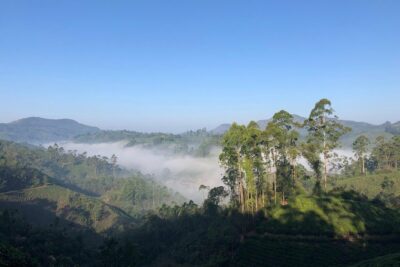
Mountain Hiking in Munnar (half day) By Munnar Info
Read our review →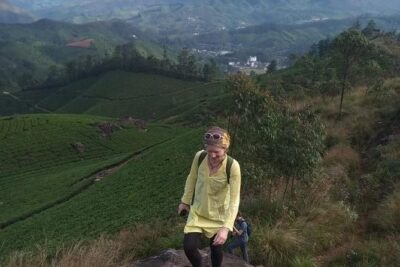
Half day trekking (munnar valley Trekking & Tours )
Read our review →
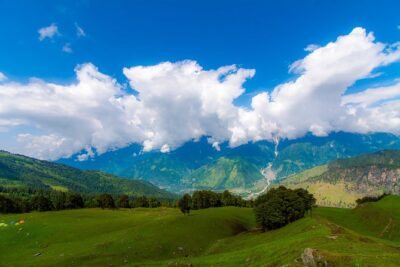
Browse the lists this tour appears in