
Reviewed · COOKING CLASSES
Traditional Vegetarian Cooking Class in Chennai with Gayathri
Cooking with a Tamil brahmin family feels personal. This hands-on class in Chennai goes beyond recipes, you learn how dishes are built at home, with traditional vessels and proper technique in a real kitchen setting. I especially love the focus on medicinal herbs in a Tamil brahmin kitchen, and the way the instruction supports step-by-step cooking so you know what to do when the heat hits. One thing to consider, there’s no hotel pick-up, so you’ll plan your own ride to the Ramapuram meeting point.
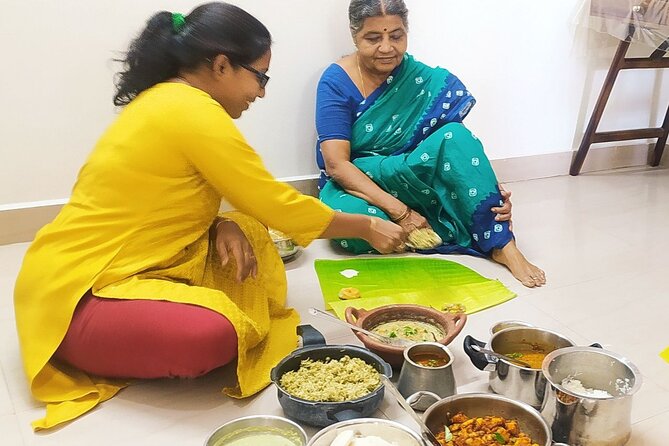
You also get a full meal afterward, served traditionally on banana leaves, with everyone eating with hands. That part matters because it’s not just food, it’s how South Indian vegetarian meals are meant to feel, casual, grounded, and meant to be shared.
Logistically, this is a private experience, typically about 3 hours total (including the meal), and the cooking block is about 1.5 hours. The menu can vary by season, and since Gayathri only serves vegetarian, you’ll want to flag allergies or dietary needs during booking.
In This Review
- Key highlights you’ll care about
- Chennai, Ramapuram, and a kitchen you can actually picture
- How the 3-hour rhythm usually plays out
- Traditional vessels: why soapstone and terracotta change the food
- The Tamil brahmin herb angle, and why it is more than trivia
- Cooking a main dish and a side dish, with technique you can reuse
- The banana-leaf meal: what to expect and how to enjoy it
- Vegetarian-only, plus an optional South Indian breakfast swap
- Price and value: what $48 buys you here
- Who this cooking class is best for
- Tips before you book (so your class feels smooth)
- Should you book Gayathri’s Chennai vegetarian cooking class?
- FAQ
- Where does the cooking class start in Chennai?
- How long is the experience?
- Is this a private class or shared with other travelers?
- What food will I cook and eat?
- Is the menu fixed, or can it change?
- Does Gayathri offer non-vegetarian food?
- Will there be hotel pick-up or drop-off?
- Are there any special dietary needs I should mention?
- What kind of cooking tools are used?
- What format is the meal served in?
Key highlights you’ll care about
- Private, 1-group-at-a-time experience in a local home in Ramapuram
- Hands-on cooking of one main dish and one side dish
- Traditional tools and methods, including soapstone, terracotta, and a stone grinder
- Medicinal herbs from a Tamil brahmin kitchen, explained in context
- Banana-leaf meal with eating by hand, right where you cooked
Chennai, Ramapuram, and a kitchen you can actually picture
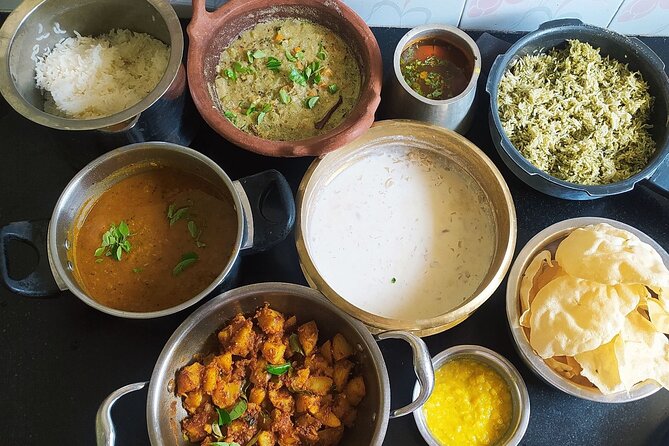
This is the kind of experience that gives you more than a cookbook result. You’re going to Gayathri’s home in Ramapuram, Chennai, and you’ll be cooking in her family style. Her background comes through in the teaching too, she was raised by her grandmother and learned cooking through that everyday household rhythm from Thanjavur, a region Tamil food lovers take seriously.
The value here is that you’re not just watching someone else cook. You’re chopping, stirring, frying, and making choices with guidance. That matters because South Indian cooking is pattern-based: tempering spices, balancing tangy and savory elements, and building depth from simple ingredients.
The other big advantage is the meal format. You don’t just eat off a plate. You eat from banana leaves on the floor and use your hands. It sounds informal until you do it, then it makes sense. With food like sambar and chutney, fingers help you portion without wasting, and you can mix textures in the way you’d never get with a fork.
The main drawback is practical. Since there is no hotel pick-up, you need to be comfortable making your own way to the start point in Ramapuram. If you prefer door-to-door transport, plan ahead, or budget time to get there smoothly.
More Cooking Classes in Chennai
- Indian Cooking Class in Pondicherry
★ 5.0 · 67 reviews - Traditional Cooking Class in Chennai in a Local Home with Sundari
★ 5.0 · 38 reviews - South Indian Vegetarian Cooking Class in Chennai with Meena
★ 5.0 · 17 reviews
How the 3-hour rhythm usually plays out
The experience runs about 3 hours total, with about 1.5 hours of hands-on cooking. That timing is a sweet spot. Long enough to actually learn technique, not so long that you’re stuck waiting while the cooking happens around you.
Here’s the flow you can expect:
1) You meet at the Ramapuram start point and head into the home kitchen.
2) Gayathri introduces the ingredients and the cooking plan, including the dishes you’ll make that day.
3) You get hands-on time for your main dish and your side dish, with guidance on steps and texture targets.
4) You use traditional cooking vessels suited to the dish.
5) You finish cooking, then you sit down to the meal you helped prepare.
What I like about this structure is that it mirrors how real kitchens work. You don’t just learn a recipe ending, you learn the order and the logic. And since the menu can vary with the season, you’re not guaranteed the exact same dishes every time, which also keeps the class from feeling copy-and-paste.
Also note the class is private. It’s only your group, so you can ask questions without feeling rushed or lost in a big room.
Traditional vessels: why soapstone and terracotta change the food
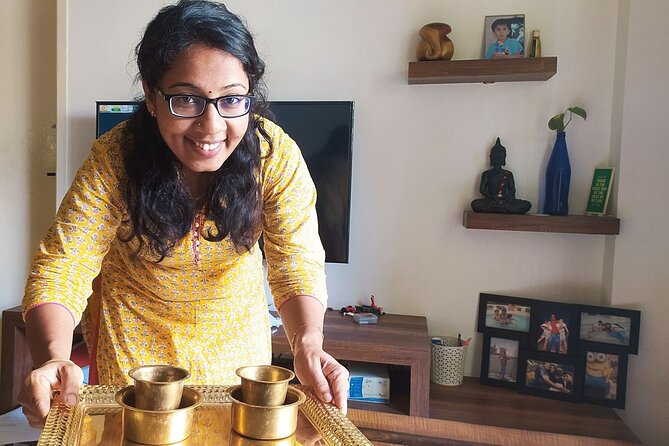
One of the coolest parts of this class is how you cook using traditional equipment. Gayathri may use different vessels depending on what you’re making, including kal chatti (soap stone), eeya chombu (tin alloy), or mann chatti (terracotta). You’ll see that these aren’t just antiques. They represent how heat behaves and how flavors develop in a traditional Tamil brahmin kitchen.
You’ll also use a traditional stone grinder to make tomato-onion chutney. That detail matters because stone-ground spice and aromatics often taste less sharp and more rounded, even when the ingredient list stays simple.
When you’re learning in these vessels, you’ll naturally pay attention to timing:
- When to stir so masala doesn’t stick
- How long to cook onions and tomatoes until they mellow
- How tempering spices changes the smell, which then becomes the flavor
This is where the step-by-step teaching really helps. When you’re holding a spoon and not just watching, you learn the pace. And that’s a major reason this class is consistently rated highly.
The Tamil brahmin herb angle, and why it is more than trivia
Gayathri doesn’t only talk about spices. She also explains medicinal herbs used in a traditional Tamil brahmin kitchen. Even if you’re not trying to treat anything with food, this perspective is useful, because it shows why certain plants show up again and again in kitchen decisions.
In South Indian vegetarian cooking, herbs and leaves aren’t garnish. They influence aroma and digestion-friendly habits that many families believe in and keep passing down. You’ll get the reasoning behind how and when herbs are used, which helps you cook more intelligently later, even when you’re not following the exact same lesson.
I like this part because it helps you understand the kitchen worldview. Instead of memorizing a list of ingredients, you learn how the cook thinks. That’s how you recreate the taste at home.
Another way to spend a day in India:
- Mahabalipuram tour by Tourism Ministry approved company
★ 5.0 · 405 reviews - Gods of Mylapore walking tour- tourism ministry approved company
★ 5.0 · 267 reviews - Mahabalipuram & Kanchipuram by tourism ministry approved company
★ 5.0 · 264 reviews - Chennai tour in car with guide-winner of traveller’s choice award
★ 5.0 · 258 reviews
Cooking a main dish and a side dish, with technique you can reuse
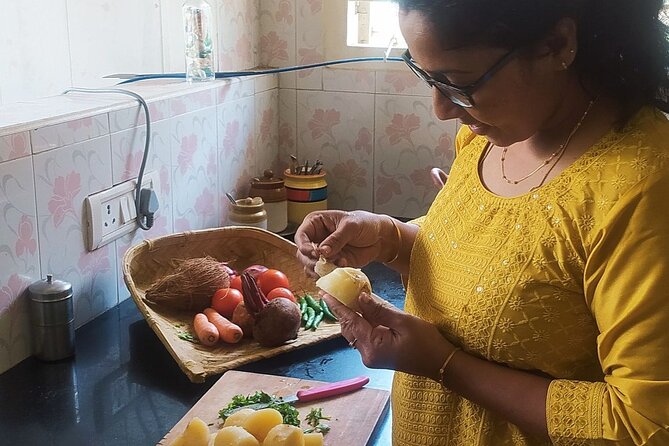
The class is centered on one main dish and one side dish, taught hands-on. That means your skill growth is practical and focused. You’re not trying to learn five recipes in three hours and leaving with nothing but photos.
The kind of dishes you might learn can include Tamil comfort foods such as sambar, kootu, and poriyal. Your exact menu can vary by season, but the teaching approach stays the same: chop, stir, fry, temper, and then adjust.
When tomato-onion chutney is on the menu, you’ll work with the stone grinder and learn how that chutney base comes together. Then you use it as part of the meal, so it isn’t theoretical.
A key bonus: the guidance is very step-by-step. In a kitchen, people often assume you know when onions are ready or when a sauce has reduced enough. This class focuses on those moments. You learn what to look for, and you don’t get left behind.
If you’ve cooked before, you’ll still appreciate the structure. If you’re new, the private setting makes it easier to ask questions as you go, and to correct small mistakes before they snowball.
The banana-leaf meal: what to expect and how to enjoy it
After cooking, you sit down to a traditional vegetarian meal at Gayathri’s home. You’ll eat seated on the floor, on banana leaves, and you’ll use your hands. It’s part of the cultural experience and part of how the meal is meant to be eaten.
Here’s why it’s worth embracing:
- Banana leaves help with presentation and aroma, and they keep the table feeling natural and “home,” not staged.
- Eating with your hands makes it easy to combine sambar with rice and chutney in a way that feels right.
- Since you cooked the dishes, you’ll taste them with new awareness, noticing salt balance, spice level, and texture.
If you’re worried about etiquette, don’t. You can keep it simple, take small portions, mix as you like, and let the meal pace you. The experience is private and home-based, so you won’t be trapped in formal show-and-tell.
One caution to keep in mind: because it is eaten on banana leaves and by hand, plan for comfort. If you have hand sensitivity or mobility concerns, tell yourself that this is part of the cultural format, and you should be prepared for it.
Vegetarian-only, plus an optional South Indian breakfast swap
Gayathri only offers vegetarian food. That’s a clear boundary, and it’s one of the reasons the class has a strong cultural identity.
She can also offer South Indian breakfast foods instead of the traditional meal if you prefer. Options include:
- dosa with sambar, coconut chutney, and filter coffee
- medu vada with coconut chutney and filter coffee
If you care about that choice, flag it when you book, because menus can also vary by season.
This flexibility is helpful if you’re visiting Chennai for multiple experiences and want a breakfast-style finish. It’s also helpful if you simply don’t want a full traditional thali-like format that day.
Price and value: what $48 buys you here
At $48 per person, this class is not a “grab a snack and watch a cooking show” deal. You’re paying for a private home experience, hands-on time, traditional cookware, and a meal you helped prepare.
In practical terms, you get:
- A kitchen session where you actually participate (about 1.5 hours)
- A traditional meal afterward (included)
- A host who shares context, including medicinal herbs and Tamil brahmin kitchen practices
- A private setup, so you’re not negotiating attention with a large group
That makes the price feel more fair. You’re not just buying recipes, you’re buying coaching and access to a real home table.
One more detail that affects value: this is often booked around 25 days in advance. If you’re aiming for a specific date, don’t wait until the last minute. Popular home experiences in Chennai tend to fill up as travel plans lock in.
Who this cooking class is best for
I think you’ll love this if you want authentic South Indian vegetarian cooking without the “tour bus food” feel. It’s a great match for:
- food travelers who want hands-on teaching, not passive watching
- anyone interested in Tamil brahmin culinary habits, herbs, and kitchen tools
- people who enjoy learning with their hands, and like eating what they make
- couples or small groups who want private attention
It’s less ideal if you hate commuting to a residential meeting point, because there is no hotel pick-up. Also, if you’re seeking non-vegetarian food, this isn’t that class.
Tips before you book (so your class feels smooth)
Here are my practical takeaways before you go:
- Plan transport to Ramapuram. Since there’s no pick-up, map your route and time your arrival.
- If you have allergies or dietary restrictions, tell Gayathri at booking. She’ll need that info in advance.
- Remember the menu can vary by season, so be open to what’s available that day.
- If you want the dosa, sambar, vada, filter coffee style breakfast option, request it at booking.
- Bring a sense of humor about learning spices. Cooking sessions can get messy, and that’s part of the fun.
Since service animals are allowed and the area is near public transportation, this format can work for a range of visitors. Still, the floor-seating banana-leaf meal is a key part of the experience, so think about comfort level in advance.
Should you book Gayathri’s Chennai vegetarian cooking class?
Book it if you want a private, traditional home cooking lesson that teaches technique you can reuse, not just a single meal memory. I’d especially recommend it if you’re curious about Tamil brahmin kitchen practices, including medicinal herbs, and if you like the idea of cooking in traditional vessels like soapstone and terracotta.
Skip it only if you strongly prefer convenience, since there’s no hotel pick-up, or if you can’t do a floor-seated, hands-on eating format. Also skip if vegetarian isn’t workable for you.
If you fit the sweet spot, this is one of the more “you will remember this later” experiences in Chennai, because you leave with both food skills and cultural context, and you get to eat in the same place you learned.
FAQ
Where does the cooking class start in Chennai?
The activity starts in Ramapuram, Chennai, Tamil Nadu, India, and it ends back at the meeting point.
How long is the experience?
The total duration is approximately 3 hours, with about 1.5 hours of hands-on cooking.
Is this a private class or shared with other travelers?
It is private and personalized. Only your group participates.
What food will I cook and eat?
You’ll learn to cook one main dish and one side dish in a hands-on class. Afterward, you’ll have a traditional vegetarian meal prepared at the home.
Is the menu fixed, or can it change?
The menu may vary depending on the season.
Does Gayathri offer non-vegetarian food?
No. Gayathri only offers vegetarian food. If you want South Indian breakfast foods instead of the traditional meal, she can offer dosa, sambar, medu vada, coconut chutney, and filter coffee.
Will there be hotel pick-up or drop-off?
No, hotel pick up and drop off are not included.
Are there any special dietary needs I should mention?
Yes. If anyone in your group has allergies, dietary restrictions, or cooking preferences, you should advise at the time of booking.
What kind of cooking tools are used?
You may cook using traditional vessels such as kal chatti (soap stone vessel), eeya chombu (tin alloy vessel), or mann chatti (terracotta vessel). A traditional stone grinder is used to make tomato-onion chutney.
What format is the meal served in?
You can expect a traditional vegetarian meal seated on the floor, eating with your hands from banana leaves.
More Vegan & Vegetarian in Chennai
- Jaipur Market Tour & Vegetarian Rajasthani Home Cooking Class
★ 5.0 · 113 reviews - Discover Mumbai’s street & beach with Vegetarian food tour
★ 4.8 · 46 reviews - Traditional Indian Cooking Class in Goa, Anjuna [vegetarian]
★ 4.5 · 39 reviews - Private Vegetarian Indian Cooking Class in Mumbai
★ 5.0 · 17 reviews
Recently added around Chennai
- Wild life tour in Chennai with guide and private car★ 5.0 · 9 reviews
- St Thomas Trail in Chennai by Wonder tours★ 4.5 · 11 reviews
- Exploring Georgetown: A Heritage Walking Tour of Chennai★ 4.5 · 16 reviews
- South India Tour- Temple Architecture and Backwaters★ 5.0 · 7 reviews
- Private Tour: Pondicherry Day Trip from Chennai★ 5.0 · 6 reviews
- Discover Georgetown: Guided Bazaar Walk Through Vibrant Markets★ 5.0 · 9 reviews
- Full-Day Private Tour to the Kanchipuram Temples from Chennai★ 5.0 · 73 reviews
- Chennai City Highlights – Government Museum & Temple Discovery★ 4.0 · 7 reviews
Cooking Classes, compared.
Veg and Non veg : Private Cooking Class in Delhi home (7 meal)
Read our review →
Indian Cooking Class in an Authentic Local Home – Learn 6 Dishes
Read our review →
Jaipur Market Tour & Vegetarian Rajasthani Home Cooking Class
Read our review →
Cooking Class in Jaipur – Family Experience with Meal & Transport
Read our review →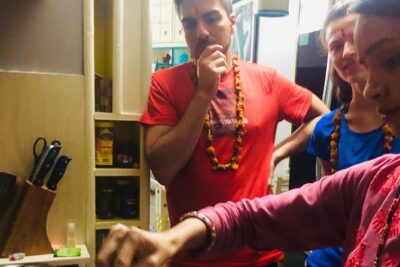
Interactive Cooking Class with a Local Family in Jaipur
Read our review →Browse the lists this tour appears in