
Reviewed · COOKING CLASSES
Traditional Indian Cooking Class in Goa, Anjuna [vegetarian]
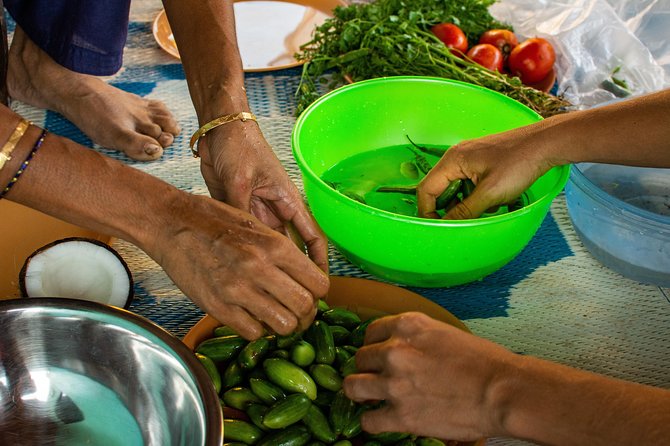
Spices come first, then you eat. This vegetarian class in Anjuna has you learning from local women in a small village setting, with a real focus on ayurvedic spice aromas and how Goan Indian cooking works day to day. You are also in a tight group (up to 6), so the vibe stays relaxed and interactive instead of rushed.
A key thing to know up front: it is a traditional setup, so expect floor seating and a hands-on mix where you may chop and prep some parts while the hosts handle much of the cooking. If you want maximum hands-on time, tell them your preference, and if you need a chair, ask before you sit down.
In This Review
- Key Highlights at a Glance
- A 3:30 pm Get-Together That Feels Like a Home Kitchen
- Why Project Tres Matters When You Book a Food Experience
- What You Cook: A 5-Dish Vegetarian Menu With Ayurvedic Spice Notes
- Inside the Class Flow: From Spices to a Shared Meal
- How Hands-On It Really Is (And How to Get More Doing)
- Floor Seating, Chairs, and Comfort in a Traditional Setup
- The Spice Lesson You Can Use Back Home
- What the Meal Feels Like at the End
- Price and Value: Is $39.27 Worth It?
- Who This Cooking Class Is Best For
- Who Might Want a Different Style
- Should You Book This Vegetarian Cooking Class in Anjuna?
- FAQ
- How long is the traditional vegetarian cooking class in Anjuna?
- What time does it start?
- How many dishes do you cook?
- Is the class only vegetarian?
- Where do I meet, and where does it end?
- If I have dietary restrictions, can I still book?
Key Highlights at a Glance
![Traditional Indian Cooking Class in Goa, Anjuna [vegetarian] - Key Highlights at a Glance](https://media3.theindianguide.com/wp-content/uploads/traditional-indian-cooking-class-in-goa-anjuna-vegetarian-1.jpg)
- Up to 6 people keeps it personal, with more time for questions.
- 5 vegetarian dishes using local ingredients, with spice and ayurvedic notes.
- Mineral water used for prep and served for a more comfortable experience.
- Traditional home-village setting behind Anjuna gives you a quieter, everyday feel.
- Floor seating is part of the deal, but chairs and bench seating are available if you ask.
- Project Tres is women-focused, and your class supports the local initiative.
A 3:30 pm Get-Together That Feels Like a Home Kitchen
![Traditional Indian Cooking Class in Goa, Anjuna [vegetarian] - A 3:30 pm Get-Together That Feels Like a Home Kitchen](https://media3.theindianguide.com/wp-content/uploads/traditional-indian-cooking-class-in-goa-anjuna-vegetarian-2.jpg)
This is a Goa cooking class that starts in the afternoon, around 3:30 pm, and runs about 3 hours. The meeting point is the Project Tres Centre in Dmello Vaddo, Anjuna (HPPW+MM, Goa 403509). From there, you stay local and end back at the same spot when the meal is done, so you do not have to piece together a complicated transport plan.
What makes the timing work well is the pacing. You arrive, get oriented, learn how the spice flavor system fits together, cook a 5-dish vegetarian menu, and then sit down together to eat. It is not a quick demo followed by a ticketed meal. It is more of a shared kitchen afternoon.
More Cooking classes in Goa:
- Private Market Visit and Cooking Class in Goa with a Local Family
★ 5.0 · 11 reviews - Pink City Cooking Class
★ 5.0 · 452 reviews - Five Course Cooking Class & Meal
★ 5.0 · 250 reviews
Why Project Tres Matters When You Book a Food Experience
Project Tres is not just a cooking class brand. It is an initiative that supports economic development for women through a project tied to India and Kenya. Each class helps put money toward the community in that women-led setting.
In practical terms, that means you are paying for more than recipes. You are buying into the ongoing work of keeping this model running, training skills, and building income through an experience you can actually participate in. If you care about where your travel dollars go, this is the kind of activity that makes you feel connected to the people behind it.
What You Cook: A 5-Dish Vegetarian Menu With Ayurvedic Spice Notes
You will learn traditional Indian cooking with an emphasis on aromatic spices and the way spices relate to ayurvedic properties. The menu is vegetarian, and it is built from local ingredients, which matters in Goa where seasonal produce and familiar flavors do most of the heavy lifting.
You should also know that the class is traditional in approach. That shows up in everything from how ingredients are handled to how cooking happens in stages. You are not likely to get a slick “chef-show” format with everything pre-set for you. Instead, you are learning the rhythms of an everyday kitchen.
Since you are making a full 5-dish menu, you get a better sense of the broader meal, not just a single curry. Think of it as learning how different components work together on the plate, using spices as the thread that links the dishes.
Inside the Class Flow: From Spices to a Shared Meal
The experience is designed around a clear sequence:
First, you settle in and get introduced to the cooking setup. Expect an atmosphere that is more friendly than formal. The hosts guide you through what is happening and what ingredients are doing in the dish.
Then comes the work. You will help with tasks like chopping and prepping vegetables and ingredients. You can also learn how spices are measured and used, and how flavor changes when spices hit heat.
Finally, you eat. The class ends back at the meeting point after the meal. This part is important because it turns your learning into something you can taste and remember. When you sit down and eat what you made, you start to understand the logic behind the flavor choices, not just the name of the dish.
A few more Goa days to compare
- Jaipur Market Tour & Vegetarian Rajasthani Home Cooking Class
★ 5.0 · 113 reviews - Discover Mumbai’s street & beach with Vegetarian food tour
★ 4.8 · 46 reviews - Private Vegetarian Indian Cooking Class in Mumbai
★ 5.0 · 17 reviews - South Indian Vegetarian Cooking Class in Chennai with Meena
★ 5.0 · 17 reviews
How Hands-On It Really Is (And How to Get More Doing)
Here is the honest truth that will help you decide if this class matches your style.
Because the cooking is done in a traditional home-kitchen rhythm, you may not be doing every step yourself. Many people end up doing parts of the prep, like chopping and helping with vegetable preparation, while the host(s) handle the faster cooking steps. That can still be valuable, especially if you want to learn the process and see how flavor develops in real time.
If you are the type who loves to learn by doing, you can get more from the class by arriving with a “hands-on mindset.” When you introduce yourself, tell them you want to help as much as possible. Also, ask for clarity if communication feels limited. A few words can change how much you understand about what is happening and why.
Bottom line: you should go in expecting a shared kitchen experience, not a tightly choreographed cooking class where you personally stir every pot for the full session.
Floor Seating, Chairs, and Comfort in a Traditional Setup
![Traditional Indian Cooking Class in Goa, Anjuna [vegetarian] - Floor Seating, Chairs, and Comfort in a Traditional Setup](https://media3.theindianguide.com/wp-content/uploads/traditional-indian-cooking-class-in-goa-anjuna-vegetarian-4.jpg)
The class is prepared traditionally, and that includes sitting on the floor. If you need a chair, the hosts are set up to help, but you have to speak up and request it.
This matters because kitchen floors can be fine for some people and uncomfortable for others. If you have knee issues, back pain, or just prefer not to sit on the floor, plan to ask early. The good news is that people report there are chairs and bench seating available if you struggle with floor seating.
Wear something you can sit in comfortably for a couple of hours. And bring a little patience, because in a home setting, things move at the pace of cooking, not the pace of a timetable.
The Spice Lesson You Can Use Back Home
One reason this class stands out is the attention to the spice story. You do not just get instructions for a single recipe. You learn about ayurvedic properties and how spices are linked to traditional ideas of balance and wellbeing.
Even if you do not follow ayurveda closely at home, the practical takeaway is the same: you start noticing how spices behave differently in heat, and how layering flavors changes the final taste. That is the sort of knowledge that makes you a better cook even when you are not cooking the exact same menu.
So when you cook later, you can recreate more than just the dishes. You can recreate the approach, the spice timing, and the logic behind the flavors.
What the Meal Feels Like at the End
After the cooking, you all enjoy the food together. This part is one of the best reasons to pick this specific class style.
Sitting down to a meal you helped make turns the session into a memory you can bring home. You also get a feel for how the dishes work as a group, not as separate recipes. It is the difference between learning a cookbook technique and learning how a meal gets assembled in a real kitchen.
Because the group size is small (up to 6), the meal conversation stays easy. The experience has a welcoming tone that fits well with solo travelers and couples too.
Price and Value: Is $39.27 Worth It?
At $39.27 per person, this is not a “cheap and cheerful” shortcut cooking class. It is priced like a community-based, small-group experience with multiple dishes, spice instruction, and a real meal at the end.
Here is where the value shows up:
- Small group size means more personal time than bigger classes.
- 5-dish vegetarian menu means you are not just nibbling or tasting.
- Mineral water is used for prep and served to guests, which is a real comfort detail.
- Your money supports Project Tres, which adds meaning beyond the food itself.
If you compare it to other Goa food activities, the key question is what you want. If you want a big show with lots of content and lots of seating comfort, you may find better options elsewhere. If you want an authentic home-style class in Anjuna with a women-led mission and a full plate of food at the end, this price looks fair.
Who This Cooking Class Is Best For
This class fits best if you want:
- A vegetarian cooking experience in Goa
- A small group setting
- A spice-focused lesson with ayurvedic explanations
- A warm, welcoming atmosphere where you participate at your comfort level
It also suits you if you are a bit curious about how local women run kitchen work day to day, and you want to connect that to the broader idea of responsible tourism.
Who Might Want a Different Style
I would consider another option if:
- You expect to do nearly all the cooking hands-on, every step, for the full 3 hours
- You are uncomfortable with floor seating and do not want to request a chair or bench
- You need very detailed instruction in a language you can easily understand, since the teaching may be more practical than academic
That does not mean the class is weak. It just means it has a different teaching style, more like learning in a real household kitchen than following a tightly scripted cooking school lesson.
Should You Book This Vegetarian Cooking Class in Anjuna?
If you love food, spices, and learning how dishes come together in an actual kitchen setting, I think this is a strong choice. The 5-dish vegetarian menu, the small group, and the women-led Project Tres mission make it feel like you are not just consuming an experience, you are joining one.
Book it if you are ready for traditional methods, you are okay with some floor seating (or you will request a chair), and you want a relaxed afternoon where you cook, talk, and eat what you made.
Skip it or consider a different format if your main goal is to cook every step yourself, or if you are sensitive to comfort and prefer high-chair, Western-style setups without asking.
FAQ
How long is the traditional vegetarian cooking class in Anjuna?
The class takes about 3 hours (approx.).
What time does it start?
The start time is listed as 3:30 pm.
How many dishes do you cook?
You cook a 5-dish vegetarian menu.
Is the class only vegetarian?
Yes, this specific class is vegetarian.
Where do I meet, and where does it end?
You meet at the Project Tres Centre (HPPW+MM, Dmello Vaddo, Anjuna, Goa 403509) and it ends back at the same meeting point.
If I have dietary restrictions, can I still book?
You should advise the provider of any dietary requirements or allergies so they can accommodate as best they can.
Recently added around Goa
- Private 2-Day Tour to Taj Mahal, Agra from Goa with Both side Commercial Flights★ 5.0 · 7 reviews
- 3-Day Private Taj Mahal, Agra and Delhi Tour from Goa or Mumbai★ 5.0 · 26 reviews
- Private Fort Aguada Port and Jail Complex Night Walk★ 4.5 · 13 reviews
- Heritage walk in Old Goa to relive the golden age of Velha Goa★ 5.0 · 9 reviews
- Old Goa Churches, Temples & Spice Plantation With “Goan” Lunch★ 4.5 · 34 reviews
- Panjim Heritage Walk for a cultural immersion in Goa★ 5.0 · 16 reviews
- Highlights of South Goa with Spice Plantation Tour (Guided Fullday Tour by Car)★ 5.0 · 6 reviews
- Margao City Food Trail by Make It Happen★ 5.0 · 16 reviews
Cooking Classes, compared.
Veg and Non veg : Private Cooking Class in Delhi home (7 meal)
Read our review →
Indian Cooking Class in an Authentic Local Home – Learn 6 Dishes
Read our review →
Jaipur Market Tour & Vegetarian Rajasthani Home Cooking Class
Read our review →
Cooking Class in Jaipur – Family Experience with Meal & Transport
Read our review →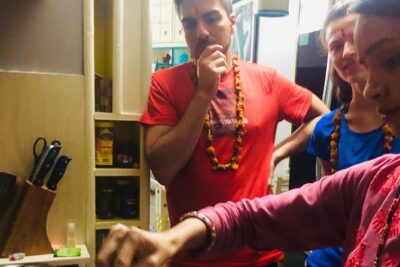
Interactive Cooking Class with a Local Family in Jaipur
Read our review →Browse the lists this tour appears in