
Reviewed · COOKING CLASSES
Traditional Cooking Class in Chennai in a Local Home with Sundari
Banana leaves, sambar, and a warm Chennai home. This is a small, home-style cooking lesson with Sundari that turns South Indian vegetarian cooking into a real, lived-in evening. I especially love Sundari’s approachable teaching and I love eating right after cooking, on banana leaves in the traditional way. One thing to consider is that the menu can vary by season, so you should communicate any strict preferences ahead of time.
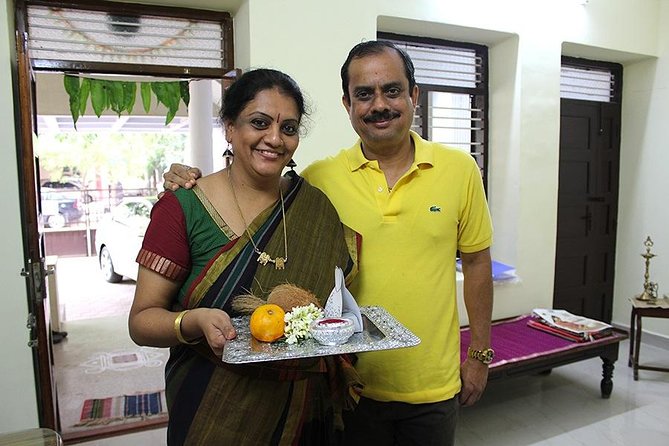
Sundari hosts in her beautifully converted in-laws’ house, with traditional decor and lush fruit trees around the home. You start with a quick look around and a tour of what you’ll be cooking, then you roll up your sleeves in the kitchen. It is private, and it is also clearly about sharing family food traditions, not performing for an audience.
You choose lunch or dinner, and you get nonalcoholic beverages with the meal. The class runs about 3 hours and centers on Tamil Brahmin vegetarian fare, usually building a full meal with 4 to 5 dishes like vegetable curry, sambar, rasam, and dosas.
In This Review
- Key things I’d book this for
- A Tamil Brahmin kitchen in Chennai: what you are really buying
- Meeting at Traveling Spoon in Adyar, then settling into Sundari’s home
- The lesson inside the kitchen: 4 to 5 dishes of Tamil vegetarian fare
- Sambar, rasam, and dosas: how the flavors are taught, not just served
- Eating like a family: banana leaves, stainless steel plates, and hand-food etiquette
- Sundari and Krishna: what makes the experience feel personal
- Menu variety, allergies, and choosing lunch or dinner wisely
- Price and time: is $78 per person worth it for 3 hours?
- Who should book this class, and who might prefer something else
- Should you book Sundari’s Traditional Cooking Class in Chennai?
- FAQ
- Where does the experience start?
- How long is the cooking class?
- Is this a private experience?
- Can I choose lunch or dinner?
- What food will I learn to cook?
- Are drinks included?
- Do you eat on banana leaves?
- Will the menu always be the same?
- What if I have allergies or dietary restrictions?
- Does anyone else join the dinner or weekend sessions?
Key things I’d book this for
- Tamil Brahmin vegetarian focus with dishes like sambar, rasam, and dosas
- A real home kitchen with a warm host, fruit trees, and traditional decor
- Hands-on cooking as you prepare 4 to 5 dishes together
- Banana-leaf dining (or stainless steel plates) right after you cook
- Lunch or dinner choice, plus nonalcoholic beverages included
- Family atmosphere if you join for dinner or a weekend session, meeting Krishna
A Tamil Brahmin kitchen in Chennai: what you are really buying
This experience is not about a checklist of recipes. It is about learning how Tamil Brahmin vegetarian food fits into daily life and why it tastes the way it does. You get that because Sundari cooks in a home setting, following the food tradition she learned and practiced since childhood.
The biggest value for me is the cooking approach. You are guided step-by-step through what to do in the kitchen, and you are not just watching someone else. That matters in South Indian cooking, where small choices, like how you season, temper spices, or time a simmer, can change the entire result.
The second value is the meal format. You will eat the food in the traditional way, often on banana leaves. That single detail shapes your whole experience. Eating with your hands is part of the culture, and it also makes the food feel more connected, less like a restaurant plate you rush through.
The Brahmin vegetarian lens is important too. You are not getting “generic Indian vegetarian.” You are getting a specific South Indian tradition, prepared and served the way Sundari’s family does, and that gives you a more precise understanding of flavors and techniques.
More Cooking Classes in Chennai
- Indian Cooking Class in Pondicherry
★ 5.0 · 67 reviews - South Indian Vegetarian Cooking Class in Chennai with Meena
★ 5.0 · 17 reviews - Traditional Vegetarian Cooking Class in Chennai with Gayathri
★ 5.0 · 14 reviews
Meeting at Traveling Spoon in Adyar, then settling into Sundari’s home
Your day begins in Adyar, Chennai. You meet at Traveling Spoon, and the activity ends back at the same meeting point. This makes the timing easy to plan because you do not need to figure out a new endpoint or a complicated last transfer.
From the meeting point, the flow of the experience is very human. You are welcomed into Sundari’s home in her converted in-laws house, and she sets a relaxed tone right away. She is described as warm and cheerful, and that shows in how quickly you feel comfortable. You get a home tour first, which is more useful than it sounds. Seeing the space, the decor, and the everyday environment helps you understand what you are about to cook in, and it makes the lesson feel grounded.
This is also a “small group” style experience in practice because it is private for your group. So you are more likely to ask questions and adjust based on what you personally want to learn. If you like hands-on food instruction, this setup tends to work better than large group cooking demos where your questions get swallowed.
Practical tip: if you have dietary restrictions or allergies, tell the provider at booking. The menu can vary with season, so clear communication helps them adapt what you’ll cook and eat.
The lesson inside the kitchen: 4 to 5 dishes of Tamil vegetarian fare
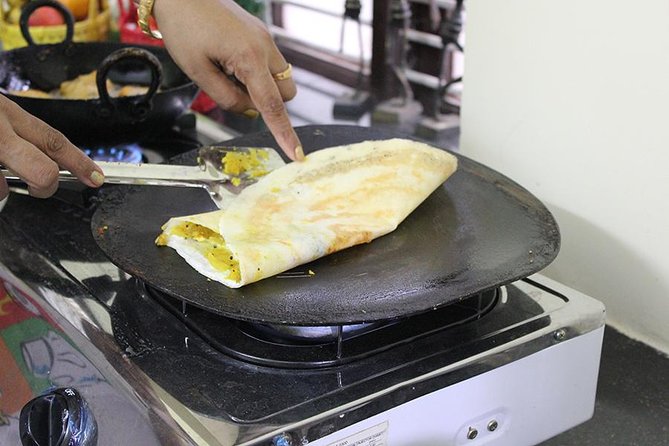
You will cook several South Indian vegetarian dishes together. Expect 4 to 5 dishes, and the exact lineup can shift with season. Common dishes include vegetable curry, sambar, rasam, and dosas. That is a smart mix because it teaches different categories of South Indian flavor building, not just one type of dish.
A typical session has a rhythm:
- You start with an introduction to the dishes you’ll be preparing.
- Then you work alongside Sundari as she guides your hands through the steps.
- As you cook, she explains what you are doing and why, so you can understand the logic, not only memorize actions.
Sundari has been passionate about cooking since she was a child, which comes through in her teaching style. Reviews describe her as approachable and professional, the kind of teacher who makes it easy to jump in without feeling rushed or embarrassed. That matters if you are not an experienced cook. In a lot of classes, the instructor speed can make you feel behind. Here, the emphasis seems to be on you participating.
Also, Tamil Brahmin cooking is known for flavor discipline. You should expect your meal to have clear spice character, balanced sourness and spice where relevant, and a sense of harmony across dishes. Sambar and rasam are great examples of that balance, and vegetable curries let you learn how to build depth without meat.
Practical tip: you do not need to be good at cooking before you arrive. What you need is curiosity. If you pay attention to how Sundari seasons and times things, you will walk away with practical instincts you can use later, even at home.
Sambar, rasam, and dosas: how the flavors are taught, not just served
The dishes listed for this experience are not random. They represent a South Indian meal structure where each component plays a job.
- Sambar gives you a hearty base, often with vegetables and lentils, plus a spice blend that should taste layered, not flat. You learn how to build that kind of flavor without relying on one dominant element.
- Rasam is more light and aromatic, and the sour, spicy character is a big part of what makes it feel special at the table. It is also the kind of dish you can often cook only if you understand timing.
- Vegetable curry teaches you how vegetables can become satisfying when they are treated with the right seasoning and simmering.
- Dosa changes the whole experience because it turns the meal into something hands-on and interactive. Even if you are not making a complicated batter from scratch, you are still working within South Indian meal logic.
A key thing to understand: when you cook and then eat immediately, you see cause and effect. If something tastes a little off while you’re cooking, you can ask. If it tastes right, you can ask why. That back-and-forth is hard to get in a restaurant meal, even a great one.
If you are a food traveler who likes to bring skills home, this is where the class pays you back. You get to notice how different dishes relate on the plate, how spice levels shift, and how the meal tastes as a whole.
Another way to spend a day in India:
- Mahabalipuram tour by Tourism Ministry approved company
★ 5.0 · 405 reviews - Gods of Mylapore walking tour- tourism ministry approved company
★ 5.0 · 267 reviews - Mahabalipuram & Kanchipuram by tourism ministry approved company
★ 5.0 · 264 reviews - Chennai tour in car with guide-winner of traveller’s choice award
★ 5.0 · 258 reviews
Eating like a family: banana leaves, stainless steel plates, and hand-food etiquette
This is one of the most praised parts of the experience, and it makes sense. You cook the food, and then you sit down to eat it the traditional way, often on banana leaves. You might also eat on stainless steel plates depending on the setup.
Eating on banana leaves is not just “for photos.” It creates a different experience of texture and aroma and it also signals that this is a meal, not just a class. When you eat with your hands, you also learn a practical South Indian rhythm, where rice or other staples are combined with spoonable curries and sauces. It encourages you to taste in the way locals do, with small mixes instead of one bite at a time.
You should also expect nonalcoholic beverages with the meal. It helps you settle in after cooking, and it keeps the experience focused on food and conversation, not alcohol.
One small consideration: if hand-eating is a challenge for you, plan to follow Sundari’s lead. The important part is respect and comfort. You can still enjoy the meal fully while learning the etiquette.
Sundari and Krishna: what makes the experience feel personal
Sundari is the heart of this class. She is warm and cheerful, and she has a teaching style that feels approachable. One review highlighted how, when there was an issue with the booking, she handled it carefully and made sure the guest was not overcharged. That kind of care tells you a lot about how she runs the experience, and it also makes you trust that you are in good hands.
You also get a friendly family atmosphere. If you join for dinner or a weekend session, you have the chance to meet her husband, Krishna. He is described as a foodie who enjoys meeting new people and adding lively conversation. Even if you come in quiet, this kind of interaction can turn a cooking class into a cultural evening.
If you like stories with your food, this is where you get them. You are not only learning how to cook. You are also hearing about the culture around it, and how vegetarian Brahmin cooking fits into daily life.
Menu variety, allergies, and choosing lunch or dinner wisely
There are two moving parts to keep in mind: the menu can vary by season, and you can choose lunch or dinner.
Seasonal variation is normal for any home kitchen. The best way to protect your expectations is to share dietary needs and preferences at booking. The experience info explicitly asks you to advise the provider if anyone has allergies, dietary restrictions, or cooking preferences. If you do that early, you reduce stress and increase the chance the class can match your needs.
Lunch vs dinner can matter for the social vibe. The class is built around cooking and then eating what you made, but dinner or weekend sessions may include meeting Krishna, which can add conversation to the night.
For food planning, think about how adventurous you feel. This class centers on Tamil Brahmin vegetarian dishes, which can be flavorful and spice-forward. If you are sensitive to spice, communicate your tolerance level at booking so Sundari can guide you on what to focus on and how to manage flavors during cooking.
Price and time: is $78 per person worth it for 3 hours?
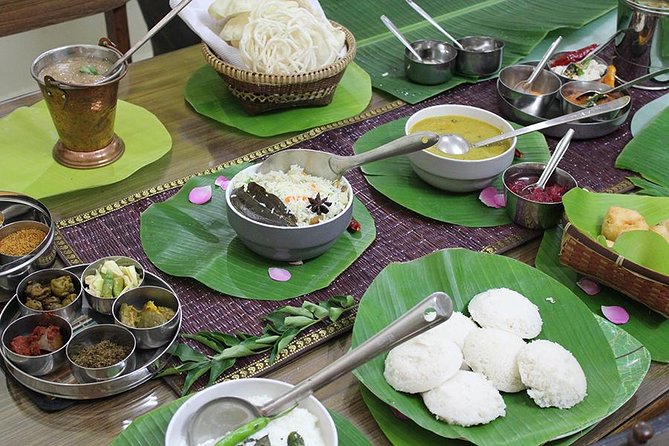
At $78 per person for about 3 hours, you are paying for several things at once:
- A private, home-hosted cooking lesson in Chennai
- Instruction and hands-on participation
- 4 to 5 dishes that turn into a full meal
- Nonalcoholic beverages included
- A cultural dining format, often with banana leaves
- The personal hospitality of Sundari and, sometimes, her husband Krishna
Restaurant cooking classes can be cheaper, but they often lack the home setting and the meal experience. Here, the class is built around both cooking and sitting down together, which means you get real value even if you are not the fastest cook. You also get a specific culinary tradition, Tamil Brahmin vegetarian food, which is harder to replicate if you only eat out.
Also consider what you get in terms of transfer. Learning techniques like how to balance flavors across sambar, rasam, and vegetable curries can be useful later. Food classes that only teach one dish can still be fun, but this one covers multiple parts of the meal.
Timing wise, 3 hours is enough to feel productive but not so long that you burn out. It is a good length for visitors who want something hands-on without losing a whole day.
Who should book this class, and who might prefer something else
Book this if you:
- Want a home experience in Chennai, not a restaurant meal
- Prefer hands-on cooking instruction
- Love South Indian vegetarian food or want to learn how it works
- Like meeting hosts and hearing family stories around food
- Want a meal format you can only get in a home setting, especially banana leaves
You might skip or reconsider if you:
- Have very strict dietary needs and have not communicated them in advance
- Are uncomfortable with hand-eating and do not want any guidance
- Are expecting a menu that never changes. Seasonal variation is part of the setup.
If you are traveling as a couple or a small group, the private format is especially appealing. If you are solo, it is still a great match because you are in a small, welcoming environment where questions are easy to ask.
Should you book Sundari’s Traditional Cooking Class in Chennai?
If you want an authentic South Indian vegetarian meal with real kitchen time, I think this one is a strong yes. The reviews point to Sundari’s warmth, her approachable teaching, and how carefully she handles details, including booking issues. The banana-leaf dining and the Tamil Brahmin focus add depth that you do not get from a typical food tour.
I would book this if you can be flexible about the menu and you communicate allergies or restrictions before you go. If you want to learn by doing, and you like the idea of eating what you cooked in a local home, this is exactly the kind of experience that rewards you with both skills and memories.
FAQ
Where does the experience start?
It starts at Adyar, Chennai, Tamil Nadu, India, with the listed meeting point at Traveling Spoon.
How long is the cooking class?
It lasts about 3 hours.
Is this a private experience?
Yes. It is a private tour or activity, and only your group participates.
Can I choose lunch or dinner?
Yes. You can choose either lunch or dinner options.
What food will I learn to cook?
You will cook several South Indian vegetarian dishes, typically 4 to 5 dishes. Options may include vegetable curry, sambar, rasam, or dosas.
Are drinks included?
Yes. Nonalcoholic beverages are included.
Do you eat on banana leaves?
You may eat on fresh banana leaves for a traditional experience, and you may also eat using stainless steel plates.
Will the menu always be the same?
No. The menu may vary depending on the season.
What if I have allergies or dietary restrictions?
Tell the provider at the time of booking so they can plan for your needs. The menu may vary, so early communication helps.
Does anyone else join the dinner or weekend sessions?
If you join for dinner or a weekend session, you may meet Sundari’s husband, Krishna.
Recently added around Chennai
- St Thomas Trail in Chennai by Wonder tours★ 4.5 · 11 reviews
- Wild life tour in Chennai with guide and private car★ 5.0 · 9 reviews
- Exploring Georgetown: A Heritage Walking Tour of Chennai★ 4.5 · 16 reviews
- South India Tour- Temple Architecture and Backwaters★ 5.0 · 7 reviews
- Private Tour: Pondicherry Day Trip from Chennai★ 5.0 · 6 reviews
- Discover Georgetown: Guided Bazaar Walk Through Vibrant Markets★ 5.0 · 9 reviews
- Full-Day Private Tour to the Kanchipuram Temples from Chennai★ 5.0 · 73 reviews
- Chennai City Highlights – Government Museum & Temple Discovery★ 4.0 · 7 reviews
Cooking Classes, compared.
Veg and Non veg : Private Cooking Class in Delhi home (7 meal)
Read our review →
Indian Cooking Class in an Authentic Local Home – Learn 6 Dishes
Read our review →
Jaipur Market Tour & Vegetarian Rajasthani Home Cooking Class
Read our review →
Cooking Class in Jaipur – Family Experience with Meal & Transport
Read our review →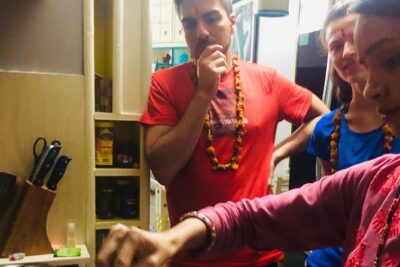
Interactive Cooking Class with a Local Family in Jaipur
Read our review →Browse the lists this tour appears in