
Reviewed · WALKING TOURS
Shimla Private Guided Walk Tour exploring the colonial trails
Shimla clicks into focus on this walk. This private guided colonial trails stroll runs from Christ Church to the Indian Institute of Advanced Study in about two hours, led in English, Hindi, and Pahari. I love the storytelling from guides like Pawan Sharma and Preeti, and you get lots of view pauses without feeling rushed.
Because it is private, your group stays together and your guide can keep things moving at your pace. One watch-out: admission is not included for several stops, so you will mainly see places from the outside while learning their background.
In This Review
- Quick highlights before you set off
- Why this Shimla colonial walk is a smart use of 2 hours
- Christ Church to The Ridge: Shimla’s layout, explained on foot
- BSNL Office and the telegraph-era vibe on the Mall Road
- Bantony Castle and Kali Bari Temple: power, place names, and local beliefs
- The Railway Board Building and the engineering mindset of 1896
- Gorton Castle and the civic layer around CPWD Office
- Vidhan Sabha Chowk, Oberoi Cecil, and the famous modern touchpoints
- Finishing at IIAS: the walk’s intellectual endpoint
- Price and value for money at $16.67 per person
- Who should book this Shimla private guided walk
- Should you book the Shimla colonial trails walk?
- FAQ
- Where does the tour start and end?
- How long is the guided walk?
- Is this a private tour?
- What languages does the guide speak?
- Are entry tickets included for the attractions?
- What will I see during the walk?
- Do I need a printed ticket?
- What is the cancellation policy?
Quick highlights before you set off
- Private, one-way route from Christ Church to IIAS, so you do not waste time on backtracking.
- Local guides in English, Hindi, and Pahari, with a style that mixes facts and everyday Himachali perspective.
- Colonial-era landmarks in a tight walk, from the telegraph-era BSNL office to the 1896 Railway Board Building.
- Shimla’s key viewpoints like The Ridge and Scandal Point, where you understand how the Mall fits into the town.
- History meets religion, with Kali Bari Temple explained in the context of the city’s name.
- Mobile ticket format to keep the day simple.
Why this Shimla colonial walk is a smart use of 2 hours
Shimla can feel like a collection of scenic corners until someone connects them for you. This walk does that by stitching together landmarks along the Ridge and Mall-area spine, then pushing onward to the Indian Institute of Advanced Study. The timing is practical: about two hours is long enough to learn, but short enough to fit into a first day when you still want energy for markets, food, and transport.
The private format matters more than it sounds. When it is just your group, the guide can slow down for photos, answer questions, and keep your pace comfortable. In the past, guides tied to this experience have been known to wait patiently even if you run late to the meeting point, and they also handle short breaks like getting coffee without turning the tour into a race.
A few more Shimla & Manali days to compare
- Shimla: Guided Walk Tour-Heritage, Culture & Colonial Trail
★ 4.7 · 28 reviews - Discover the Colonial Trails of Shimla- Guided Walking Tour
★ 4.9 · 10 reviews - Fontainhas Heritage Walk by Make It Happen
★ 5.0 · 2,834 reviews
Christ Church to The Ridge: Shimla’s layout, explained on foot
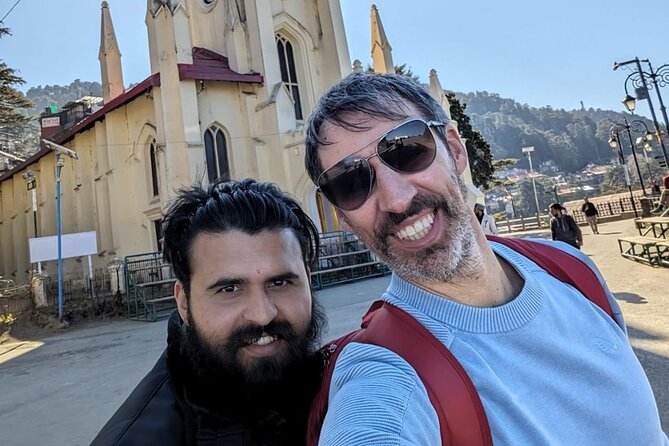
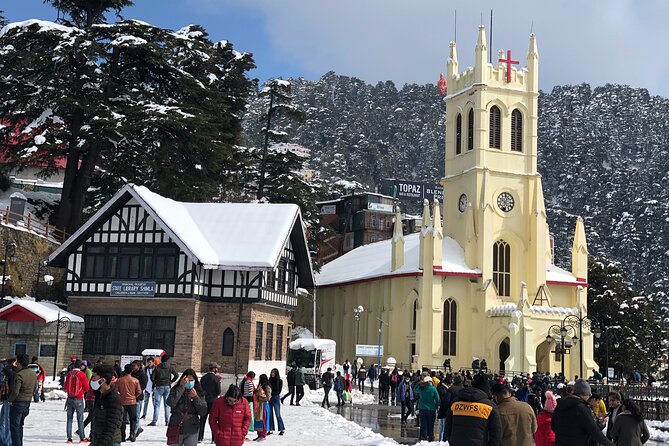
You start at Christ Church, outside the church itself. It is described as the second oldest church in North India after St John’s Church in Meerut, and services are conducted in Hindi and English. Even without entering, I find it a great opener because it anchors the idea of Shimla as a planned hill station, not just a postcard.
From there, you move toward The Ridge, an open central space in Shimla. This is the kind of place that helps you understand the town’s geometry fast. On a map, the Ridge can look like a generic park. On foot, it makes sense as the main communal zone where the town breathes between colonial-era buildings and daily life.
Next comes Scandal Point, the spot where the Mall Road meets the Ridge Road on the west side. It is a tiny stop in time, but it is a useful one. You get a feel for how Shimla’s most famous promenade connects to the broader town plan, and you can place the sights you see later around the Mall with less guesswork.
Practical note: at stops like Christ Church, admission is not included, so plan for outside viewing rather than going in.
BSNL Office and the telegraph-era vibe on the Mall Road
A highlight of the walk is the BSNL Office Shimla, a red brick Telegraph Office built in 1922. What I like here is the detail: it was designed by Scottish architect Scott Begg, and it is an easy visual contrast to the newer Shimla you might see driving past. The building reads like a message station, even if you are not thinking about telecommunications.
It also helps that the stop is placed on a walk segment where you are already thinking about the town as a British-influenced hill station. You are not just seeing architecture. You are learning the function behind it, which makes the street feel less random.
This is also a good reminder for your expectations. Some stops are listed as not having included admission, so you should treat these segments as guided viewing plus stories, not a ticketed museum visit.
Bantony Castle and Kali Bari Temple: power, place names, and local beliefs
Then you reach Bantony Castle on Kalibari Road, just a few meters from Scandal Point. The big story here is status and time: it served as the summer palace of the Maharaja of Sirmaur, built in the 19th century. From a distance, you may not notice every architectural flourish, but the guide makes the scale and the intent click, like this was a place designed for season, comfort, and authority.
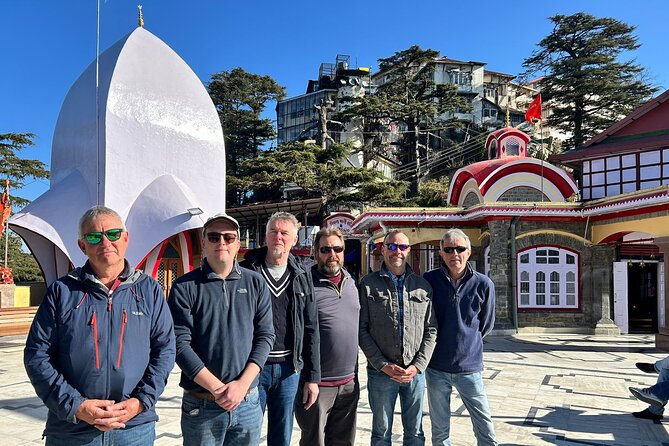
Right after that comes Kali Bari Temple, Shimla, on Bantony Hill. This is where the tour feels properly Shimla, not just colonial. The temple is dedicated to Shyamala, described as the fearsome reincarnation of Goddess Kali, and the guide connects this to the story of the city’s name. Even if you have visited other hill stations, I find this sort of local explanation adds a layer that walking alone usually misses.
If you are the type who likes meaning behind names, this is one of the stops that rewards your attention. You will likely remember the city-name connection long after the details of the castle fade.
Admission here is listed as free for this stop, but the tour structure overall still leans toward quick, guided viewing and learning rather than long interior time.
Another way to spend a day in India:
- Bhrigu Lake and Alpine Meadow Trek
★ 5.0 · 121 reviews - Friendship Peak Trek
★ 5.0 · 94 reviews - Himalayas Motorcycle Escapades
★ 5.0 · 81 reviews - Nagtibba Trek (Pantwari to Pantwari)
★ 5.0 · 39 reviews
The Railway Board Building and the engineering mindset of 1896
Shimla has a way of turning buildings into lessons. The Railway Board Building, constructed in 1896, is a strong example. It is described as the first of its kind in India, made predominantly out of cast iron and steel, and designed to be resistant to fire. You can see why this matters: engineering choices from more than a century ago become part of the walking tour’s core story about how the British era handled infrastructure on hilly terrain.
Even if you are not an architecture nerd, this stop helps you understand why Shimla’s development is not just decorative. It is practical. Fire resistance, imported materials, and a purpose-built structure are all clues that someone was planning for durability and long-term use.
This is also one of the stops where the guide’s commentary makes the exterior feel more meaningful. Look closely and you will likely catch the building’s industrial personality.
Gorton Castle and the civic layer around CPWD Office
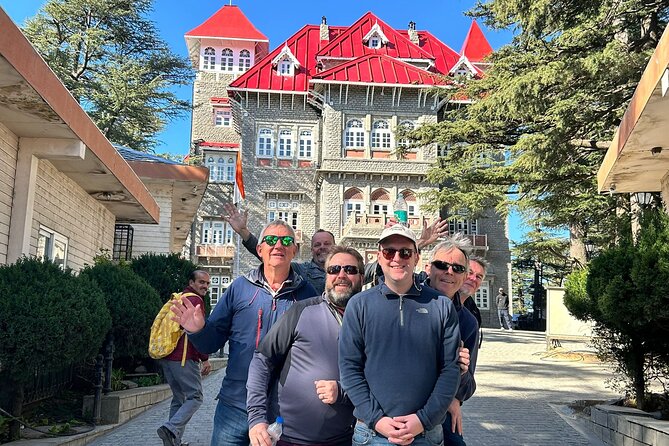
After the Railway Board Building segment, you get Gorton Castle. It is brief on time, but the description focuses on heritage and craftsmanship, with a note about innovative minds and intelligent construction. This quick stop works because you already have enough context by then. You are primed to think about what buildings were meant to do, not just how they look.
Next is CPWD Office. The background story here goes back to 1819, when Lieutenant Ross, an Assistant Political Agent in the Hill States, set up a wood cottage in Shimla. Three years later, his successor, Scottish civil servant Charles Pratt Kennedy, built the first pucca h… The key takeaway is that you are standing in the space where early administrative infrastructure began evolving into more permanent built structures.
For me, that is where a walking tour earns its value. You are not learning dates in isolation. You are seeing how the town grew in layers, from temporary setups to durable institutions.
Vidhan Sabha Chowk, Oberoi Cecil, and the famous modern touchpoints
The tour continues to Vidhan Sabha Chowk, the area associated with the Himachal Pradesh Legislative Assembly, described as the state’s unicameral legislature. Even if you only spend about a minute here, it is a useful marker. It signals that Shimla’s story did not stop at the colonial period. The same ridge-line importance shows up in modern governance.
Then you pass The Oberoi Cecil, Shimla, listed as a historic luxury hotel. This stop is short, but it is worth noticing because it shows how Shimla’s prestige continues in a modern hospitality setting. If you are curious about how “old city” becomes “tourist city,” this is a quick, visible example.
You also get a mention of the All India Radio Centre, set up in Shimla in 1955. That detail is the kind of bridge between eras that makes a walk feel alive. It reminds you Shimla is not just a background for photographs. It has been a communication hub too.
Finishing at IIAS: the walk’s intellectual endpoint
The last and most time-filled stop is the Indian Institute of Advanced Study (IIAS), Shimla. You end outside the main entrance, with the guide dropping you there. The institute is described as a research center set up by the Ministry of Education, Government of India in 1964 and starting functioning on 20 October 1965.
I like this ending because it reframes what you just walked. You started with church history and town layout, moved through administrative and engineering landmarks, and ended at a place built for research and scholarship. It gives the whole day a clean arc: Shimla as a planned hill station, Shimla as a working administrative city, and Shimla as a place still investing in ideas.
Plan for this as a final checkpoint rather than a long linger. The walk is about pace and learning along the way, not a day of tickets and extended entry times.
Price and value for money at $16.67 per person
At about $16.67 per person for roughly 2 hours, the value comes less from “how many attractions” and more from what you get in the process: a private guide, multiple named landmarks, and context that helps the town make sense. Because it is a one-way walking route, you are paying for guided direction, explanations, and an efficient flow from Christ Church onward.
Also, this cost is for a small time window that fits well with limited vacation days. If you already plan to walk around Shimla’s center anyway, having someone connect the dots turns a normal stroll into a history-and-place orientation.
One more value factor: it is described as executed by a local expert who can speak English, Hindi, and Pahari. That kind of local language access can help you understand not just facts, but the way locals talk about places and stories.
Who should book this Shimla private guided walk
Book this if you:
- Want a first-pass orientation to Shimla’s colonial and civic landmarks.
- Prefer a slow-paced walk with photo and view breaks, rather than a rushed checklist.
- Like learning from a guide who mixes facts with local storytelling, and who can handle questions in multiple languages.
It also fits solo travelers who want structure and someone to talk to. Guides tied to this experience have been described as patient and supportive, including for first-time visits.
If you are someone who wants long museum-style entry time at every stop, you might find the format less satisfying. Admission is explicitly not included for several attractions, so expect guided viewing outdoors in many cases.
Should you book the Shimla colonial trails walk?
I would book it if you want your Shimla day to feel organized and meaningful without turning it into a heavy schedule. Two hours is exactly the sweet spot for people who want to understand what they are seeing on the Ridge, the Mall Road connections at Scandal Point, and the town’s layered story from colonial administration to modern institutions.
Skip it only if your priority is ticketed museum interiors and long stops. This walk is built around named streets, buildings, and viewpoints, paired with a guide who knows how to explain them clearly, in multiple languages.
If you can, do it on day one or day two. That way, the rest of Shimla starts to make sense fast, and your self-guided wandering will feel less like aimless wandering and more like reading a town with your own eyes.
FAQ
Where does the tour start and end?
The tour starts at Christ Church, Shimla (meeting point is outside Christ Church). It ends at the Indian Institute of Advanced Study (IIAS), Shimla, where the guide drops you outside the main entrance.
How long is the guided walk?
It’s listed as about 2 hours.
Is this a private tour?
Yes. It is described as a private tour/activity, with only your group participating.
What languages does the guide speak?
The tour includes a local guide who can speak English, Hindi, and Pahari.
Are entry tickets included for the attractions?
No. The tour notes that admissions are not included for attractions marked as not included, and you will not enter those attractions for which admission is not included.
What will I see during the walk?
You’ll stop at several landmarks including Christ Church, The Ridge, Scandal Point, BSNL Office Shimla, Bantony Castle, Kali Bari Temple, the Railway Board Building, Gorton Castle, CPWD Office, Vidhan Sabha Chowk, The Oberoi Cecil, Shimla, and finish at IIAS.
Do I need a printed ticket?
No. The tour uses a mobile ticket.
What is the cancellation policy?
You can cancel free of charge up to 24 hours before the experience starts for a full refund. If you cancel less than 24 hours before, the amount paid is not refunded.
Recently added around Shimla & Manali
- Tirath Expedition: Trek to the Tirath Hans Kund & Saketi Top(4280m)★ 5.0 · 9 reviews
- Nagtibba Trek (Pantwari to Pantwari)★ 5.0 · 39 reviews
- Dayara Bugyal and Surya Top Trek★ 5.0 · 10 reviews
- Shimla: Hiking Tour to Jakhu Hill with Local Guide★ 5.0 · 9 reviews
- Shimla: Guided Walk Tour-Heritage, Culture & Colonial Trail★ 4.7 · 28 reviews
- Shimla: Wildlife Sanctuary & Water Catchment Guided Tour★ 4.8 · 7 reviews
- Shimla: Himachali Traditional Local Home Food Experience★ 4.4 · 10 reviews
- Discover the Colonial Trails of Shimla- Guided Walking Tour★ 4.9 · 10 reviews
Walking Tours, compared.
The Great Indian Food Tour: Old Delhi Food and Heritage Walk
Read our review →

Old Delhi Food, Heritage&Cultural Walk with Rickshaw ride to Masterji Kee Haveli
Read our review →
Fontainhas Heritage Walk At Latin Quarters of Goa
Read our review →Browse the lists this tour appears in