
Reviewed · CITY TOURS
Spiritual City Walking Tour-THE Pushkar Route
Pushkar feels spiritual even at street level. On this small-group walk, I like how a local guide ties together Sikh and Hindu stories so the city makes sense fast, especially at the temples and ghats. It is one of those rare routes where you do not just see places, you learn what people believe and why they come.
I also really like the food break built into the spiritual rhythm. You get traditional Malpua and a special masala tea served in a claypot, which gives you a warm reset without turning the tour into a food stop. It pairs well with the slower, devotional feel of Pushkar.
One consideration: this is a short walk, about 1 to 3 hours, with limited time per stop. If you want long worship sessions or deep participation in ceremonies, plan to treat those as optional extras since holy ritual fees are not included.
In This Review
- Key highlights to know before you go
- Why Pushkar’s holiest spots are best on foot
- The Pushkar Route: Gurudwara, temples, and the lake in one loop
- Stop-by-stop guide to what you’ll actually see
- Gurudwara Sahib: starting with Sikh faith and local meaning
- Varaha Temple: a tall, stone-heavy landmark with a specific story
- Old Rangji Temple (Rama Vaikuntha Temple): architecture you can read
- Ati Prachin Shri Atamteshwar Mahadev Mandir: Shiva with his family
- Brahma Temple: why one temple matters so much
- Pushkar Lake and Brahma Ghat: prayers, memory, and lake views
- Alka Rooftop Restaurant break: lemon ginger honey with a view
- Gau Ghat (Gandhi Ghat): the oldest ghat and the sweet street nearby
- The food and chai moment that makes the tour feel human
- Price and value: what $6.76 covers, and what it does not
- Pace, group size, and why it feels manageable
- Practical tips so you feel respectful and comfortable
- Who should book this walking tour
- Should you book this tour?
Key highlights to know before you go
- A route that connects Sikh and Hindu sacred sites so you see the full Pushkar spiritual picture.
- Stop-by-stop context on what each temple represents, including why Brahma has only one temple in the world.
- Real time by Pushkar Lake and the ghats, not just photos from the street.
- Masala tea in a claypot plus Malpua, a simple snack that fits the day’s pace.
- Small group size (max 6), which helps the guide keep things personal and flexible.
- Camera-friendly planning with locker facilities mentioned for cameras and bigger items.
Why Pushkar’s holiest spots are best on foot
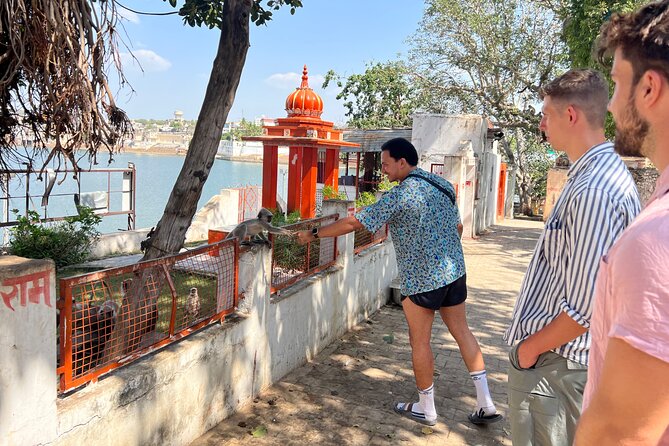
Pushkar is compact, and it rewards walking. The spiritual life here is not tucked away in one big monument, it shows up in doorways, courtyards, and steps leading down toward the lake. A walking route helps you notice the small details your eyes would miss from a car.
The biggest value I see is context. A local guide helps you connect what you are looking at with what it means to people who live nearby and make pilgrimage here. That is the difference between seeing temples and understanding why they matter.
And yes, the city is famous for its lakeside ghats, so you naturally end up where the devotional energy is strongest. Pushkar Lake becomes more than scenery once you know what families are doing there, like prayers and rituals connected to happiness and remembering the dead.
A few more Pushkar days to compare
- Afternoon Walk Tour with Sunset & Fire Ritual -The Pushkar Route
★ 5.0 · 119 reviews - Evening Walking Tour with Fire Rituals-The Pushkar Route
★ 4.9 · 108 reviews - Spiritual Walking tour with Puja Ceremony -The Pushkar Route
★ 5.0 · 101 reviews
The Pushkar Route: Gurudwara, temples, and the lake in one loop
This tour focuses on a clear, walkable spiritual circuit. You start at Gurudwara Sahib, then move through Hindu temples such as Varaha and Rangji, and later reach the Brahma Temple and the lakefront ghats.
What makes the order feel smart is the way it builds understanding. Sikhism and Hinduism are both present in Pushkar, and you get an early explanation of Sikh religion and why Pushkar matters to the Sikh community. Then the route shifts into Hindu temple history and symbolism, so the city’s different faith threads start to connect in your mind.
The last portion emphasizes the lake and ghats, which is where so much of Pushkar’s spiritual life happens. Even if you only have a short window, this tour guides you to the places most people come for.
Stop-by-stop guide to what you’ll actually see
Below is what you can expect at each major stop, including the purpose and the practical feel of the visit.
Gurudwara Sahib: starting with Sikh faith and local meaning
The first stop is Gurudwara Sahib, and you spend about 30 minutes here. The guide explains Sikh religion and the importance of Pushkar for the Sikh community, so you are not treating the visit as a quick photo stop.
This start matters. If you come from a place with only one dominant religious tradition, Pushkar can feel confusing at first. Beginning with a Sikh explanation gives you a framework for the rest of the route.
Admission ticket is free at this stop, which also helps keep expectations simple.
Another way to spend a day in India:
- From Jaipur : Private Ajmer Pushkar Tour by Cab
★ 4.5 · 29 reviews - Sariska Tiger Reserve Assistance for Gypsy Private Safari Tickets
★ 4.0 · 13 reviews - Fullday pushkar tour from jaipur with guid+camel/jeep safari
★ 4.4 · 12 reviews - From Delhi: Private 5-Day Golden Triangle Tour Love Triangle
★ 5.0 · 10 reviews
Varaha Temple: a tall, stone-heavy landmark with a specific story
Next is the Varaha Temple, a site known for being about 150 feet high. The present statue dates to 1784, and the temple’s structure is built with heavy stone and plaster in a typical Rajasthani haveli style, inside a walled temple compound.
You get around 25 minutes here, which is enough to look closely and learn what you are seeing. The “why it looks like this” part tends to be the takeaway, since temple design in Rajasthan carries meaning in materials and proportions.
Admission is included, and the visit stays focused rather than wandering.
Old Rangji Temple (Rama Vaikuntha Temple): architecture you can read
Then you reach the Old Rangji Temple, also known as Rama Vaikuntha Temple. This is an older Vishnu temple, and it is known for workmanship and architecture, built of heavy stone in a beautiful Rajasthani style.
Time here is about 15 minutes, so think of it as a concentrated look. If you normally rush through temple courtyards, this stop helps you slow down because the guide’s explanation gives your eyes something to follow.
Admission is included.
Ati Prachin Shri Atamteshwar Mahadev Mandir: Shiva with his family
After Rangji, the route goes to Ati Prachin Shri Atamteshwar Mahadev Mandir. This temple represents Lord Shiva and is also described as the oldest Shiva temple in town, with a Shiva statue that shows his complete family.
You get about 25 minutes here, and the focus is symbolic meaning rather than just the physical building. When the guide explains the family and attributes tied to Shiva worship, the visual details start to make more sense.
Admission ticket is free.
Brahma Temple: why one temple matters so much
Next is the Brahma Temple, and this is the stop most people have heard about. You spend about 30 minutes here, and you learn why Brahma has only one temple in the world, along with temple architecture and mythology.
This part of the route tends to be the emotional center. Brahma Temple is not just a landmark, it is tied to a very specific religious narrative, and the guide’s storytelling helps you understand why people treat this site as uniquely important.
Admission ticket is free at this stop.
Pushkar Lake and Brahma Ghat: prayers, memory, and lake views
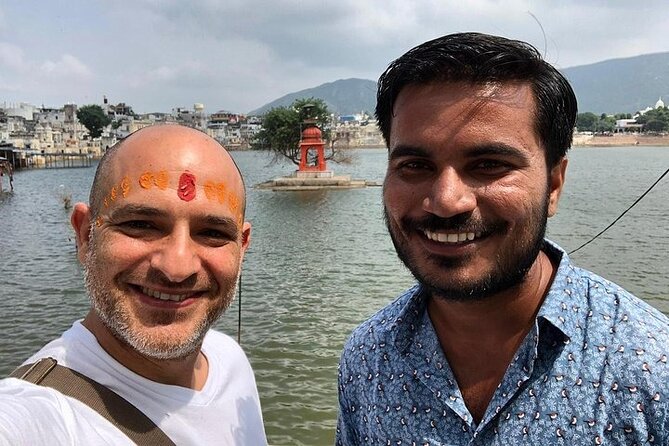
After Brahma Temple, you head toward the lake area around Brahma Ghat. Here, families offer prayers for happiness and also make tribute for the dead souls, which adds a serious, human layer to what you see along the water.
You get about 30 minutes between the lake and the ghats, and the focus includes photography and lakefront views. The route moves with respect for what is happening, so you can observe without feeling like you are intruding.
Admission is free for this stop segment.
Alka Rooftop Restaurant break: lemon ginger honey with a view
Then the tour includes a short refresh at a nearby restaurant, ALKA ROOFTOP RESTAURANT. You spend about 10 minutes there with a cup of lemon ginger honey and enjoy a view over the market area.
This is a practical pause, not a long meal. It also helps reset you before the final ghat stop, which can be a bit more visually busy because of the nearby sweet shops.
Admission is included for this component.
Gau Ghat (Gandhi Ghat): the oldest ghat and the sweet street nearby
The final stop is Gau Ghat, described as the oldest ghat in 52 ghats and also known as Gandhi Ghat. It is paired with a visit to the nearby Halwai Gali, known for sweet bakers and confectioners.
Time here is about 15 minutes. It is a good ending because you get a sense of how devotion and everyday life meet: people come for spiritual purpose, and then the neighborhood feeds that rhythm with sweets.
Admission is included.
The food and chai moment that makes the tour feel human
One of the tour’s best “make it real” details is how it treats food as part of worship culture, not a separate agenda. You get traditional breakfast Malpua, described as sugar syrup coated pancakes with curd, spices, khoya, and dried milk solids, topped with nuts.
Malpua is sweet, filling, and simple enough to enjoy without slowing the tour too much. The best part is that it fits the Pushkar vibe, where snacks and tea are often part of everyday hospitality.
You also get a special masala tea served in a claypot, with taste notes of cardamom and ginger. This is the kind of tea break that helps you cool down and refocus, especially on a walking route under Rajasthan sun.
Price and value: what $6.76 covers, and what it does not
At $6.76 per person, this tour is priced like a bargain, and that matters in a place where short experiences can still add up. You are paying for a guided city walk, plus guidance fees, taxes and fees, and entrance fees tied to the listed stops.
You also get meaningful inclusions. The guide, the sites, temple access, and the food and tea components make it feel more complete than a simple walking orientation.
What is not included is also important. Charges for holy rituals and ceremonies are on travellers choices, and foods and drinks outside what is listed are not included. If you plan to participate in rituals, set aside extra cash so you are not surprised.
Pace, group size, and why it feels manageable
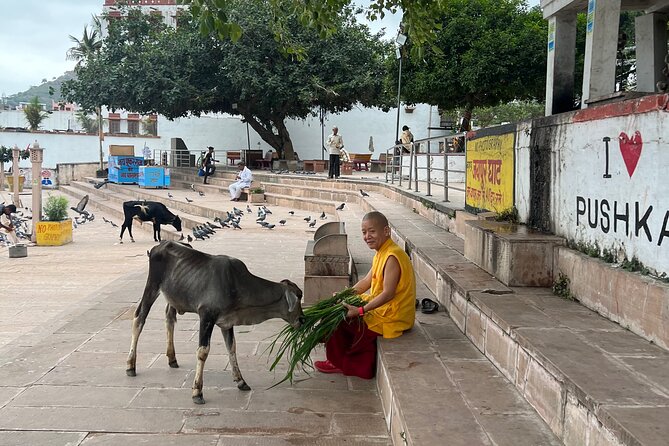
This experience runs about 1 to 3 hours, and each stop is time-boxed. You do not linger all day, but you still get enough moments at major sites to absorb the story.
The group size is capped at 6, which helps keep the tour from becoming chaotic. Small groups also tend to make it easier to ask questions, especially if you want clarity on what different symbols mean.
Also, the experience depends on good weather. In practical terms, that means you should be flexible with your schedule and expect the operator to try to protect the route quality.
Practical tips so you feel respectful and comfortable
Because this is a spiritual route, a few basics go a long way. Wear comfortable walking shoes, since you are moving between temples and lakefront ghats. Keep your shoulders and head covered as a default mindset when entering religious spaces, and follow any guidance from the local guide on what is appropriate in each place.
Bring a light layer if evenings feel cooler, but also plan around the weather. The tour explicitly requires good weather, so on days with rain or poor conditions, you may need to switch dates or accept a refund offer.
If you care about photos, take advantage of the mentioned locker facilities for cameras and bigger items. That small detail can save time and reduce stress when you are moving between indoor and outdoor spaces.
Finally, if rituals and ceremonies are on your wish list, ask in advance what you should expect to pay for participation. The tour includes guidance and key stops, but ceremony charges are listed separately.
Who should book this walking tour
I think this tour is a strong fit if you want the spiritual story of Pushkar without trying to do everything alone. It is especially helpful if you have a limited time window and want a structured route that still feels walkable and personal.
It is also a good choice if you like learning practical cultural context. You get explanations of Sikh religion at Gurudwara Sahib and temple-specific meaning at stops like Brahma Temple and Atamteshwar Mahadev Mandir.
And if you enjoy a short, guided break that includes chai and Malpua, this route does that in a way that stays connected to the day’s religious rhythm.
Should you book this tour?
I would book it if you want a focused, respectful Pushkar introduction that covers both temples and the ghats. The combination of temple explanations, Pushkar Lake time, and included masala tea plus Malpua makes it good value at this price.
Skip it only if you want long, slow worship participation or you expect a food-focused itinerary. For a short spiritual orientation with a guided route, though, this is an efficient and genuinely meaningful way to see Pushkar.
Recently added around Pushkar
- Sariska Tiger Reserve Assistance for Gypsy Private Safari Tickets★ 4.0 · 13 reviews
- Pushkar: Camel Sunset Safari Adventure★ 3.5 · 7 reviews
- Fullday pushkar tour from jaipur with guid+camel/jeep safari★ 4.4 · 12 reviews
- From Jaipur : Private Ajmer Pushkar Tour by Cab★ 4.5 · 29 reviews
- From Delhi: Private 5-Day Golden Triangle Tour Love Triangle★ 5.0 · 10 reviews
- Afternoon Walking tour -The Pushkar Route★ 4.8 · 7 reviews
- Evening Walking Tour with Fire Rituals-The Pushkar Route★ 4.9 · 108 reviews
- Spiritual Walking tour with Puja Ceremony -The Pushkar Route★ 5.0 · 101 reviews
City Tours, compared.
Old & New Delhi City Tour – Half or Full Day Options Available
Read our review →
Old & New Delhi Private City Tour – Traveler’s Choice (Top Rated)
Read our review →
Jaipur City Private Day Tour from Delhi by Car – All Inclusive
Read our review →
Full Day City Highlights Day Tour & Ganges Cruise
Read our review →
Full-Day City Tour with Car, Guide & Skip-the-Line
Read our review →
Private Old and New Delhi City Full Day or Half Day Tour
Read our review →Browse the lists this tour appears in