
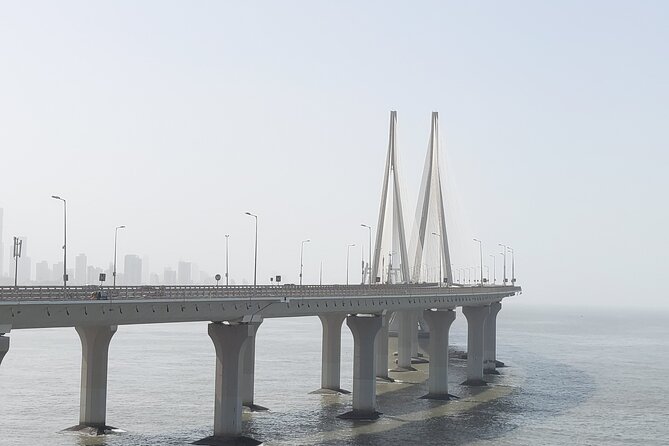
Reviewed · DHARAVI SLUM TOURS
Private City Tour with Dharavi Slum Dhobighat and Dabbawalla
Dharavi and Dhobi Ghat, in one day. I love the way Siddhi guides you with a human, sensitive touch while still packing in major Mumbai landmarks like Gateway of India and Chhatrapati Shivaji Terminus. You’ll also move at a brisk pace, so the only real drawback is that this is 6 to 7 hours of “see a lot,” meaning some stops feel short.
For the price of $75.69 per person, you’re paying for a truly private experience with pickup options and a mobile ticket, plus clear pre-trip communication over email and WhatsApp. You get a clean flow through South Mumbai first, then the day turns toward the working reality of the city.
In This Review
- Key highlights if you want this kind of day
- What this private Mumbai day really is
- Starting in Colaba: Regal Cinema to Gateway of India
- South Mumbai power buildings: University Library and the High Court
- Chhatrapati Shivaji Terminus: the UNESCO rail stop
- Crawford Market, Marine Drive, and the city’s everyday rhythm
- Gandhi’s Mumbai at Mani Bhavan
- Malabar Hill views: Hanging Gardens, Kamala Nehru Park, Banganga
- Antilia and the billionaires row contrast
- Dhobi Ghat: open-air laundry life at Mahalaxmi
- Churchgate Railway Station: cricket nearby and neo-era architecture
- Dharavi for two hours: a neighborhood, not a headline
- How the guide shapes the day (and why you should care)
- Price and value: is $75.69 per person worth it?
- Who should book this tour, and who might skip it
- Should you book? My practical take
- FAQ
- How long is the tour?
- What time does the tour start, and where do I meet?
- Is pickup offered?
- Where does the tour end?
- How long do you spend in Dharavi?
- How long do you spend at Dhobi Ghat?
- Are admission tickets needed for the stops?
- Is this a private tour?
- How much does it cost?
- What if the weather is bad?
- What is the cancellation window for a full refund?
Key highlights if you want this kind of day
- Private group, not a cattle-car tour: only your group joins the schedule.
- Siddhi’s approach: professional city context plus a careful, respectful tone on sensitive sites.
- A smart contrast route: colonial-era monuments, major rail heritage, then Dharavi and open-air laundry.
- Time where it counts: about 2 hours in Dharavi and 30 minutes at Dhobi Ghat.
- Free entries for the named stops: each listed stop shows admission ticket free.
- You start and end where the day matters: Colaba in the morning, Dharavi by the end.
What this private Mumbai day really is
This is a private city tour that tries to do two things in one stretch. First, it gives you an organized sweep of “classic” Mumbai sights across South Mumbai, where architecture and city institutions tell part of the story. Then it shifts to the working neighborhoods, with time at Dhobi Ghat laundry and a longer visit inside Dharavi.
The value part is simple. In many Mumbai tours, you either get landmarks with no context or you get neighborhood visits with no big-picture framing. This format attempts both, and since it’s private, you can keep asking questions without feeling like you’re slowing everyone down.
A small reality check helps you plan. You’ll spend roughly 20 minutes at many landmarks, then more time at Dharavi and Dhobi Ghat. If you want deep time at one place, this day will feel “busy.” If you want orientation plus meaningful neighborhood time, it’s a strong fit.
A few more Dharavi Slum tours around Mumbai:
- Dharavi slum tour in Mumbai by Female tour guides of the slum
★ 5.0 · 1,976 reviews - Mumbai: Dharavi Slum, DhobiGhat, and Dabbawallas Tour
★ 4.9 · 689 reviews - Dharavi Slum Tour
★ 5.0 · 625 reviews
Starting in Colaba: Regal Cinema to Gateway of India
Your morning meeting point is Regal Cinema, Apollo Bandar, Colaba, with a 9:30 am start. That’s a practical choice because Colaba is a hub, and the day is designed to flow outward from there.
From the start, you’re set up for your first “Mumbai wow” moment at Gateway of India. This arch-monument was built in the early 20th century to commemorate the landing of King-Emperor George V. You don’t need a long visit here to get it. Even a short stop gives you a sense of how this city became globally visible during the colonial era.
One thing to consider: Gateway of India sits in an area that can be lively and crowded. If you’re sensitive to heavy crowds, come with patience and focus on watching the mix of people around the monument, not just photographing the arch.
South Mumbai power buildings: University Library and the High Court
After Gateway of India, you move to institutional Mumbai with two quick stops: the University of Mumbai Library and the Bombay High Court (Principal Bench).
At the University of Mumbai Library, the point isn’t the building alone. It’s the scale and significance of the institution, one of the largest universities in the world. A quick look like this helps you understand Mumbai as a city of learning and formal public life, not only a city of markets and media.
Then you get a brief visit at the High Court of Bombay, which serves Maharashtra and Goa and also involves union territories. This is one of those stops that works best if you pay attention to what the guide says about how the city functions. Even in 10 minutes, you can come away with a better sense of how law and governance sit inside daily life.
Chhatrapati Shivaji Terminus: the UNESCO rail stop
Next is the centerpiece for rail heritage: Chhatrapati Shivaji Terminus (also called CST). This is a UNESCO World Heritage Site, and it was designed by the British-born architect Frederick William Stevens.
Even with a short stop, you’ll likely notice why this place matters. A railway terminus is not just transport in Mumbai. It is identity, engineering confidence, and an architectural statement. If you like history you can see with your own eyes, CST usually delivers.
Tip for enjoying it: don’t treat it like a quick photo pit stop. Look up as much as you look forward. Big buildings reward attention, and CST is one of those where details give you more understanding than a fast glance.
A few more Mumbai days to compare
- Mumbai: Full-Day Sightseeing Tour of Mumbai
★ 4.9 · 1,822 reviews - Private Mumbai Sightseeing Tour (Traveller’s Choice Award Winner)
★ 5.0 · 1,565 reviews - Elephanta Caves & Island Guided Private Tour
★ 5.0 · 1,327 reviews - Group Guided Walking Tour in Fort and Colaba
★ 5.0 · 1,073 reviews
Crawford Market, Marine Drive, and the city’s everyday rhythm
From UNESCO rail heritage, the tour moves into a more everyday rhythm with Crawford Market and Marine Drive.
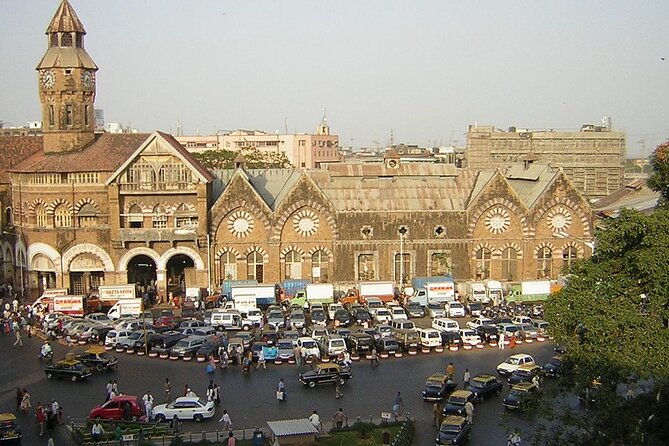
Crawford Market is one of South Mumbai’s famous markets, and the building was completed in 1869, donated to the city by Cowasji Jehangir. What makes this stop useful is not only shopping. It’s the social layer. You get to see how commerce lives next to old civic symbolism.
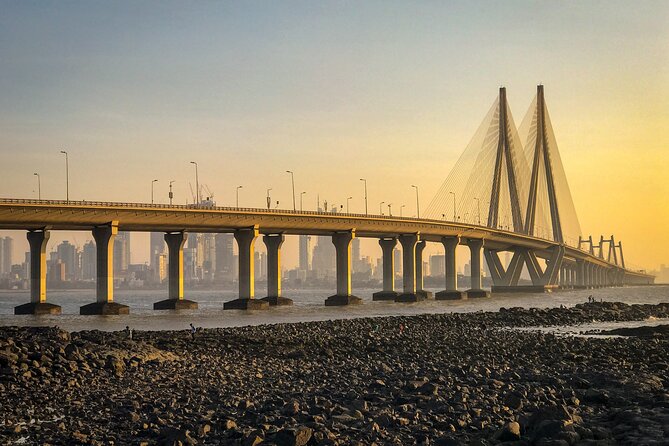
Then you slide to Marine Drive, the classic 3-kilometer promenade along Netaji Subhash Chandra Bose Road. The road and promenade are described as a C-shaped six-lane concrete road, constructed by Pallonji Mistry. This stop is a quick reset for the brain. It helps you see Mumbai as coastal, cinematic, and built for people to stroll.
Keep expectations realistic. Marine Drive is best when you can take a slow look, but you’ll be there only about 20 minutes. Use that time to spot the curve of the promenade and how the skyline lines up as you walk.
Gandhi’s Mumbai at Mani Bhavan
You then reach Mani Bhavan Gandhi Museum. This is a museum and historical building tied directly to Gandhi’s political activities in Mumbai, and it was a focal point for those efforts.
In a fast tour day, this stop is a good “meaning pause.” Landmarks and markets can blur together unless you add context. Mani Bhavan gives you a human, political thread connecting the city to a major world figure and a major movement.
If you tend to skim museums, don’t overthink it here. You’re not trying to do a full museum day. You’re using the museum as a grounding moment, then you’re moving on.
Malabar Hill views: Hanging Gardens, Kamala Nehru Park, Banganga
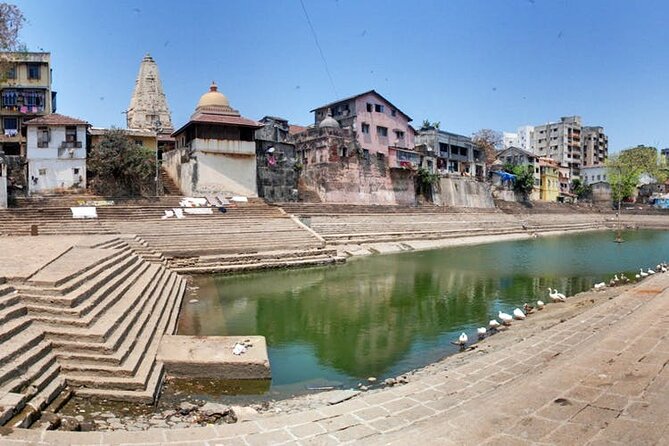
After Mani Bhavan, the tour heads into view territory on Malabar Hill, with Hanging Gardens (also known as Pherozeshah Mehta Gardens) and Kamala Nehru Park.
The Hanging Gardens are terraced gardens perched on top of Malabar Hill, on its western side, opposite Kamala Nehru Park. This is one of those stops where the guide’s description makes a big difference, because the value is partly in what the gardens represent and partly in what you can see from the elevation.
Then Kamala Nehru Park, built in 1952 and named after Nehru’s wife, gives you an overlook with a view back toward Marine Drive. In a day full of movement, this is useful. It helps you stitch the city together in your mind.
Next is Banganga, a temple tank part of the Hindu Walkeshwar Temple complex. The tank aspect keeps this stop grounded in place, because it is not a monument you only look at from one angle. It’s a religious and cultural feature embedded in a neighborhood setting.
Small practical note: parks and temple areas often have their own foot traffic patterns. Wear something comfortable, because you’ll be walking and repositioning for sight lines.
Antilia and the billionaires row contrast
Then comes a striking contrast stop: Antilia. It’s a private residence in Mumbai’s “billionaires row,” named after the mythical island Antillia. It’s the home of Indian billionaire Mukesh Ambani, moved into in 2012.
You won’t be inside. The value is in what the sight represents and how the guide frames it against the rest of your day. When you do this route in sequence, Antilia lands differently. You’re not just seeing a famous house. You’re seeing how extreme wealth exists in the same city geography as everyday labor.
If this kind of contrast makes you uncomfortable, that’s normal. It helps to treat the stop as a question starter: how does Mumbai support both worlds at once, and what systems let that happen?
Dhobi Ghat: open-air laundry life at Mahalaxmi
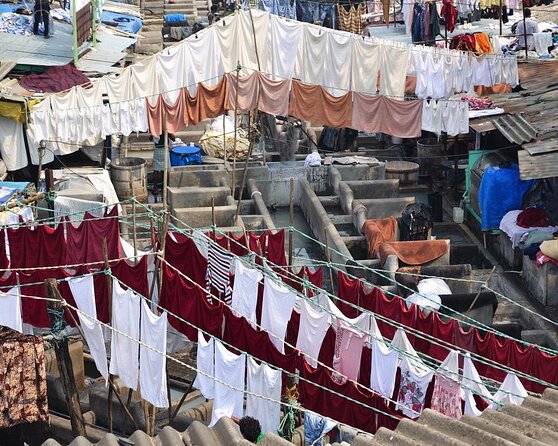
Now the day turns from viewing to watching real work at Dhobi Ghat. The stop is Mahalakshmi Dhobi Ghat, an open-air laundry area located near Mahalaxmi railway station, and it can also be accessed from Jacob Circle monorail.
You’ll have about 30 minutes here. In that half hour, the best approach is to observe first and talk second. Laundry operations are repetitive, and that rhythm helps you understand scale. It’s not a performance designed for tourists. It’s a service business, and you’re seeing it in action.
Respect matters most at places like this. If you want photos, wait for the guide’s cues and ask before you start. Also, keep your belongings secure and your hands free. Street-level work areas can be slippery and crowded.
Churchgate Railway Station: cricket nearby and neo-era architecture
After Dhobi Ghat, you’ll pass through Churchgate Railway Station area. Churchgate is known for nearby Oval Maidan and the Brabourne Stadium, including sports grounds where cricket happens. The area is also described for neo-Gothic and art deco elements.
This stop works as a bridge. You’ve seen trains as heritage at CST, then you’ve seen trains as practical access near Dhobi Ghat. Churchgate adds another layer of how rail corridors shape daily life.
You’ll probably get more of this as a visual snapshot than a deep architecture lesson. That’s fine because the bigger payoff is what you’re comparing across the day.
Dharavi for two hours: a neighborhood, not a headline
Finally, you end the major neighborhood focus at Dharavi, where the tour spends about 2 hours.
Dharavi is described as one of the world’s largest slum localities, with around 1,000,000 people in an area just over 2.1 square kilometers. That scale is hard to absorb quickly, which is why the time matters. A short walk-through doesn’t do it justice, and this portion is long enough to let you ask real questions and understand daily patterns.
This is also where your guide’s approach becomes crucial. The strongest feedback about Sid/Siddhi centers on a professional, careful tone and a sensitive way of introducing difficult realities. That matters because Dharavi can easily become a spectacle if the day is run poorly.
Practical way to get the most out of Dharavi:
- Keep your questions respectful and specific.
- Watch how daily routines are described.
- Don’t assume you need to be shocked to learn. Focus on how people work, trade, and live.
One extra note based on the tour name: it mentions dabbawalla. The itinerary details you provided emphasize the landmark sweep plus Dharavi and Dhobi Ghat. If dabbawallas are a must for you, ask the operator directly what’s included during your exact day so you don’t end up disappointed.
How the guide shapes the day (and why you should care)
This tour is guided, and the guide experience comes through in the feedback you shared. People specifically highlighted that Siddhi/Sid brings solid city knowledge, communicates clearly, and has an authentic personality. They also mentioned a flexible style, meaning if you’ve already seen a stop or you want to linger a moment, the guide can often adjust.
That flexibility is valuable in Mumbai. Cities don’t follow schedules the way guidebooks pretend they do. A good guide helps you keep the plan while handling real-world changes like foot traffic and timing.
Also, the pre-tour communication stood out. Confirmation details arriving via email and WhatsApp is more than convenience. It reduces stress, especially on a long day where timing and meeting points matter.
Price and value: is $75.69 per person worth it?
At $75.69 per person, you’re paying for a few things at once: private pacing, a full half-day plus neighborhood time, pickup options, and a schedule that covers major sights plus Dharavi and Dhobi Ghat.
The best way to judge the value is to compare what’s included. Many Mumbai tours that claim “Dharavi” make it a quick photo segment. Here, Dharavi is allotted about two hours. Many tours that do “classic Mumbai” do it with no working neighborhood component. Here, you get both.
Also, the named stops show admission as ticket free for the listed attractions, which helps keep costs predictable.
The one tradeoff is your time. Because the tour tries to hit a lot of points, it’s not slow travel. If you want one neighborhood in depth for half a day, you might feel rushed.
Who should book this tour, and who might skip it
I’d point you to this tour if you want:
- A private day with a guide who asks you questions back.
- A balanced contrast between Mumbai icons and real daily-life neighborhoods.
- A structured route that helps you learn faster without feeling lost.
I’d think twice if you:
- Hate rushed schedules. Many stops are short, especially after you start the landmark sweep.
- Want a single theme. This day is intentionally mixed: heritage, markets, Gandhi, billionaires row, then laundry and Dharavi.
If you’re coming for the first time, this is a strong “orientation with meaning” day. If you’ve been in Mumbai before and you mainly want one specific deep dive, you might prefer a tour focused only on Dharavi or only on the coastline and heritage.
Should you book? My practical take
Book this tour if you want your Mumbai day to feel like a story with jumps. You’ll start with major landmarks, slow down with viewpoint stops, then shift toward Dhobi Ghat work life and the scale of Dharavi.
Use one decision rule: if you’re comfortable with a day that is scheduled and time-limited, you’ll likely love how efficiently it teaches you. If you want long, unhurried time in only one neighborhood, you may feel the “many stops” pacing.
If dabbawallas are a top priority for you, confirm ahead of time whether your day includes that piece, since the plan details you shared put the emphasis on Dharavi and Dhobi Ghat.
FAQ
How long is the tour?
The tour lasts about 6 to 7 hours.
What time does the tour start, and where do I meet?
The start time is 9:30 am, and the meeting point is Regal Cinema, Apollo Bandar, Colaba, Mumbai.
Is pickup offered?
Yes, pickup is offered. The tour also lists a specific meeting point at Regal Cinema.
Where does the tour end?
The tour ends at Kumbhar Wada, Dharavi, Mumbai.
How long do you spend in Dharavi?
Dharavi is scheduled for about 2 hours.
How long do you spend at Dhobi Ghat?
Dhobi Ghat is scheduled for about 30 minutes.
Are admission tickets needed for the stops?
For each of the listed stops, admission is shown as ticket free.
Is this a private tour?
Yes, it is a private tour/activity, and only your group participates.
How much does it cost?
The price is $75.69 per person.
What if the weather is bad?
This experience requires good weather. If it is canceled due to poor weather, you will be offered a different date or a full refund.
What is the cancellation window for a full refund?
You can cancel up to 24 hours in advance for a full refund.
Recently added around Mumbai
- Mumbai After Dark: Private Night Tour with AC Transfers★ 5.0 · 48 reviews
- Private Dharavi Slum and Sightseeing Tour★ 5.0 · 73 reviews
- Mumbai Full-Day Sightseeing & Dharavi Slum Tour★ 5.0 · 94 reviews
- Elephanta Caves & Island: Your Tour, Your Way★ 5.0 · 12 reviews
- Private Dharavi Slum Photography Tour With Pickup★ 5.0 · 56 reviews
- Life In Dharavi: A Guided Tour Of Dharavi Slum★ 5.0 · 99 reviews
- Full-Day Privat Sightseeing in Mumbai & Dharavi Tour with Pick Up★ 5.0 · 26 reviews
- Private Dharavi Slum Tour with Transport and Refreshments★ 5.0 · 28 reviews
Dharavi Slum Tours, compared.
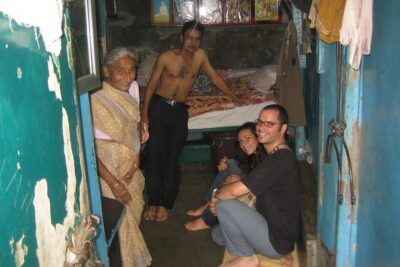
Dharavi slum tour in Mumbai by Female tour guides of the slum
Read our review →
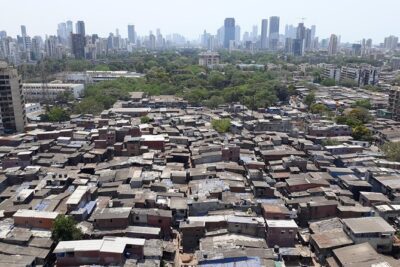


Dharavi Slum Slumdog Millionaire Tour with a Local
Read our review →
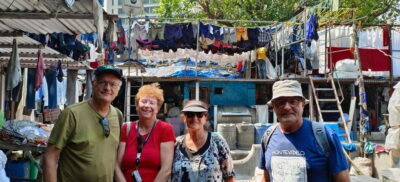
Dhobi Ghat Laundry and Dharavi Slum Tour with Local
Read our review →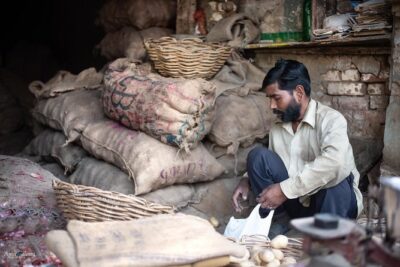
Browse the lists this tour appears in