
Reviewed · DHARAVI SLUM TOURS
Private Dharavi Slum and Sightseeing Tour
One day, two worlds: Dharavi and Mumbai. This private 9-hour plan strings together Dharavi home and work life with big-name sights like Marine Drive, plus return pickup so you are not fighting traffic or transit. It also helps that the day is guided by people like Sabina or Chetan, who can explain the city in a way that actually sticks.
I like the structure here. You get a local English-speaking guide and driver for the whole day, and each stop is timed so the itinerary moves but you still get enough minutes to look, ask, and absorb. I also like that most stops have free admission, so your money is going mainly to access, guiding, and transport.
My only caution is stamina and mood. It is a long day, it can feel chaotic in places, and there is no food included, so plan to eat on your own between stops or after the tour.
In This Review
- Key highlights to know before you go
- Why Dharavi and the big landmarks work better than a checklist
- Price and what you actually get for $87.23
- The day’s rhythm: 9 hours, 12 stops, and how to pace yourself
- Dharavi walking time: homes, businesses, and real local industries
- Dhobi Ghat, Jain Temple, and Kamala Nehru Park: religion, work, and a view break
- Dhobi Ghat (10 minutes)
- Jain Temple – Mumbai (20 minutes)
- Kamala Nehru Park (20 minutes)
- Banganga and Haji Ali Mosque: sacred tanks and a mosque on the sea
- Banganga (20 minutes)
- Haji Ali Mosque (30 minutes)
- Crawford Market, CST, and the art of a quick landmark stop
- Crawford Market (30 minutes)
- Chhatrapati Shivaji Terminus, CST (20 minutes)
- Gateway of India (20 minutes)
- Chor Bazaar, Marine Drive, and Sassoon Dock: markets, night views, and the working waterfront
- Chor Bazaar (45 minutes)
- Marine Drive (25 minutes)
- Sassoon Dock (30 minutes)
- What makes the guide matter on this specific itinerary
- Who should book this tour, and who should think twice
- Should you book this Dharavi and Mumbai highlights tour?
- FAQ
- How long is the Dharavi and sightseeing tour in Mumbai?
- What is the price per person?
- Is hotel pickup and drop-off included?
- Is food included in the tour?
- What attractions have admission tickets on this itinerary?
- Is this tour private or shared?
- Does the tour include a guide and water?
- Can I use a mobile ticket?
- What is the cancellation policy?
Key highlights to know before you go
- Private access to Dharavi with time to see homes and businesses tied to local industries
- Return hotel transfers included, handled by a driver and local guide for the entire day
- Short, varied stop times that cover laundry, temples, tanks, markets, and major landmarks
- Multiple famous Mumbai icons like CST, Gateway of India, and Marine Drive in one run
- Admission free at every listed stop, so your day is about seeing and learning, not paying entry fees
Why Dharavi and the big landmarks work better than a checklist
If your first instinct in Mumbai is to grab the famous photos, this is a smart counter-move. Dharavi and the headline sights are very different corners of the city, but the tour stitches them together into one clear story of daily life, faith, commerce, and public space.
What makes this pairing work is the pacing. You spend a proper block of time in Dharavi, then you do smaller, focused visits across the city: a temple, a mosque, a famous open-air laundry, a market, and the major waterfront views. By the time you reach places like Chor Bazaar and Marine Drive, you are not just seeing Mumbai, you are connecting it.
And because it is private, you are not stuck in a one-size-fits-all group rhythm. Your guide can shape the day to your questions, and you stay with the same driver and guide from start to finish.
A few more Dharavi Slum tours around Mumbai:
- Dharavi slum tour in Mumbai by Female tour guides of the slum
★ 5.0 · 1,976 reviews - Mumbai: Dharavi Slum, DhobiGhat, and Dabbawallas Tour
★ 4.9 · 689 reviews - Dharavi Slum Tour
★ 5.0 · 625 reviews
Price and what you actually get for $87.23
At $87.23 per person for a 9-hour private tour, the value is in three practical areas:
1) Transport without the headache
You get hotel or residence pickup and drop-off, handled by a dedicated driver. That matters in Mumbai, where travel time can balloon fast. The price is essentially buying you a stress-free day of getting from one side of the city to the other.
2) A local English-speaking guide for the entire day
Many tours sprinkle guidance only at the big stops. Here, you get a guide and driver for the whole route, and that is especially important for a place like Dharavi where context makes everything make more sense.
3) Free admission across the itinerary
The listed stops are all marked as free entry. Your money is not going to multiple attraction tickets, it is going to access, guiding, and the logistics that let you see a lot in one day.
The one thing to remember is also simple: food is not included. You will need to plan meals separately, either before you start, during breaks, or after the tour ends.
The day’s rhythm: 9 hours, 12 stops, and how to pace yourself
This is a full-day run, with a typical flow like this: pickup, a long first stop (Dharavi), then a chain of shorter cultural and city-life stops, ending with waterfront and port views.
Here is what the timing looks like on paper, and why it matters:
- Dharavi: 2 hours
- Dhobi Ghat: 10 minutes
- Jain Temple: 20 minutes
- Kamala Nehru Park: 20 minutes
- Banganga: 20 minutes
- Haji Ali Mosque: 30 minutes
- Crawford Market: 30 minutes
- Chhatrapati Shivaji Terminus: 20 minutes
- Gateway of India: 20 minutes
- Chor Bazaar: 45 minutes
- Marine Drive: 25 minutes
- Sassoon Dock: 30 minutes
The practical takeaway: wear shoes that can handle uneven sidewalks, and keep your expectations realistic. You will see a lot, but you will not “linger for hours” at every single stop. If your goal is depth, treat Dharavi as your main deep-dive, and use the other stops to gather impressions and context.
Dharavi walking time: homes, businesses, and real local industries
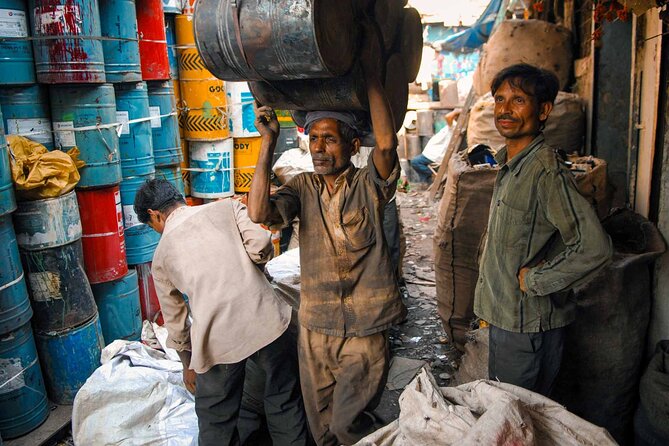
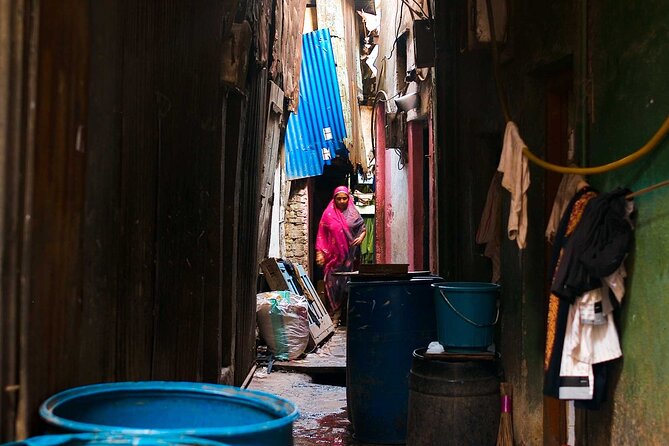
Dharavi is the anchor of the day, and it deserves that. You get 2 hours for a guided visit to homes and businesses in the settlement. This is the part that turns Dharavi from a headline into something human-scale.
What I find most useful about this portion is that it is not framed as just “poverty viewing.” The tour is designed to help you understand the many industries that operate there and the day-to-day life of the people who live there. That context matters, because it changes how you interpret what you see.
A second plus is that it is access you cannot easily replicate on your own. With a guide, you can move through the area with explanations that connect the dots between workshops, homes, and the way people earn a living.
A realistic consideration: this is emotionally intense for some people. Even if you come prepared, you might need a moment during the walk. I suggest taking your time with your questions and your gaze. You are there to learn, not to rush.
A few more Mumbai days to compare
- Mumbai: Full-Day Sightseeing Tour of Mumbai
★ 4.9 · 1,822 reviews - Private Mumbai Sightseeing Tour (Traveller’s Choice Award Winner)
★ 5.0 · 1,565 reviews - Elephanta Caves & Island Guided Private Tour
★ 5.0 · 1,327 reviews - Group Guided Walking Tour in Fort and Colaba
★ 5.0 · 1,073 reviews
Dhobi Ghat, Jain Temple, and Kamala Nehru Park: religion, work, and a view break
After Dharavi, the itinerary pivots into fast, distinctive city-life stops.
Dhobi Ghat (10 minutes)
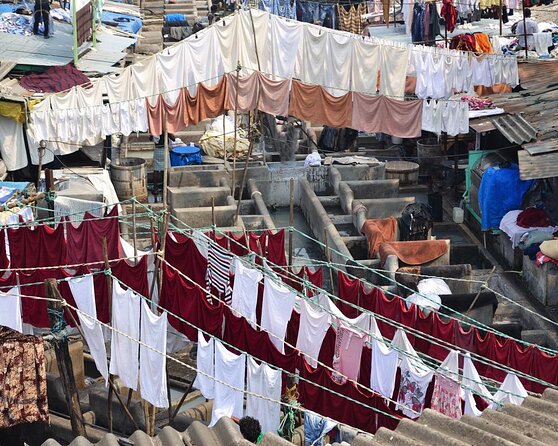
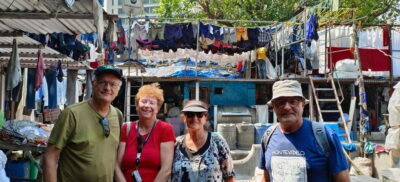
Dhobi Ghat is described as the world’s largest outdoor laundry. You will see washermen, often called dhobiwallahs, scrubbing linens from Mumbai’s biggest hospitals and hotels. Ten minutes sounds short, but the goal here is to catch the scale and rhythm quickly, then move on before the day becomes overwhelming.
Tip: treat this as a sensory stop. Watch the process, not just the scene. Laundry here is a whole system.
Jain Temple – Mumbai (20 minutes)
This Jain temple is known for being one of the city’s most beautiful, intricately decorated temples. Jainism emphasizes peacefulness and non-violence, so the visit is not just about architecture. It also gives a window into values that shape how people worship.
The time is moderate, so you can look carefully without feeling rushed out the door.
Kamala Nehru Park (20 minutes)
This is your “catch your breath” moment. Located on top of Malabar Hill, it is known for being one of Mumbai’s greener, calmer spots. The payoff is the view out over Marine Drive and the Arabian Sea.
If the first half of the day feels heavy, this park break helps reset your eyes. It is also a good place to understand how the city’s coastline shapes what you will see later.
Banganga and Haji Ali Mosque: sacred tanks and a mosque on the sea
Two stops here are connected by water, even though they feel different on the ground.
Banganga (20 minutes)
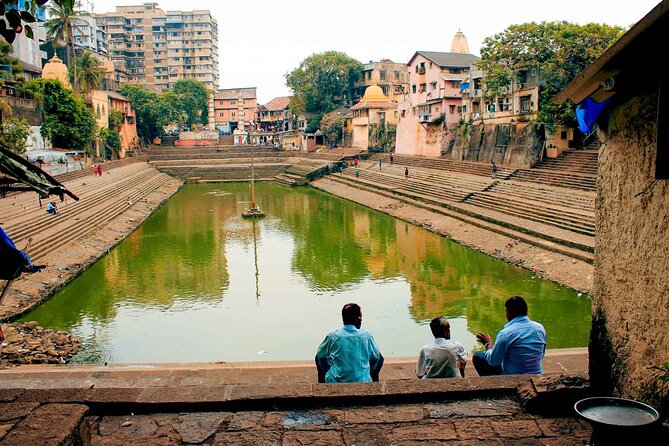
Banganga is a famous 12th century tank surrounded by Hindu temples. The story includes a belief that the water has special healing powers, plus a rumor that its spring comes from the holy Ganges river.
This is exactly the kind of place where a guide helps. Without context, you might just see a tank and temples. With context, you start to understand why it matters to people today.
Haji Ali Mosque (30 minutes)
Haji Ali Mosque sits at the end of a long causeway into the sea. The stop also connects to Saint Haji Ali, described as a wealthy Muslim who renounced the world and proceeded to Mecca.
This is a longer pause than some of the earlier stops, which is good because the location itself takes time to appreciate. The sea setting changes the mood, and it is easier to slow down for a bit here than in crowded markets.
Crawford Market, CST, and the art of a quick landmark stop
This stretch moves into commerce and infrastructure, and it shows you another side of Mumbai: how public life and movement shape the city.
Crawford Market (30 minutes)
Crawford Market is one of the city’s largest wholesale markets for fruit, vegetables, and meat. The itinerary also flags a detail many visitors miss: it was the first building in India to get electricity.
That single fact makes the stop more than a quick look. You start noticing how modernization and daily trade overlap in old structures.
Chhatrapati Shivaji Terminus, CST (20 minutes)
CST is the only UNESCO World Heritage Site mentioned in the itinerary. You also get to see it during rush hour, which is where the station becomes more than a building. It becomes a living network.
There is a pop-culture reference here too: CST was featured in the final song from the movie Slumdog Millionaire. Even if you are not a movie person, it helps anchor where you are in the story of Mumbai’s global image.
Gateway of India (20 minutes)
Gateway of India, built in 1911, marks a key turning point in the British Raj endgame. The itinerary notes that British troops marched under it in 1948 to signal the end of the British Raj.
So yes, you get the iconic viewpoint, but you also get the historical meaning layered in. That makes the stop more than postcard time.
Chor Bazaar, Marine Drive, and Sassoon Dock: markets, night views, and the working waterfront
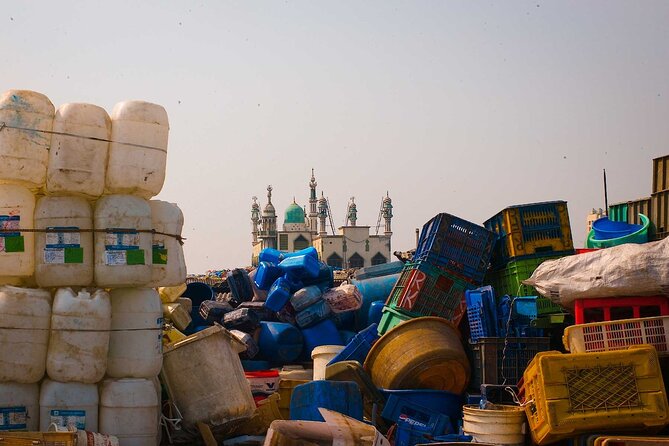
These final stops are about everyday energy, sea air, and a sense of how Mumbai keeps moving.
Chor Bazaar (45 minutes)
Chor Bazaar is nicknamed the thieves market and is one of India’s largest flea markets. It sells almost anything, and you also have a chance to try local sweets and pick up homemade pickles and chutneys.
This is one of the longest time blocks after Dharavi. It also gives you a practical goal: browse, taste, and decide what, if anything, you want to take home.
A consideration: markets mean crowds and close quarters. If you dislike that kind of setting, keep your expectations flexible.
Marine Drive (25 minutes)
Marine Drive is often called the Queen’s Necklace, and this stop is for exactly that slow stroll effect. The timing is enough to enjoy the promenade and get your own sense of what people mean when they describe the views.
This is also a nice moment to reflect on what you have seen earlier. You go from industries and religious sites to a long stretch of waterfront beauty.
Sassoon Dock (30 minutes)
The day ends with a port visit at Sassoon Dock. You will watch local fishermen bring in their catch. It is a working end to a day that already covered work and trade throughout.
If you want to understand Mumbai as a city of jobs, not just sights, this final stop ties the whole tour together.
What makes the guide matter on this specific itinerary
In a tour like this, the guide is not just a translator. They act like a map for your attention.
The strongest feedback from guides named Sabina and Chetan is that they explain Mumbai history clearly and keep the flow step by step. I like that approach because it prevents the common “see a lot, remember little” problem. With a good guide, you remember why a station matters, why a tank matters, and why a market matters.
It also helps that the guidance is in English, which keeps the day comfortable for first-time visitors. When you are navigating a place like Dharavi, good explanations are not a luxury.
Who should book this tour, and who should think twice
This tour is a great fit if:
- You are a first-time visitor to Mumbai and want to see beyond the standard handful of monuments.
- You want a real look at Dharavi, but with context and a structured plan.
- You like a full day with many different types of stops, markets, and sacred sites.
You might think twice if:
- You want a relaxed, slow sightseeing pace. This day is long and packed with stops.
- You are sensitive to heavy realities right at the start.
- You expect food to be part of the package. It is not, so plan your meals.
Should you book this Dharavi and Mumbai highlights tour?
I think it is worth booking if your priority is getting a guided introduction to Mumbai that connects people, industry, faith, and famous landmarks in one coherent day. The big value is the combination of Dharavi access plus a full-day guided city route, with hotel pickup and drop-off and free admission at the listed stops.
One simple way to make this tour even better: come ready to move. Bring comfortable shoes, keep your energy up, and plan your meals in advance. If you do that, you will finish the day with a much clearer idea of what Mumbai is really like.
FAQ
How long is the Dharavi and sightseeing tour in Mumbai?
It runs for about 9 hours.
What is the price per person?
The price is $87.23 per person.
Is hotel pickup and drop-off included?
Yes. Hotel or residence car pickup and drop-off are included.
Is food included in the tour?
No. Food is not included.
What attractions have admission tickets on this itinerary?
The listed stops are marked as admission ticket free.
Is this tour private or shared?
This is a private tour/activity. Only your group participates.
Does the tour include a guide and water?
Yes. You get a local English-speaking guide and driver for the entire tour, plus water or a cold drink.
Can I use a mobile ticket?
Yes. The tour includes a mobile ticket.
What is the cancellation policy?
You can cancel for free up to 24 hours in advance for a full refund.
Recently added around Mumbai
- Mumbai After Dark: Private Night Tour with AC Transfers★ 5.0 · 48 reviews
- Mumbai Full-Day Sightseeing & Dharavi Slum Tour★ 5.0 · 94 reviews
- Elephanta Caves & Island: Your Tour, Your Way★ 5.0 · 12 reviews
- Private Dharavi Slum Photography Tour With Pickup★ 5.0 · 56 reviews
- Life In Dharavi: A Guided Tour Of Dharavi Slum★ 5.0 · 99 reviews
- Full-Day Privat Sightseeing in Mumbai & Dharavi Tour with Pick Up★ 5.0 · 26 reviews
- Private Dharavi Slum Tour with Transport and Refreshments★ 5.0 · 28 reviews
- 1-Day Trip to Jaipur from Mumbai with Both side Commercial Flights★ 5.0 · 7 reviews
Dharavi Slum Tours, compared.
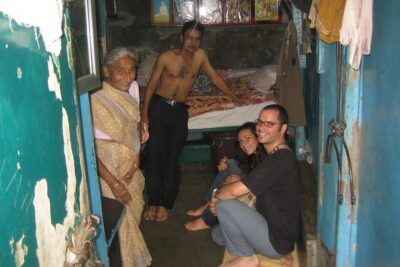
Dharavi slum tour in Mumbai by Female tour guides of the slum
Read our review →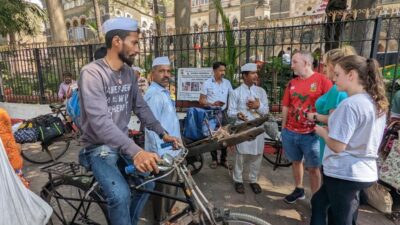
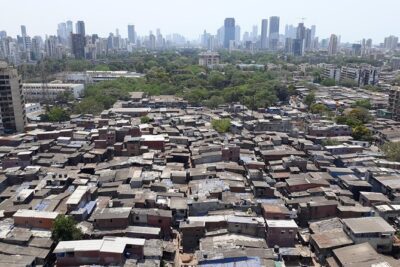


Dharavi Slum Slumdog Millionaire Tour with a Local
Read our review →
Dhobi Ghat Laundry and Dharavi Slum Tour with Local
Read our review →
Browse the lists this tour appears in