
Reviewed · DHARAVI SLUM TOURS
New Delhi: Sanjay Colony Slum Tour with Locals
A real place with real routines, not a stage. This Sanjay Colony tour in New Delhi is built around daily life, from work in the clothing industry to school and home challenges, led by locals like Badal. I also like that you get local tea and a water bottle to keep you comfortable during the walk.
A possible drawback: this is not a casual stroll. You should expect a serious, human look at issues like daily water needs and education barriers, so it may feel heavy for some people.
In This Review
- Key highlights you will actually notice
- Sanjay Colony in plain view, and why this tour matters
- Starting at Harkesh Nagar Okhla Metro, and how the 1 hour 45 minutes flows
- The first look, before the classroom doors and community projects
- Learning by Locals stop: education work you can understand in 15 minutes
- Seeing a public school from outside, and understanding the education system
- Beyond the stops: temples, daily life, religion, and the clothing industry work
- Tea, water, and keeping your body ready for a serious conversation
- Price and value: why $12 can feel like a fair trade, if you match the tone
- Guides make or break it, and Badal and Sukhmani set the bar
- Respect, comfort, and the best way to behave on a residential walk
- Who should book this Sanjay Colony slum tour, and who should skip it
- Should you book this tour or choose something else?
- FAQ
- How long is the Sanjay Colony slum tour with locals?
- What is included in the $12 per person price?
- Where do I meet for the tour?
- How large are the groups?
- Is pickup offered, and will I be dropped back?
- Can I cancel for free?
Key highlights you will actually notice
- Local-guided small group pace (max 6 per booking) so you are not rushed
- Sanjay Colony context: learn how one area supports about 60,000 residents
- Learning by Locals stop with a focus on education and youth empowerment
- School viewing outside so you can understand the education system without wandering off
- Tea and water included to help you stay steady during the walk
Sanjay Colony in plain view, and why this tour matters
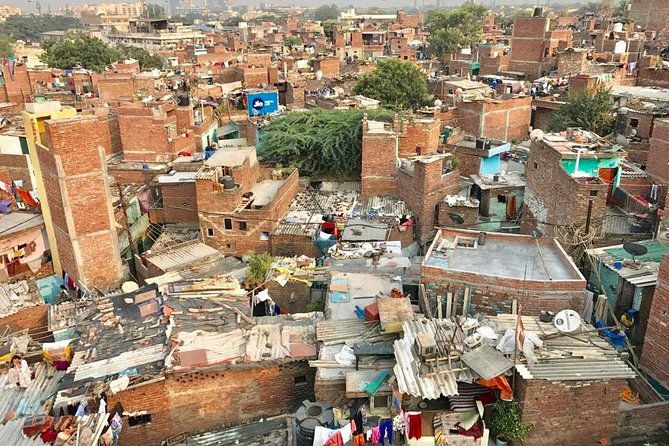
Sanjay Colony is one of the many informal settlements that shape daily life in New Delhi. The city has over 700 slum areas, and this tour focuses on Sanjay Colony, where roughly 60,000 people live. That alone gives you perspective. This is not an abstract idea. It is a neighborhood with families, routines, and responsibilities.
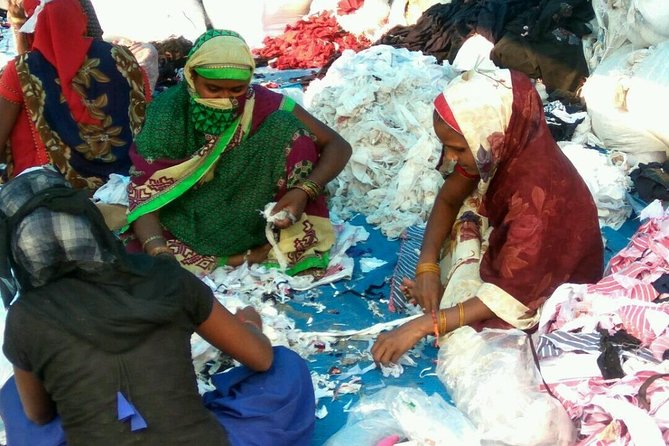
What makes this experience interesting is the way it connects places to people. You are not only shown buildings. You are guided through topics like religion, home life, education, and the constant challenge of basic needs, especially water. The guide also explains local livelihoods, including work connected to the clothing industry, so you can see how money, labor, and survival fit together.
I like that the tour feels respectful and practical. In this kind of setting, good guidance matters. A local-led route helps you avoid wandering in the wrong places and gives you stories you can actually ask questions about as you go. When someone is named, like Badal or Sukhmani, it signals that you are meeting people, not just collecting facts.
A few more Dharavi Slum tours around New Delhi:
- Sanjay Colony Slum Tour
★ 5.0 · 498 reviews - New Delhi Slum Walking Tour
★ 5.0 · 360 reviews - New Delhi Sanjay Colony slum Tour (Private Tour)
★ 5.0 · 20 reviews
Starting at Harkesh Nagar Okhla Metro, and how the 1 hour 45 minutes flows
You meet at Harkesh Nagar Okhla Metro gate number 2, near the start point labeled G-16 on the area side. The idea is simple: you reach the meeting spot using public transportation, and the tour stays close to transit so you do not have to figure out the whole area on your own.
The full walk runs about 1 hour 45 minutes. That is a sweet spot. Long enough for meaningful conversation and a few key stops, but not so long that you feel stuck in a single place while your day falls apart. The tour is also described as a small group slum tour, with a maximum of 10 travelers overall and up to 6 people per booking. Translation: you get time to ask questions, and your guide can keep track of everyone.
Pickup is offered, which is helpful if you are coming from a hotel where the metro route feels annoying. If you booked a private car version, the team can drop you back to your hotel. If you did not, you will still get help coordinating with the metro area, including directions and assistance to take an Uber or taxi back.
Practical tip: wear comfortable shoes. The tour is on foot and you will want your feet to feel fine for the whole 1 hour 45 minutes, not just the first 15.
The first look, before the classroom doors and community projects
The tour begins at Harkesh Nagar Okhla Metro, gate number 2. That first transfer moment matters. It sets the tone that this is a neighborhood walk, not a sightseeing detour. You start with orientation, and then you move into the colony where everyday life continues around you.
At this stage, your guide typically frames what you will see. That helps you look with less confusion. You are more likely to notice details like where people work, what community spaces do for daily life, and how education fits into household plans.
There is also something emotionally practical here. A guided route helps you feel steadier, especially if you are unsure about how to behave in a residential area. One reason the reviews rate this so highly is that the approach feels organized and considerate, which makes it easier to stay respectful and present.
Learning by Locals stop: education work you can understand in 15 minutes
The next major stop is Learning by Locals, a local NGO focused on education and youth opportunities in Sanjay Colony. This is built into the schedule for about 15 minutes, so you are not dragged through a long presentation. Instead, you get a focused look at the mission and the type of projects happening on the ground.
Why this stop is valuable is simple: it explains the “why” behind what you see. When you walk through a place with limited resources, it can be easy to assume that nothing changes. The NGO part shows how support systems try to break cycles using education. You also get a chance to connect what you learned about daily challenges to real responses in the community.
In the strongest accounts of the tour, guides helped visitors connect with the people involved, and that made the whole visit feel meaningful rather than observational. If your mind is asking questions like What is being done? and What does it look like for kids today?, this is where you get clearer answers.
A few more New Delhi days to compare
- Old & New Delhi City Tour – Half or Full Day Options Available
★ 5.0 · 4,811 reviews - Half Day Private Delhi City Tour
★ 5.0 · 4,474 reviews - Same Day Taj Mahal, Agra Fort & Baby Taj Tour from Delhi by Car
★ 5.0 · 4,304 reviews - Taj Mahal Day Tour from Delhi by Superfast Train – TOP RATED TOUR
★ 5.0 · 4,166 reviews
Seeing a public school from outside, and understanding the education system
You also visit the s.d.m.c primary school. You view it from outside, with time to understand how education works in the area. That outside view detail is important. It keeps the focus on learning about the system rather than turning the school into a public attraction.
What you gain from this stop is context. Even without stepping deep into classrooms, you can understand how schooling is structured, how it connects to community priorities, and what it means for children and parents who are balancing survival needs.
In a place where water, work, and family life create constant pressure, education becomes more than school hours. Your guide’s stories give you a better sense of why attendance, support, and learning outcomes matter so much, and why community programs try to help.
A note on expectations: because the school is only viewed from outside, do not expect a full guided tour of buildings or classrooms. The value here is the framing, the explanations, and the way it ties back to the bigger picture.
Beyond the stops: temples, daily life, religion, and the clothing industry work
The tour does more than check off three places. As you walk, you learn how people live day to day. The overview highlights several topics you are likely to hear about: religion, home life, education, daily challenges like finding water, and local livelihoods connected to the clothing industry.
This is where the experience becomes genuinely “real.” It is one thing to read about a slum. It is another to hear how a household handles water needs, how daily schedules work around labor, and how children’s education fits into the picture.
The clothing industry connection is especially useful. You get a clearer view of work that supports families. Clothing related labor often depends on contracts, piecework, and shifting demand. Your guide’s explanations help you understand that the economy here is not just one job. It is a network of roles that keep homes running.
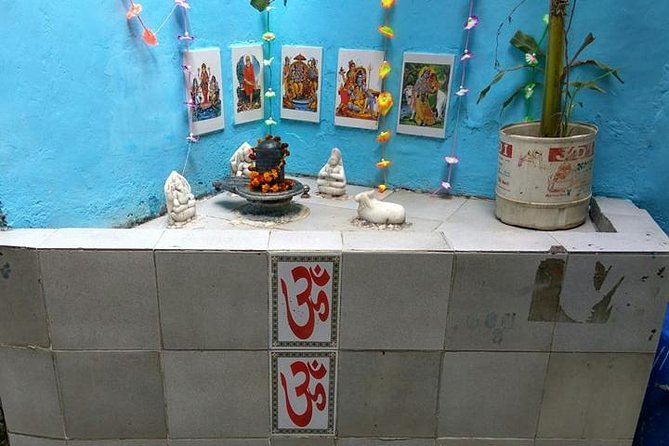
There is also a temple visit included as part of the learning themes. That matters because religion is not a separate category of life. In many communities, it shapes everyday rhythms, community bonds, and how people cope with hard moments. Even if the temple stop is brief, it can change how you interpret everything else.
Tea, water, and keeping your body ready for a serious conversation
Local tea and a water bottle are included, and I think that is a smart inclusion. In a neighborhood setting, it is easy to underestimate how quickly fatigue builds. A drink break keeps the tour human. It also helps you stay present for the conversations your guide wants to have.
Hydration also changes how you experience the emotional tone. If you are tired or overheated, even a respectful tour can feel tense. If your body feels cared for a little, you are more able to listen, ask questions, and absorb what you are hearing.
Still, use this as a baseline, not a guarantee. If you are sensitive to heat or have specific health needs, plan to be cautious. This kind of walk can take more out of you than a typical sightseeing stroll.
Price and value: why $12 can feel like a fair trade, if you match the tone
The price is $12 per person. For 1 hour 45 minutes with a local guide, plus tea and a water bottle, it is good value for what you get: guided context, not just a route through a neighborhood.
The real value is not only the cost. It is what you receive for the time: orientation, explanations, and the chance to ask questions about daily life, education, religion, and work. A cheaper tour that only shows a few street corners can leave you with more confusion than understanding. This one is designed to give you structure.
That said, your mindset matters. If you show up expecting entertainment, you might feel uncomfortable. If you show up ready to learn with respect, you are more likely to walk away with a clear sense of how people live and what support looks like.
Guides make or break it, and Badal and Sukhmani set the bar
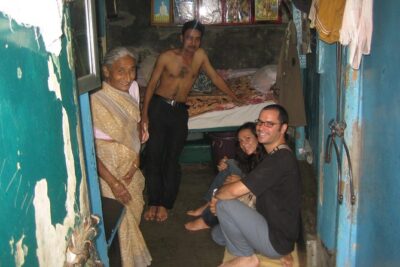
One of the most praised parts of this tour is how the guides handle the experience. Badal comes up often for being friendly and clear about what is happening in the community, including the kinds of projects being developed. Sukhmani is also highlighted for making the visit feel unforgettable, especially when it comes to the learning work tied to youth education and empowerment.
Another detail I find important: flexibility. One account notes that when someone in the group was unwell, the team arranged an extra guide so that the person could be supported during the visit. That is not showy. It is practical care, and it signals that the operation is paying attention to the people in the group, not just the schedule.
Respect, comfort, and the best way to behave on a residential walk
You are entering a place where people live their daily lives. That means you should behave like you would in someone else’s home territory: calm, quiet where needed, and responsive to your guide’s instructions.
Because the tour includes serious topics like finding water and education challenges, expect more weight than you would get on a standard city walk. If you are someone who needs light humor and quick photo stops, this may not be your best match. If you want to understand daily life in New Delhi with context, this is exactly the right kind of experience.
Comfort matters, too. Wear clothes that let you move easily. Bring a small bag for your essentials. If you think you might feel overwhelmed, give yourself permission to take a breath during the walk. Your guide is there to help you stay oriented, not to pressure you.
Who should book this Sanjay Colony slum tour, and who should skip it
This is a strong fit if you want:
- A guided, local-led walk with time for questions
- A neighborhood understanding that goes beyond surface sightseeing
- A short format, about 1 hour 45 minutes, that still covers education and daily challenges
It might be less ideal if you:
- Want a relaxed, entertainment-style outing
- Prefer only positive or purely scenic experiences
- Are sensitive to discussions about hardship like daily water needs and education barriers
Should you book this tour or choose something else?
If you are in New Delhi and you want one experience that gives you real context fast, I would book this. The price is low, the group size stays small, and you get structured stops like Learning by Locals and the s.d.m.c primary school viewing, plus a guided walk that touches religion, home life, water challenges, and work in clothing related industries.
However, be honest with yourself about your expectations. This is not a spectacle. It is a learning experience with a serious tone. If that sounds like what you want, this tour is a solid choice. If you want only cheerful sightseeing, you may prefer a lighter city focus for this day.
FAQ
How long is the Sanjay Colony slum tour with locals?
The tour lasts about 1 hour 45 minutes.
What is included in the $12 per person price?
The included items are local tea, a water bottle, and a local guide.
Where do I meet for the tour?
You start at Harkesh Nagar Okhla Metro Gate no. 2. The start point is listed near G7VG+62H, Harkesh Nagar, Okhla, New Delhi, Delhi 110020, India.
How large are the groups?
It is a small-group tour. There is a maximum of 6 people per booking, with up to 10 travelers maximum for the activity.
Is pickup offered, and will I be dropped back?
Pickup is offered. The end point is at Okhla Phase II, near Harkesh Nagar, G-block, with help in taking an Uber or taxi back if you have booked the private tour with a car.
Can I cancel for free?
Yes. You can cancel up to 24 hours in advance for a full refund. If you cancel less than 24 hours before the start time, the amount you paid will not be refunded.
Recently added around New Delhi
- Private Same day Jaipur Tour from New Delhi★ 5.0 · 82 reviews
- Private Agra Day Tour★ 5.0 · 14 reviews
- Taj Mahal,Agra fort and Baby Taj tour from Delhi by Express train★ 5.0 · 7 reviews
- From Delhi: Full Day TajMahal & Agra Fort with 5 Star Lunch★ 5.0 · 64 reviews
- Taj Mahal & Agra City Private Tour from Delhi by Car – Fast Entry★ 5.0 · 13 reviews
- All Inclusive: Same day Taj Mahal Tour From Delhi★ 5.0 · 111 reviews
- Same Day Tour of Taj Mahal with Our Real Historical Experience★ 5.0 · 42 reviews
- Same Day Agra/Taj Mahal Tour from Delhi : Private & all inclusive★ 5.0 · 38 reviews
Dharavi Slum Tours, compared.
Dharavi slum tour in Mumbai by Female tour guides of the slum
Read our review →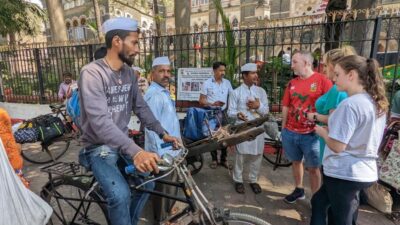



Dharavi Slum Slumdog Millionaire Tour with a Local
Read our review →
Dhobi Ghat Laundry and Dharavi Slum Tour with Local
Read our review →
Browse the lists this tour appears in