
Reviewed · DHARAVI SLUM TOURS
New Delhi Sanjay Colony slum Tour (Private Tour)
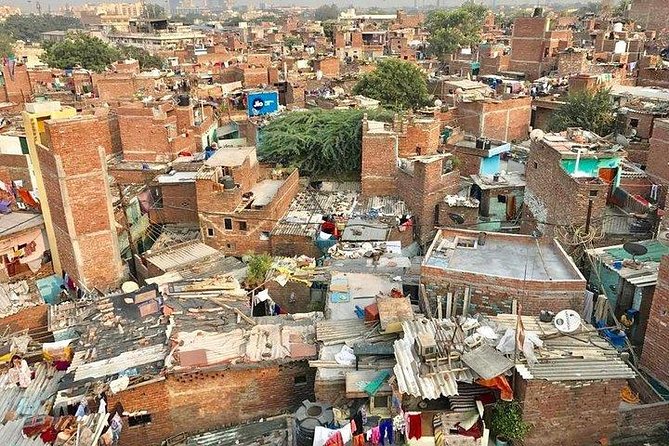
Sanjay Colony is Delhi you do not see from a bus window. This private tour takes you through a real community of about 60,000 people, where you learn about education, the role of faith, and the daily realities around water, electricity, and hygiene. You also get a look at how work in the neighborhood connects to the wider clothing industry.
I especially like the small group setup (up to 6), which makes it easier to ask questions and move at a human pace. I also like the built-in support for the community, since 50% of profits go back to Learning by Locals, the nonprofit tied to the work in the area.
The main thing to consider is tone and expectations. Photography is not allowed, and the conversation will include practical, sometimes tough topics about everyday challenges in the colony. If you only want postcard moments, this will feel more like a direct, educational encounter than a sightseeing loop.
In This Review
- Key highlights
- Why Sanjay Colony feels like a real slice of Delhi
- Price and what your $35 actually supports
- Meeting in Harkesh Nagar Okhla, and pacing for 1.5 hours
- Stop 1, s.d.m.c Primary School and how education shows up on the ground
- The temple stop, faith in everyday life, and why no photos matters
- Walking through livelihoods tied to clothing, and the realities behind daily routines
- Learning By Locals stop: schools, community work, and your tea break
- How to be a good visitor in someone’s neighborhood
- Should you book the Sanjay Colony slum private tour?
- FAQ
- How long is the New Delhi Sanjay Colony slum private tour?
- Is this tour private?
- Is photography allowed during the tour?
- What’s included in the price?
- Where is the meeting point?
- Can I cancel for a refund?
Key highlights
- Temple visit focused on the role of faith in daily life
- s.d.m.c Primary School stop to understand how learning works in the area
- Learning by Locals connection, with education in focus and time to interact
- Tea and water included, so you can slow down and chat during the walk
- No photography on the tour, which keeps things respectful and private
- Up to 6 people per private booking, great for questions and pacing
Why Sanjay Colony feels like a real slice of Delhi
If you want Delhi in the fuller sense, this tour is a solid choice. You are not just looking at buildings. You are walking through routines, community spaces, and the systems people rely on to get through the day. The tour is designed to help you understand how a Dilliwala community works, not just how it looks from the outside.
A big part of what makes this feel authentic is that the visit connects a few themes that usually stay separate when you travel. You start with education, then you move to faith at a temple, and you end up with the everyday infrastructure questions that affect everything. How do people get water? What about electricity? What does hygiene look like in practice? Those answers are not abstract. They come from how people live.
You will also hear about work, including how local livelihoods connect to broader industries like clothing. That matters because it frames the neighborhood as part of the city’s economy, not as an isolated side story.
And one more note: this is a respectful format. Photography is not allowed, and your guide sets the pace so the community stays the focus, not the camera roll.
A few more Dharavi Slum tours around New Delhi:
- Sanjay Colony Slum Tour
★ 5.0 · 498 reviews - New Delhi Slum Walking Tour
★ 5.0 · 360 reviews - New Delhi: Sanjay Colony Slum Tour with Locals
★ 5.0 · 46 reviews
Price and what your $35 actually supports
At $35 per person for about 1 hour 30 minutes, this is not an expensive add-on. The real question is value: what do you get for your time?
First, the tour includes a local guide plus local tea and a water bottle. That sounds small, but it changes the experience. It gives you a natural break, and it signals that this is not a quick drive-by stop. You can slow down, listen, and ask follow-ups while you are actually in the flow of the day.
Second, the tour is linked directly to Learning by Locals, and 50% of profits go back to the nonprofit in the slum. That gives your money a clearer path to the community work, instead of disappearing into overhead only.
Third, the booking is a private tour with a maximum of 6 people. For many groups, that keeps the experience personal. You do not have to shout over strangers, and you can tailor your questions to what you care about most, like school access, daily routines, or faith and community life.
You should also remember what $35 is really paying for. It is not paying for a museum ticket. It is paying for interpretation, time with locals, and access to places tied to everyday life.
Meeting in Harkesh Nagar Okhla, and pacing for 1.5 hours
You meet near public transportation, at Harkesh Nagar Okhla Metro Gate no. 2 (the exact pin shown with the meeting details). That helps a lot in Delhi, where getting across town can be its own adventure.
The tour runs about 1 hour 30 minutes, so it is long enough to feel like more than a drive-through. It is also short enough that you will not be stuck for half a day if you are tired from sightseeing.
Because it is private and limited to up to 6, the timing tends to feel controlled. You are not waiting for a large group to gather. You are moving with your guide through the colony areas connected to the stops.
Practical tip: plan your schedule so you are not sprinting right before or right after. Even when you move at a steady pace, you are walking through tight community spaces, and your attention will be on conversations and small details, not only on distance.
The big thing to watch is your mindset. This is a walk for learning and listening. The pace supports that.
Stop 1, s.d.m.c Primary School and how education shows up on the ground
The first stop is s.d.m.c Primary School. This is where the tour shifts from “what is the neighborhood like” into “how does daily education work here.”
You can expect your guide to help you understand the education system in Delhi and how it shows up in the slum context. The focus is practical: how people approach schooling, what resources mean for everyday learning, and how faith and community support can tie into education.
This stop also sets expectations for the rest of the tour. Once you understand education as a lived system, the later conversations about water, electricity, and hygiene start to make more sense. When basics are hard, schooling is not just about desks. It is about conditions that make attendance and learning possible.
A minor drawback to be aware of: since your experience is school-centered, you should be ready for the emotional weight of seeing kids and education under strain. This is not a theme park. It is a real community reality.
For me, the best part of school stops like this is that they turn “poverty statistics” into human-scale choices and barriers. If you care about education, this is a strong anchor for the whole tour.
A few more New Delhi days to compare
- Old & New Delhi City Tour – Half or Full Day Options Available
★ 5.0 · 4,811 reviews - Half Day Private Delhi City Tour
★ 5.0 · 4,474 reviews - Same Day Taj Mahal, Agra Fort & Baby Taj Tour from Delhi by Car
★ 5.0 · 4,304 reviews - Taj Mahal Day Tour from Delhi by Superfast Train – TOP RATED TOUR
★ 5.0 · 4,166 reviews
The temple stop, faith in everyday life, and why no photos matters
Next comes the temple visit. The tour is explicit about this: you learn about the role of faith in people’s lives. In practice, this means you are not treating religion as a tourist topic. You are learning how it functions as part of daily support, community bonding, and resilience.
You will likely hear how faith shapes what people do, how people gather, and how moral and social boundaries hold together. For travelers who are used to seeing temples as “architecture stops,” this reframes the visit into something more personal and social.
Then the guide connects faith and daily life to the basics that control comfort and health. Expect discussion of water, electricity, and hygiene and what those challenges look like day to day.
Now, the no photography rule is a major part of why the experience can stay respectful. I actually think this is a strength. It prevents the tour from turning into a scavenger hunt of faces and rooms. It also keeps privacy intact in homes and community spaces where people deserve normal dignity.
If you need photos for proof you were somewhere, plan to be okay without them. Your “souvenir” here is understanding, not images.
Walking through livelihoods tied to clothing, and the realities behind daily routines
One of the stated goals of the tour is to show you how people work in the clothing industry and how local livelihoods connect to the wider city economy. That angle matters because it gives context. You start to see people as workers with skills, not just residents in a difficult environment.
Your guide will also help you connect everyday routines to infrastructure constraints. If water access is inconsistent, it changes hygiene schedules. If electricity is unreliable, it affects lighting, cooling, charging, and how work gets done. When you hear those connections from locals, it stops being “sad stories” and becomes a clear, systems-level picture.
You will also have time to interact with locals during the tour. That is where the experience becomes more than a lecture. Conversation helps you understand what you are seeing, and it helps the guide correct your assumptions quickly.
A small consideration: because this is community life, you may feel a bit like an observer at first. That is normal. The best way to get past that is to ask simple, respectful questions and listen more than you talk.
Learning By Locals stop: schools, community work, and your tea break
The second stop is Learning By Locals. This is where the tour connects your visit to the nonprofit work tied to education and community support.
Expect the guide to explain the education system in the slum context and to visit a public school from the outside. That means you are not just hearing about education in theory. You see the setting, and you get a sense for what education looks like when it depends on community structures.
This is also the moment where your included refreshments fit naturally. You get a cup of local tea and a water bottle, and it becomes a pause built into the visit. Tea breaks are not just for comfort. They give you time to slow down and talk.
From the reviews and how the organization responds, guides here tend to take their roles seriously. People mention names like Sukh, Pradeep, and Badal for their warmth and passion during the walk. That matches what you want from a tour in a sensitive area, someone who guides with care, not someone who just counts highlights.
Practical advice: use the tea break to ask about what you genuinely want to understand. For example, you can ask how education works day to day, or what challenges matter most to families. Keep your questions grounded and respectful.
How to be a good visitor in someone’s neighborhood
A tour like this works because you follow the rules and the vibe. The tour’s stated approach is respectful, and it includes a strict no photography policy. That is not optional in spirit. It is part of protecting privacy and maintaining dignity.
When you are walking through homes and community areas, keep these habits:
- Stay close to your guide, so you do not accidentally block paths or drift into private spaces.
- Ask before you look closely. Curiosity is fine. Staring is not.
- Keep your tone gentle when discussing water, electricity, and hygiene. These are not “shock value” topics. They are daily realities.
- Accept that your guide’s role is to frame what you see, so you do not need to force conclusions.
If you are with family, this tour can still work because it is structured and time-limited. But it is best for people who can handle honest conversation. If you are traveling only for entertainment, you might find the topics heavy.
If you are a curious cultural traveler, you will likely appreciate how the tour connects education, faith, work, and daily infrastructure into one coherent picture.
Should you book the Sanjay Colony slum private tour?
Yes, I think you should book it if you want a Delhi experience with meaning and clear community ties. For $35, you get a short, guided walk with school stops, a temple visit, conversation about daily challenges, and built-in support through Learning by Locals. The small group size makes it easier to connect with your guide and ask questions without turning the community into a show.
You should skip it if your main goal is photos, quick sightseeing, or you strongly prefer “light and easy” tours. This is respectful, but it is not sugarcoated. You will learn about real challenges like water access and hygiene conditions.
My final take: if you go in with humility, you will get more than information. You will leave with a better sense of how Delhi functions beyond the tourist map, and you will see how education and community support can matter in very practical ways.
FAQ
How long is the New Delhi Sanjay Colony slum private tour?
It lasts about 1 hour 30 minutes.
Is this tour private?
Yes. It is a private tour, and only your group participates, with a maximum of 6 people per booking.
Is photography allowed during the tour?
No. Photography is not allowed on this tour.
What’s included in the price?
A local guide, local tea, and a water bottle are included.
Where is the meeting point?
You meet at Harkesh Nagar Okhla Metro, Gate no. 2 (shown with the coordinates near Harkesh Nagar, Okhla, New Delhi).
Can I cancel for a refund?
Free cancellation is available. You can cancel up to 24 hours in advance for a full refund, and changes within 24 hours of the start time are not accepted.
Recently added around New Delhi
- Private Same day Jaipur Tour from New Delhi★ 5.0 · 82 reviews
- Private Agra Day Tour★ 5.0 · 14 reviews
- Taj Mahal,Agra fort and Baby Taj tour from Delhi by Express train★ 5.0 · 7 reviews
- From Delhi: Full Day TajMahal & Agra Fort with 5 Star Lunch★ 5.0 · 64 reviews
- Taj Mahal & Agra City Private Tour from Delhi by Car – Fast Entry★ 5.0 · 13 reviews
- All Inclusive: Same day Taj Mahal Tour From Delhi★ 5.0 · 111 reviews
- Same Day Tour of Taj Mahal with Our Real Historical Experience★ 5.0 · 42 reviews
- Same Day Agra/Taj Mahal Tour from Delhi : Private & all inclusive★ 5.0 · 38 reviews
Dharavi Slum Tours, compared.
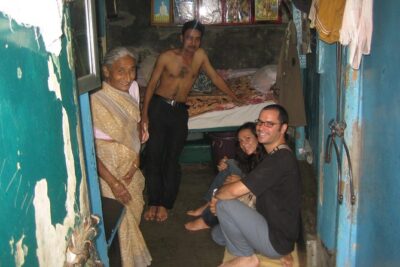
Dharavi slum tour in Mumbai by Female tour guides of the slum
Read our review →



Dharavi Slum Slumdog Millionaire Tour with a Local
Read our review →
Dhobi Ghat Laundry and Dharavi Slum Tour with Local
Read our review →
Browse the lists this tour appears in