
Reviewed · HISTORICAL TOURS
Kolkata’s English History – European Calcutta Tour
Colonial Kolkata walks start here. This European Calcutta tour ties British-era architecture to street-level history, with stops built around BBD Bagh and the surrounding grand buildings. I like the small group setup (up to 15), because you get room for questions and better pace on the walk.
You also get comfort in the middle of the story, with coffee or tea, plus water and snacks. In multiple accounts, the guide, Manjit, earns praise for making the details click through storytelling and architecture spotting. The main thing to consider is that this is a walking focused tour of the colonial English influence, so you’ll want good shoes and you may want another theme if you are craving deeper focus on other eras.
In This Review
- Key things to know before you go
- Getting oriented at BBD Bagh, the starting point for English Calcutta
- Great Eastern Hotel stops and photo angles you can actually use
- St. Andrew’s Church and St. John’s Church, faith and power in stone
- Government House, where administration shaped the city look
- How Manjit’s storytelling makes history stick
- Walking pace, timing, and what to wear in Kolkata
- Pickup, mobile tickets, and the simple logistics that matter
- Coffee, tea, snacks, and why that inclusion is a real perk
- Price and value: what you’re paying for
- Who should book this tour, and who might prefer something else
- Quick practical checklist for a smooth experience
- Should you book Kolkata’s English History European Calcutta Tour?
- FAQ
- How long is Kolkata’s English History European Calcutta Tour?
- Where does the tour start and end?
- Is pickup available?
- How many people are in the group?
- What’s included in the tour price?
- Is free cancellation available?
Key things to know before you go
- BBD Bagh sets the stage at Dalhousie Square, where the area grew around Job Charnock’s Calcutta
- Grand hotels and churches are treated like part of the same history lesson, not isolated photo stops
- Government House is a focal point for how administration shaped the look of the city
- Small group size, flexible start times help you fit the walk into your day
- Tea, water, and snacks keep you moving for a 3-hour loop
- A mobile ticket and pickup option make it easier to get to the start point
Getting oriented at BBD Bagh, the starting point for English Calcutta
The tour begins around Dalhousie Square area, now known as B. B. D. Bagh, which is a smart choice because it gives you a “map in your head” before you wander into the details. This zone was once the central business district, and it connects directly to the early engine-room of the city, including the role of Job Charnock’s Calcutta.
What I like about starting here is that it breaks the usual museum-style approach. You are not just looking at impressive buildings and guessing what they mean. Instead, you are learning why this part of town mattered, and that helps every next stop click into place.
Practical note for your day: the area is busy and photogenic, so it is helpful if you arrive a few minutes early and take a quick moment to orient yourself with the streets and landmarks around the square.
A few more Kolkata days to compare
- Kolkata Heritage Tram Tour
★ 4.0 · 395 reviews - Raj Heritage Walk
★ 5.0 · 93 reviews - British Raj Heritage walk in Kolkata with guide
★ 5.0 · 54 reviews
Great Eastern Hotel stops and photo angles you can actually use
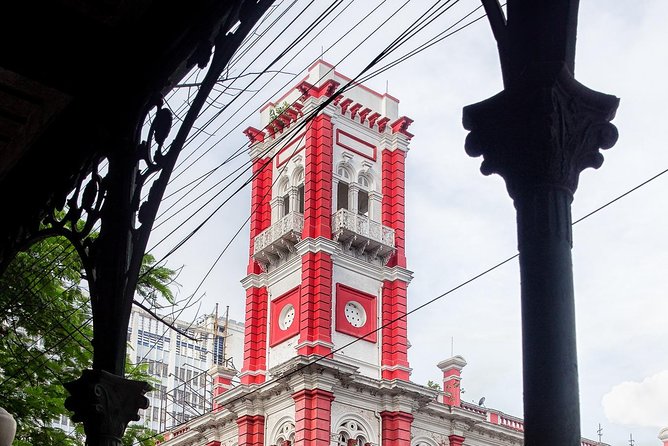
One of the big drawing cards is the stop around the Great Eastern Hotel, an anchor for the idea of European Calcutta. Even if you do not know the building’s full backstory, you will understand the theme quickly: this is where colonial-era commercial life and prestige had a physical address.
This stop is especially good for photos because you can frame the hotel and nearby colonial facades in ways that show more than one layer of the city at a time. You are not stuck with the “one building, one angle” problem.
The value here is interpretation. The guide’s strength is connecting architectural choices to purpose, so you end up noticing things you would miss on your own, like how the building’s style signals status and the way the surrounding blocks support that story.
St. Andrew’s Church and St. John’s Church, faith and power in stone
The churches on the route are not random side quests. They help explain how the British left more than offices and hotels. They left institutions, and in colonial cities, churches often played a public role far beyond worship.
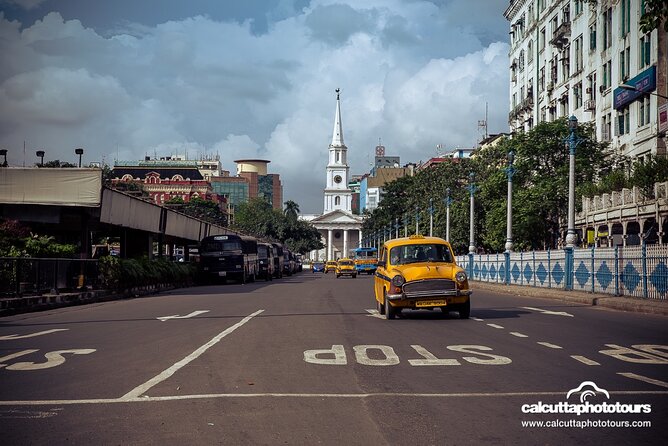
At St. Andrew’s Church, you get a chance to slow down and look at details that are easy to overlook when you are only rushing for pictures. At St. John’s Church, you also end your walk, which makes it feel like you finished with a strong visual cue for the overall “English Kolkata” theme.
One tip for your experience: spend a few extra seconds at each church facade and look for architectural cues that repeat across the city. When you spot that repetition, you start seeing the city’s colonial grammar, and the tour becomes less of a checklist and more of a pattern you can follow.
Government House, where administration shaped the city look
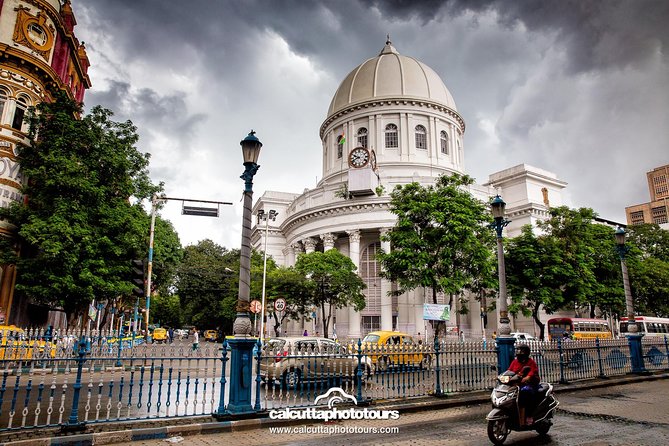
If you want the tour to feel more than scenic, Government House is the stop that does that. It connects the dots between governance and architecture, which is the heart of “English History” in practice. This is where you see how power wanted to be presented: through building placement, scale, and a formal presence that helped the city read as organized and controlled.
Even if you are not a hardcore architecture person, this part works because you are learning what to look for. You are not left with vague descriptions. You learn how the building’s role ties into the larger story of Kolkata’s growth and British influence.
Watch for how your guide points out relationships between buildings and street life. You start realizing that colonial architecture was not just decorative, it was part of the city’s system for doing business, managing people, and organizing daily movement.
Another way to spend a day in India:
- Cultural Confluence of Kolkata – Culture Kaleidoscope Tour
★ 5.0 · 701 reviews - Bengali Nights Kolkata Food Tour with 13+ Tastings
★ 5.0 · 325 reviews - Magic Hour Tour
★ 5.0 · 241 reviews - Alleyway Food Tour
★ 5.0 · 137 reviews
How Manjit’s storytelling makes history stick
A strong history guide turns facts into something you can replay later, and this tour is built around that kind of guiding. Manjit is highlighted for a style that mixes historical context with sharp observation of architecture and honest context about what you are looking at. There is also a human touch, including humor and personal anecdotes that help you remember dates and details without feeling like you are back in a classroom.
You will also notice the difference between a guide who recites information and one who gives you a mental framework. Here, the framework is simple: British influence shaped not just institutions, but the way the city looked and operated. Once you hold that idea, every stop becomes easier to place.
Small-group format helps this too. When you are not packed in, questions feel natural, and your guide can adjust explanations to what you seem curious about, especially if you keep an eye on architectural details or street history.
Walking pace, timing, and what to wear in Kolkata
This is an about 3-hour experience, and it is set up as a walk through central Kolkata sights. That means you should plan like it is a city stroll with stops, not a long marathon. With up to 15 people, you will likely move steadily between photo points and explanations.
Timing can matter in Kolkata. The tour offers flexible start times, so you can choose a slot that matches your energy. If you know you like cooler morning light for photos, pick that kind of start. If you prefer fewer rushed moments, choose the time that gives you the least stress from your other plans.
What to wear:
- Comfortable, supportive shoes for uneven sidewalks and quick turns at busy corners
- Light layers, since you will be outside for most of the loop
- A small water plan since water is provided, but you will still want to keep sipping
Pickup, mobile tickets, and the simple logistics that matter
If you are staying near the center, pickup can make this easier on your schedule. The meeting point is clearly anchored at The LaLiT Great Eastern Kolkata, near Dalhousie Square, and the walk ends at St. John’s Church in the B.B.D. Bagh area. That start and end pairing is handy because it keeps you from fighting the city at the beginning and again at the end.
You also get a mobile ticket, which is one less thing to manage once you arrive. Confirmation is received at booking time, so you can usually plan with confidence rather than waiting until the last minute.
Coffee, tea, snacks, and why that inclusion is a real perk
This tour includes coffee or tea, plus water and snacks. That might sound small, but in practice it changes how the walk feels. You can stay focused on the guide and the architecture instead of feeling your energy drop mid-route.
It also makes it easier if you are traveling with different tastes. Even if you prefer tea, you are covered. And if you are the kind of traveler who likes to keep going after tours, having a snack included means you are less likely to end your walk hungry and distracted.
Price and value: what you’re paying for
The price is $40.28 per person for an experience that runs about 3 hours, includes guided interpretation, and offers the extras that support the walk: pickup option, mobile ticket, and refreshment inclusion, plus an admission ticket included note.
Here’s how I think about value for this type of tour:
- You are paying for interpretation, not just access to buildings
- You are paying for a small group, which usually means a better quality explanation
- You are paying for convenience like the clear start point and the end point in the same central zone
- You are getting the comfort of tea and snacks, which helps you actually enjoy a walking timeline
If you are short on time in Kolkata and want an organized way to understand the European, English thread through the city, the price feels reasonable. If you prefer entirely self-paced touring with no guiding, then you might find better value by building your own route. But you would lose the story and the “what am I looking at” clarity this tour is built around.
Who should book this tour, and who might prefer something else
This fits well if you:
- Want a first introduction to Kolkata’s colonial-era English influence
- Enjoy walking tours where the guide helps you “read” buildings and streets
- Like photo opportunities with context, not just sightseeing stops
- Appreciate small group dynamics
It may be less ideal if you:
- Want a very long deep dive through many eras, since this one is focused on English and European Calcutta
- Have mobility limits that make a walking route challenging, even though it says most travelers can participate
Quick practical checklist for a smooth experience
Before you head out, keep these in mind so the tour feels easy:
- Wear shoes you can stand and walk in for about 3 hours
- Bring a light layer if the weather changes mid-day
- Have your camera or phone ready, but take a few seconds to listen before you shoot
- Plan your other activities so you are not rushing right after you finish at St. John’s Church
Also, consider using the tour as your “orientation layer.” After a good orientation walk, you will usually understand where you are in relation to the rest of the city much faster.
Should you book Kolkata’s English History European Calcutta Tour?
I think you should book this if you want Kolkata to make sense quickly through the lens of British-era architecture and the story of how the city formed around key central spaces like B.B.D. Bagh. The combination of small group size, a guide with a knack for storytelling, and practical inclusions like tea and snacks makes it a comfortable way to see important landmarks without turning the day into a slog.
I would skip it or pair it with another theme if you are mainly interested in eras beyond the colonial English influence, or if you prefer a completely self-directed route. But if you want your first pass through central Kolkata to feel guided, memorable, and photo-friendly, this tour is an easy “yes.”
FAQ
How long is Kolkata’s English History European Calcutta Tour?
It is approximately 3 hours.
Where does the tour start and end?
It starts at The LaLiT Great Eastern Kolkata, Dalhousie Square. It ends at St. John’s Church in the B.B.D. Bagh area.
Is pickup available?
Yes, pickup is offered.
How many people are in the group?
The tour has a maximum of 15 travelers.
What’s included in the tour price?
You get a mobile ticket, coffee or tea, water, snacks, and an admission ticket is included.
Is free cancellation available?
Yes. You can cancel for a full refund up to 24 hours before the experience starts. If you cancel less than 24 hours in advance, you will not get a refund.
Recently added around Kolkata
- Authentic Bengali Cooking Class in a Local Kolkata Home★ 5.0 · 11 reviews
- Calcutta walk★ 5.0 · 9 reviews
- Chasing The Sun Experience Kolkata’s Culture★ 5.0 · 7 reviews
- Calcutta Contrast Tour★ 5.0 · 46 reviews
- Day trip from Kolkata for a Slice of Europe★ 4.5 · 13 reviews
- One Day Guided Kolkata Local Sightseeing Trip by Cab★ 5.0 · 8 reviews
- Kolkata: Spiritual World of Kolkata Sightseeing Tour★ 4.8 · 7 reviews
- Kolkata Midtown Madness- A Street Food & Nightlife Tour★ 4.9 · 49 reviews
Historical Tours, compared.
The Great Indian Food Tour: Old Delhi Food and Heritage Walk
Read our review →
Old Delhi Food, Heritage&Cultural Walk with Rickshaw ride to Masterji Kee Haveli
Read our review →
Fontainhas Heritage Walk At Latin Quarters of Goa
Read our review →
Blue City Heritage Private Walking Tour With Pickup and Drop-Off
Read our review →
Private Heritage Walking Tour in Jaisalmer Fort and Old Bazaar
Read our review →Browse the lists this tour appears in