
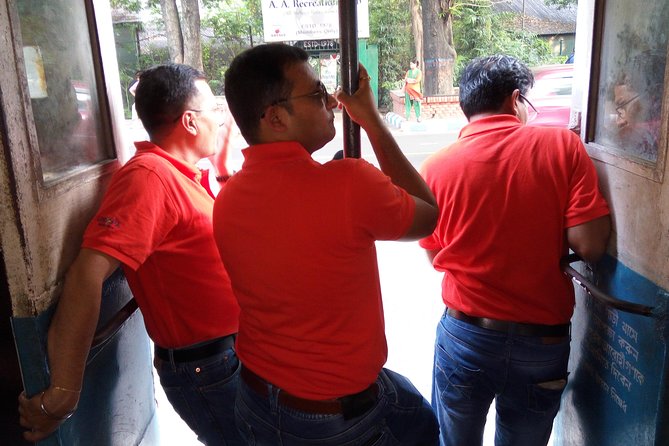
Reviewed · HISTORICAL TOURS
Kolkata Heritage Tram Tour
Kolkata’s tram is history on wheels. This Kolkata Heritage Tram Tour uses the city’s old tram network to connect you with landmarks you would otherwise miss, from the Maidan to religious sites like Mother Teresa’s Mother House. You ride, you stop, and you learn how everyday Kolkata life and faith communities shaped the city.
I especially like the heritage tram ride itself, complete with century-old cars and original mechanicals (a big win if you like transport history). I also appreciate the guided pacing and the built-in snacks and refreshments, which make the 2 to 3 hour morning outing feel effortless.
The main consideration is sound. On board, street noise can make the guide harder to hear, and headsets were being planned to improve that experience.
In This Review
- Key highlights to watch for
- Why the heritage tram tour feels different in Kolkata
- 2 to 3 hours of rail time, plus guided stops
- From the Maidan to Victoria Memorial, watch Kolkata from the window
- Birla Mandir and another Birla-family landmark on the route
- Church sites, the General Episcopal Cemetery, and how faith shaped street corners
- Schools, language institutions, and the Kolkata you can read
- Nonapukur Tram: the birthplace of Calcutta Tramways
- Mother House and St. Teresa, a quieter 30-minute moment
- Price and value: is $60 fair for a short rail tour?
- Who this tram tour suits best, and who might want another plan
- Should you book the Kolkata Heritage Tram Tour?
- FAQ
- How long is the Kolkata Heritage Tram Tour?
- What time does the tour start?
- Is pickup available?
- Is the tram ride ticket mobile?
- How many people are in a group?
- Is this tour suitable for most people?
- What is included besides the tram ride?
- Which landmarks are included in the stops?
- Is admission required at the stops?
- What happens if weather is bad or I need to cancel?
Key highlights to watch for
- India’s only tram network in action, and it’s not staged, it’s still running
- Early morning start at 7:00 am, when the city feels calmer and easier to watch
- Big mix of landmarks across Hindu, Christian, and Muslim sites
- Nonapukur Tram, called the birthplace of Calcutta Tramways
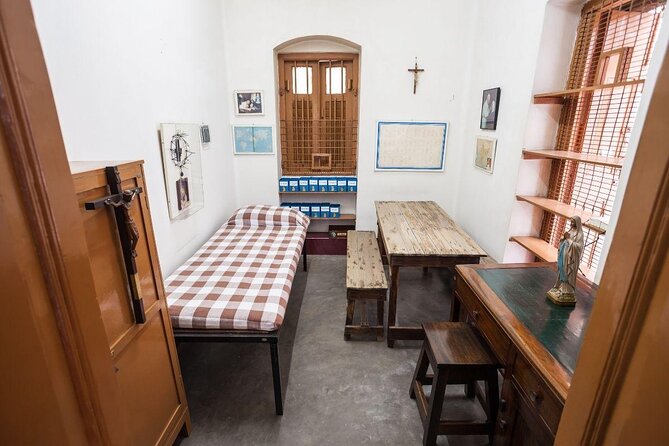
- Mother House stop, with a dedicated moment at Mother Teresa’s final resting place
- Small group size (up to 20), plus a mobile ticket and pickup option
Why the heritage tram tour feels different in Kolkata
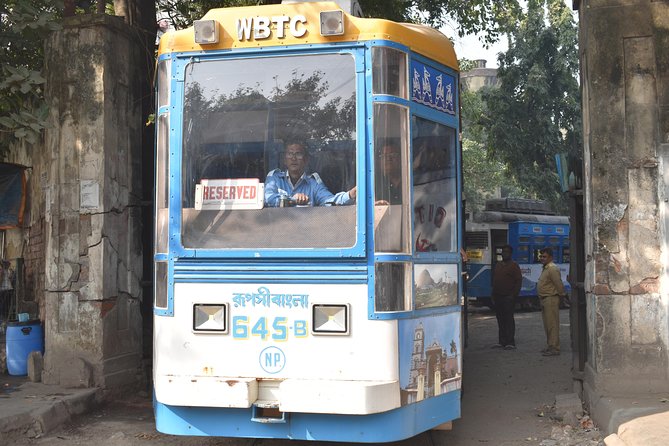
Kolkata has India’s only tram network, and this tour is a smart way to use it for more than just transport. Instead of hopping from place to place by car, you take the ride and let the route teach you how the city is stitched together.
I like that the tour does more than point at sights. You get a guided overview of local life, culture, and history, with stops that make the story feel physical. And because you’re moving by tram, it breaks up the hard work of walking in a busy city.
One more practical win: the stops are short enough that you can keep momentum, but long enough to look around, take photos, and reset. It’s a good fit when you want highlights without turning your day into a marathon.
A few more Kolkata days to compare
- Raj Heritage Walk
★ 5.0 · 93 reviews - British Raj Heritage walk in Kolkata with guide
★ 5.0 · 54 reviews - Kolkata: Guided Heritage Walking Tour
★ 4.6 · 23 reviews
2 to 3 hours of rail time, plus guided stops
This is a morning tour that runs about 2 to 3 hours, starting at 7:00 am. That early start matters. The city is just waking up, traffic is lighter, and you get better chances to observe street life as you pass by key sights.
You’ll have a mobile ticket, and pickup is offered. The meeting point is described as near public transportation, which is helpful if you want flexibility about how you get there. Groups are capped at 20 people, so you’re not stuck in a huge crowd.
Also, the tour notes that it works best with good weather. If conditions are poor and it gets rescheduled, you’ll be offered a different date or a full refund. That’s the kind of clarity you want for a short, fixed time window.
From the Maidan to Victoria Memorial, watch Kolkata from the window
A lot of the “getting oriented” happens while you’re riding. The route passes major central landmarks like the Maidan and the Victoria Memorial, which gives you a citywide sense of scale.
Then comes the switch. You don’t just stay on the tram until the end. You get down at selected stops to explore places tied to the city’s religious and civic identity, including the Tipu Sultan Masjid and Mother Teresa’s former home area.
The way this is paced is useful if you’re the kind of person who learns best when you can compare what you see from a moving vehicle versus what you notice up close. The tram ride sets the context, then the stops let you see details.
Birla Mandir and another Birla-family landmark on the route
One of the first stops is Birla Mandir. It’s a Hindu temple on Asutosh Chowdhury Avenue, built by the Birla family, and dedicated to Vishnu avatars including Rama and Krishna. Even if you are not a temple person, this stop gives you a clear window into how prominent families shaped the city’s public space.
The tour also includes another Birla-family landmark. The exact site isn’t specified in the details I have, but the point is clear: you’re seeing how architecture and patronage connect to Kolkata’s growth.
What to watch for at these stops is contrast. A tram window view shows mass and location. A temple stop lets you notice how a place signals tradition in the middle of a modern city.
Another way to spend a day in India:
- Cultural Confluence of Kolkata – Culture Kaleidoscope Tour
★ 5.0 · 701 reviews - Bengali Nights Kolkata Food Tour with 13+ Tastings
★ 5.0 · 325 reviews - Magic Hour Tour
★ 5.0 · 241 reviews - Alleyway Food Tour
★ 5.0 · 137 reviews
Church sites, the General Episcopal Cemetery, and how faith shaped street corners
Kolkata’s religious history is not one-story. It’s layers, and this tour leans into that.
You stop at Sacred Heart Church, described with a strong Portuguese legacy. There’s also mention of a violent incident connected to a street episode, though the details provided aren’t complete. Still, the vibe you can expect is a church that feels woven into local movement, not parked like a museum item.
Next is Tipu Sultan Masjid, a mosque named after Tipu Sultan. The tour frames it as a relic of architectural and cultural heritage. The practical payoff here is that you see a major Muslim landmark within the same morning context as Hindu and Christian sites.
Then you visit Lower Circular Road Cemetery, also called the General Episcopal Cemetery. It was established in 1840 and is still operating. The cemetery contains approximately 12,000 graves, including graves for people tied to earlier eras of Kolkata. This stop is a reminder that the city’s history lives in more than buildings.
Later, the itinerary includes several church-related landmarks:
- Thoburn Memorial Methodist Church, established in 1873
- The Lord Jesus Church (Catholic), located at Taltala, and noted as having been linked to other denominations in its earlier years
- An educational and faith-related institution connected to the Assembly of God Church School, established in January 1964 by Pastor Buntain, with 200 children enrolled for poor and homeless children
These aren’t just name checks. Together, they help you understand how Kolkata built community support networks, not only temples and monuments.
Schools, language institutions, and the Kolkata you can read
A big part of this tour’s value is that it doesn’t treat history like stone only. It includes institutions that keep shaping daily life.
You’ll visit Maulana Azad College, founded in 1926. It’s described as a government-administered liberal science and arts college in central Kolkata. Even if you only have a short time here, it’s the kind of stop that reframes the city from sightseeing to education and social infrastructure.
Another key stop is the West Bengal Urdu Academy. It’s presented as a heritage institution set up by the Left Front Government for the upliftment of Urdu language. That detail matters because it shows a cultural policy angle, not just religious landmarks.
The route also includes The Muslim Institute, with its foundation laid in July 1902 by students and youth. You’ll also pass or stop at Heritage Book Store, which adds a calmer, bookish pause to an otherwise packed morning.
If you like understanding how a city keeps its identity through language, learning, and community institutions, these stops are where the tour rewards you most.
Nonapukur Tram: the birthplace of Calcutta Tramways
This is the kind of stop transport lovers circle on the map. Nonapukur Tram is listed as the birthplace of Calcutta Tramways, and you have around 20 minutes here.
Why it works: it connects the romance of heritage with a concrete origin point. You’re not just watching old trams, you’re learning where the system began. That’s also why this tour feels different from a typical “look at buildings” checklist. You’re grounding the whole experience in how the network started.
With only about 20 minutes, you won’t get an all-day museum feeling. But you will get enough time to notice what’s special, then hop back into the flow of the morning.
Mother House and St. Teresa, a quieter 30-minute moment
The final major stop is Mother House, described as Mother Teresa’s House and the final resting place of St. Teresa. You get around 30 minutes, with admission listed as free.
This stop plays a different role than the others. Many stops are about architecture, community, or education. This one is about a person and a legacy, and it gives your morning a slower tempo.
Even with limited time, the guided context helps you connect why this place is so central to Kolkata’s global reputation without reducing it to a photo-only stop.
Price and value: is $60 fair for a short rail tour?
At $60 per person for 2 to 3 hours, this is not a budget add-on. But it also isn’t just a tram ticket. You’re paying for a guided route, multiple landmark stops, the built-in snacks and refreshments, and the experience of riding a working heritage tram system.
The small group size (up to 20 people) helps keep the tour from turning into a crowded line. Pickup and a mobile ticket also reduce friction on your morning schedule.
There’s also value in the mix of free admission stops mentioned for parts of the itinerary. Some locations are explicitly listed with free admission, including Sacred Heart Church, Tipu Sultan Masjid, Nonapukur Tram, and Mother House. When entrances are free, you’re really buying the guide, timing, and access to a well-chosen route.
One more scheduling angle: the tour is described as commonly booked around 7 days in advance. If you’re traveling in busy periods or on a tight calendar, planning ahead helps.
Who this tram tour suits best, and who might want another plan
This tour is ideal when you want an overview of Kolkata in a single morning. It’s also great if you like cities with layers, because you’ll see faith sites, cemeteries, schools, language-focused institutions, and the tram network itself in one loop.
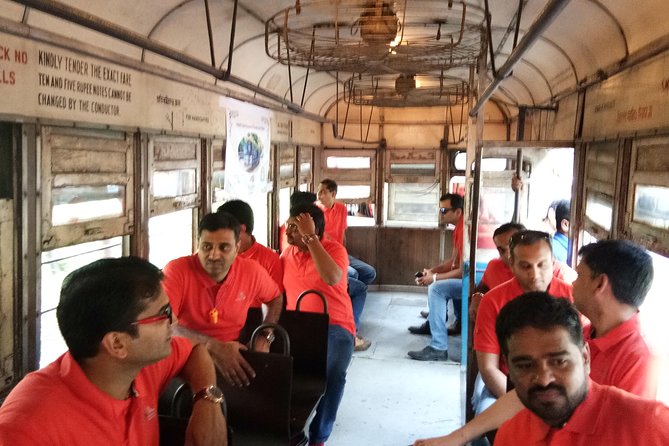
It’s especially good for people who enjoy old transit. One of the strongest impressions from the ride is that the trams have an authentic feel, with century-old cars and the sense of mechanical continuity.
The biggest mismatch is time depth. Some stops are around 20 minutes, and you don’t get the long, slow museum pace. If you want deep study in one place, you might need a second half-day elsewhere.
Sound can also be a factor. If you are sensitive to noise, be aware the guide may be hard to hear at times. Headsets were mentioned as an improvement that the operator was planning.
Should you book the Kolkata Heritage Tram Tour?
Book it if you want a structured way to get your bearings fast, with the bonus of riding Kolkata’s heritage tram system while learning why the city looks the way it does. The route covers a strong mix of landmarks, and the inclusion of snacks keeps the whole thing from feeling rushed or punishing.
Skip it or pair it with other plans if your priority is long, quiet time inside a single major site. This tour is made for movement and overview. It’s a strong morning choice, not a replacement for a full day of independent exploration.
If you are deciding between transit-only sightseeing and a guided approach, I’d choose guided. The tram ride is fun, but the stops are what give it meaning.
FAQ
How long is the Kolkata Heritage Tram Tour?
The tour lasts about 2 to 3 hours.
What time does the tour start?
The start time listed is 7:00 am.
Is pickup available?
Yes, pickup is offered.
Is the tram ride ticket mobile?
Yes. The tour includes a mobile ticket.
How many people are in a group?
The tour has a maximum of 20 travelers.
Is this tour suitable for most people?
The information says most travelers can participate.
What is included besides the tram ride?
Snacks and refreshments are provided, and the tour includes guided stops at key landmarks.
Which landmarks are included in the stops?
Stops listed include Birla Mandir, Lower Circular Road Cemetery (General Episcopal Cemetery), Sacred Heart Church, Tipu Sultan Masjid, Thoburn Memorial Methodist Church, the Lord Jesus Church, locations tied to the Assembly of God Church School, Maulana Azad College, West Bengal Urdu Academy, Heritage Book Store, Nonapukur Tram, and Mother House.
Is admission required at the stops?
Some stops are explicitly listed as admission ticket free, including Sacred Heart Church, Tipu Sultan Masjid, Nonapukur Tram, and Mother House.
What happens if weather is bad or I need to cancel?
The tour requires good weather. If it is canceled due to poor weather, you will be offered a different date or a full refund. Cancellation is free if you cancel up to 24 hours in advance for a full refund.
Recently added around Kolkata
- Kolkata: Spiritual World of Kolkata Sightseeing Tour★ 4.8 · 7 reviews
- Kolkata Midtown Madness- A Street Food & Nightlife Tour★ 4.9 · 49 reviews
- Bengali Nights Kolkata Food Tour with 13+ Tastings★ 4.8 · 70 reviews
- Kolkata: Full-Day Spirituality & Temples Tour★ 4.4 · 18 reviews
- Kolkata: Guided Heritage Walking Tour★ 4.6 · 23 reviews
- Kolkata: Private Tour of City of Joy with Licensed Guide★ 4.8 · 7 reviews
- Build Your Own: Customizable Private Tour of Kolkata★ 4.6 · 28 reviews
- Kolkata Morning Culture Tour- Chasing The Sun★ 4.8 · 27 reviews
Historical Tours, compared.
The Great Indian Food Tour: Old Delhi Food and Heritage Walk
Read our review →
Old Delhi Food, Heritage&Cultural Walk with Rickshaw ride to Masterji Kee Haveli
Read our review →
Fontainhas Heritage Walk At Latin Quarters of Goa
Read our review →
Blue City Heritage Private Walking Tour With Pickup and Drop-Off
Read our review →
Private Heritage Walking Tour in Jaisalmer Fort and Old Bazaar
Read our review →
Panaji: Heritage Walk through Goa’s Latin Quarter
Read our review →Browse the lists this tour appears in