
Reviewed · DHARAVI SLUM TOURS
Dharavi Slum Tour
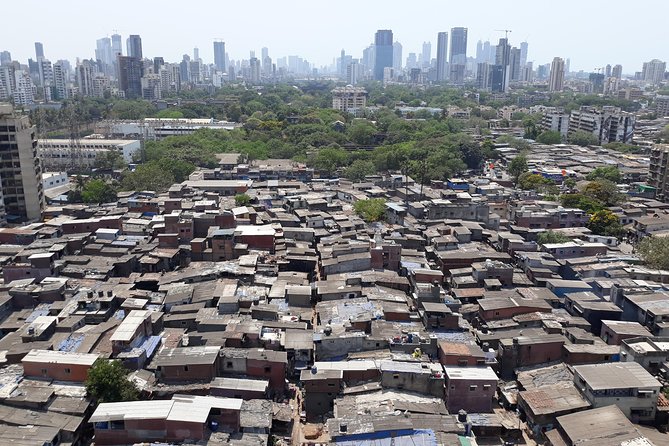
Dharavi is not what you expect. This Dharavi slum tour in Mumbai is a fast-paced, 2-hour group walk that focuses on how people build livelihoods in tight spaces, not on misery theater. I love that the tour is built to correct misconceptions, and I also love the small group size, with a maximum of 5 travelers, so the guide can actually manage the pace and questions.
One thing to consider: you should be ready for narrow alleys and close quarters, and you’ll want a respectful mindset around a sensitive topic like poverty. The tour also needs good weather, since it’s an outdoor walking experience.
In This Review
- Key highlights before you commit
- Why this Dharavi tour is built around work, not spectacle
- Entering the alley-world: what you should expect in 2 hours
- Meeting point at Café Coffee Day in Mahim, then a focused start
- What you’ll see: recycling, leather, pottery, and soap production
- Schools and churches: why community institutions belong on this tour
- Guide quality and the value of real local context
- Price and logistics: how $20 stacks up for a 2-hour guided walk
- Ethics and expectations: how to make this tour feel respectful
- Who should book this Dharavi slum tour
- Should you book this Dharavi slum tour?
- FAQ
- How long is the Dharavi Slum Tour?
- What is the price per person?
- Where is the meeting point?
- Is an English-speaking guide included?
- What is the maximum group size?
- Is private transportation included?
- Is the tour suitable for people with limited mobility?
- Does it run in any weather?
- What is the cancellation policy?
Key highlights before you commit
- Small groups (up to 5 travelers), which makes the walk feel personal instead of chaotic
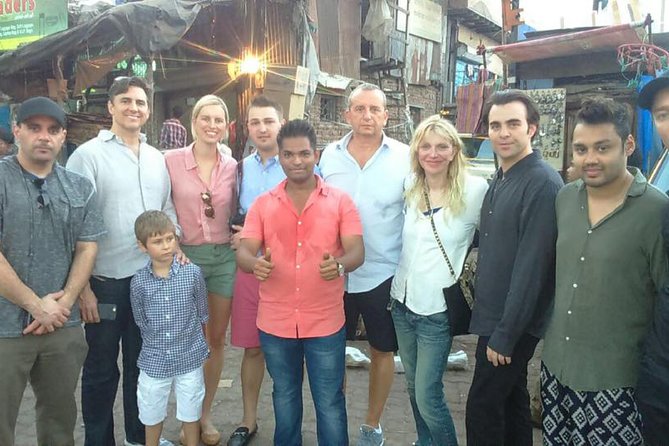
- An English-speaking local guide included, with local context rather than generic facts
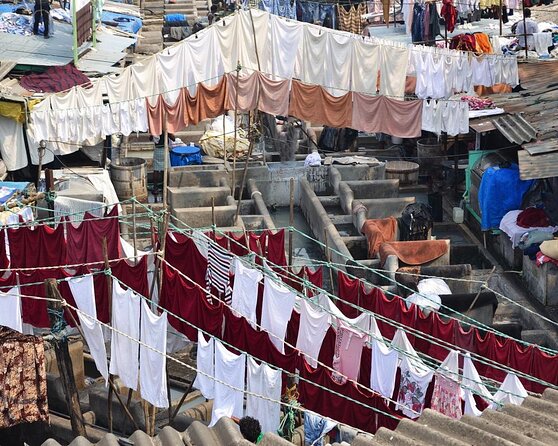
- Hands-on work examples, including plastic recycling, leather work, pottery, and soap production
- Community institutions you’ll see, like schools and churches
- A misconception-correcting approach, meant to avoid gawking and “poverty tourism”
Why this Dharavi tour is built around work, not spectacle
Dharavi is often reduced to one image from pop culture, especially after Slumdog Millionaire made the place widely known in 2008. But this kind of Dharavi slum tour pushes you to look at something more practical: what people produce, how neighborhoods function, and how daily life keeps moving even with limited resources.
The “largest slum in Asia” label is real as a scale marker, but it can also lead to the wrong expectation. This tour is designed to counter that, with a clear message: stop treating people as a sad photo op. Instead, you’re guided through narrow lanes where you’ll see different types of work that keep the area operating like a mini-city.
I like that the tone is forward-looking. Rather than lecturing from a distance, the guide frames Dharavi as a place of effort, skills, and community systems. That framing matters because it changes how you’ll walk, what you’ll notice, and how you’ll talk with the guide.
A few more Dharavi Slum tours around Mumbai:
- Dharavi slum tour in Mumbai by Female tour guides of the slum
★ 5.0 · 1,976 reviews - Mumbai: Dharavi Slum, DhobiGhat, and Dabbawallas Tour
★ 4.9 · 689 reviews - Dharavi Slum Tour
★ 5.0 · 625 reviews
Entering the alley-world: what you should expect in 2 hours
This experience is about 2 hours, so it’s not a slow, leisurely sightseeing loop. You’re moving with a guide through compact lanes, which is exactly why the tour asks for moderate physical fitness. If you’re comfortable walking on uneven ground and staying focused in tight spaces, you’ll be fine.
Your biggest “mental prep” is emotional rather than physical. Dharavi can trigger stereotypes fast, especially if you arrive with images from the internet or movies. The tour’s approach is meant to keep your attention on context and real activity, like how work and services are organized. It’s the difference between looking at a neighborhood and understanding how it works.
Also, plan for weather. Since the experience requires good weather, you’ll want a backup plan if rain, wind, or harsh conditions cancel or reschedule the tour. Bring that practical mindset with you, especially in Mumbai where conditions can change quickly.
Meeting point at Café Coffee Day in Mahim, then a focused start
You’ll start at Café Coffee Day, Unit No. 58, Ground Floor, Ram Mahal Building, Senapati Bapat Marg, T.P. Road, Mahim area (near Marinagar Colony and Navjivan Society), Mumbai 400016. The end point is back at the meeting spot, which helps you plan your route and reduces stress when you’re done.
I like meeting points like this because they’re easy to orient to. It also helps that the tour is described as near public transportation, meaning you’re not locked into pre-arranged taxi logistics just to get to the first minute.
The start matters more than you’d think. If you walk into Dharavi without a guide-led frame, it’s easy to slide into stare-and-snap behavior. A proper start helps you settle into the right tone quickly. In the experiences shared, people appreciated how the guides helped them get to the meeting point smoothly, including names like Mohamed and Shailinder, which signals that they take coordination seriously.
What you’ll see: recycling, leather, pottery, and soap production
The tour description highlights multiple local industries you may encounter during the walk, including plastic recycling, leather work, pottery, and soap production. Even if you do not know the technical process of each trade, seeing these work types close up changes the story of Dharavi.
Here’s what makes these stops meaningful from a visitor’s perspective.
- Plastic recycling reframes the neighborhood as part of a larger materials system. Instead of seeing waste, you see processing and reuse in action.
- Leather work points to skill-based labor, not just labor in general. It’s one more reminder that expertise exists here, even when formal conditions are limited.
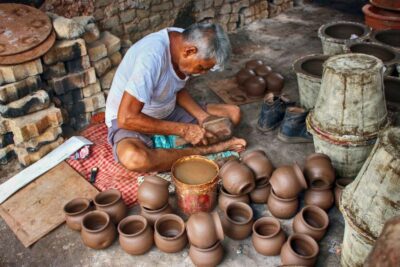
- Pottery brings in craft and production, which often reads as more than “survival work.” It shows how makers keep techniques alive.
- Soap production connects to everyday needs. When you see items made locally, the neighborhood stops looking like a mystery block and starts looking like a functioning supply chain.
You should treat these as “activity moments,” not museum exhibits. The guide helps connect what you’re seeing to the idea of community-driven problem solving. And because the tour is only around 2 hours, the walk usually aims for breadth, showing multiple trades rather than going deep into one.
Practical drawback to keep in mind: with so many different work areas covered, you may have less time for long Q and A in any single lane. If you love one specific topic, ask early while you still have time.
A few more Mumbai days to compare
- Mumbai: Full-Day Sightseeing Tour of Mumbai
★ 4.9 · 1,822 reviews - Private Mumbai Sightseeing Tour (Traveller’s Choice Award Winner)
★ 5.0 · 1,565 reviews - Elephanta Caves & Island Guided Private Tour
★ 5.0 · 1,327 reviews - Group Guided Walking Tour in Fort and Colaba
★ 5.0 · 1,073 reviews
Schools and churches: why community institutions belong on this tour
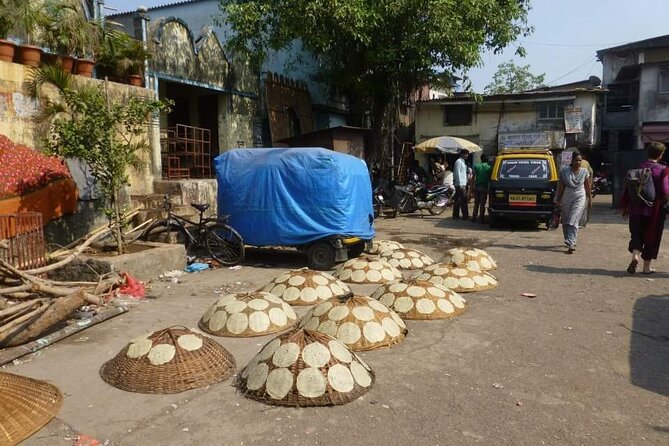
It’s tempting to think Dharavi tours should only focus on workshops. But the tour also points to schools and churches, and that inclusion is important.
When you see education and places of worship in the same space as work, you get a more balanced picture of how communities keep continuity. It’s not only about making money or producing goods. It’s also about identity, learning, and shared norms.
This matters for you because it shifts the “before and after” effect the tour can have on your thinking. If your mental model of Dharavi is only about poverty, you’ll leave the tour with new reference points. You’ll remember that community life includes institutions, routines, and people planning for the future.
You also get a more grounded idea of the neighborhood rhythm. Schools and churches are not random scenery. They represent regular structures that many residents rely on.
A sensitive note: you’re there as a visitor, so keep your questions respectful and follow the guide’s lead. This is especially true around places where people gather with privacy and meaning.
Guide quality and the value of real local context
This tour includes an English speaking local guide. That’s a big deal. With a local guide, you’re not just collecting general facts about slums or development. You’re hearing how Dharavi is explained from inside the day-to-day reality.
The review comments tied to planning and smooth arrival at the meeting point, with guide names like Mohamed and Shailinder, reinforce an important point: good guiding isn’t only about what you say during the walk. It’s also about how you manage the start, expectations, and flow so the experience stays respectful and organized.
I’d pay attention to the way the guide frames your role as a visitor. A tour built around correcting misconception tends to do better on tone, and tone affects whether your photos, questions, and reactions feel humane or intrusive.
Price and logistics: how $20 stacks up for a 2-hour guided walk
At $20 per person, this is priced as an accessible tour option for Mumbai. The cost looks even better when you factor in what’s included: an English-speaking local guide. You’re not paying extra for guided interpretation, which is usually where these experiences justify their price.
The duration is about 2 hours, so you’re buying a short, structured walking segment, not a full-day program. That can be a plus if you want to add Dharavi to a packed itinerary without burning the whole day.
Group discounts are mentioned, which is helpful if you’re traveling with friends or want company without paying for a private guide setup. But note the trade-off: with a max of 5 travelers, it’s still a small group, so the tour likely feels orderly rather than crowded.
One logistic point: private transportation is not included. If you’re not already near the Mahim area, plan your own getting-to-the-meeting-point route. The good news is that the meeting point is described as near public transportation, so it’s not designed as a remote pickup situation.
Ethics and expectations: how to make this tour feel respectful
Let’s talk about the elephant in the room, the ethical tension around “poverty tourism.” This tour explicitly pushes back on that idea, and you can help it succeed by choosing the right mindset.
Here are the rules of thumb that keep the experience from turning uncomfortable:
- Treat it as learning about a living neighborhood, not consuming hardship as entertainment.
- Ask the guide questions about work, community systems, and daily life, not only about suffering.
- Don’t push for reactions, and don’t assume you’re entitled to personal stories.
If you’re hoping for a theme-park version of Dharavi, this isn’t built for that. If you want context and perspective, it can be one of those Mumbai experiences that changes how you see cities and what “development” can mean in practice.
Who should book this Dharavi slum tour
This tour is a strong fit if you:
- Want a 2-hour guided experience that adds real context to your Mumbai trip
- Prefer a small group setting
- Like seeing how different trades and services function in everyday life
- Are traveling with curiosity, not judgment
It’s not ideal if you:
- Struggle with walking through tight spaces
- Want a long, slow, photo-heavy sightseeing session
- Get overwhelmed by sensitive social topics quickly
Also, check the weather forecast. Since the experience requires good weather, rain can disrupt your plan. The tour being outdoors is part of why it feels immediate, but it also means you should stay flexible.
Should you book this Dharavi slum tour?
I’d book it if you want a guided walk that aims to correct misconceptions and show real work and community life inside Dharavi. The price is reasonable, the tour is short, and the small group size plus English-speaking local guidance makes it easier to stay respectful and engaged.
Skip it only if you’re not comfortable with narrow alleys, or if you’re looking for a generic highlights tour. The value here comes from attitude and interpretation, not from turning someone else’s neighborhood into a spectacle.
If you decide to go, come prepared to listen, ask thoughtful questions, and let the guide set the tone from the start.
FAQ
How long is the Dharavi Slum Tour?
The tour lasts about 2 hours.
What is the price per person?
It costs $20.00 per person.
Where is the meeting point?
You meet at Café Coffee Day, Unit No. 58, Ground Floor, Ram Mahal Building, Senapati Bapat Marg, T.P. Road, Mahim area, Mumbai, Maharashtra 400016, India.
Is an English-speaking guide included?
Yes. An English-speaking local guide is included.
What is the maximum group size?
The maximum is 5 travelers.
Is private transportation included?
No, private transportation is not included.
Is the tour suitable for people with limited mobility?
The tour asks for travelers with a moderate physical fitness level.
Does it run in any weather?
The experience requires good weather.
What is the cancellation policy?
You can cancel for a full refund if you cancel up to 24 hours in advance of the experience start time. If you cancel less than 24 hours before, the amount paid is not refunded.
Recently added around Mumbai
- Dharavi Slumdog Millionaire Tour★ 5.0 · 6 reviews
- Inside Dharavi: A Unique Slum Tour with an Local Guide★ 5.0 · 25 reviews
- Private Dharavi Slum Tour with Guide and Transport★ 5.0 · 18 reviews
- Dharavi- Asia’s largest Slum tour with local guide from Dharavi★ 5.0 · 12 reviews
- Dabbawala, Dhobi Ghat & Dharavi slum Tour with Local Train Ride★ 5.0 · 102 reviews
- Small Group Tour of Dharavi Slum★ 5.0 · 77 reviews
- Mumbai Dharavi Slum, Dhobi Ghat & Dabbawala Lunchbox Tour★ 5.0 · 43 reviews
- Premium Mumbai Sightseeing Tour★ 5.0 · 16 reviews
Dharavi Slum Tours, compared.
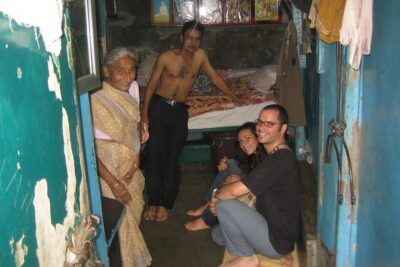
Dharavi slum tour in Mumbai by Female tour guides of the slum
Read our review →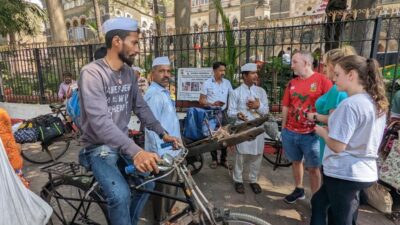
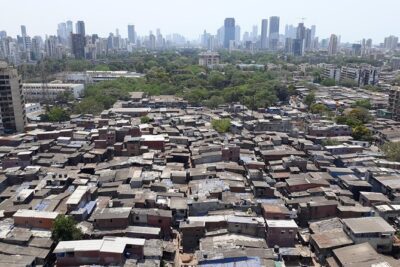

Dharavi Slum Slumdog Millionaire Tour with a Local
Read our review →
Dhobi Ghat Laundry and Dharavi Slum Tour with Local
Read our review →
Browse the lists this tour appears in