
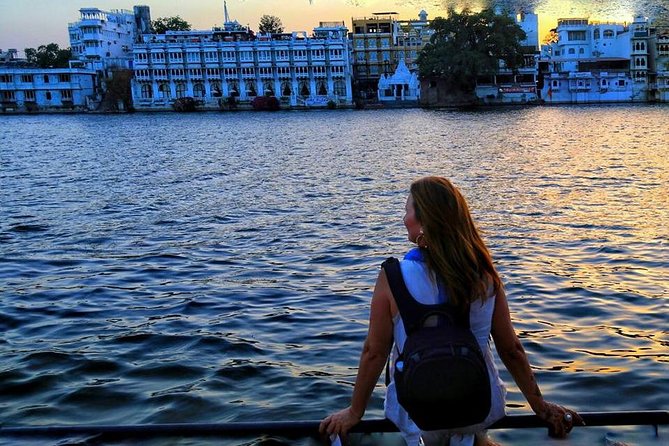
Reviewed · HERITAGE WALKS
Cultural & Heritage Tour Of Mumbai 01 Day
Mumbai can feel like sensory overload, fast. This one-day heritage tour is built to help you make sense of the city without rushing like a robot. You get a private setup for your group, an air-conditioned car, and a guide who connects the dots between Mumbai’s colonial architecture, maritime life, and everyday traditions.
I especially like the pacing choices baked into the route, like starting at major sights early and then working through the Fort and downtown areas in a clean line. I also like the practical touches that make a long day easier, especially unlimited mineral water and round-trip transport handled for you. The main drawback is simple: it is still a full day, so if you want a slow, lingering museum experience, you may feel a bit rushed with so many stops.
In This Review
- Key highlights to focus on
- Why this 8-hour Mumbai plan works
- Prince of Wales Museum: your first big cultural anchor
- Mumbai Fort area: the golden-period buildings you can actually spot
- Marine Drive: Mumbai’s famous seaside promenade
- Gateway of India: the landmark that anchors most routes
- Flora Fountain and Hutama Chowk: Mumbai’s street-junction theater
- Chhatrapati Shivaji Terminus: Gothic meets Indian influence
- Rajabai Clock Tower and the university gardens
- Mumbai High Court near Oval Ground: justice in stone
- Dhobi Ghat: the city’s living laundry scene
- Private AC transport, and why it changes your day
- Price and value: what $75 per person buys you
- Who this tour suits best
- Should you book this Mumbai day tour?
- FAQ
- What is the duration of the Mumbai one-day tour?
- How much does the tour cost?
- Is this a private tour?
- What transportation is included?
- Where does the tour start and how will I be picked up?
- Are tickets provided?
- Is mineral water included?
- Do I need a passport?
- What is the cancellation policy?
- Is the tour suitable for most travelers?
Key highlights to focus on
- Private tour for your party only, so you can ask questions and adjust the pace
- Round-trip air-conditioned transportation with a dedicated driver
- Prince of Wales Museum to Dhobi Ghat, a day that mixes grand landmarks and working-city sights
- Iconic Mumbai landmarks in one loop, from Marine Drive and Gateway of India to Chhatrapati Shivaji Terminus
- Unlimited mineral water, a small thing that matters when you are walking all day
- Strong service culture, including the kind of guide support that helps if you need help communicating
Why this 8-hour Mumbai plan works
Mumbai is not a “see it all by yourself in a day” kind of city. Streets are busy, distances add up, and some areas make more sense with context. This tour solves that by bundling the biggest heritage and culture stops into one 8-hour day with a private guide and car.
You will be picked up from the airport or your address by a TRAVELASTU representative. Then the day starts with Prince of Wales Museum, and you move through a string of landmarks that show Mumbai’s transformation over time. You are also free to move at your own pace and ask questions, which is the difference between collecting photos and actually understanding what you are looking at.
Two practical notes for your expectations:
- You are covering a lot of points on foot and by car, so comfortable shoes matter.
- Entrance fees are not spelled out in the info you shared, so if a site requires a ticket, it is worth confirming in advance what is included.
More Heritage Walks in Mumbai
- Best South Mumbai Heritage Walk
★ 5.0 · 122 reviews - Heritage Walk: Recommended by Gigi Hadid as a must-do in Mumbai
★ 5.0 · 122 reviews - Mumbai: South Mumbai Heritage Walking Guided Tour
★ 4.5 · 69 reviews
Prince of Wales Museum: your first big cultural anchor
Your sightseeing begins at the Prince of Wales Museum, one of the early anchors for understanding Mumbai’s identity as both a colonial-era hub and a city with deep local culture. Even if you only have time for a quick look, this stop sets the tone. You start with an institution tied to the broader heritage story before you jump into street-level landmarks.
What to watch for here is how museums help “translate” a city. Mumbai’s architecture and public spaces can look random if you do not know what era you are seeing. Starting with a museum-style introduction gives you better context as the rest of the route moves into Fort-era buildings and 19th-century civic architecture.
Time tip: if you want photos with less glare and fewer crowds, early is usually your friend in Mumbai. This tour’s structure supports that kind of strategy.
Mumbai Fort area: the golden-period buildings you can actually spot
Next comes Mumbai Fort, the north of Colaba area named after an old British fort that once stood there. This is where Mumbai’s “golden period” buildings come into view. You will notice how the architecture shifts from pure street grid to more monumental building styles, including facades designed to announce power and permanence.
This is also where the guide’s commentary becomes more than background noise. As you move through the area, you will get a sense of how power, trade, and the sea shaped what got built and why. It is the kind of explanation that helps you look at a building and say, okay, I know what I am seeing.
Potential drawback: this area is central, and roads can be busy. You may want to keep your phone and wallet secure and be ready for stop-and-go traffic while still enjoying the scenery.
Marine Drive: Mumbai’s famous seaside promenade
Then you hit Marine Drive, built in the 1920s and 30s on land reclaimed from the sea. That detail alone is a big clue about Mumbai’s ambition, the way the city kept expanding its “usable” coastline.
Marine Drive is often described as Mumbai’s signature thoroughfare, and it deserves the attention. The promenade gives you a visual sweep that connects city life to the waterfront. Even when it is crowded, the view works because the road itself was designed to make the shoreline feel like part of the city’s daily rhythm.
What I like about including this stop in a one-day route is that it is a reset. After museums and architectural streets, you get open views and a sense of scale.
Practical tip: bring a light layer if you are sensitive to evening breezes near the water. The tour is long, and weather can change quickly.
More History Tours in Mumbai
- South Mumbai: Cultural Heritage Walking Tour
★ 4.8 · 45 reviews - Kanheri Caves Heritage Tour
★ 5.0 · 45 reviews - Bombay Fort Heritage Walking Tour
★ 5.0 · 27 reviews - Cruise to Mumbai Historical Tour
★ 5.0 · 16 reviews
Gateway of India: the landmark that anchors most routes
Your downtown landmark moment arrives at the Gateway of India. It is Mumbai’s principal landmark, a huge archway at Apollo Bunder. The meaning behind it is part of why it is so recognizable: it commemorates the visit of King George V and Queen Mary in 1911.
This stop works in two ways. First, it gives you a major visual marker for understanding where people start sightseeing. Second, it is a natural place to regroup, take photos, and let your guide point out how the city’s geography and shoreline relate to the stories.
If you care about atmosphere, be prepared for a lively scene around the monument. That energy is part of the experience.
Flora Fountain and Hutama Chowk: Mumbai’s street-junction theater
From the grand archway, you shift into city-center drama at Flora Fountain / Hutama Chowk. This fountain was erected in 1869 to honor British Governor Sir Bartle Frere. It is known as the Piccadilly Circus of Mumbai, with mythological figures decorating the four corners.
The fun part here is the “junction” concept. It is not just a pretty fountain. It is a landmark that marks where multiple streets meet, so it becomes a place for orientation. When you look up at the mythological figures and notice the structure’s dull stone look, you see the colonial-era design language mixed into a working modern city.
If you enjoy street photography, this is one of the best spots to slow down for a few minutes and watch pedestrian patterns.
Chhatrapati Shivaji Terminus: Gothic meets Indian influence
Next up is Victoria Terminus / Western Railway Station, now known for its landmark identity as Chatrapati Shivaji Terminus. This is one of Mumbai’s most prominent buildings and is described as architecturally among the finest stations in the world. It combines Gothic and Indian influences, a design choice that makes the building feel both European in form and unmistakably local in detail.
Key points you should know before you arrive:
- It was completed in 1885, with the work beginning in 1878.
- The building is designed by F. W. Stevens.
- Its frontage is listed as over 15,00 feet.
Even if you do not go inside, you get the full impact from the outside. This stop is one of the biggest “wow” factors on the route because the station is not just transport. It is heritage, built for scale and permanence.
Practical note: train stations can be busy and full of movement. Keep an eye on your surroundings while still taking in the architecture.
Rajabai Clock Tower and the university gardens
Right around this civic-heritage zone is the Rajabai Clock tower, rising above the gardens of Bombay University. The tower is listed at 280 ft and described as having five elaborately decorated storeys.
This is a great stop if you like vertical details. Clock towers are designed to be legible from distance, and Rajabai is no exception. You can use it as a visual “time anchor” while your brain connects the day’s stops from museum to rail station to government buildings.
What to do: when you get your bearings, look for how the tower’s decoration changes as you move your gaze upward. It is a subtle kind of architecture reading, but it makes the place feel more alive.
Mumbai High Court near Oval Ground: justice in stone
Then you move to Mumbai High court, described as early English Gothic style, next to Oval Ground. It’s worth your attention for architecture alone, with statues representing Justice and Mercy surmounting the central structure.
This stop works well because it is different from the station and the museum. It is civic power made visible. You will likely get a clearer sense of how Mumbai’s public buildings were designed not only to function, but to project authority and values.
If you enjoy symbolism, take a moment to look for how those statues relate to the building’s central focus. Small details like that help you stop seeing the city as random and start seeing it as designed.
Dhobi Ghat: the city’s living laundry scene
One of the most unique stops is Dhobi Ghat. This is a traditional laundry area where dhobi, laundrymen, collect your dirty linen, wash it, and return it neatly pressed to your doorstep. It is done for a small cost, and the laundry areas are called ghats, meaning there are row after row of concrete wash pens.
The place can feel unusual if you have never seen communal laundry operations like this. The “work” is the attraction. Instead of monuments, you get a window into daily life and labor that has long been part of the city.
Respect matters here. This is not a staged set, so keep your distance, avoid blocking people working, and take photos only if you can do it without interrupting. If you are unsure, a quick question to your guide is always the safest move.
Also, this stop may depend on timing and local activity. The tour info says transfers happen “as per timings,” so it helps to wear comfortable clothes you do not mind getting dust on, just in case you end up close to active areas.
Private AC transport, and why it changes your day
The tour includes private round-trip transportation with air-conditioning. That matters more in Mumbai than it might in some other cities, because you are spending a long time moving between neighborhoods.
A private car also gives you flexibility. Even if the route is planned, your guide can adapt the order slightly based on what you want to see more of, and you can ask questions without worrying about keeping up with a large group.
If you have ever tried to do Mumbai in one day with multiple taxis, you know how quickly fatigue piles up. Here, the driver and car setup keeps the day smoother.
And the small comfort win, unlimited mineral water, means you stay hydrated without stopping for snacks every hour. It is a simple inclusion, but it makes the walk-and-drive rhythm easier.
Price and value: what $75 per person buys you
At $75.00 per person for a roughly 8-hour private cultural and heritage day tour, the value is strongest in the combination:
- private guide commentary across multiple major stops
- private round-trip AC transport
- unlimited mineral water
- a route that covers famous architecture plus Dhobi Ghat
What I would still verify before you go:
- Whether entrance fees for Prince of Wales Museum or other sites are included, since the info you shared does not list it clearly.
- How long each stop typically lasts, so you can decide if this pace fits your style.
One more value angle: the tour is designed so only your group participates. That tends to feel more “personal” than big-group hop-on hop-off touring, especially at places like the railway terminus and the high court area where you may want your guide to point out details.
Who this tour suits best
This fits you best if you:
- want a structured way to see top Mumbai heritage stops in one day
- prefer a guide to explain what you are looking at, instead of guessing
- value comfort, especially with an AC car and bottled water included
- are traveling with family or friends and want your own pace
It can also work well for solo travelers who want a sense of safety and attention. In feedback, solo travelers have described the service as attentive and supportive, and that kind of mindset is exactly what you want when you are navigating a huge city.
If you are the type who loves long museum hours and quiet corners, you might find the full-day schedule a bit packed. Still, you can adjust the amount of time you spend at each stop, since the tour lets your group move at its own pace.
Should you book this Mumbai day tour?
I think you should book it if your goal is simple: get a smart introduction to Mumbai heritage without the guesswork. The route is practical, hitting major “anchor” landmarks like Prince of Wales Museum, Gateway of India, and Chhatrapati Shivaji Terminus, then balancing it with everyday culture at Dhobi Ghat.
If you hate busy schedules, or you want a slow, deep museum day, this may feel too full. But for most people who want value and clarity in a single day, it’s an easy yes, especially with the private car and unlimited water removing everyday friction.
Go in with comfortable shoes, a camera ready, and a curious brain. Mumbai rewards curiosity, and this tour helps you ask the right questions at the right places.
FAQ
What is the duration of the Mumbai one-day tour?
It runs for about 8 hours.
How much does the tour cost?
The price is $75.00 per person.
Is this a private tour?
Yes. It is private, and only your group participates.
What transportation is included?
The tour includes private round-trip transportation with air-conditioning.
Where does the tour start and how will I be picked up?
You start in Mumbai, and you will be met on arrival at the airport or from your address by a TRAVELASTU representative.
Are tickets provided?
You receive a mobile ticket.
Is mineral water included?
Yes, unlimited mineral water is included.
Do I need a passport?
Yes, a current valid passport is required on the day of travel.
What is the cancellation policy?
You can cancel for free up to 24 hours in advance for a full refund.
Is the tour suitable for most travelers?
Most travelers can participate.
More Historical Tours in Mumbai
- Fontainhas Heritage Walk by Make It Happen
★ 5.0 · 2,834 reviews - The Great Indian Food Tour: Old Delhi Food and Heritage Walk
★ 5.0 · 1,698 reviews - Old Goa Heritage Walk by Make It Happen
★ 5.0 · 797 reviews - Old Delhi Food, Heritage&Cultural Walk with Rickshaw ride to Masterji Kee Haveli
★ 5.0 · 742 reviews
Recently added around Mumbai
- Dharavi Slumdog Millionaire Tour★ 5.0 · 6 reviews
- Dharavi Slum Tour★ 5.0 · 15 reviews
- Inside Dharavi: A Unique Slum Tour with an Local Guide★ 5.0 · 25 reviews
- Dharavi- Asia’s largest Slum tour with local guide from Dharavi★ 5.0 · 12 reviews
- Private Dharavi Slum Tour with Guide and Transport★ 5.0 · 18 reviews
- Small Group Tour of Dharavi Slum★ 5.0 · 77 reviews
- Mumbai Dharavi Slum, Dhobi Ghat & Dabbawala Lunchbox Tour★ 5.0 · 43 reviews
- Dabbawala, Dhobi Ghat & Dharavi slum Tour with Local Train Ride★ 5.0 · 102 reviews
Heritage Walks, compared.
The Great Indian Food Tour: Old Delhi Food and Heritage Walk
Read our review →
Fontainhas Heritage Walk At Latin Quarters of Goa
Read our review →
Private Heritage Walking Tour in Jaisalmer Fort and Old Bazaar
Read our review →
Panaji: Heritage Walk through Goa’s Latin Quarter
Read our review →

Browse the lists this tour appears in