
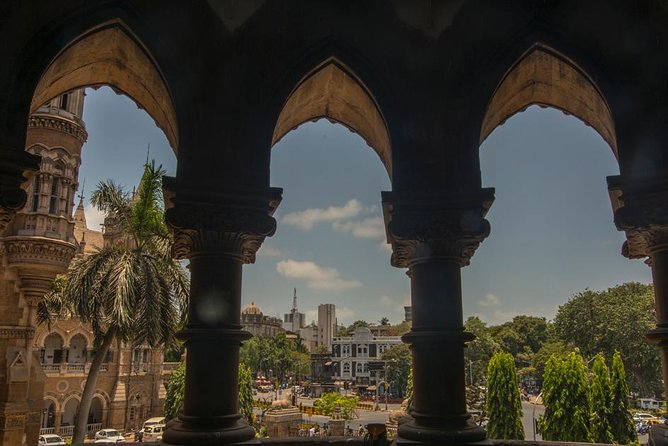
Reviewed · HERITAGE WALKS
Heritage Walk: Recommended by Gigi Hadid as a must-do in Mumbai
Mumbai history hits you fast on foot. This South Mumbai heritage walk strings together major sights from the Asiatic Society area to Kala Ghoda, with a guide who knows the stories behind the stone. I love the hotel pick-up and drop-off convenience, and I also look forward to the quick break at Yazdani Restaurant & Bakery. One thing to plan for, though, is that this is mainly an outdoor walking circuit, so if you are expecting to go inside every stop, you should confirm what is possible with your guide.
My favorite part is how the route ties neighborhoods to eras, not just photo stops. You start in Fort-era Mumbai, you get a taste of multiple communities and building styles, and you end near the old docks with final stories that feel a little strange in a good way. In the reviews, guides like Meherbeen and Dereck are praised for adjusting the tour to interests, and that flexibility matters when a city moves slower than your feet.
The whole thing runs about 3 to 4 hours, it is private for your group, and it is priced at $44.39 per person. It is a solid value because the guide, fees, and that included snack are bundled in. Still, it does require moderate walking fitness, and the company notes they run it only when weather is workable.
In This Review
- Key things to know before you go
- Why South Mumbai works for a heritage walk
- Price and what you get for $44.39
- Starting at Town Hall and Asiatic Society: the Fort-era mood
- Gas lights, Jinnah anecdotes, and the Asiatic Society
- Horniman Circle and St. Thomas Cathedral area
- The Yazdani snack break: Parsi bakery energy
- Flora Fountain and the expansion beyond the Fort lines
- Bombay Stock Exchange: trade history from banyan tree beginnings
- Keneseth Eliyahoo Synagogue and Sassoon family stories
- Kala Ghoda Art Precinct and the Watson Hotel link
- Lion Gate and the old docks closer
- Pace, comfort, and weather tips that actually help
- Who should book this and who should skip it
- Should you book the Heritage Walk recommended for Mumbai?
- FAQ
- FAQ
- How long is the Heritage Walk?
- Is this tour private?
- Is hotel pick-up and drop-off included?
- What is included in the price?
- Where does the tour start and end?
- Do I need to buy admission tickets for the stops?
- Are children allowed?
- Does the tour run on the day of the Mumbai Marathon?
Key things to know before you go
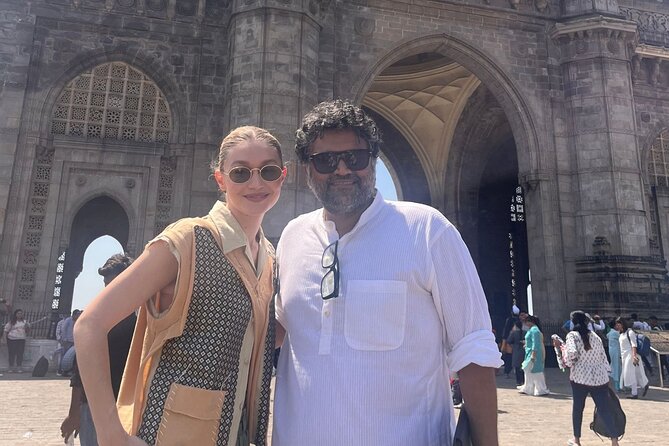
- Private, not crowded: it is just your group, so questions and pacing are easier than on big bus-style tours.
- Built for getting bearings: the route is designed to orient you through South Mumbai on foot.
- Snack is part of the experience: you stop at Yazdani Restaurant & Bakery for a quick Parsi bite.
- Major landmarks, mostly outside: you see big names in architecture and heritage without committing to lots of indoor time.
- Stories connect people and power: you hear how institutions and communities shaped Mumbai, from gas lights to trade.
- Your guide can steer the day: guides like Meherbeen and Dereck are noted for adapting to what interests you.
Why South Mumbai works for a heritage walk

South Mumbai is where the city tells its early story, in a way you can actually walk. You go from Fort-era structures and institutions into areas tied to art, minority communities, and the growth of commerce.
This tour makes that geography feel logical. The route does not just show buildings. It explains why those buildings mattered, who paid for them, and what changed as Mumbai expanded.
Also, the walking time is long enough to feel like you did something real, but short enough that you are not cooked by the heat. If you want a first-time introduction without committing to a full day, this is a good match.
More Heritage Walks in Mumbai
- Best South Mumbai Heritage Walk
★ 5.0 · 122 reviews - Mumbai: South Mumbai Heritage Walking Guided Tour
★ 4.5 · 69 reviews - South Mumbai: Cultural Heritage Walking Tour
★ 4.8 · 45 reviews
Price and what you get for $44.39
At $44.39 per person, this does not feel like a splurge, especially because key items are bundled. You get a professional guide, all fees and taxes, and a quick bite at Yazdani.
The added value is the “guided thinking” part. A local guide helps you read what you are looking at, instead of guessing. You will also have hotel pick-up and drop-off included in most cases, which is one of those costs that quietly eats your budget in cities like Mumbai.
One note to keep your budget honest: the information says there may be additional transport cost if you need pick-up from Mumbai Suburban hotels. If you are staying further out, ask upfront to avoid surprises.
Starting at Town Hall and Asiatic Society: the Fort-era mood
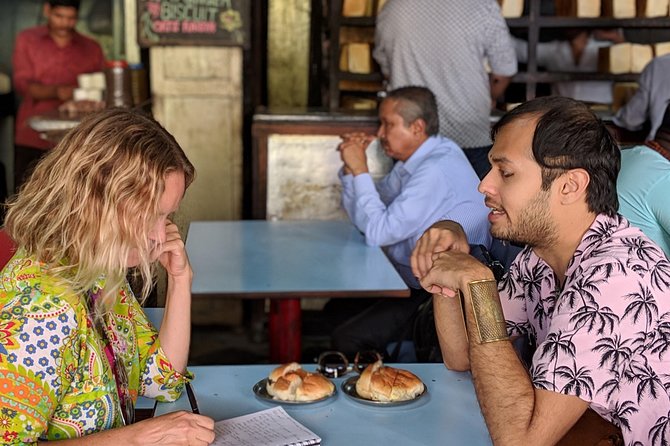
Your morning (or late morning) starts at Town Hall, the Asiatic Society, Mumbai, near the Fort area. You begin outside the Bombay Castle area, behind the Asiatic Society, and the guide sets up the story of Bombay Fort before you even hit the main sights.
The tone here is old-city serious, but not stuffy. You get a sense of Mumbai as a place where institutions, trade, and colonial-era planning all overlapped.
This first stretch matters because it sets expectations for what comes next. If you understand the Fort story, the rest of the route clicks: the fountain, the stock exchange, the art precinct, and the community landmarks all become part of one larger growth arc.
Gas lights, Jinnah anecdotes, and the Asiatic Society
The Asiatic Society stop is where the tour leans into the human side of history. You learn about stories from the mid-1800s, and you hear how gas lights were first exhibited there.
That is the kind of detail that makes the place feel real. A building becomes a timeline. A timeline becomes a way to look at the city without getting lost.
There is also a lighter anecdote included in the guide’s explanations, including a funny tale about Jinnah, father of Pakistan. Even if you are not a politics person, these small stories help you stay engaged through the early, more academic parts of the walk.
You will not spend ages here, but the stop is long enough to absorb the big idea: Mumbai’s institutions were not only about power, they were also about experiments, public learning, and new technologies.
More History Tours in Mumbai
- Kanheri Caves Heritage Tour
★ 5.0 · 45 reviews - Cruise to Mumbai Historical Tour
★ 5.0 · 16 reviews
Horniman Circle and St. Thomas Cathedral area
After the Asiatic Society zone, the walk moves through Horniman Circle Garden and heads toward the St. Thomas Cathedral precinct. This part of the route is useful if you like architecture, urban design, and the “how did this city plan its center” question.
Horniman Circle is a classic South Mumbai layout. You get open space, a sense of symmetry, and an easy way to understand how the streets were shaped around civic spaces.
From a value perspective, this stop is smart because it is not just a quick exterior glance. It helps you connect the earlier Fort-era context with the later expansion. Even if you do not get every detail, the layout makes the rest of the day feel smoother.
The Yazdani snack break: Parsi bakery energy
Then comes the best reset button. You stop at Yazdani Restaurant & Bakery for a quick bite.
This is an included food break, which is a quiet win on tours. You are not burning time searching for a snack, and you are not deciding on the fly in a neighborhood where options can be pricey or chaotic.
Also, the Parsi bakery angle matters because it is food tied to community history in Mumbai. You are not just eating. You are tasting a thread of the city.
The stop is timed, and it is meant to keep you comfortable for the rest of the walk. Plan to bring a water bottle too, since you are still outdoors after the snack.
Flora Fountain and the expansion beyond the Fort lines
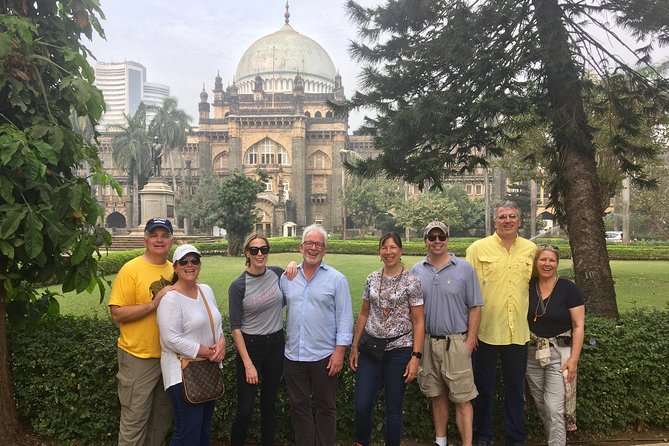
Next up is Flora Fountain, a landmark that marks the expansion of Bombay beyond the Fort limits. It is one of those locations where your guide’s job becomes translation. From the sidewalk, you see the structure, but the meaning comes from the story.
You will also hear a tale related to the division of the state of Maharashtra, with Hutatma Smarak in view. That is a reminder that heritage tours are not only about ancient times. They also track political and administrative changes that shaped modern life.
Why this stop works: the tour is building a pattern. First, institutions in the 1800s. Then, civic design and religion in the center. Then, a monument that signals the city’s physical and political expansion.
If you care about how a city grows, this is the “connect the dots” moment.
Bombay Stock Exchange: trade history from banyan tree beginnings
You end up at the Bombay Stock Exchange, described as the beating heart of Mumbai’s economy. The guide explains how it started under a humble banyan tree and grew into the impressive structure you see today.
That origin story is exactly what makes a financial district stop worthwhile on foot. You are not just looking at a landmark for looks. You are learning how commerce can start small and then scale into a major institution.
The stop is short, which is fine. The important part is the context you get from the guide, so you can look at the building and understand what kind of power and ambition it represents.
If you are the type who loves the “how did this begin” story, this will probably be one of your favorite stops.
Keneseth Eliyahoo Synagogue and Sassoon family stories
After trade comes community heritage at Keneseth Eliyahoo Synagogue. The tour frames it as part of Mumbai’s Jewish heritage and focuses on the Sassoon family and their impact on the city.
This is a meaningful contrast to the earlier stops. You are no longer only dealing with institutions like libraries or exchanges. You are meeting the story of a family and a community that helped shape the neighborhood.
In places like this, a good guide makes a difference. The buildings may be familiar from photos, but the stories explain why they are important in the broader Mumbai narrative.
It also helps the route feel balanced. You are not only seeing colonial-era architecture and big-name monuments. You are seeing a more complete picture of South Mumbai’s social fabric.
Kala Ghoda Art Precinct and the Watson Hotel link
Now you move into Kala Ghoda Art Precinct, an area strongly associated with art and culture. The tour weaves this stop with history, including references to Sassoon and Jewish heritage in the area.
A highlight mentioned is the Watson Hotel, described as the first iron-cast building in the city, and it is noted as having hosted Mark Twain. That fact gives you a hook beyond the immediate street scene.
Even if you are not an art-world person, this part is still worth your time. It is where the tour shifts from “heritage as monuments” to “heritage as everyday city layers,” where culture and commerce share the same streets.
The stop is timed, but you get enough time to understand what Kala Ghoda is today without losing the historical thread that brought you there.
Lion Gate and the old docks closer
You wrap up at Lion Gate near the old docks area. The tour says this is where extraordinary stories await, including the mystery of the Ice King and a connection to the American Civil War.
This is the part where the tour feels most storyteller-driven. You may not immediately know what you are looking at from the dock area alone, but the guide’s explanations help you see why the city remembers certain legends and connections.
You finish at Ador House in the Kala Ghoda area, so you leave near a place that feels central to South Mumbai’s cultural lane.
It is a good ending because it does not just stop at a landmark. It leaves you with curiosity, which is what a heritage walk should do.
Pace, comfort, and weather tips that actually help
This is a 3 to 4 hour walking tour with a moderate fitness requirement. That means you will want comfortable shoes and a plan for heat.
The tour also notes it runs only in good weather, and the company offers a different date or full refund if canceled due to poor weather. So do not wait until the last minute if you can help it.
If you have dietary needs, you should reach out before booking, because the snack is included and timed. Also, because the sequence can be adjusted based on traffic and the guide’s discretion, it is smart to keep your schedule flexible.
A small practical tip: start hydrated. Even late morning can feel intense in Mumbai, and you will cover a lot of pavement.
Who should book this and who should skip it
This fits you if you:
- are new to Mumbai and want a guided route through South Mumbai landmarks
- like history explained through neighborhoods and institutions
- appreciate a built-in food stop instead of hunting for lunch
- want a private tour where your guide can adapt the emphasis
You might want to choose a different style of tour if:
- you want lots of time inside buildings, not just at exterior views
- you dislike walking circuits or prefer very slow pacing
- you need full wheelchair-friendly access, since the tour only says moderate fitness and a walking plan, not specific accessibility details
From the reviews, the guides are praised for friendliness and adapting, including people like Meherbeen and Dereck. So if you communicate what you care about, this tour is set up to respond.
Should you book the Heritage Walk recommended for Mumbai?
I think this is a strong booking if your goal is to get oriented fast and understand South Mumbai as a living story. The value is real, since guide time, fees, hotel pick-up and drop-off, and the Yazdani snack are all included in the base price.
The only real caution is expectation management. This is a walking heritage circuit with time spent on explanations and street-level context, so you should not assume you will enter every landmark.
If you want a half-day plan that mixes institutions, community heritage, and a smart snack break, book it. If you want a stop-by-stop museum ticket tour, look for something more indoor and building-focused.
FAQ
FAQ
How long is the Heritage Walk?
The tour lasts about 3 to 4 hours.
Is this tour private?
Yes. It is a private tour/activity, and only your group participates.
Is hotel pick-up and drop-off included?
Hotel pick-up and drop-off are included, but the information also notes additional transport cost may apply for pick-up from Mumbai Suburban hotels.
What is included in the price?
Included features are a professional guide, all fees and taxes, and a quick bite at Yazdani Restaurant & Bakery.
Where does the tour start and end?
It starts at Town Hall, Asiatic Society, Mumbai, and ends at Ador House, 6 K Dubash Marg, Kala Ghoda, Fort, Mumbai.
Do I need to buy admission tickets for the stops?
The tour lists admission tickets for the stops as free, and the tour includes all fees and taxes.
Are children allowed?
Children below 9 years of age can do the tour for free of cost.
Does the tour run on the day of the Mumbai Marathon?
No. The tour does not run on the day of the Mumbai Marathon.
More Historical Tours in Mumbai
- Fontainhas Heritage Walk by Make It Happen
★ 5.0 · 2,834 reviews - The Great Indian Food Tour: Old Delhi Food and Heritage Walk
★ 5.0 · 1,698 reviews - Old Goa Heritage Walk by Make It Happen
★ 5.0 · 797 reviews - Old Delhi Food, Heritage&Cultural Walk with Rickshaw ride to Masterji Kee Haveli
★ 5.0 · 742 reviews
More Walking Tours in Mumbai
- Group Guided Walking Tour in Fort and Colaba
★ 5.0 · 1,073 reviews - Private Guided Walking Tour in Fort & Colaba
★ 5.0 · 895 reviews - Private Guided Walking Tour in Bandra Queen of Suburbs
★ 5.0 · 383 reviews - Private Guided Spiritual Walk in Banganga Hindu Temples
★ 5.0 · 271 reviews
Recently added around Mumbai
- South Mumbai: Cultural Heritage Walking Tour★ 4.8 · 45 reviews
- Mumbai: Local Markets & Temples Tour★ 4.6 · 45 reviews
- South Bombay Live Walking Tour★ 4.9 · 11 reviews
- Mumbai: Same Day Tour of Ajanta & Ellora Cave’s★ 5.0 · 7 reviews
- Private Mumbai Highlights Tour (5 Hours)★ 4.9 · 46 reviews
- Private Dharavi Slum Tour★ 5.0 · 13 reviews
- Night Tour: Mumbai’s Nights & Buzzing Bazaars★ 5.0 · 7 reviews
- Mumbai:Dhobi Ghat Laundry,Dharavi Slum & Flower market Tour★ 5.0 · 12 reviews
Heritage Walks, compared.
The Great Indian Food Tour: Old Delhi Food and Heritage Walk
Read our review →
Fontainhas Heritage Walk At Latin Quarters of Goa
Read our review →
Private Heritage Walking Tour in Jaisalmer Fort and Old Bazaar
Read our review →
Panaji: Heritage Walk through Goa’s Latin Quarter
Read our review →
Browse the lists this tour appears in