
Reviewed · HERITAGE WALKS
Colonial Heritage Walking Tour in Darjeeling
Colonial Darjeeling is right under your feet. I love how the walk connects British-era landmarks to real places people still use, and I especially like the stop at Das Studio with panoramic old photos. The main drawback is simple: the tour needs good weather, since you spend most of the time outside moving between sights.
You’ll go with a professional guide for about 2 to 3 hours, hitting major colonial-era anchors like the Clock Tower, Planters Club, head post office, St. Andrews Church, and more. I also like that you get time for shopping and a couple of included breaks at well-known refreshment stops, so it doesn’t feel like a lecture with legs.
This is a group tour with a maximum of 50 people, so the vibe is friendly but not quiet. Many places are only quick visits, so if you hate rushing, you may want to slow down afterward on your own.
In This Review
- Key highlights you should actually care about
- Starting at Limbugaon, finishing at St. Andrews Church
- Clock Tower and Planters Club: the colonial “hub and club” story
- Post office and the Mall: infrastructure plus power
- St. Andrews Church plus Dhirdham Temple: faith on the same route
- Keventer’s and Glenary’s: included snacks with hill-town views
- Das Studio (since 1927): how old photos change what you see
- Gymkhana Club and school buildings: colonial life beyond tea
- Old Market, railway-era spots, and the British ropeway link
- Independence, Tibet links, and Hayden Hall: stories that expand the route
- Curios, books, and real shopping time
- Darjeeling Himalayan Railway connection and a fast architectural stop near the station
- Price and value: what you get for about $27.97
- Pace, group size, and how long each stop really is
- Who should book this walk, and who might want another option
- Should you book the Colonial Heritage Walking Tour in Darjeeling?
- FAQ
- How long is the Colonial Heritage Walking Tour in Darjeeling?
- What does the tour cost?
- Where does the tour start and end?
- What time does the tour run?
- Is a mobile ticket used?
- Is the group large?
- Are admissions included or free at stops?
- What food or breaks are included?
- Is this tour affected by weather?
- Can I cancel for a full refund?
Key highlights you should actually care about
- Clock Tower, built in the 1850s, gives you a clear starting point for Darjeeling’s colonial timeline
- Das Studio (started in 1927) shows Darjeeling through panoramic photos from different eras
- Included stops at Keventer’s and Glenary’s give you views, snacks, and local atmosphere
- Spiritual mix on the same walk with Anglican church architecture and a temple modeled after Pashupatinath style
- Museums and memorials that widen the story beyond British tea and buildings, including Tibet links and independence-era remembrance
- Admission tickets handled for many stops, so you spend less time figuring out what costs extra
Starting at Limbugaon, finishing at St. Andrews Church
Your day begins at Limbugaon, Darjeeling, West Bengal 734101. You end at St. Andrews Church near Chauk Bazaar, which is a handy finish point if you’re planning to wander more afterward on the Mall area.
The tour runs daily from 7:00 AM to 7:00 PM. You’ll receive a mobile ticket, and the operator Darjeeling Walks keeps things straightforward with group discounts and a max group size of 50.
Because the schedule is built around a chain of short visits, I recommend arriving a bit early so you can get oriented and not lose time when the group gathers. Also, plan your other activities around weather, since the experience requires good conditions.
More Heritage walks in Darjeeling:
- Fontainhas Heritage Walk by Make It Happen
★ 5.0 · 2,834 reviews - The Great Indian Food Tour: Old Delhi Food and Heritage Walk
★ 5.0 · 1,698 reviews - Old Goa Heritage Walk by Make It Happen
★ 5.0 · 797 reviews
Clock Tower and Planters Club: the colonial “hub and club” story
You start at the Darjeeling Clock Tower, built in the 1850s, where the tower’s landmark position ties it to town life and civic space. It also connects you to the Darjeeling Town Hall housed within, so it’s not just a pretty monument.
From there you move to the Darjeeling Planters Club, established in 1868 for British planters and their families. This is one of the key “why Darjeeling looked and operated differently” stops. The club atmosphere helps you understand colonial social life as something more than government and churches.
One detail I like here is how the tour frames these clubs as part of everyday identity, with legacies that have carried forward into later decades. The session is brief, but the point lands fast: tea-era wealth came with institutions, not only plantations.
Post office and the Mall: infrastructure plus power
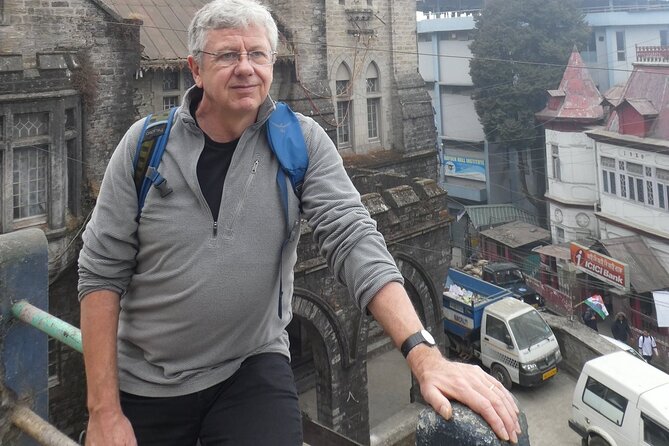
Next up is the Darjeeling Head Post Office, built in May 1921. It’s described as one of the oldest post offices in the region and noted as a UNESCO World Heritage Site, which gives the stop extra weight for history lovers.
The timing is short, but the value is that you’re seeing colonial communication infrastructure in the same walking loop as social and religious places. It helps you connect the dots between trade, settlement, and the daily logistics of a growing hill town.
You then reach the Darjeeling Mall, tied to the era when Darjeeling served as the winter capital. The Government House, now Raj Bhavan, connects to British building efforts from 1840, followed by later ownership shifting to the Maharaja of Cooch Behar in 1877. Even without long speeches, this stop gives you a clean timeline of who held authority and how it changed.
St. Andrews Church plus Dhirdham Temple: faith on the same route
For the spiritual side, you visit St. Andrews Church, originally built in 1843. This Anglican church along the Mall Road is linked to Lt. Gen A Lyod, believed to be the discoverer of Darjeeling, which adds a personal name to the architectural story.
Later, near the railway station, you’ll stop at Dhirdham Temple. The tour describes it as built in a style modeled after Katmandu’s Pashupatinath temple, which makes the religious architecture section more than a single-style checklist.
I like pairing these two because it forces you to notice how Darjeeling’s identity is layered. You’re not only walking through one cultural lane, you’re moving through different belief systems and building aesthetics within the same short window.
A few more Darjeeling days to compare
- Darjeeling Cultural & Nature Walking Guided Tour
★ 4.9 · 7 reviews - Group Guided Walking Tour in Fort and Colaba
★ 5.0 · 1,073 reviews - Spiritual City Walking Tour-THE Pushkar Route
★ 5.0 · 907 reviews - Private Guided Walking Tour in Fort & Colaba
★ 5.0 · 895 reviews
Keventer’s and Glenary’s: included snacks with hill-town views
Two of the most fun parts are the included food and drink stops.
At Keventer’s, you get 30 minutes and admission is included. The tour frames Keventer’s as a nostalgic reminder of Mr. Edward Keventer’s dairy farm of Ghoom, and it also emphasizes hearty breakfast and snacks with an iconic viewpoint in the middle of the hill town.
Then you move to Glenary’s, where admission is included for 15 minutes. This bakery, restaurant, and pub was founded by an Austrian, and the focus here is atmosphere, including a reputation for good sunsets and an open cafeteria and bar setup.
Even if you don’t plan to stay seated long, these stops are practical. They break the walk at just the right time and give you places where you can look around and watch the town’s rhythm.
Das Studio (since 1927): how old photos change what you see
One stop I consider a standout is Das Studio. It started in 1927 and is presented as one of the oldest photography studios in Darjeeling. The walls are decorated with panoramic photographs of the town from different periods, so the “history” is visual.
This is the kind of moment where the walking story clicks. You can see what streets, buildings, and viewpoints looked like when the colonial era was still actively shaping the town.
The visit is short at about 10 minutes, but it’s a high-impact use of time. I’d treat it as your anchor stop for photos, because the panoramic format makes it easier to spot change across decades even in a quick visit.
Gymkhana Club and school buildings: colonial life beyond tea
You also visit the Darjeeling Gymkhana Club, established in 1909. The club includes badminton courts, card rooms, and an excellent library, and admission is included for 15 minutes.
Then the route shifts to education with Turnbull High School. This is described as a lesser-known colonial school in Darjeeling, connected in timeline to Nepali High School and Bishop’s House. Admission is included for about 20 minutes.
These stops matter because they broaden the colonial story. If you only think of Darjeeling as tea plantations, you miss the institutions that taught, entertained, and organized the people who ran the system.
The walking pace here can feel a bit like passing through layers of “how the British organized society,” one doorway at a time. If you like that kind of cultural reading, you’ll probably enjoy it.
Old Market, railway-era spots, and the British ropeway link
As you get into the older commercial area, you stop at the Old Market, described as the heart of the Old British Market, the Old Railway Station, and the old British Ropeway. Admission is included for 15 minutes.
This isn’t a museum-style stop, and that’s part of the value. You’re seeing the town’s business and transport story tied to colonial infrastructure. It also sets you up for souvenir shopping because this area naturally supports browsing.
If you prefer less crowd energy, you might want to time your own browsing around your guide’s pace. The stop itself is short, so the goal is to understand where the activity used to center, not to shop until you’re done.
Independence, Tibet links, and Hayden Hall: stories that expand the route
The tour includes several “context” stops that go beyond British buildings.
At the Chittaranjan Das Memorial, you’ll step aside for about 20 minutes. It’s tied to Chittaranjan Das, noted here as a legendary figure in the Indian Independence Movement.
You also visit the Himalayan Tibet Museum for 30 minutes. It’s described as holding accounts from thousands of years of Tibet’s indigenous history and the centuries-old Tibet-India relationship. This is a big theme in the route because Darjeeling sits at a crossroads of culture and refuge.
Then you’ll see Hayden Hall, described as a must visit to explore the history of the Hayden Hall Institute and enterprising women. Admission is included for 15 minutes.
I also like how one of the tour’s viewpoints in the story connects tea development and comparisons to Simla. Darjeeling is portrayed as more commercial and active, while Simla is described as holding onto a Surrey-like identity in the Himalayas. That kind of contrast helps you understand colonial choices as patterns, not random facts.
Curios, books, and real shopping time
You get a bit of room to shop and explore, and the route includes a few purposeful stops that make buying easier.
Before reaching the Mall, you’ll visit Habeeb Mullick & Sons Estd 1890, described as one of the best places to experience handcrafted curios. There’s also a stop at Oxford Book and Stationery Co., where the hill-style cottage architecture catches your eye, and the store offers an enormous collection of souvenirs.
Because these are short stops, I suggest deciding what you want before you arrive. Think small and light. It’s easier to enjoy the walk when you’re not mentally trying to solve luggage math every ten minutes.
Darjeeling Himalayan Railway connection and a fast architectural stop near the station
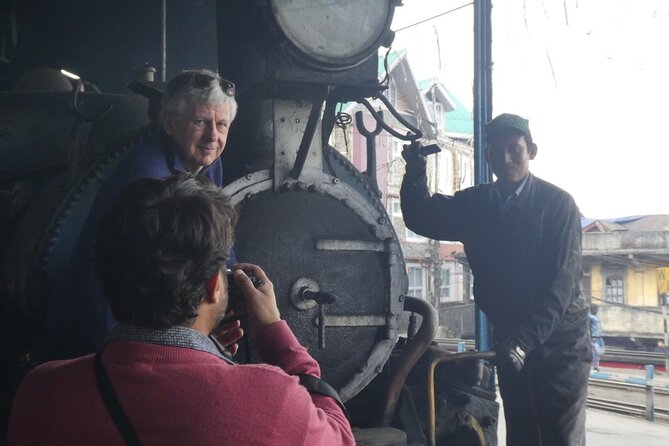
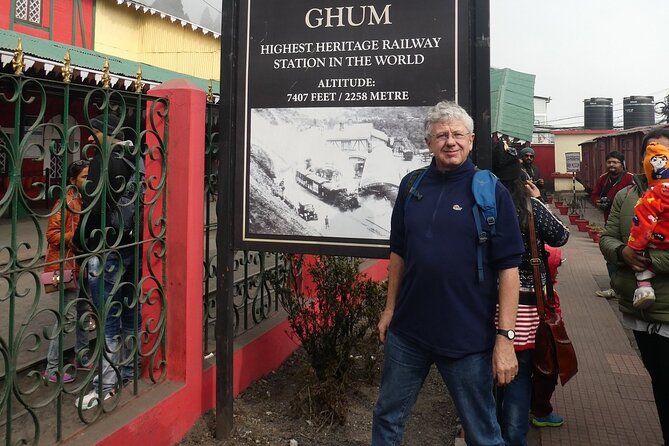
The route includes a stop connected to Darjeeling and the Darjeeling Himalayan Railway, with admission included for 15 minutes. The description notes that the railway started its journey in the 1870s.
You also visit Dhirdham Temple near the railway station, described earlier as modeled after Pashupatinath style in Katmandu. Putting these together helps you see how transport corridors and religious architecture shape the feel of the town.
If you’re the type who likes transit history, this section is a good reminder that rail in Darjeeling wasn’t just for getting around. It helped shape where people gathered and what the town became.
Price and value: what you get for about $27.97
At $27.97 per person, this tour is priced like a focused city walk, not a full-day ticketed program. The key value is that the listing notes all fees and taxes are included, plus admission tickets are free for many stops.
Some parts are clearly included in the sense of covered admissions, including Keventer’s and Glenary’s, and several museum or venue stops like the Himalayan Tibet Museum and Hayden Hall. For other stops, admission is noted as free, which means you still get guided context without paying at each door.
In practical terms, you’re paying for structure and interpretation. With so many stops, that can be a good deal, especially if you want the colonial story and the spiritual architecture angles without spending your own time figuring out which places are open and what they cost.
If you’re traveling with a group, the mention of group discounts can also improve value. If you’re traveling solo, it’s still reasonable because a lot of your “entry and access” is already handled.
Pace, group size, and how long each stop really is
The whole experience runs 2 to 3 hours and includes many short visits, often 10 to 30 minutes each. That’s ideal for getting your bearings and understanding the colonial and spiritual map of Darjeeling.
With a maximum group size of 50, you’ll move as a pack. Some people find that comforting because it keeps energy up. Others might prefer a smaller group. Either way, expect a steady flow, not leisurely wandering.
Also remember the tour requires good weather. If conditions are bad, the operator offers a different date or a full refund, so you’re not stuck.
Who should book this walk, and who might want another option
I’d book this tour if you want a guided route that mixes colonial landmarks, church and temple architecture, and photo history in a short window. It’s also great if you like towns that reward quick orientation, because the walk gives you a sequence you can revisit later.
You might skip it if you want deep time in museums or a lot of time for slow shopping. The stops are short by design, and the point is to cover many layers rather than linger in one place for hours.
If you enjoy both tea-era stories and broader cultural context, the mix of stops connected to the railway, independence memories, and the Himalayan Tibet Museum is a strong fit.
Should you book the Colonial Heritage Walking Tour in Darjeeling?
I think it’s a solid yes if you want an efficient, guided way to understand Darjeeling’s colonial-era architecture and social institutions without spending your day guessing what to do next. The included stops at Keventer’s and Glenary’s are practical breaks, and Das Studio adds a visual anchor that makes the story stick.
Book it if you can go in good weather and you’re happy with a group pace. If you’d rather slow down and linger in fewer places, you may be happier with a more flexible, self-paced day after you learn the basics from this walk.
FAQ
How long is the Colonial Heritage Walking Tour in Darjeeling?
The tour lasts about 2 to 3 hours.
What does the tour cost?
It costs $27.97 per person.
Where does the tour start and end?
It starts at Limbugaon, Darjeeling, West Bengal 734101, India, and ends at St. Andrews Church in Chauk Bazaar, Darjeeling, West Bengal 734101.
What time does the tour run?
The listed opening hours are Monday through Sunday, 7:00 AM to 7:00 PM.
Is a mobile ticket used?
Yes, the tour uses a mobile ticket.
Is the group large?
The tour has a maximum of 50 travelers.
Are admissions included or free at stops?
Many stops have admission noted as free, and several stops have admission included. All fees and taxes are included.
What food or breaks are included?
Admission is included for Keventer’s (with breakfast and snacks described) and for Glenary’s (bakery and tea room, with time included).
Is this tour affected by weather?
Yes. The experience requires good weather, and if it is canceled due to poor weather, you’ll be offered a different date or a full refund.
Can I cancel for a full refund?
You can cancel up to 24 hours in advance of the experience for a full refund. If you cancel less than 24 hours before the start time, the amount paid is not refunded.
More Historical Tours in Darjeeling
- Old Delhi Food, Heritage&Cultural Walk with Rickshaw ride to Masterji Kee Haveli
★ 5.0 · 742 reviews - Fontainhas Heritage Walk At Latin Quarters of Goa
★ 5.0 · 531 reviews - Blue City Heritage Private Walking Tour With Pickup and Drop-Off
★ 5.0 · 441 reviews - Kolkata Heritage Tram Tour
★ 4.0 · 395 reviews
Recently added around Darjeeling
- Private Calcutta Tour With Guide and Authentic Bengali lunch★ 5.0 · 26 reviews
- Tea Pluckers’ Day★ 5.0 · 19 reviews
- Trip to Tiger Hill Darjeeling★ 4.5 · 10 reviews
- Day_Trippers (Darjeeling Full Day Tour).★ 5.0 · 54 reviews
- Singalila Ridge Trek from Darjeeling – 6 Days★ 5.0 · 56 reviews
- North Sikkim Green Lake Trekking★ 5.0 · 10 reviews
- Explore North East India – Darjeeling Sikkim Road Trip★ 4.5 · 37 reviews
- Darjeeling Cultural & Nature Walking Guided Tour★ 4.9 · 7 reviews
Heritage Walks, compared.
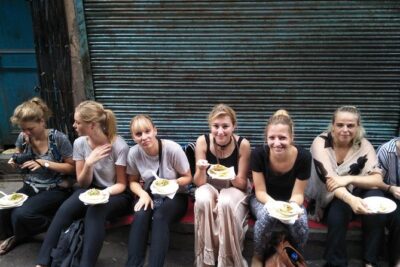
The Great Indian Food Tour: Old Delhi Food and Heritage Walk
Read our review →
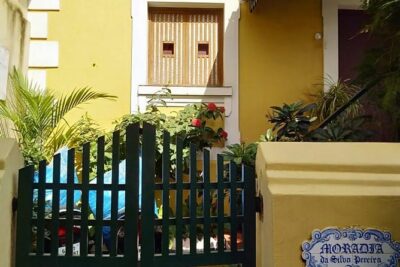
Fontainhas Heritage Walk At Latin Quarters of Goa
Read our review →
Private Heritage Walking Tour in Jaisalmer Fort and Old Bazaar
Read our review →
Panaji: Heritage Walk through Goa’s Latin Quarter
Read our review →
Browse the lists this tour appears in