
Reviewed · DHARAVI SLUM TOURS
Walking Tour of Dharavi Slum in Mumbai
Dharavi is not what you expect.
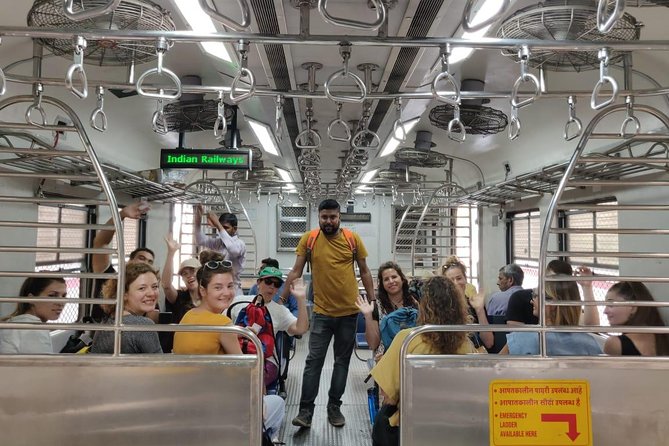
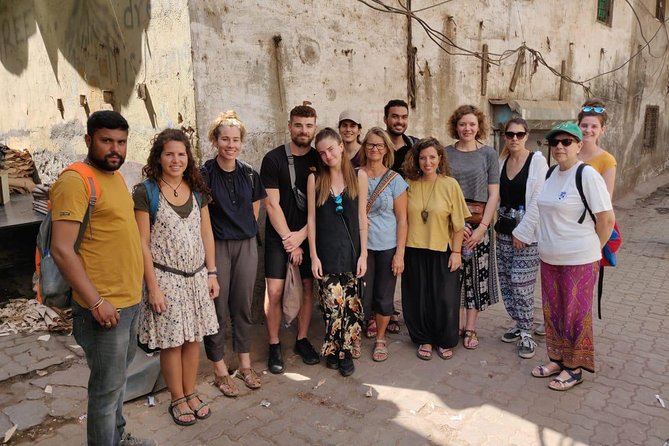
This walking tour trades shock value for real context, led by a local guide who helps you see how people make a living in tight spaces. I like that it focuses on hands-on industries like leather work and pottery, not generic doom-and-gloom talk. I also like the small-group feel, capped at 15, so questions do not get lost in the shuffle.
You should know one thing up front: photography is not allowed at certain locations, mostly for privacy. That can be a dealbreaker if you want full visual proof for your camera roll.
Plan for a moderate walk, and wear clothing that looks respectful. Dharavi is active, close-up, and occasionally dusty, so you will enjoy it more with comfy shoes and sleeves that do not feel like you are headed to a beach.
In This Review
- Key Points You Should Care About
- First Steps in Dharavi: Where the Tour Starts and How It Works
- Why This Tour Feels Different: Work, Community, and Small Details
- Entering the Real Craft Stops: Leather and Pottery Up Close
- The Community Spirit Piece You Notice on Foot
- Your Guide Is the Whole Experience: Safety, English, and Real Perspective
- What You Can and Cannot Do: Photography, Clothes, and Walking Comfort
- Price and Value: Why $12 Makes Sense for This Format
- Logistics That Help You Prepare Like a Pro
- Should You Book This Dharavi Walking Tour?
- FAQ
- How long is the Walking Tour of Dharavi Slum in Mumbai?
- Where do I meet the guide?
- Where does the tour end?
- How much does the tour cost?
- What is included in the price?
- Is hotel pickup or drop-off included?
- Is food or drinks included?
- How many people are in a group?
- Is photography allowed?
- What are the age and fitness requirements?
Key Points You Should Care About
- Small group size (up to 15) keeps the tour conversational and easier to manage on foot
- Local guide-led context helps you challenge stereotypes with what you actually see
- Leather and pottery stops show how major industries operate inside cramped workshops
- Community diversity on one route includes temples, mosques, and churches sharing the same streets
- Photography restrictions protect residents’ privacy, so be ready to put your phone away
First Steps in Dharavi: Where the Tour Starts and How It Works
The tour meets in the Mahim area, at a coffee shop location near Mahim Station. The start point is listed as Third Wave Coffee on Tip Road, Mahim, with a specific unit address you can plug into maps. You will find it easiest to arrive with a little extra time, because finding the exact spot is half the battle in a big city.
Expect a total walk time of about 1 hour 30 minutes to 2 hours, depending on pacing and group flow. This is not one of those “stand in one place and listen for two hours” tours. You will move, look, ask, and get oriented to what Dharavi looks like at street level.
Also note the tour ends not far from the Dharavi area, opposite Sai Multispeciality Hospital & Research Centre. In practice, that means you are not backtracking all the way to where you started, which is a small but real quality-of-life win.
More Walking Tours in Mumbai
- Group Guided Walking Tour in Fort and Colaba
★ 5.0 · 1,073 reviews - Private Guided Walking Tour in Fort & Colaba
★ 5.0 · 895 reviews - Private Guided Walking Tour in Bandra Queen of Suburbs
★ 5.0 · 383 reviews
Why This Tour Feels Different: Work, Community, and Small Details
Dharavi gets lumped into one word too often: slum. This tour aims to correct that shortcut. The point is not to pretend poverty tourism is fun. The point is to show how life and work are organized in one of Asia’s largest slum neighborhoods, which has a population near one million.
What I appreciate about this approach is the way it reframes the word slum into something more specific: neighborhoods, routines, trades, and community ties. You will hear commentary that challenges negative stereotypes and helps you understand why calling a place only by its label misses the real story.
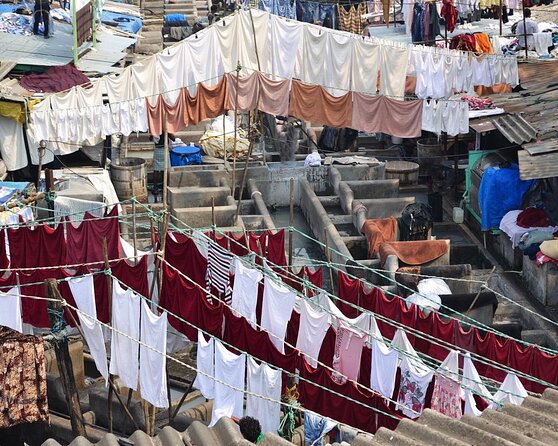
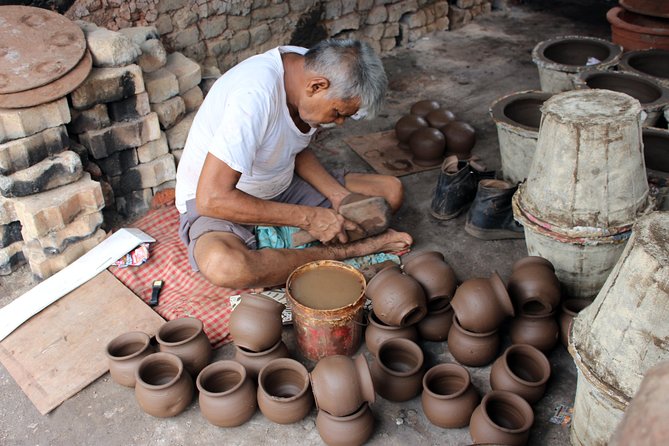
Instead of big monuments, you get small industries in action. Think recycling, pottery-making, embroidery, soap-making, and leather tanning, all using innovative techniques in very confined spaces. It is less “tourist attraction” and more “worksite plus street life,” which is exactly why it feels real.
And one more detail that matters: you walk through an area where people from all over India live. That diversity shows up visibly when you notice temples, mosques, and churches close to each other. It is not a lecture topic. It is something you can see with your own eyes as you move.
Entering the Real Craft Stops: Leather and Pottery Up Close
The itinerary keeps things focused with short stops where you can actually observe the work. One of the first major themes is leather, and it is treated like the dominant industry for a reason: it shows up everywhere in how people earn and operate.
At the leather stop, you will spend about 10 minutes where the guide helps explain what you are looking at. The value here is not only the product. It is the process, the constraints, and the adaptations required when you are working in small spaces. Watching people do focused, repetitive craft work while the surroundings stay tight makes the scale click in a way photos never quite manage.
Then you will shift to another key industry theme: pottery-making. Again, the stop is about 10 minutes, and it is designed to give you a clear snapshot of how pottery work is made and sold within the neighborhood economy.
If you want a souvenir, pottery and leather are naturally the obvious categories. But even if you do not buy anything, these stops are a great way to understand how Dharavi functions as a network of micro-businesses rather than a single story.
One practical consideration: because you are walking through working areas, things can feel tight, and some parts may be dusty or busy. If you arrive expecting something like a museum, you may find it oddly intense. If you come ready to observe human-scale work, you will probably love it.
The Community Spirit Piece You Notice on Foot
A big part of the experience is simply walking and watching how people live alongside production. Dharavi is not just workshops. It is housing, community institutions, and daily routes.
You will get an explicit emphasis on community as you move. That matters because you are not only learning what industries exist. You are seeing the social framework that keeps them running and connects neighbors who might come from different parts of India.
This is also where the tour’s pacing helps. With a short guided route over 1.5 to 2 hours, you are given just enough time to build a mental map. As the route passes places of worship and different kinds of street activity, the neighborhood starts to feel like a living place rather than a headline.
And yes, you are dealing with a sensitive subject. The best tours handle that with care and boundaries. The guide’s role becomes crucial here, and the strongest tours are the ones that keep you aware of privacy and safety rather than pushing you for drama.
A few more Dharavi Slum tours around Mumbai:
- Dharavi slum tour in Mumbai by Female tour guides of the slum
★ 5.0 · 1,976 reviews - Mumbai: Dharavi Slum, DhobiGhat, and Dabbawallas Tour
★ 4.9 · 689 reviews - Dharavi Slum Tour
★ 5.0 · 625 reviews - Dharavi Slum tour in Mumbai by local resident
★ 5.0 · 572 reviews
Your Guide Is the Whole Experience: Safety, English, and Real Perspective
This is a guide-led tour, and the quality of that guide shows quickly. The structure is designed for a small group, and that helps guides keep the conversation flowing and the pace comfortable.
The reviews point to guides who are friendly, careful, and genuinely invested in giving you a positive, grounded view. I have seen this kind of tour live or die based on the guide’s tone, and this one seems to attract the right kind of people for the job.
For example, some guests have specifically mentioned guides such as Mr. Ganesh for clear explanations and Mr. Alam for strong knowledge and an emphasis on safety. Another review highlighted Dawood as putting people at ease while sharing the points that matter most. Your guide may not be the same person, but the pattern is consistent: good guides keep you informed and oriented.
Here is what you should take away as a traveler: ask questions. If you are curious, you are more likely to get thoughtful answers when the group is small. If you are uneasy about filming or specific areas, a good guide will steer you without making it awkward.
What You Can and Cannot Do: Photography, Clothes, and Walking Comfort
There is one rule you must plan for: photography is not allowed on this tour at certain locations. That is a privacy call for the people who live and work there. Bring that mindset with you from the start, and you will feel less frustrated.
Dress matters too. The guidance says to dress appropriately and avoid very short clothes. You will be happier if you wear something that feels respectful and practical, not flashy or skimpy. Think breathable layers, shoes you can trust on uneven ground, and sleeves you will not mind if things get close.
As for body comfort, the tour is listed for travelers with a moderate physical fitness level. That generally means you should be able to do a steady walk and handle crowds and street movement. You do not need to be a marathoner, but you also should not plan this as an easy stroll if you have mobility limits.
If you do not love walking, you can still make this work if you pace yourself and stay present. But you will probably enjoy the craft stops more if you can stand comfortably and keep moving through the route.
Price and Value: Why $12 Makes Sense for This Format
At $12.00 per person, this is priced like a budget-friendly activity, and it feels like good value for what you get. You are paying for guided interpretation by a local guide plus a route built around short, high-impact stops.
The tour is scheduled for about 1 hour 30 minutes to 2 hours, which is a sweet spot for a city day. You can slot it between other Mumbai plans without it swallowing your whole afternoon.
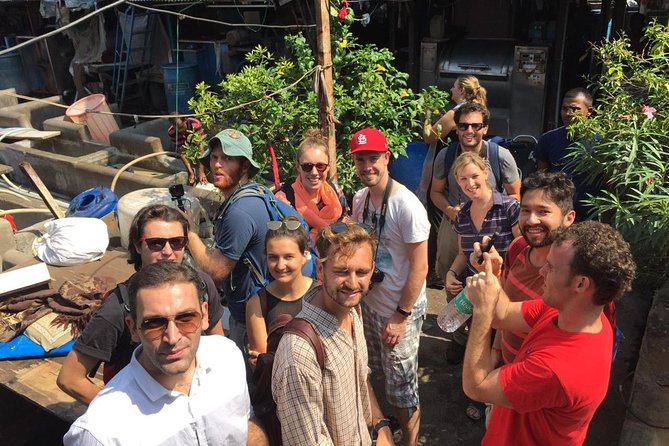
You also get a small-group advantage, with a maximum of 15 travelers. That matters because it improves how much you can ask and how well you can hear the explanation. In places with complex social realities, the ability to ask a question in the moment is not a luxury. It is part of learning.
Not included: hotel pickup and drop-off, and also food and drinks. So do not assume there will be a meal break or a snack stop built into the plan. If you need to eat, plan it separately.
There is also no admission ticket cost for the stops listed, with the itinerary entries showing admission tickets as free. That keeps the budget simple.
If you like cultural experiences that feel grounded in everyday work, this price-to-content ratio tends to make sense.
Logistics That Help You Prepare Like a Pro
The tour starts at a fixed meeting point near Mahim Station, and ends opposite Sai Multispeciality Hospital & Research Centre. Those details matter because you will not be picked up from your hotel.
It also helps to know confirmation timing: you typically get confirmation at booking time unless you book within 12 hours of travel, in which case confirmation comes as soon as possible based on availability.
Because this tour is limited to small groups and runs for short durations, booking earlier can improve your odds. The data you have says it is booked on average about 33 days in advance, which suggests it is popular enough that last-minute planning can be risky.
You will also use a mobile ticket, which is handy. Just make sure you can access it without hunting for it once you are standing on the street.
Should You Book This Dharavi Walking Tour?
If you want a Mumbai experience that feels human-scale and practical, I think it is worth booking. This is best for you if you are curious about how urban India works beyond postcards, and if you appreciate a local perspective that corrects stereotypes with real examples.
Book it if:
- You like guided walks that explain what you are seeing while you are seeing it
- Leather and pottery craftsmanship interests you, even a little
- You are comfortable with photography restrictions and prefer learning over filming
Skip it, or at least think twice, if:
- You mainly came for a “safe, polished” sightseeing vibe
- You are not comfortable walking on uneven streets or in tight spaces
- You strongly dislike tours that limit photo stops
One last tip: come with a respectful attitude and a question or two ready. The best moments happen when the guide can connect what you notice with why it matters.
FAQ
How long is the Walking Tour of Dharavi Slum in Mumbai?
The tour runs about 1 hour 30 minutes to 2 hours.
Where do I meet the guide?
You meet near Mahim Station (West) outside a coffee shop location. The start is listed as Third Wave Coffee, Tip Road, Unit no.58, Ground, Ram Mahal, Senapati Bapat Marg, Marinagar Colony, Mahim, Mumbai.
Where does the tour end?
The tour ends opposite Sai Multispeciality Hospital & Research Centre, near 90 Feet Rd, behind Sion Hospital, in Dharavi. The end point is listed as opposite the Sai Hospital.
How much does the tour cost?
The price is $12.00 per person.
What is included in the price?
The only listed inclusion is a local guide.
Is hotel pickup or drop-off included?
No. Hotel pickup and drop-off are not included.
Is food or drinks included?
No. Food and drinks are not included.
How many people are in a group?
The tour has a maximum of 15 travelers.
Is photography allowed?
Photography is not allowed on this tour at certain locations.
What are the age and fitness requirements?
Children must be accompanied by an adult, with a minimum age of 5 years. The tour also notes a moderate physical fitness level is recommended.
Recently added around Mumbai
- Mumbai Spice Markets and Bazaars Tour with Guide and Transport★ 5.0 · 42 reviews
- Customize private tour with pickup★ 5.0 · 95 reviews
- Private Guided Bandra Half Day City Tour in AC Vehicle★ 5.0 · 72 reviews
- Mumbai 800 Year Worli Village: Talking Goddess, Old Fort & more★ 5.0 · 94 reviews
- Mumbai by Night Guided Tour★ 5.0 · 6 reviews
- Gufran’s Slum Home Tour in the Mumbai Slums★ 5.0 · 19 reviews
- Private Walking Tour in Dharavi Slums★ 5.0 · 7 reviews
- The Panoramic Ridge Hike near Mumbai★ 5.0 · 7 reviews
Dharavi Slum Tours, compared.
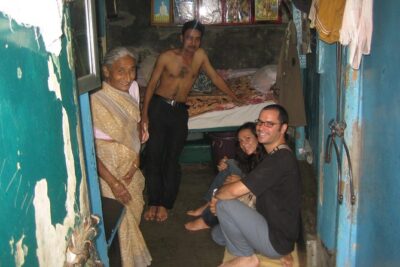
Dharavi slum tour in Mumbai by Female tour guides of the slum
Read our review →


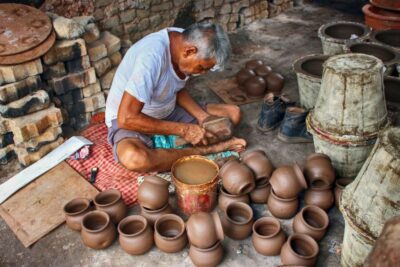
Dharavi Slum Slumdog Millionaire Tour with a Local
Read our review →
Dhobi Ghat Laundry and Dharavi Slum Tour with Local
Read our review →
Browse the lists this tour appears in