
Reviewed · HIKING & TREKKING
Ladakh Sham Valley Trek
Two passes, three days, big Ladakh energy.
The Ladakh Sham Valley Trek, often called the Baby Trek, is a short introduction to high-altitude trekking around Leh, with steep moments and real mountain quiet. You still start above 3,600m, cross named passes, and sleep in village homestays, so it feels like a proper Ladakh trip, not a casual walk.
I particularly like two things about it: the included meals plus private transportation make the logistics easy, and you stay in homestays in Yangthang and Hemis Shukpachen, where the valley turns greener than you expect. Even better, the day-by-day route mixes pass crossings with village scenery like cedar groves, willow streams, barley fields, and prayer flags at the top of Mebtak La.
One thing to consider: even though it’s marketed as beginner-friendly, the altitude and the heat can still make you work. Day 1 especially is described as warm with little shade and no water on the route, so you’ll want to plan your hydration and pacing carefully.
In This Review
- Quick hits on the Sham Valley Baby Trek
- Why Sham Valley is called a Baby Trek, and what that means for you
- Day 1: Likir to Yangthang, two passes and a warm start
- Day 2: Gentle walking to Tsermangchen La, then down to Hemis Shukpachen
- Day 3: Mebtak La prayer flags and the gorge descent to Ang
- Price and logistics, what the $400 package really covers
- Homestays in Ladakh: how the nights add meaning to the hike
- The guide can turn a good trek into a great one
- Fitness and altitude: the real difficulty level in the Sham Valley Baby Trek
- Weather windows and why timing matters in Ladakh
- Should you book this Sham Valley trek?
- FAQ
- What time does the Sham Valley trek start, and where do we meet?
- Is private transportation included?
- How long is the trek?
- What level of fitness do I need?
- What overnight accommodations are included?
- What is included with the trek besides the guide?
- What is not included in the price?
- What if weather is bad or the minimum number of travelers is not met?
Quick hits on the Sham Valley Baby Trek
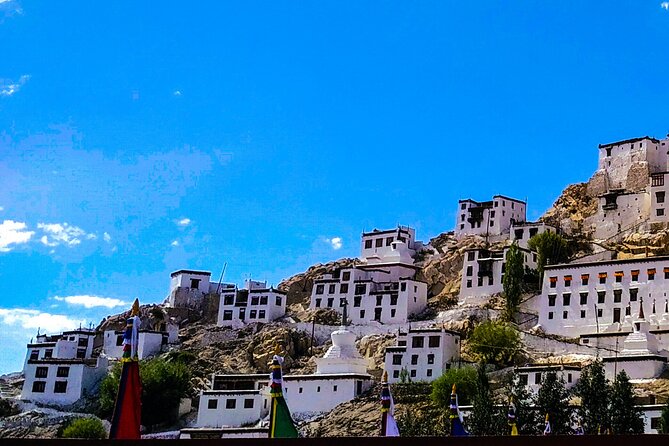
- Beginner pace with altitude reality: short days, but you still climb to passes up around 3,700m.
- Pass names you will remember: Phobe La, Chagatse La, Tsermangchen La, and Mebtak La.
- Homestays in two villages: overnight stays in Yangthang and Hemis Shukpachen.
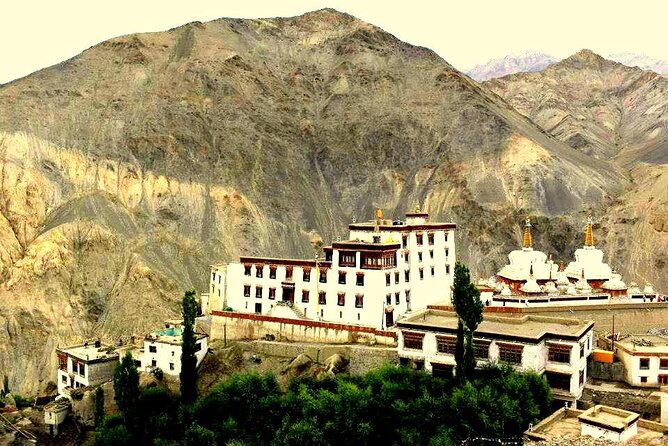
- A monastery stop near Yangthang: Ridzong Monastery is about an hour south of Yangthang.
- Prayer flags at the high point: Mebtak La is marked by prayer flags before your descent.
- Support that feels personal: guides and organizers like So-nam and Fida Hussain Tangrong come up in strong feedback, including patience and good coordination.
Why Sham Valley is called a Baby Trek, and what that means for you
The Sham Valley trek is short on paper, about 3 days, and that’s the whole point. If you’re new to trekking in Ladakh, you get a taste of the rhythm: climb, rest, descend, repeat, then enjoy village life at night.
But “baby” can trick people. You are still trekking at elevations roughly between 3,500m and 3,800m on this route. That means breathlessness, slower pace, and the need to keep effort steady. The good news is that the route is described as easy on some days, with gentle approach and descent sections, so you’re not constantly doing steep, punishing gradients.
This trek also balances exertion with payoff. You’re not just walking through empty-looking valleys. You’ll pass recognizable places, cross streams, and end days in villages where the mountain scenery turns into something more lived-in: streams with willows, cedar groves, and fields that look almost out of place in the high desert.
A few more Leh days to compare
- Mountain Hiking in Munnar (half day) By Munnar Info
★ 5.0 · 390 reviews - Half day trekking (munnar valley Trekking & Tours )
★ 5.0 · 310 reviews - Full day in hiking in Munnar (By Munnar Info)
★ 5.0 · 176 reviews
Day 1: Likir to Yangthang, two passes and a warm start
Your day begins with a drive from Leh, about 58 km away, to Likir, the trek starting point at 3,650m. Even though the transfer is short in distance, the altitude makes the first day feel serious, so you’ll want to treat the first hours like acclimatization time, not speed-walking time.
From Likir, the route goes west up to Phobe La (3,580m). After the pass, Sumdo village comes next. Then the trail keeps rising steadily until you reach Chagatse La (3,630m). The next movement is toward Yangthang, where you spend the night in a homestay.
Two details matter on Day 1. First, the route is described as warm, without shade or water. That doesn’t mean you can’t do it comfortably, but it does mean you should come ready to manage sun and thirst. Second, you traverse two passes early in the itinerary. That helps you understand the trek’s style quickly, and it sets up a realistic expectation: you’ll work, then you’ll recover.
Also plan for a cultural stop. The route includes Ridzong Monastery, described as about an hour south of Yangthang. It’s the kind of stop that breaks up pure hiking time and gives the day a local grounding.
Day 2: Gentle walking to Tsermangchen La, then down to Hemis Shukpachen
Day 2 is the “easier day” on this trek, and the description is pretty specific about why. Even with a pass crossing, the approach and descent have gentle gradients, which helps a lot when your legs are still adapting to altitude.
The trail heads north. You’ll descend for a bit, cross a stream, then climb back up to the west toward Tsermangchen La (3,750m). After resting at the pass, you descend down to Hemis Shukpachen for the homestay night.
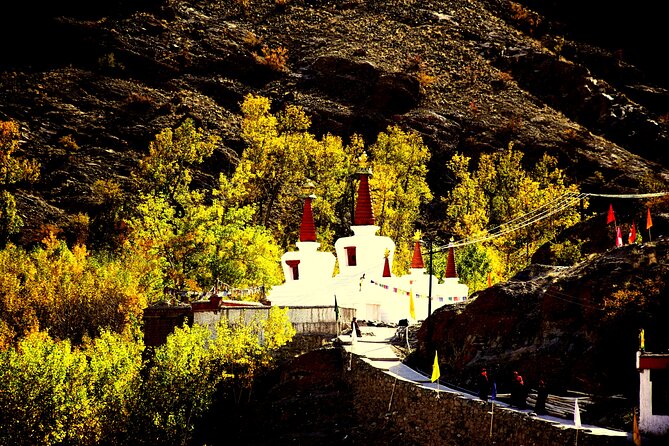
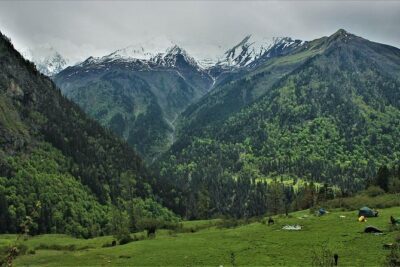
This is also where the scenery gets more personal. Hemis Shukpachen is named for a grove of cedars, and you’ll see streams, shady willows, and large barley fields. That combination is a big reason people remember the Sham Valley trek. In a place that can look stark from far away, you get proof that water and cultivation shape how life happens here.
Practical takeaway for Day 2: it’s easier in terms of slopes, but it’s still high altitude. Keep moving at a controlled pace, especially during climbs back up toward the pass. You’ll enjoy the day more if you don’t treat each uphill section like a test.
Day 3: Mebtak La prayer flags and the gorge descent to Ang
Your final day starts with a section described as fairly easy again. The trail goes upward between two hillocks west of the village, then veers south and climbs more steeply to Mebtak La (3,750m), marked by prayer flags.
That prayer-flag moment is your “you made it” point. After the climb, you head down the gorge toward Ang village. Then your driver meets you in And (the itinerary wording is slightly different here, but the idea is the same), and you drive back to Leh to end the tour.
Day 3 is a classic Ladakh finish: a reasonable start, one more demanding climb to a pass, then the satisfaction of a descent into a different kind of terrain. The gorge descent is where you may feel your knees a bit, so take short steps and keep your balance. If you’ve saved energy during the earlier days, this is a day you can enjoy rather than just survive.
Another way to spend a day in India:
- Private Ladakh 6 Days Tour (All Inclusive)
★ 5.0 · 129 reviews - Ladakh Special Tours
★ 5.0 · 63 reviews - Ladakh Private Tours
★ 5.0 · 59 reviews - Ladakh 5-Star Premium Tour 7 Days
★ 5.0 · 48 reviews
Price and logistics, what the $400 package really covers
At $400 per person for a ~3-day trek, this is not a “pay extra for everything” setup. The package includes private transportation, meals (breakfast, dinner, and lunch as a packed lunch), a trek guide, walking sticks, and homestay accommodation for the two nights.
It also includes pickup tied to the meeting point at Kushok Bakula Rimpochee Airport in Leh, with a stated start time of 8:00 am. The tour ends back at the meeting point as well. Because it’s a private tour/activity, it’s structured for your group, not mixed trekking hordes.
What you should factor in when judging value is what’s not included. Tips are not included. Porters are not included. Bottled water is not included. Insurance and medical emergency coverage are not included. Ponies are also not included. In plain terms, you’re covering the trek infrastructure and guidance, then you handle the personal extras and any safety coverage you want.
This is where the format feels efficient. Meals and homestays are taken care of, and the guide plus walking sticks remove two common friction points for beginners. If you want a short trek in Ladakh without spending extra time solving logistics in advance, this kind of package can be a smart way to do it.
Homestays in Ladakh: how the nights add meaning to the hike
You’ll sleep in homestays on both Day 1 and Day 2. The itinerary puts you in Yangthang and Hemis Shukpachen. The homestay experience matters because it changes the feel of the trek. You’re not just passing through viewpoints. You’re part of the daily rhythm of a small place for a night or two.
There’s also good practical feedback around accommodation quality. People describe the homestay standards as high for the route, with special praise for the stays along the trek. That doesn’t mean it’s like a city hotel, but it does suggest you should expect clean, functional comfort rather than a rough survival setup.
I’d also pay attention to how these nights fit the trek’s pacing. Since you’re only doing 3 days, your recovery matters. A homestay where you can eat dinner and sleep normally helps your next day of climbing feel manageable.
The guide can turn a good trek into a great one
On treks like this, the guide’s job is more than pointing the way. You need steady pacing, calm guidance on the passes, and smart help when you feel altitude fatigue.
Strong feedback specifically calls out So-nam as experienced, kind, and patient. That combination is exactly what you want on a “beginner-friendly” trek, because beginners tend to second-guess themselves at the first big climb. A patient guide keeps you moving in a way that makes the experience feel safe and doable.
You’ll also see names like Fida Hussain Tangrong connected to smooth coordination and customization. One review highlights that the team arranged a package according to the traveler’s specifications, and another mentions Fida’s fluent German. In other words, communication matters, and a good organizer makes the pre-trek and in-trek experience less stressful.
When you book, I’d take 2 minutes before Day 1 to tell your guide how you want to pace: steady and slow, or more active. That’s all it takes to make the days match your comfort level.
Fitness and altitude: the real difficulty level in the Sham Valley Baby Trek
This trek is best described as beginner-friendly, but not beginner-free. You should have a moderate physical fitness level. The route includes passes at elevations around the 3,600m to 3,750m range, and the altitude can make even gentle slopes feel harder than you expect.
Day 1 is where this shows up the quickest because the route is described as warm, without shade or water, and you cross two passes. That means you need to control heat stress as well as breathing.
Here’s how I’d approach the fitness side without overcomplicating it:
- Walk slowly on climbs, and let your breathing set the pace.
- Take the rest stops seriously, especially at passes.
- Keep your effort consistent across days, because Day 3 includes another pass climb.
If you’re looking for something in Ladakh that’s short, structured, and not overly technical, this is a strong match. If you’re dealing with serious altitude concerns or you want a completely low-stress hike with no pass crossings, you might find this too demanding.
Weather windows and why timing matters in Ladakh
This experience requires good weather. If it’s canceled due to poor weather, you’ll be offered a different date or a full refund. It also requires a minimum number of travelers to operate.
So plan like this: choose a window when Leh weather is reasonable for trekking, and be ready for the fact that high-altitude routes are sensitive to conditions. Even with the “easy day” parts, bad weather changes visibility, footing, and comfort.
If you’re the flexible type, you’ll handle this better. If your schedule is locked and you can’t move dates, it’s worth keeping a Plan B for your Ladakh time.
Should you book this Sham Valley trek?
You should book if you want a short Ladakh trek that still feels real, with pass crossings, village homestays, and a guide who can keep things calm and clear. The $400 price makes sense when you see what’s included: transportation, meals, guide, walking sticks, and two homestay nights. That bundle is especially helpful if you’re new to Ladakh and don’t want to manage daily logistics.
You might skip it if you’re looking for a stroll with no altitude pressure, or if you know you struggle in heat with long, unshaded stretches. Day 1’s warm, low-shade route and the absence of water on the trail are the key flags.
If you’re ready to work a little, but you want something manageable and well organized, the Sham Valley Baby Trek is a smart first Ladakh trek.
FAQ
What time does the Sham Valley trek start, and where do we meet?
The tour starts at 8:00 am. The meeting point is Kushok Bakula Rimpochee Airport in Leh (listed address and plus code are provided).
Is private transportation included?
Yes. Private transportation is included, and you are driven to and from the trekking area. The tour begins with a drive from Leh and ends with a drive back to Leh to the meeting point.
How long is the trek?
The trek duration is approximately 3 days.
What level of fitness do I need?
You should have a moderate physical fitness level. The route is described as beginner-friendly, but it can still be tiring due to the altitude.
What overnight accommodations are included?
Accommodation is included as homestays. You stay overnight in Yangthang and Hemis Shukpachen.
What is included with the trek besides the guide?
The package includes a trek guide, walking sticks, breakfast, dinner, and a packed lunch. Private transportation and homestay accommodation are also included.
What is not included in the price?
Not included are tips, porters, bottled water, ponies, insurance, and medical emergency coverage.
What if weather is bad or the minimum number of travelers is not met?
This trek requires good weather. If it is canceled due to poor weather, you’ll be offered a different date or a full refund. If the minimum number of travelers is not met, you’ll be offered a different experience or a full refund.
Recently added around Leh
- Private Tour of Ladakh for 6 Days★ 5.0 · 8 reviews
- Kargil Trip From Leh With Suru Valley And Aryan Valley★ 5.0 · 9 reviews
- Private 6 Days Tour Visit to Ladakh with Meals Included★ 5.0 · 32 reviews
- Leh Ladakh Circuit – Trans Himalaya★ 5.0 · 6 reviews
- Wonders of Ladakh★ 5.0 · 25 reviews
- Best Of Ladakh★ 5.0 · 9 reviews
- 8-Days Heavenly Himalayas- LEH-LADAKH★ 5.0 · 14 reviews
- Leh: 3Hours short Trip – Spituk Monastery, Leh Palace & More★ 4.9 · 8 reviews
Hiking & Trekking, compared.
Mountain Hiking in Munnar (half day) By Munnar Info
Read our review →
Half day trekking (munnar valley Trekking & Tours )
Read our review →
Browse the lists this tour appears in