
Reviewed · DHARAVI SLUM TOURS
Dharavi Tour & Pottery Workshop
Dharavi teaches you to look twice. This guided walk helps you see the everyday trades, homes, and street art in an area many people never visit, and it’s done at a human pace with a guide who can explain what you’re seeing as you go. I especially like the way the tour connects work life to community life, and I like that you get bottled water during the walk so you can focus on the streets, not your thirst.
Two more things click for me: you visit multiple practical businesses, including pottery-making, and you end up understanding Dharavi as a real part of Mumbai, not a headline. One thing to consider is simple, you’ll be walking. Wear comfortable shoes and be ready for a few busy, close-up moments along the way.
In This Review
- Key moments you’ll remember most
- Why a Dharavi walk feels different from the usual Mumbai loop
- Meeting at Mahim Junction and how the 3-hour flow actually works
- Stop 1 in Dharavi: work streets, pottery-making, and reuse as a system
- What to watch for while walking (so you learn more)
- Understanding what you’re seeing without turning it into a checklist
- Stop 2 at Reality Tours and Travel: a short lesson on reinvestment
- Price and value: is $29.09 really fair for 3 hours?
- Getting the most out of the pottery-focused parts of Dharavi
- Who should book this Dharavi tour and pottery workshop walk?
- Should you book this Dharavi experience?
- FAQ
- How long is the Dharavi tour and pottery workshop walk?
- Where do I meet for the tour?
- Where does the tour end?
- What is included in the price?
- Is hotel pickup or drop-off included?
- How much does it cost?
- Is the tour suitable for most people?
- Is there a limit on group size?
- What is the cancellation policy?
Key moments you’ll remember most
- Meeting at Mahim Junction Railway Station means you start with easy access to the local rhythm
- A 3-hour guided walking route keeps the focus tight, not rushed
- Pottery-making and other working trades show how livelihoods function day to day
- Residential lanes and street art add color and contrast beyond the stereotypes
- A short Reality Tours stop explains how funds are reinvested into the community
- Small group size (max 25) helps you get questions answered on the spot
Why a Dharavi walk feels different from the usual Mumbai loop
Dharavi is one of those places people think they already know, usually from TV images or quick summaries. This tour changes the frame. Instead of treating Dharavi as a single story, you walk through a mix of workspaces, residential areas, and places of worship that sit close together. The result is a more grounded understanding of how everyday people build, sell, repair, reuse, and raise families in a dense urban environment.
What I like most is that it is not just sightseeing. You’re guided through a range of ordinary businesses that keep running in challenging conditions, including recycling and leather tanning, plus food preparation like poppadom-making. Even the topics that sound technical on paper turn into clear, everyday explanations when someone points out what is happening and why.
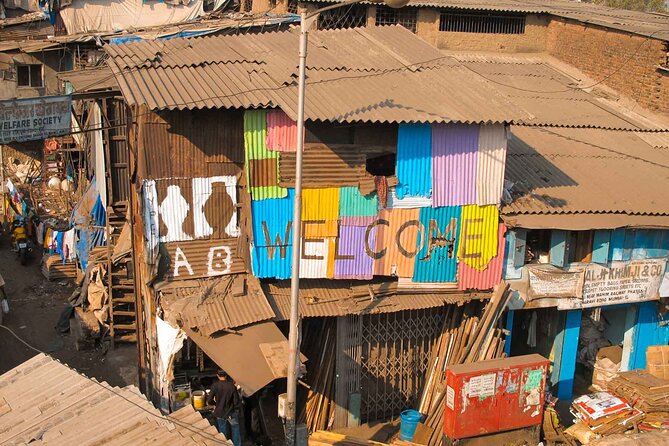
You also get a street art view that feels more personal than poster-level murals. You’ll see the way communities express identity through wall art, and you’ll notice temples, mosques, churches, and pagodas standing side by side. It’s a powerful reminder that this is a lived-in neighborhood with many faiths and languages, not an empty set built for visitors.
A few more Dharavi Slum tours around Mumbai:
- Dharavi slum tour in Mumbai by Female tour guides of the slum
★ 5.0 · 1,976 reviews - Mumbai: Dharavi Slum, DhobiGhat, and Dabbawallas Tour
★ 4.9 · 689 reviews - Dharavi Slum Tour
★ 5.0 · 625 reviews
Meeting at Mahim Junction and how the 3-hour flow actually works
The tour starts and ends at Mahim Junction Railway Station. That matters more than it sounds, because it places you right where Mumbai life moves. You’re not dealing with a complicated pickup. You also avoid the stress of hunting for a distant meeting point once you’re in the city.
Plan on about 3 hours total. The first main segment is roughly 2 hours 30 minutes, then there’s a 20-minute stop at Reality Tours and Travel (Dharavi). That pacing is good for first-time visitors because you get a concentrated introduction without feeling trapped for a whole afternoon.
You’ll want to arrive ready to walk. The tour specifically asks for comfortable shoes, and for good reason. This is a walking route, so your comfort level shapes your whole experience. If you show up in stiff footwear, you’ll feel it by mid-walk.
The guide provides water, and you also get a cold drink at the short second stop. That makes a difference in a place where you may not have easy access to fresh, comfortable breaks.
Stop 1 in Dharavi: work streets, pottery-making, and reuse as a system
Your first stop is Dharavi, described as Mumbai’s beating heart, and the structure of the walk matches that idea. You move through different work activities, which helps you understand Dharavi as a network rather than a single attraction.
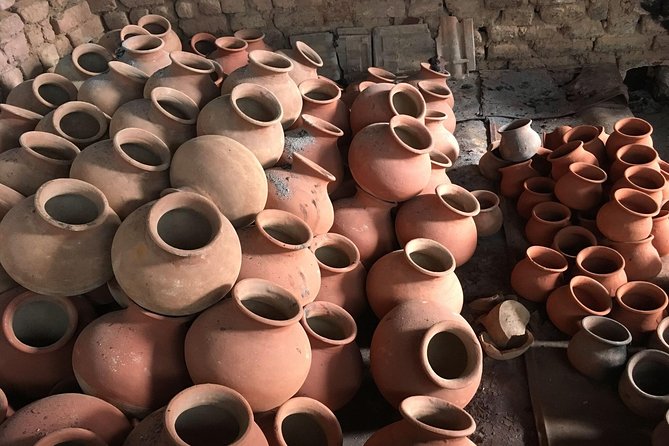
The tour includes a range of innovative businesses, including pottery-making, embroidery, bakery work, soap factory operations, recycling, leather tanning, and poppadom-making. The way these categories are presented is helpful. Even if you do not know the technical details, you can still grasp the bigger theme: skills and materials are constantly repurposed, and work continues because local demand and local needs keep it going.
Here’s how this becomes meaningful for you. When you see recycling or soap production in action, it reframes what you might think of as waste. It turns into input for other products. When you see pottery-making, you’re seeing craft mixed with practicality, because usable items matter more than showpieces. And when you spot food preparation like poppadom-making, you’re watching how something simple becomes part of everyday consumption.
Residential areas and street art come in here too. You’re not confined to workshop fronts. You’ll get glimpses of colorful murals, plus the religious variety that’s visible on the street. That’s a big part of the value: the tour gives you contrast, work beside homes, and art beside devotion.
What to watch for while walking (so you learn more)
Keep your eyes on patterns. Notice how different trades are organized, how materials seem to move between steps, and how the same street can hold multiple kinds of activity at once. Also pay attention to the visual language around you. In a place like this, signs, colors, and wall art can tell you what people consider important.
A few more Mumbai days to compare
- Mumbai: Full-Day Sightseeing Tour of Mumbai
★ 4.9 · 1,822 reviews - Private Mumbai Sightseeing Tour (Traveller’s Choice Award Winner)
★ 5.0 · 1,565 reviews - Elephanta Caves & Island Guided Private Tour
★ 5.0 · 1,327 reviews - Group Guided Walking Tour in Fort and Colaba
★ 5.0 · 1,073 reviews
Understanding what you’re seeing without turning it into a checklist
Some tours hand you facts and call it done. This one helps you connect the facts. As you walk, the guide helps you interpret how different businesses operate in dense conditions. You don’t just hear a list of trades. You get context for how each trade fits into daily life.
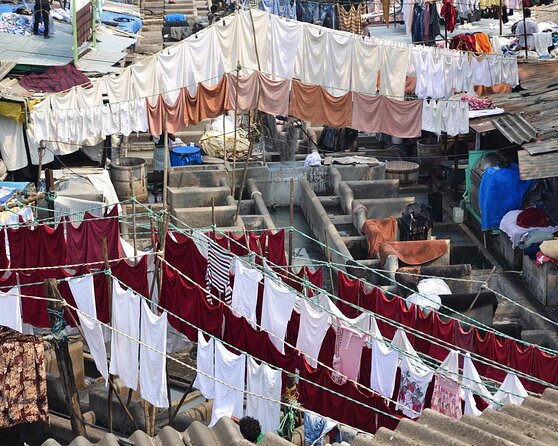
Take the recycling and soap factory examples. Recycling is not just one job, it’s the start of a chain that feeds other production. Soap, meanwhile, is something many people use without thinking about how it’s made or where inputs come from. When you see that process up close, you start to understand how resourcefulness becomes part of the local economy, not a special story reserved for documentaries.
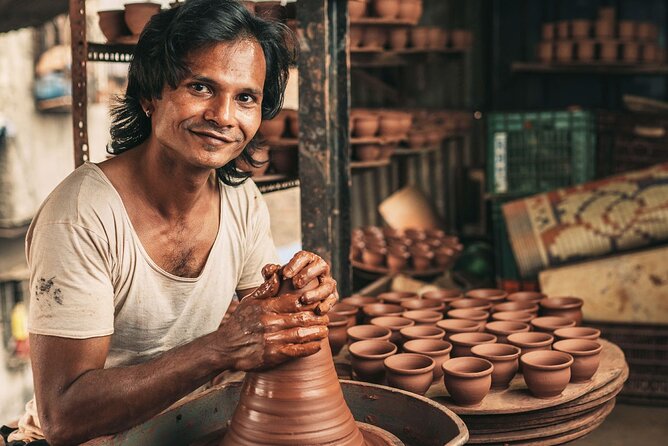
Then there’s the pottery-making angle. Even if you’re not personally crafting anything, seeing pottery-making alongside other trades helps you notice how different skills depend on materials, tools, and time. Craft is still labor, and labor still needs a market. That simple idea makes the experience feel real.
The street art and religious sites add another layer. In many cities, “sights” are separated from daily routines. Here, the neighborhood itself is the shared environment. The point is not to romanticize or oversimplify. It’s to show how community identity can be visible on everyday walls and in places of worship, right next to where people work.
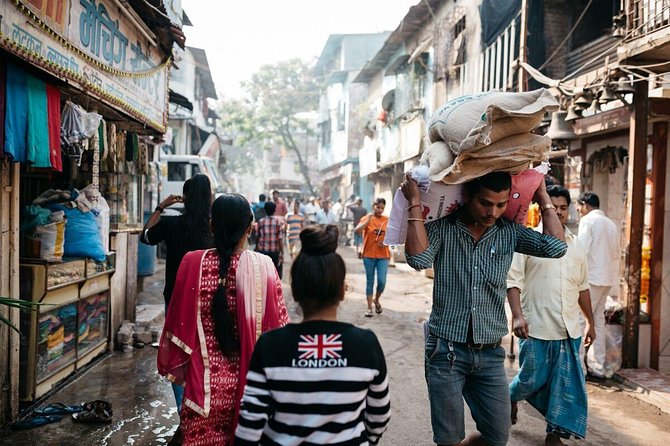
One possible consideration, and I’ll say this plainly: the density can feel intense. Expect narrow pathways, close-up scenes, and a lot going on at once. If you get overwhelmed easily in crowded places, take your time with your breathing, slow down when the group slows down, and keep your attention on what your guide is pointing out.
Stop 2 at Reality Tours and Travel: a short lesson on reinvestment
The second stop is brief, about 20 minutes, at Reality Tours and Travel (Dharavi). This is where the tour adds a practical human layer: you learn how funds are reinvested back into the community. It’s not a long lecture, but it gives you a way to connect your participation to local impact.
You’ll also enjoy a soft drink here. That break matters. After walking through work areas and residential lanes, you need a moment to sit, drink something cold, and let your observations settle.
Even in a short segment, this stop changes the emotional tone of the day. Instead of leaving with only images, you leave with a basic understanding of how the tour program is meant to support the community it visits. It doesn’t erase complexity, but it helps you think beyond the surface.
Price and value: is $29.09 really fair for 3 hours?
At $29.09 per person for about 3 hours, the value is strong if you care about guidance and context. This isn’t just a self-guided stroll. You get a local English-speaking guide, plus water (and a cold drink at the second stop). For a city like Mumbai, that kind of guidance is often what turns a confusing neighborhood walk into a coherent experience.
A few details add up:
- Group size is limited to a maximum of 25, which helps the guide manage questions and keep the group together.
- Admission is listed as free for the main stop and the short second stop, which helps you avoid surprise add-ons.
- You get a mobile ticket, meaning less paper hassle and fewer logistical headaches once you arrive.
The main tradeoff is what isn’t included: there is no hotel or residence pickup and drop-off. That’s normal for walking tours, but it means you need to plan your own way to Mahim Junction Railway Station. If you’re staying far away, factor in transit time so you’re not stressed.
If you like experiences that are short, structured, and built around learning what you’re actually seeing, this price feels reasonable. If you’re the type who only wants famous landmarks, Dharavi may feel like too much, too real. But if you want substance, the cost buys real interpretation and safety.
Getting the most out of the pottery-focused parts of Dharavi
Because the title highlights a pottery workshop, I’ll ground your expectations in what the tour data clearly supports: you’ll visit areas where pottery-making is happening as part of the broader range of trades. You’re not just passing by a pottery shop window. The tour is designed to show work activities as living processes.
Here’s how to make that pottery time count:
- Ask your guide what you’re looking at, even if you think it sounds basic. People often forget to ask simple questions, and that’s where learning actually happens.
- Take notes mentally on steps you notice, shape to firing to finishing, even if the exact stages aren’t spelled out at every moment.
- Focus on how pottery-making fits into the neighborhood economy, how it connects with materials and customers.
And one practical thing: bring a phone strap or keep your hands free for photos. You’ll be walking through active areas. The more you juggle gear, the more you’ll slow down and miss small details your guide points out.
Who should book this Dharavi tour and pottery workshop walk?
This is a great fit if you want:
- A guided way to understand Dharavi in a respectful, structured format
- A walking tour with clear stops and a local English-speaking guide
- A short window to see multiple trades, including pottery-making, recycling, and food production
- Street art and residential glimpses, not just a workfront tour
It’s also a good choice if you want safety and access. The tour is designed so you can explore a part of Mumbai you might find difficult to access independently. That doesn’t mean it removes all uncertainty, but it does give you a plan, a route, and someone who can explain what you’re seeing.
If you dislike walking, crowds, or you want a strictly comfortable, low-exertion outing, you might prefer something else. This is built around movement and on-the-ground explanations.
Should you book this Dharavi experience?
I’d book it if you want value plus real insight in a few hours. The combination of a local English-speaking guide, included water, and a route that connects trades like pottery-making with residential street art makes it more meaningful than a basic “see it and leave” stop.
You should skip it if you’re mainly chasing postcard sights, or if you know you struggle with walking in tight, busy areas. Dharavi is not a theme park. It’s a working neighborhood where daily life shapes what you see.
If you want an honest Mumbai story from street level, this is one of the better ways to do it.
FAQ
How long is the Dharavi tour and pottery workshop walk?
It’s about 3 hours (approx.).
Where do I meet for the tour?
The tour meets at Mahim Junction Railway Station in Mumbai, Maharashtra.
Where does the tour end?
It also ends at Mahim Junction Railway Station. Your guide can help with transport, such as a taxi, afterward.
What is included in the price?
A local English-speaking guide is included, and water or a cold drink is provided.
Is hotel pickup or drop-off included?
No, hotel or residence pickup and drop-off is not included.
How much does it cost?
The price is $29.09 per person.
Is the tour suitable for most people?
Most travelers can participate.
Is there a limit on group size?
Yes, the tour has a maximum of 25 travelers.
What is the cancellation policy?
Free cancellation is available up to 24 hours in advance of the experience’s start time for a full refund.
Recently added around Mumbai
- Mumbai Spice Markets and Bazaars Tour with Guide and Transport★ 5.0 · 42 reviews
- Customize private tour with pickup★ 5.0 · 95 reviews
- Mumbai 800 Year Worli Village: Talking Goddess, Old Fort & more★ 5.0 · 94 reviews
- Private Guided Bandra Half Day City Tour in AC Vehicle★ 5.0 · 72 reviews
- Mumbai by Night Guided Tour★ 5.0 · 6 reviews
- Gufran’s Slum Home Tour in the Mumbai Slums★ 5.0 · 19 reviews
- Private Walking Tour in Dharavi Slums★ 5.0 · 7 reviews
- The Panoramic Ridge Hike near Mumbai★ 5.0 · 7 reviews
Dharavi Slum Tours, compared.
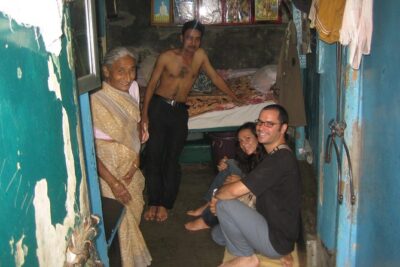
Dharavi slum tour in Mumbai by Female tour guides of the slum
Read our review →


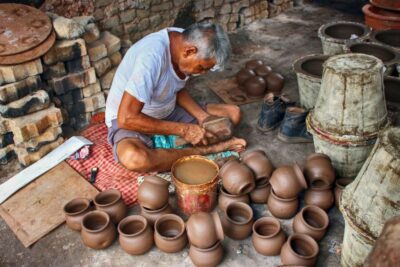
Dharavi Slum Slumdog Millionaire Tour with a Local
Read our review →
Dhobi Ghat Laundry and Dharavi Slum Tour with Local
Read our review →
Browse the lists this tour appears in