
Reviewed · DHARAVI SLUM TOURS
Dharavi Slum Tour – See the real Slum with a Local Guide
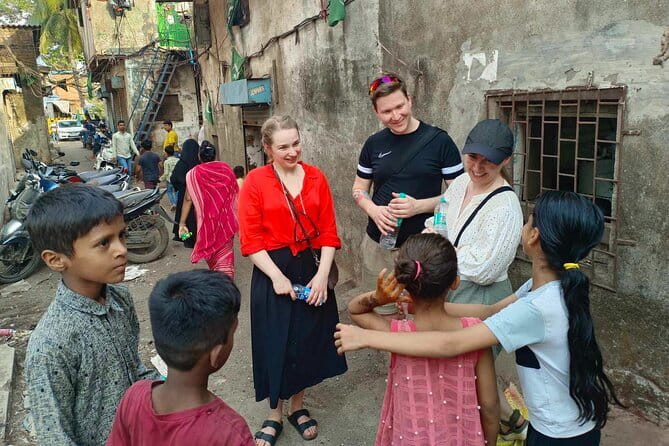
Dharavi changes how you see cities. This Dharavi Slum Tour is guided by an English speaker who lives in Dharavi, so you get the view from inside a working community, not from behind a fence. I also like that the walk is built around real routines and real trades, from where families live to the small recycling and manufacturing work that keeps people earning.
The main thing to consider is that this is a neighborhood walk, not a sit-down show. Come ready for comfortable walking shoes and expect the tour to depend on good weather, since it runs only when conditions allow.
In This Review
- Key reasons this Dharavi tour feels worth it
- Dharavi’s everyday life, explained by a resident
- What you’ll see in the 2-hour walk through Dharavi
- Entering Dharavi with a local guide who speaks English
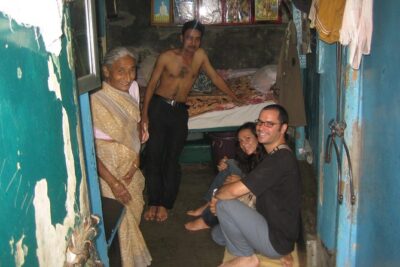
- Homes, children playing, and where families relax
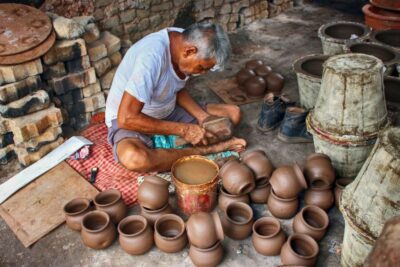
- Small factories and trade work: plastic, leather, textile, metal
- Slumdog Millionaire filming location inside Dharavi
- Price and value: $7.93 for a resident-led education walk
- Best fit: who should book this Dharavi Slum Tour
- Should you book this Dharavi Slum Tour?
- FAQ
- How long is the Dharavi Slum Tour?
- Where does the tour start and end?
- Who is the guide and what language do they speak?
- What’s included in the $7.93 price?
- Is food and drinks included?
- Does the tour run in any weather?
Key reasons this Dharavi tour feels worth it
- A guide who lives in Dharavi helps you connect daily life to the businesses you’ll see
- Two hours is long enough to understand how the place functions, without dragging on
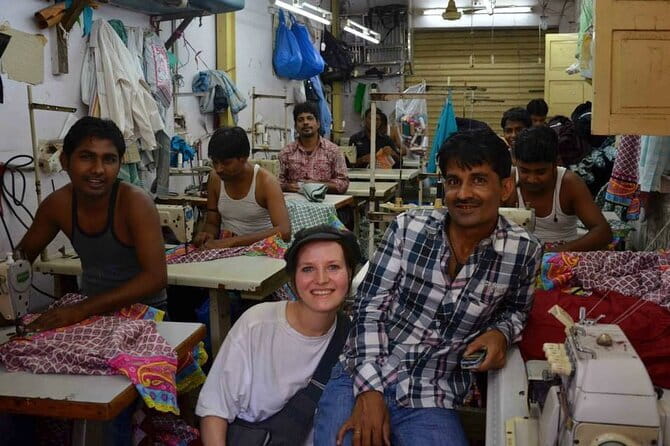
- Small industry walkthrough covers plastic recycling, leather, garment/textile, and metal work
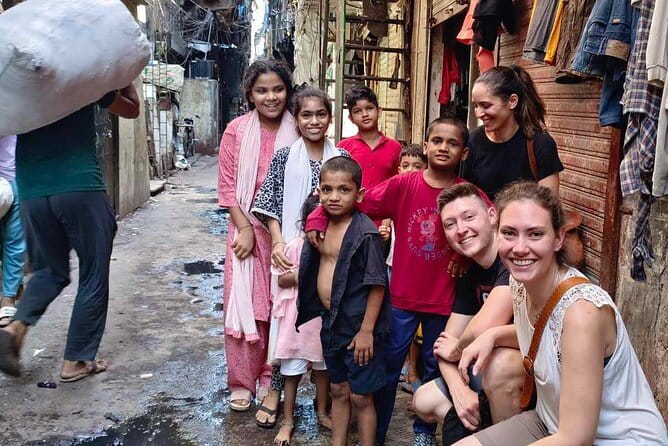
- Family life scenes include where people stay, where kids play, and where people relax
- Slumdog Millionaire filming reference adds a pop of pop-culture context inside Dharavi
- Small group size (up to 15) makes it easier to keep the tour personal and moving
Dharavi’s everyday life, explained by a resident
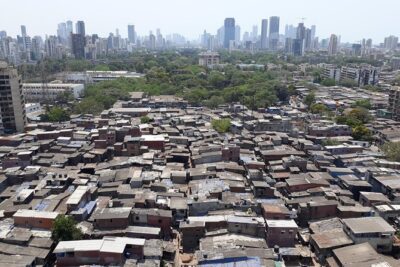
Dharavi is famous, and not in a gentle way. It’s the Mumbai neighborhood people associate with Slumdog Millionaire, and it has become a magnet for foreign visitors trying to understand what life looks like there. But the point of this tour is to correct your mental picture. Instead of treating Dharavi like a tragedy display, you’re shown daily life as it actually happens, including the parts that are practical, social, and even inspiring.
What makes this experience especially compelling is the guide. You’re not just getting facts, you’re getting a lived-in explanation. When someone lives there, they notice what outsiders usually miss. You tend to get a clearer sense of how space is used, how households function, and why so many small trades cluster together.
I also like the way the tour is framed as education. You’re not meant to walk away with a dramatic storyline. You’re meant to leave with a working understanding: what people do for a living, where they stay, how families share space, and how the local economy connects the community to the wider world. The tour even touches on how much business activity happens there, with an annual income figure shared as part of the overall context.
A few more Dharavi Slum tours around Mumbai:
- Dharavi slum tour in Mumbai by Female tour guides of the slum
★ 5.0 · 1,976 reviews - Mumbai: Dharavi Slum, DhobiGhat, and Dabbawallas Tour
★ 4.9 · 689 reviews - Dharavi Slum Tour
★ 5.0 · 625 reviews
What you’ll see in the 2-hour walk through Dharavi
This tour is built around one main stop in Dharavi, but it’s not just a quick glance. Plan on a focused, on-foot experience that moves through multiple parts of daily life during the same visit. The duration is about two hours, which is tight enough to keep the energy up, but long enough to see how people’s routines link to work.
You can expect to see areas tied to household life: where people stay, where family life unfolds, and how children spend their time. You’ll also see how people relax, which matters more than most first-time visitors expect. Relaxation is not a separate topic in a community like this, it’s part of the same fabric as work and household responsibilities.
Then there’s the work side. Your guide will point out what’s going on for earning, including several industries that the tour specifically highlights: plastic recycling, leather work, garment and textile production, and metal-related activities. The value here is not only that you learn the industry names. You learn what those trades look like in practice and how they fit into where people live and spend their time.
One more detail that can shape your perception: the tour is designed to dispel the idea that Dharavi is only misery. That doesn’t mean you should expect everything to be easy. It means the tour is trying to show the full reality, including the determination, creativity, and business activity that keeps people going.
Entering Dharavi with a local guide who speaks English
Your guide is an English speaking resident of Dharavi. That detail sounds simple, but it changes the whole tone of the tour. You’re more likely to ask questions that actually help you understand what you’re seeing, instead of guessing what it means.
The guide’s familiarity matters, especially when you’re walking through a place that outsiders often feel confused by. In at least one review, the guide was described as very familiar with the area and able to show the location of small factories. That kind of directing is exactly what helps you connect the dots as you walk.
Here’s how that translates into practical benefits for you. First, you won’t just see workshops. You’ll understand why they’re where they are and what they contribute to the local economy. Second, your experience becomes less about staring at poverty and more about recognizing systems: how materials flow into recycling and production, how skills show up in work, and how family life runs alongside business operations.
Also note the group size. With a maximum of 15 travelers, the pace is more controlled than in larger tours. That typically means you spend less time waiting and more time actually seeing and learning.
Homes, children playing, and where families relax
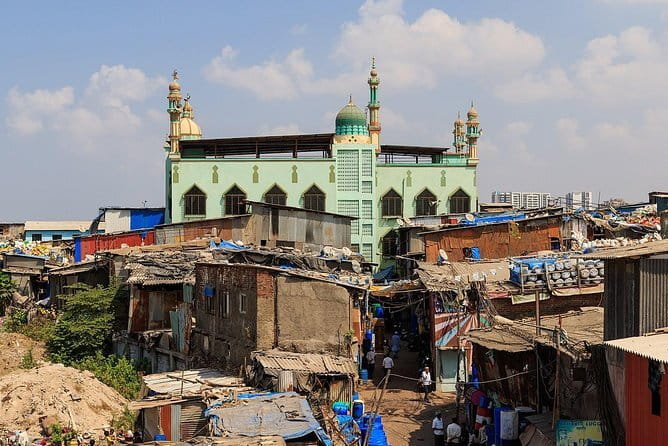
A big part of the experience is seeing the human side of Dharavi, not just its economic engine. The tour is set up to show where people live and how family life plays out in real space. You’ll see where family members stay and how day-to-day life continues right next to work activity.
You’ll also see children playing. That’s not a distraction. It’s the proof of something important: children are growing up here, and life for families does not pause for your sightseeing. When you notice that, your understanding shifts. You stop treating Dharavi as a set. You start treating it as a place where people have routines, responsibilities, and moments of normalcy.
The tour also includes time to see where people relax. That can be surprising if your mental model of slums is all hardship. But relaxation shows up because communities are social, and people need breaks. Even in tough conditions, people carve out small spaces for rest and conversation.
I recommend you keep expectations grounded. This is a real neighborhood. Your job is not to judge from the sidewalk, and it’s not to try to turn the visit into a charity mission. Instead, you’ll get more from it if you treat it as an educational walk about how life works, what people do for income, and what community members choose to share during a short guided visit.
A few more Mumbai days to compare
- Mumbai: Full-Day Sightseeing Tour of Mumbai
★ 4.9 · 1,822 reviews - Private Mumbai Sightseeing Tour (Traveller’s Choice Award Winner)
★ 5.0 · 1,565 reviews - Elephanta Caves & Island Guided Private Tour
★ 5.0 · 1,327 reviews - Group Guided Walking Tour in Fort and Colaba
★ 5.0 · 1,073 reviews
Small factories and trade work: plastic, leather, textile, metal
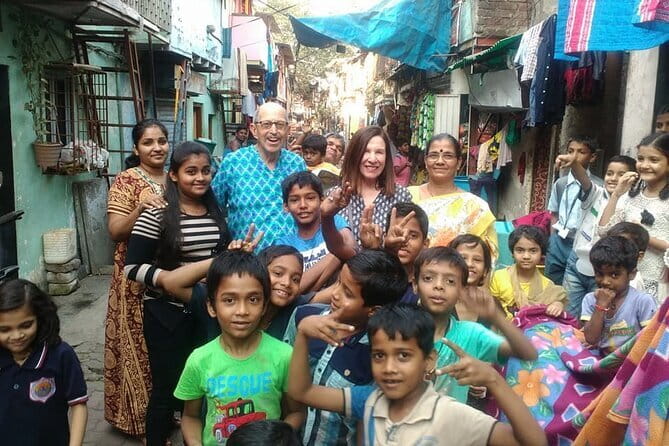
This is one of the strongest reasons to book this tour. You’ll get an on-foot look at multiple trades that operate within Dharavi, including plastic recycling, leather industry work, garment and textile production, and metal industry activities.
Why this matters for your understanding is simple. Those trades explain the neighborhood’s energy. Dharavi is often discussed as a place with limited resources, but the tour’s focus makes something else clear: there is real production and real business activity happening every day. That helps you see why the community isn’t only surviving. It’s working.
At least one review highlighted that the guide showed the area where small factories are located, and that the tour gave many insights into those businesses. That kind of orientation helps you connect what you see with how people earn. It also helps you understand the neighborhood as an ecosystem, not a random collection of workshops.
If you’re the type who likes to see how things are made, this section will satisfy you. You’re not just hearing that small industries exist. You’re watching the work themes that the tour names explicitly, and you’re getting context for why such trades cluster where they do.
One more interesting context point shared on the tour: there’s an annual income figure mentioned as part of how the local economy is discussed. Even if you don’t memorize the number, it points you toward the bigger idea behind the industries, scale.
Slumdog Millionaire filming location inside Dharavi
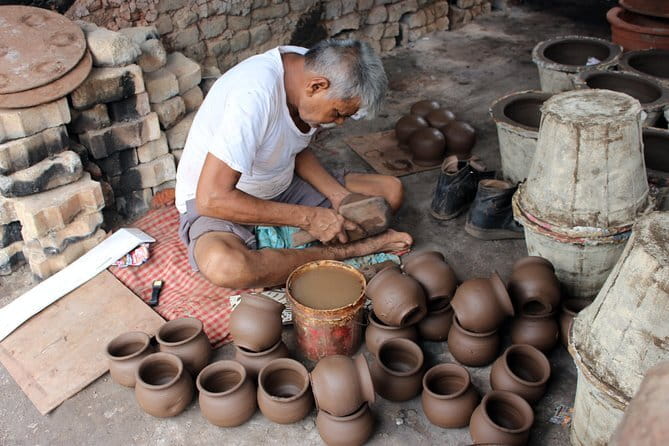
Pop culture is part of Dharavi’s international story. This tour includes a stop that references where Slumdog Millionaire was filmed inside Dharavi. That matters because it links your prior knowledge of the movie to the real place that inspired it.
I’d treat this as more of a context moment than a full-on movie reenactment. The tour’s main focus stays on daily life and work, but the film reference helps you reframe what you thought you knew. Instead of seeing the movie as pure drama, you can compare your impression from the screen with what the guide shows you in real neighborhoods.
If you’re traveling with friends who know Dharavi only from the movie, this can also be a useful bridge. It gives you something shared to talk about while you walk, and it keeps the experience from feeling like only socioeconomic information.
Price and value: $7.93 for a resident-led education walk
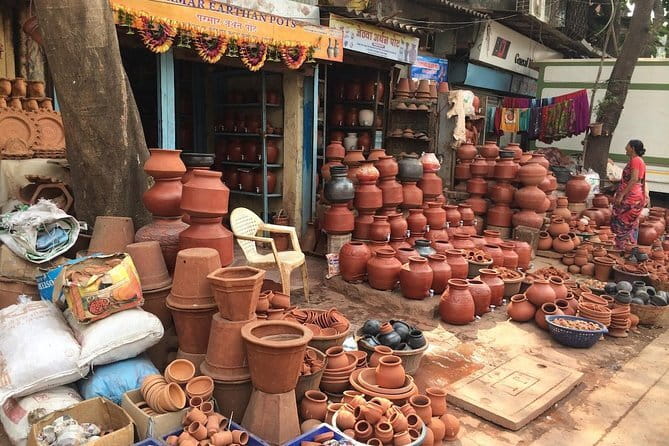
At around $7.93 per person, this is one of the lower-priced ways to do a guided look at Dharavi. The key question is what you’re buying with that price, and the answer is mostly human and practical value, not luxury.
You’re paying for:
- An English speaking guide who lives in Dharavi
- Entrance fees included for the activities on this tour
For many visitors, the best value is the guide perspective. Someone who lives there can explain what you’re seeing as part of daily life, not as a dramatic object. That kind of interpretation is hard to get from general sightseeing.
The trade-off is also part of value. The tour lasts about two hours, so it’s a highlight tour rather than a long, slow study. You won’t get every street detail or every industry story. Still, for a first visit, two hours can be enough time to leave with a clearer understanding and a calmer, more accurate mental picture.
Also keep in mind what’s not included. Food and drinks are not part of the price. Since you’ll be walking through a working neighborhood, you should plan your own water and snacks. That’s the easiest way to avoid a late-tour energy crash.
Best fit: who should book this Dharavi Slum Tour
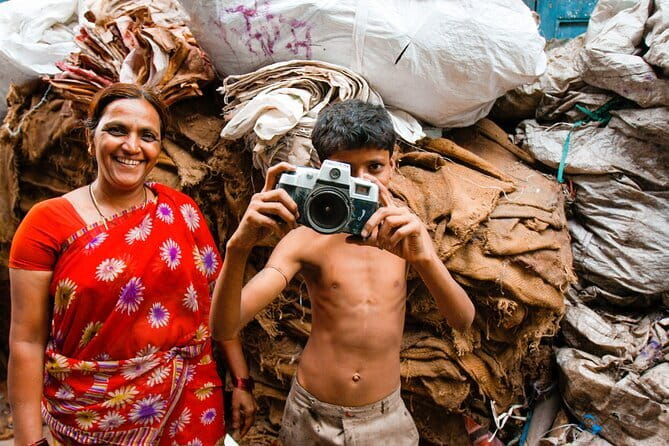
This tour is a good fit if you want an educational, resident-led look at Dharavi that goes beyond the movie myth. It’s especially good for you if you:
- Prefer local context over generic facts
- Want to see how small industries tie into daily life
- Like compact tours that still cover multiple themes
- Travel in small groups and appreciate a maximum of 15 travelers
It’s also a solid choice for first-time Mumbai visitors who want one meaningful neighborhood experience without committing an entire day. Just remember the walk is real and the setting is active. You’ll learn more by staying open-minded and respectful than by treating it like an attraction.
If you’re hoping for a comfortable, controlled environment, you might find that this tour is more grounded than that. It’s built to show reality. That’s the point.
Should you book this Dharavi Slum Tour?
I think you should book it if your goal is understanding. The resident guide angle is the big win, and the focus on real trades like plastic recycling, leather, garment/textile, and metal work gives the experience structure. Add in the Slumdog Millionaire filming reference, and you get a familiar story anchored to a real neighborhood.
I’d skip it or adjust expectations if you dislike walking, if you need long, unhurried viewing, or if you’re traveling on a day where weather could be an issue. Since the tour requires good weather, it’s smart to plan with flexibility.
If you want a short, high-context Mumbai experience that helps you see Dharavi as a functioning community rather than only a headline, this is an easy yes.
FAQ
How long is the Dharavi Slum Tour?
The tour is about 2 hours.
Where does the tour start and end?
It starts at Third Wave Coffee, Tip Road, Unit no.58, Ground, Ram Mahal, Senapati Bapat Marg, Marinagar Colony, Station, Mahim, Mumbai, Maharashtra 400016, India and ends back at the meeting point.
Who is the guide and what language do they speak?
The tour includes an English speaking guide who lives in Dharavi.
What’s included in the $7.93 price?
The tour includes the English speaking guide, plus all entrance fees.
Is food and drinks included?
No. Food and drinks are not included.
Does the tour run in any weather?
It requires good weather. If it’s canceled due to poor weather, you’ll be offered a different date or a full refund.
Recently added around Mumbai
- Mumbai Spice Markets and Bazaars Tour with Guide and Transport★ 5.0 · 42 reviews
- Customize private tour with pickup★ 5.0 · 95 reviews
- Private Guided Bandra Half Day City Tour in AC Vehicle★ 5.0 · 72 reviews
- Mumbai 800 Year Worli Village: Talking Goddess, Old Fort & more★ 5.0 · 94 reviews
- Mumbai by Night Guided Tour★ 5.0 · 6 reviews
- Gufran’s Slum Home Tour in the Mumbai Slums★ 5.0 · 19 reviews
- Private Walking Tour in Dharavi Slums★ 5.0 · 7 reviews
- Twilight in Mumbai: Discover the City by Night with Food Options★ 5.0 · 24 reviews
Dharavi Slum Tours, compared.
Dharavi slum tour in Mumbai by Female tour guides of the slum
Read our review →

Dharavi Slum Slumdog Millionaire Tour with a Local
Read our review →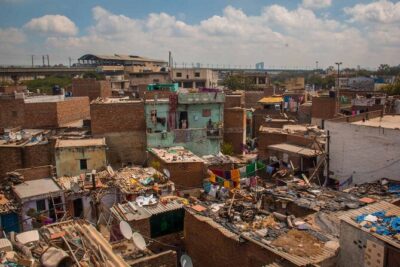
Dhobi Ghat Laundry and Dharavi Slum Tour with Local
Read our review →
Browse the lists this tour appears in