
Reviewed · WALKING TOURS
Assi to Manikarnika Walking Tour: Varanasi Ghats & Lanes
Varanasi clicks on this walk. This 3 to 4 hour Assi-to-Manikarnika route strings together the city’s most meaningful ghats and the tight lanes between them, with a professional English-speaking guide at your side.
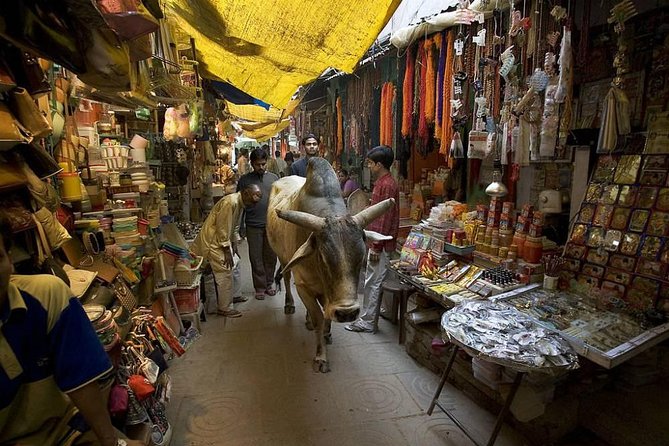
I especially like the small-group size, max 6. You move at a human pace, stop often for context, and the alleyways can get a little chaotic in a fun way, with cows and monkeys popping up along the route.
One consideration: the tour includes a temple stop where access can be limited, so you may not get to see much interior space. If you’re hoping for a long, hands-on temple visit, plan for a quick look and keep expectations flexible.
In This Review
- Key points to know before you go
- Why this walking tour is worth your time
- Assi Ghat start: Subah-e-Banaras and the Ramcharitmanas story
- Kedareshwar Temple steps: South Indian style in narrow lanes
- Cremation-ghat symbolism at the Harishchandra connection
- Chet Singh Fort and the royal riverfront viewpoint
- Maratha-era haveli and Darbhanga Palace balconies
- Dasaswamedh Ghat: the loud center and the Ganga Aarti energy
- Mir Ghat lanes: old Banaras, temples, and daily life
- Lalita Ghat: Nepali-style Lalita Devi Temple and wooden pagoda details
- Manikarnika Ghat ending: the eternal flame and what it means
- Price, value, and what $25 really buys you
- Logistics that matter on foot in Varanasi
- Who should book this tour
- Should you book Assi to Manikarnika?
- FAQ
- How long is the Assi to Manikarnika walking tour?
- Where does the tour start and where does it end?
- What’s included in the price, and what’s not?
- How many people are in the group?
- Is the walk physically demanding?
- Can I cancel and get a full refund?
Key points to know before you go
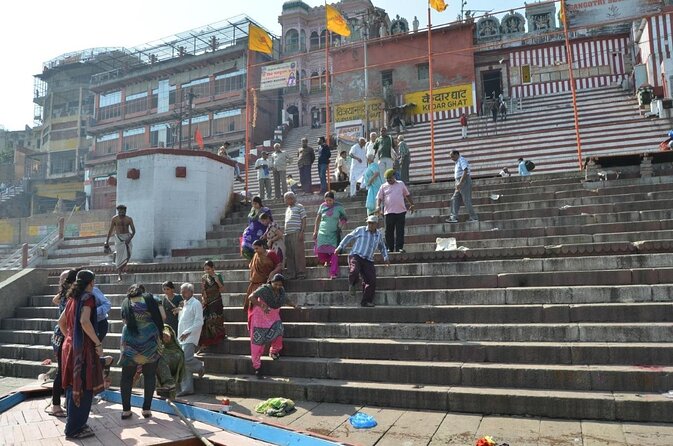
- Assi to Manikarnika route links the spiritual south of Varanasi to the city’s most sacred cremation ground
- Small group, private feel max 6 people, with time to pause and take in the scene
- Guided explanations at key sights from Tulsidas and Ramcharitmanas to cremation-ghat symbolism
- Old Banaras lane-walking at Mir Ghat, with narrow streets and real local life around you
- Architecture variety on the riverfront including South Indian temple steps, Maratha-era haveli, and Nepali-style pagoda elements
- Meets a serious part of the city at Manikarnika Ghat, where the meanings are heavy and the atmosphere is intense
Why this walking tour is worth your time
A good Varanasi tour should do two things at once: show you what you’re looking at, and explain why locals treat it as important. This one focuses on exactly that, by walking the ghat sequence and the connecting lanes rather than dropping you at a few viewpoints and calling it a day.
You also get a clear sense of flow. Starting at Assi Ghat sets a quieter tone, then you gradually move through places tied to stories, devotion, forts, and palaces, before ending at Manikarnika Ghat. That ending matters, because it frames the whole walk with the themes of life, death, and liberation.
At $25 per person for a 3 to 4 hour guided walk, it’s not trying to be a luxury production. It’s a practical way to see major sights with a guide, in a group small enough that questions actually get answered.
More Walking Tours in Varanasi
- Private Heritage and Spiritual Walk Tour – Varanasi Kashi
★ 5.0 · 172 reviews - 3 Hour Walking Tour of Buddhism in Sarnath
★ 5.0 · 160 reviews - Cultural & Spiritual Trails of Old Town Varanasi Guided Walking Tour
★ 4.5 · 73 reviews
Assi Ghat start: Subah-e-Banaras and the Ramcharitmanas story
The tour begins at Assi Ghat, the southernmost ghat of Varanasi. Assi is known for morning rituals and for the serene confluence where the Assi River meets the Ganga. Even if you’re not there at the most “ritual-forward” moment, the area sets the baseline rhythm of the day: pilgrims moving with purpose, riverfront life, and the sense that this city wakes spiritually.
A highlight here is a visit tied to saint-poet Tulsidas and the composition of the Ramcharitmanas. That detail gives you more than a postcard view. It connects literature and devotion in a place where people don’t separate the sacred from daily routine. You’ll also notice elements like akharas nearby, which help explain why Varanasi is not just about religion as a building, but religion as practice.
What I like about this opening is that it helps you “read” the rest of the walk. Once you understand that Varanasi sights often carry layered meanings, you’ll start seeing symbols everywhere, even in places that look purely functional.
Kedareshwar Temple steps: South Indian style in narrow lanes
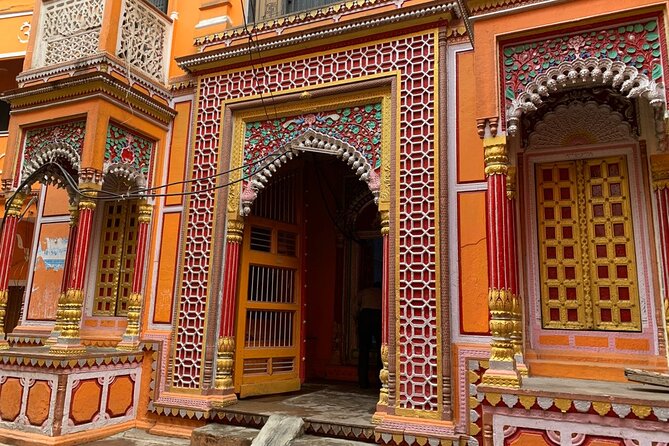
From Assi’s riverfront energy, you move into the more intimate street level. One stop takes you through colorful steps leading to Kedareshwar Temple. The tour calls out the South Indian architectural feel, which matters because Varanasi is often discussed as one single aesthetic. Here, you see how different traditions and design languages show up in one place.
Practical note: stairs and steps are part of the experience. That’s not a dealbreaker, but it helps to wear supportive footwear and expect a few uphill sections and crowd-adjacent narrow passages.
If you’re the type who likes architecture details, pause here and look closely at the forms and the way the temple sits in relation to the steps and surrounding lanes. Even when you only get a brief viewing window, the style difference is memorable.
Cremation-ghat symbolism at the Harishchandra connection
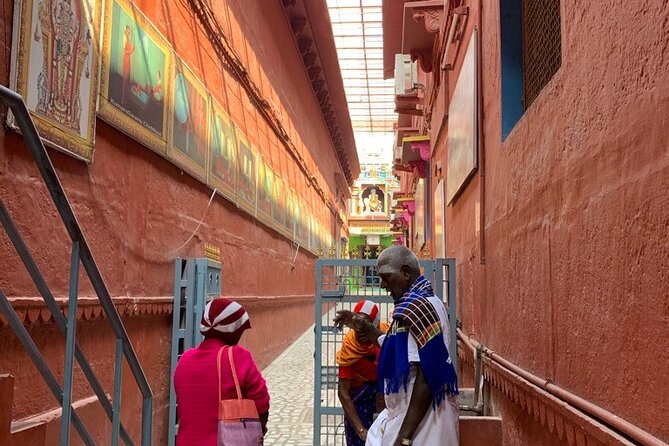
Next comes one of the more emotionally significant stops: an ancient cremation ghat associated with King Harishchandra and the ideas of truth (dharma) and liberation. This is not a sightseeing pause you can treat like a neutral photo stop. The guide’s explanations are the key that turns what you see into something you understand.
If you’re sensitive to intense imagery, it helps to mentally prepare for a serious atmosphere. You don’t need to force yourself to look at anything directly. You can observe from a respectful distance while listening, and that still counts.
One reason this section works on the walking-tour format is that it’s not isolated. You experience it in sequence, after palaces, forts, and temple steps. The meaning lands harder when you’ve already built context for why Varanasi holds these themes so tightly.
A few more Varanasi days to compare
- Walking tours – for an authentic Varanasi experience
★ 5.0 · 40 reviews - City of good life walk (South Varanasi Walk)
★ 5.0 · 37 reviews - Private Cultural Walking Tour of Varanasi with Guide
★ 5.0 · 16 reviews - Fontainhas Heritage Walk by Make It Happen
★ 5.0 · 2,834 reviews
Chet Singh Fort and the royal riverfront viewpoint
Chet Singh Fort enters the story with an almost military past. It was once a powerful stronghold during conflict involving the British, and the stop includes riverfront views plus the sense of royal history layered on the same shoreline.
This is a nice breather moment in the itinerary because forts give you a clear sense of “place.” You can look across the riverfront and connect what you’re walking past to why it mattered strategically. Even if you don’t care about wars, you’ll likely care about the views and the geography.
It also helps you understand that Varanasi’s ghats aren’t random. The city’s layout and power structures influenced who controlled access, where people built, and how the riverfront became both sacred and significant.
Maratha-era haveli and Darbhanga Palace balconies
Then the tour moves into architecture that feels calmer and more photogenic. Raja Rao Balaji’s 1720 Peshwa Haveli (Maratha-era) is described as a quiet scenic place, good for photography and easier walking.
After that, Darbhanga Palace shows up with majestic balconies looking over the Ganga. If you like viewpoints and photo frames, this is where you’ll probably slow down on purpose.
What makes these stops valuable is that they round out the ghats-only narrative. You start to see Varanasi as a city where devotional life, governance, and elite residence all coexist along the same river line.
Dasaswamedh Ghat: the loud center and the Ganga Aarti energy
The walk shifts to Dasaswamedh Ghat, widely treated as the vibrant center of Varanasi. Here, you’ll hear about legends tied to Lord Brahma, and you’ll also connect the setting to the famous Ganga Aarti energy.
Even if you don’t catch the exact ceremony at a perfect moment, this ghat tends to have constant spiritual motion. It’s the part of town that reminds you this is not a museum. People come here to live their beliefs in front of witnesses, and the river is the stage.
A potential drawback at any busy ghat like this: crowds. That’s normal for Varanasi, but it can affect how long you can linger in one spot. Having a guide helps because they know where to stand, how to move, and how to keep you on track.
Mir Ghat lanes: old Banaras, temples, and daily life
From Dasaswamedh, you walk through Mir Ghat, described as having ancient temples and narrow winding lanes. This is where the walking tour format really shines, because the “atmosphere” is not just the river. It’s the way people move around each other in tight spaces.
Mir Ghat gives you a blend of rituals and local culture. This is also the area where you’re most likely to feel what it’s like to be a small person in a big living city. You’ll likely hear conversations, see small religious gestures, and notice how everyday tasks happen right next to sacred spaces.
If you want an authentic-feeling Varanasi experience, this is the section you’ll remember most. Just keep your pace careful in crowded lanes, and watch where you step.
Lalita Ghat: Nepali-style Lalita Devi Temple and wooden pagoda details
The walk continues to Lalita Ghat, including the Lalita Devi Temple with a Nepali-style feel. The tour also highlights iconic wooden pagoda architecture connected to Nepal’s royal family.
This stop is often calmer than the big-celebration ghats. It’s a quieter cultural pause that helps reset your brain after busy lanes and more intense riverfront moments.
Architecture lovers should pay attention here, because the wooden pagoda elements are a visual change from the more common stone-and-stair riverfront look. Even if you only get a brief look, you’ll likely find the details stick in your memory.
Manikarnika Ghat ending: the eternal flame and what it means
The tour ends at Manikarnika Ghat, described as the most sacred cremation ground in Hinduism. This is the final, heavy beat of the itinerary and the place associated with an eternal flame said to be lit by Lord Shiva.
This is not a stop designed to be comfortable. It’s designed to be meaningful. The tour frames it around the idea of life, death, and liberation, and that theme ties the whole walk together. You don’t just see the place, you understand why the place is treated as sacred and why people respond to it with ritual and faith rather than avoidance.
If you’re coming with mixed feelings, that’s normal. You can still appreciate what the guide explains, and you can still be respectful in how you observe. You do not have to force yourself into a direct view to get value from the moment.
Price, value, and what $25 really buys you
At $25 per person for a 3 to 4 hour guided walk, the value comes from a few specific things:
- You get a professional guide in English included.
- The route covers multiple major ghats and lane sections, not just one postcard location.
- Stops listed with admission are marked free, which helps keep the day predictable.
- The group stays small, max 6, so you get a more personal pace.
The biggest “hidden” value here is time. With a guide, you spend less time figuring out what is where, and more time learning why each place matters. In a city like Varanasi, that difference can be the whole trip.
What costs extra: food and drinks are not included. If you need private vehicle pickup and drop-off, it’s $10 per person extra direct payment.
Logistics that matter on foot in Varanasi
This is a walking tour, so your comfort depends on your basics:
Wear supportive shoes because steps and uneven edges are part of the experience. Use a light layer if you’ll be out in the morning and the sun ramps up quickly. Bring sun protection and enough water for your own comfort, since food and drinks are not included.
The tour runs within 6:00 AM to 5:00 PM, Monday through Sunday. If your goal is less crowding and a calmer feel at the start, earlier options within that window usually work better.
Also check your expectations around temple interiors. One stop may feel more like a quick look than a full entry, especially if access is restricted.
Who should book this tour
Book this if you want a guided Varanasi ghats and lanes experience that covers the big names without turning into a rushed checklist. You’ll get the most out of it if you like context, storytelling, and walking at a human pace.
It also suits you if you don’t want to manage navigation through tight alleys on your own. The route is designed for staying together and keeping momentum without speeding through.
If you’re extremely sensitive to the cremation-ghat atmosphere, you should still consider this carefully. You can choose to look briefly and step back, but this is a serious itinerary.
Should you book Assi to Manikarnika?
I’d book it if you want one solid half-day that hits the major ghats, the lane life, and the spiritual themes that make Varanasi make sense. The small group pace and the guide-led explanations are the main reasons it’s worth your money.
Pass or choose another option if you’re hoping for long interior temple visits and a more comfortable, lighthearted tour. One temple stop may not deliver the inside access you want, and the ending at Manikarnika Ghat is intense by design.
FAQ
How long is the Assi to Manikarnika walking tour?
The tour is about 3 to 4 hours long.
Where does the tour start and where does it end?
It starts at Assi Ghat and ends back at the meeting point.
What’s included in the price, and what’s not?
The tour includes a professional English-speaking guide, and other language guides are available on demand and availability. Food and drinks are not included, and hotel pickup or drop-off by private vehicle is not included (it is offered as an extra $10 per person direct payment if needed).
How many people are in the group?
The minimum is 2 people per booking, and the maximum is 6. It is a private tour or activity, meaning only your group participates.
Is the walk physically demanding?
It’s for travelers with a moderate physical fitness level, since you will be walking and moving through narrow lanes and steps.
Can I cancel and get a full refund?
Yes. You can cancel for free up to 24 hours in advance for a full refund. If you cancel less than 24 hours before the start time, the amount paid is not refunded.
Recently added around Varanasi
- Private Guided Tour of Varanasi with Licensed Local Guide★ 5.0 · 15 reviews
- Complete Varanasi Tours★ 5.0 · 11 reviews
- Private Cultural Walking Tour of Varanasi with Guide★ 5.0 · 16 reviews
- City of good life walk (South Varanasi Walk)★ 5.0 · 37 reviews
- Cooking Class with Sona★ 5.0 · 12 reviews
- Buddhist Tour 7 Day★ 4.5 · 15 reviews
- Boat Ride on the Ganges in Varanasi★ 4.5 · 7 reviews
- City tour of varanasi with official tour guide★ 5.0 · 30 reviews
Walking Tours, compared.
The Great Indian Food Tour: Old Delhi Food and Heritage Walk
Read our review →

Old Delhi Food, Heritage&Cultural Walk with Rickshaw ride to Masterji Kee Haveli
Read our review →
Fontainhas Heritage Walk At Latin Quarters of Goa
Read our review →Browse the lists this tour appears in