
Reviewed · WALKING TOURS
Agra Walking Tour
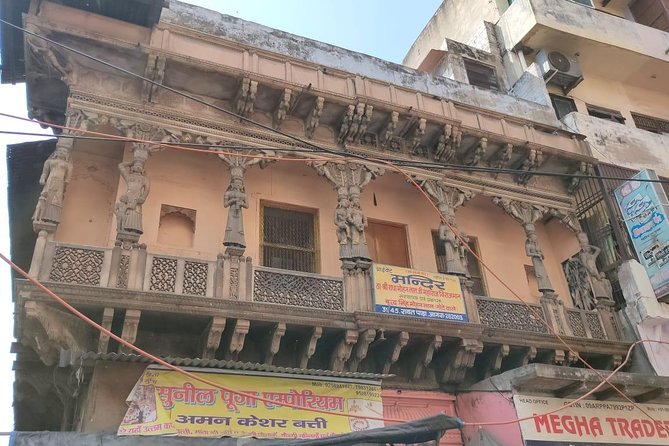
Agra changes when you walk with locals. This private 2 to 3 hour stroll threads together Jama Masjid and everyday neighborhoods, with short stops at a 650-year-old temple and the old Agra Fort Railway Station, then you head back to where you started.
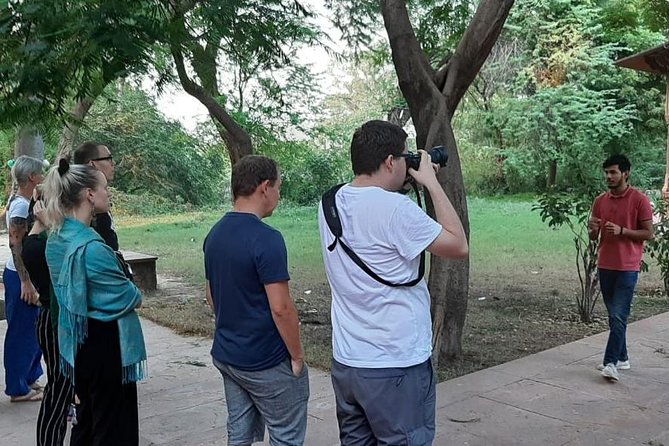
I love two things most. First, the market-to-temple mix that takes you through Kinari Bazar and Subash Bazar in the way people actually use these streets. Second, the English-speaking local guide and the private format, so you get personal attention instead of rushing with a big crowd.
My only caution is timing. The walk is advertised as 2 to 3 hours, but if the start is late or the pace runs short, it can feel closer to a quick spin. I’d also recommend being clear about what you want to see up close, since one mosque-related detail may not be covered unless you ask.
In This Review
- Quick takeaways before you go
- Why this Agra walk feels like the real city
- Pickup, mobile tickets, and how the route works in practice
- Jama Masjid stop: a big mosque and a fast orientation
- Shri Mankameshwar Mandir: 650 years of stories in one stop
- Agra Fort Railway Station: the most unusual stop on the day
- Kinari Bazar and Subash Bazar: markets where locals still shop
- Kinari Bazar, a 400-year-old market
- Subash Bazar, wholesale Indian wear and street energy
- Gopal Das Pethe Wale Johri Bazar: watching pethe made from white pumpkin
- The final wander: small places you rarely find on maps
- Pacing and duration: what 2 to 3 hours really means
- Price value at $11: why it can work, and when it won’t
- Guide styles and what to look for on the day
- Who should book this Agra walking tour
- Should you book it?
- FAQ
- How much does the Agra Walking Tour cost?
- How long is the tour?
- Is pickup offered?
- Is the tour private?
- What is the meeting point and where do we end?
- Are admission tickets needed for the stops?
- Is food included?
- What days and hours does the tour operate?
- What happens if weather is bad?
Quick takeaways before you go
- Private tour, $11 price: Great value for a guided walk with transportation support.
- Big landmark, then local lanes: Jama Masjid is first, then you move into markets.
- 650-year-old Shri Mankameshwar Mandir: A stop for temple stories and older religious life.
- Agra Fort Railway Station: A distinctive British-era architecture stop, built into the city’s layers.
- Pethe lesson at Johri Bazar: You get to watch pethe being made from white pumpkin.
- Weather matters: The tour notes good weather is required for the experience.
Why this Agra walk feels like the real city
Taj Mahal is the headline, but Agra is more interesting when you see how people pray, shop, and snack when tourists are gone. This walk is built around that idea: you start with major religious architecture, then you shift into neighborhoods and markets that have been running for centuries.
You also get a practical benefit for planning your day. The tour is short enough to fit around other Agra sights, but it is not just a list of famous monuments. By the time you hit the bazaars, you are seeing the city’s daily rhythm, not just the postcard version.
More Walking Tours in Agra
- Agra: Street Food Walking Tour, Spice Market, & Tuk-tuk Ride
★ 4.9 · 102 reviews - Flavours of Agra Food walk
★ 5.0 · 25 reviews - Agra: Sadar Bazar Food Market Night Walking Tour by Tuk-Tuk
★ 4.9 · 25 reviews
Pickup, mobile tickets, and how the route works in practice
This is a private tour, meaning only your group goes with the guide. You also get an English-speaking local guide and transportation will be provided. Even though it’s called a walking tour, you are not stuck doing every meter on foot. The stops are spaced so the guide can move you between areas efficiently.
You also get a mobile ticket, plus confirmation at booking. Since the meeting point is near public transportation, you should have an easier time getting to Jama Masjid area without needing a complicated logistics plan.
One detail worth noting from real-world guide styles: some guides run the day with extra energy and use quick transit hops, like metro or short tuk tuk rides, when it helps you cover more ground and feel less stuck in traffic.
Jama Masjid stop: a big mosque and a fast orientation
You begin at Jama Masjid Agra, with about 20 minutes at the mosque. Admission is free for this stop, so you can focus on walking, looking around, and understanding the place as part of Agra’s local life.
In a short time, the goal is orientation. You get the chance to see one of the biggest mosques in the city and get your bearings for the rest of the walk. If you care about specific architecture details, be ready to ask your guide to point them out. One traveler noted they had to request certain entrance details to get the full effect.
This is also a good starting point for photo planning. Even if you keep your camera away for much of the walk, the mosque gives you a strong visual anchor for your day.
Shri Mankameshwar Mandir: 650 years of stories in one stop
Next is Shri Mankameshwar Mandir, another 20-minute stop with free admission. The temple is described as 650 years old, and that age matters because it changes how you think about the city. You are not just looking at stone, you are seeing a place that has served spiritual life long enough to be woven into community memory.
What you’re really getting here is story time. The stop is designed around the kinds of narratives and meanings people carry with them at religious sites. In a short walk format, that kind of guided context is what turns a location into an experience.
If you like calm pacing after a larger landmark, this is also a nice reset. The temple stop gives you a chance to slow your steps and connect to the quieter side of Agra.
A few more Agra days to compare
- Agra: Street Food and Walk Tour with Spice Market by Tuk-Tuk
★ 5.0 · 18 reviews - Agra Full-day Tour Taj Mahal, Agra Fort & Secret Walking Tour with Private Car
★ 5.0 · 17 reviews - Agra Heritage & Cultural Walk
★ 4.5 · 13 reviews - Agra City Cultural Walk
★ 5.0 · 10 reviews
Agra Fort Railway Station: the most unusual stop on the day
Then the tour heads to Agra Fort Railway Station for about 20 minutes, and admission for this stop is included. This is not a typical museum-style stop. The highlight here is the architecture and the layered storytelling: it is described as the oldest railway station in the city, built by the Britishers, and known for the kind of structure that stands out because it was shaped by a different era of building.
Why I like this stop for your Agra day: it breaks the usual pattern. Instead of moving from mosque to temple to bazaar, you get a civic landmark that shows how transportation and power shaped the city. It also tends to be an easy place to linger, because the details naturally pull your eyes along the building lines.
One caution: because the stop is time-limited, don’t plan to do deep photography or long reading. Treat it as a guided glance at a place with many stories, then use the time you have to take in the overall design.
Kinari Bazar and Subash Bazar: markets where locals still shop
After the major sites, you move into markets, and this is where the tour earns its off-the-beaten-path promise.
Kinari Bazar, a 400-year-old market
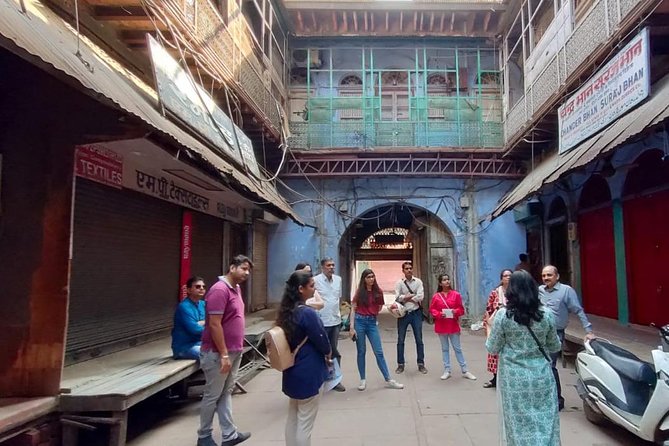
Kinari Bazar is the next stop, about 20 minutes, free admission. It is described as a 400-year-old market and a place where time feels different. The value here is simple: you are walking through a market street that is old enough to have outlasted multiple waves of commerce and still looks and feels like an active shopping area.
If you like cultural context, your guide’s job is to translate what you see into meaning. You can watch how people browse, how shops are organized, and how the street works as a system. For many people, this is when Agra starts to feel like it belongs to itself, not just to visitors.
Subash Bazar, wholesale Indian wear and street energy
Then it’s Subash Bazar for about 20 minutes, free admission. This stop is described as a wholesale market for Indian wear, and it is framed as a paradise to see locals shopping, with a great vibe.
This is also a practical shopping moment if you want fabric, clothing, or accessories. The tour format means you are not promised a long shopping spree, but you will see enough of the market to understand what is available and how bargaining and browsing typically works.
From a pace point of view, this is a great late-stage market stop because your eyes have already been trained by the earlier landmarks. You know what to look for, and the market details start to click.
Gopal Das Pethe Wale Johri Bazar: watching pethe made from white pumpkin
The tour’s sweet-focused moment is at Gopal Das Pethe Wale Johri Bazar for about 15 minutes. Admission is included here, and the big theme is pethe, the famous Agra sweet.
The standout detail is how it is described: pethe made from white pumpkin. That’s the kind of specific local ingredient detail you can’t pick up from a generic food stop. You get a quick look at the process and the story behind it, which makes the sampling part feel earned instead of random.
If you like food as a doorway into culture, this stop is a strong payoff. It’s short, but it gives you something concrete to remember from Agra besides architecture.
The final wander: small places you rarely find on maps
The last portion is about 25 minutes exploring Agra with your guide, in smaller places whose locations are said to not be easily found online. This is where the tour tries to go beyond the standard circuit.
The value of this segment is that it turns your guided walk into a conversation with the city. Instead of only seeing sites that are already packaged for tourists, you get brief access to lesser-known streets where stories are the main attraction.
It’s also the part most likely to shape how you feel at the end. If your guide is good at reading interest level, you might get more meaningful stories and quick side glances. If you prefer only famous landmarks, you might find this part lighter.
Pacing and duration: what 2 to 3 hours really means
The tour is advertised as 2 to 3 hours, with short time blocks at each stop. That format is friendly if you are sightseeing efficiently. You get multiple locations without losing your whole day.
Still, based on what you can see in real-world experiences, the biggest risk is uneven pacing. A late start or an overly rushed path can shorten the experience in ways that feel disappointing, especially if you want more time at Jama Masjid or more browsing time in the markets.
Here’s how you can protect yourself: come with a clear mental checklist. Decide what you care about most, mosque details, temple stories, station architecture, market shopping, or the pethe focus. Then ask your guide early to make sure your top priorities are actually covered during the allotted time.
Price value at $11: why it can work, and when it won’t
At $11, the value is the combination. You get a private format, an English-speaking local guide, transportation provided, and multiple major stops with some admission items included.
For budget-minded travelers, that price can be a smart trade. You’re paying for guided direction through areas that are not as straightforward to navigate when you are relying on your own instincts, especially in a dense market environment.
The main reason it might not feel like a bargain is when the day runs shorter than expected. With a schedule that already has tight stop times, losing half an hour or starting late can reduce the total experience quickly. In that scenario, you might feel the pricing is off compared to what you got.
Guide styles and what to look for on the day
The tour is private, so your guide shapes the feel of the entire walk. Two guide names came up in the experiences shared with this tour: Amit and Ritik. Amit was described as energetic and fun, with a style that included using the metro and even tuk tuks to move through the city. Ritik was described as easy company and well versed in the region’s background, with an emphasis on conversation and keeping the experience comfortable.
You can use that as a filter when choosing. If you enjoy a lively, active guide who uses transit hops to keep momentum, Amit-style energy might be your preference. If you want a calmer flow and more discussion about what you are seeing, Ritik-style pacing can feel right.
Who should book this Agra walking tour
This fits best if you want:
- A guided, local-feeling route beyond the Taj Mahal area
- A mix of religious sites, old architecture, and markets
- Short stop times that keep you moving without exhausting you
- A private experience at a low price
It might be less ideal if:
- You need extra time at one single landmark and hate rushing
- You are very detail-focused about one specific entrance or interior element and want long access windows
- You can’t handle the walk feeling shorter if timing slips
Should you book it?
If you want an affordable way to see Agra as a living city, not just a monument list, this tour is a strong candidate. The $11 price, private format, English-speaking local guide, and the pethe stop add up to a lot of value for a short day.
Just go in with the right expectations. It is not a slow, deep study session. It’s a smart, guided sampler of Agra’s local life, with a real market component and a few standout oddball stops, like the old railway station.
FAQ
How much does the Agra Walking Tour cost?
The tour is priced at $11.
How long is the tour?
It runs about 2 to 3 hours.
Is pickup offered?
Yes, pickup is offered, and transportation is provided.
Is the tour private?
Yes. It is a private tour, so only your group participates.
What is the meeting point and where do we end?
You start at Jama Masjid Agra and the activity ends back at the meeting point.
Are admission tickets needed for the stops?
Some stops are free and some include admission. Jama Masjid and Shri Mankameshwar Mandir are listed as free, while Agra Fort Railway Station and the pethe stop at Gopal Das Pethe Wale Johri Bazar include admission.
Is food included?
Food expenses are not included, but the pethe-related stop has admission included and is part of the experience.
What days and hours does the tour operate?
It lists daily hours from 4:00 AM to 10:00 PM.
What happens if weather is bad?
The experience requires good weather. If it is canceled due to poor weather, you are offered a different date or a full refund.
Recently added around Agra
- Taj Mahal Half Day Tour by Tuk Tuk★ 5.0 · 16 reviews
- Day Trip Delhi to Agra by Express Train in 90 Min★ 5.0 · 43 reviews
- 3-Hour Unimaginable Beauty of Taj Private Guided Tour★ 5.0 · 13 reviews
- Taj Mahal Virtual Tour with Local Guide(Online Experience )★ 5.0 · 24 reviews
- Private Tour Guide For Taj Mahal And Agra Fort★ 5.0 · 17 reviews
- Taj Mahal by Tuk Tuk : A Local-Style Adventure★ 5.0 · 39 reviews
- Taj mahal Private Tour with Entry Ticket and Guide★ 5.0 · 42 reviews
- Taj Mahal and Agra Full Day Private Tour From Agra★ 5.0 · 8 reviews
Walking Tours, compared.
The Great Indian Food Tour: Old Delhi Food and Heritage Walk
Read our review →


Old Delhi Food, Heritage&Cultural Walk with Rickshaw ride to Masterji Kee Haveli
Read our review →
Fontainhas Heritage Walk At Latin Quarters of Goa
Read our review →Browse the lists this tour appears in