
Reviewed · ANDAMAN ISLANDS TOURS
Niel Island Star Gazing
The night sky looks unreal here. On Neil Island, star gazing turns into a guided lesson in a rare dark-sky setting.
I love the red light headlamps because they keep the night vision comfortable as you walk out and wait for the sky to sharpen.
And I like the chance to use a Dobsonian telescope, the kind that makes targets like the Moon and Saturn feel close instead of abstract.
One thing to plan for: this experience depends on good weather. If skies are hazy, visibility can drop fast, and there may be last-minute cancellation or rescheduling.
In This Review
- Key highlights at a glance
- Neil Island star gazing, the value of dark skies
- How the 1.5 hour session unfolds at Neil’s meeting point
- Telescope time: what you can expect to see (and what might vary)
- The guide makes it educational, not just scenic
- Price and value: what $35.99 buys you on Neil Island
- Weather, timing, and how to avoid a disappointing night
- Who this fits best on Neil Island, and who might skip it
- Should you book Neil Island star gazing?
- FAQ
- What time does the Neil Island stargazing tour run?
- How long is the star gazing experience?
- Where do I meet for the tour?
- Does the ticket include the telescope and head lamp?
- Is private transportation included?
- Is the tour dependent on weather?
- What is the group size limit?
- What is the cancellation window?
- Are service animals allowed?
Key highlights at a glance
- Dark-sky walk to a secluded spot away from light pollution
- Red light headlamps to protect night vision during the session
- Dobsonian telescope viewing focused on major celestial highlights
- Constellations plus myths explained by a licensed or certified guide
- Small group size capped at 15 people for a calmer experience
Neil Island star gazing, the value of dark skies
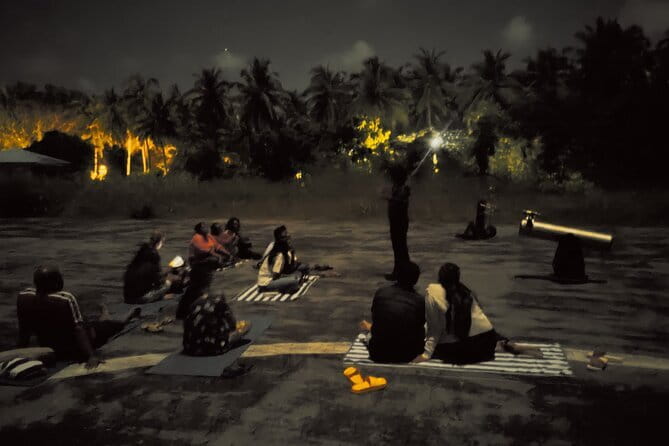
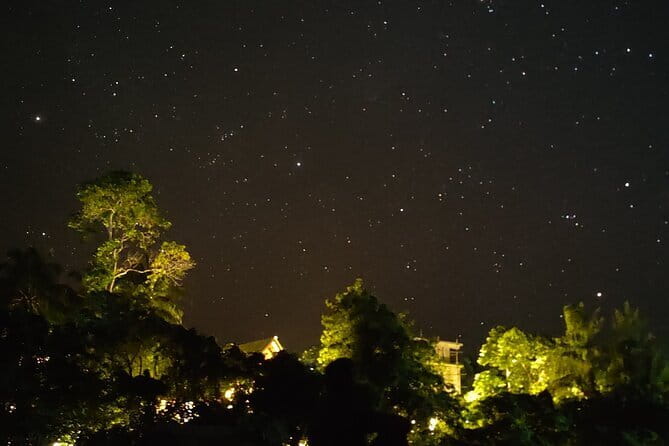
Neil Island is one of those places where you stop thinking of stars as background texture and start treating them like the main event. The tour is built around getting you away from light pollution first, then letting you see what the sky looks like without the usual glow. That matters more than people expect. In a city, you get a few bright points and call it a night. Here, you’re looking at a lot more stars, with the Moon and planets feeling like actual destinations, not random dots.
The other reason this works is that the experience is not only observational. It’s educational. You’re not just staring upward in silence. A guide helps you identify constellations, shares the stories people have told about them, and connects what you see to how the night sky is organized. Even if you’re not a science person, the combination of a dark-sky site plus clear guidance makes the whole thing easier to follow.
If you’re traveling on a tight schedule, this is also a good fit. It runs at night, typically within a window of 7:00 PM to 11:00 PM, and the session is about 1 hour 30 minutes. So you can still do other evening plans on Neil Island without feeling like you’ve handed over your whole day to astronomy.
A few more Andaman Islands days to compare
- Experience Andamans® – 6 Days Andaman Tour Package with Havelock & Neil
★ 4.5 · 570 reviews - Experience Andamans® – Andaman Honeymoon Package
★ 5.0 · 201 reviews - Scuba Diving For Non Swimmers at Havelock Island
★ 5.0 · 97 reviews
How the 1.5 hour session unfolds at Neil’s meeting point
The session starts at SeaShell Samssara, Neil, on Lakshmanpur Beach (opposite the Helipad). The activity ends back at the same meeting point, so you’re not stuck arranging a ride for the way home.
Once everyone gathers, the flow is simple:
- You’re given red light headlamps to keep the experience dark-adapted.
- You walk to a secluded stargazing site, designed to minimize light pollution.
- At the site, the guide explains how the telescope works and what to look for.
- Then you shift from orientation to targets, identifying constellations first and moving to evening highlights through the telescope.
That order is smart. You get your bearings before you start hunting for specific objects. When people skip the “find your way” part, telescope time can feel like a blur of pointing. Here, you’re meant to learn what you’re seeing, so Saturn’s rings or lunar craters connect to something in your mind, not just to an image you barely recognize.
The headlamps also set the mood. You move through darker paths, and you can feel the group waiting for the sky to open up. It’s a small thing, but it changes the entire vibe from casual sightseeing to a real night outing.
Telescope time: what you can expect to see (and what might vary)
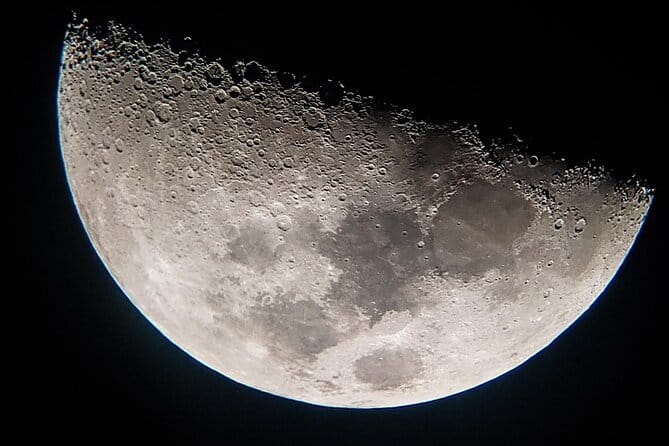
The heart of the experience is the telescope setup: a Dobsonian telescope used to view major objects. The tour description highlights likely favorites like the Moon, Saturn’s rings, and ancient star clusters. That gives you a solid idea of what the night is trying to deliver.
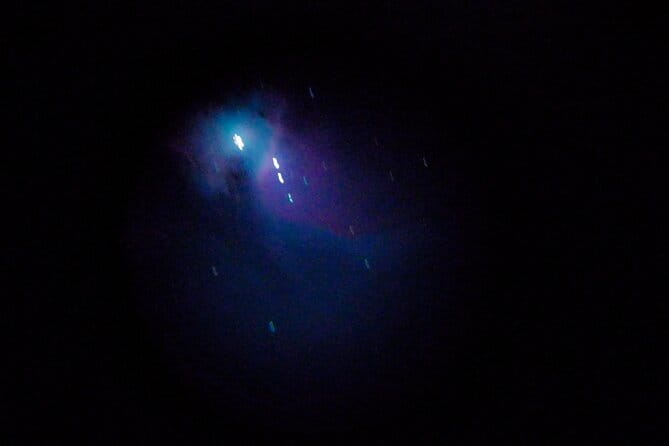
The reviews add useful color. Multiple people praised how engaging the guide was, and several mentioned planetary views and deep-sky objects. Some described seeing things like Jupiter and Saturn, along with a nebula and a supergiant. Another review mentioned using a Newtonian telescope, paired with both scientific and mythical explanations. Translation: you’ll get structured viewing, and the guide actively connects the sights to what you’re learning as you go.
Here’s the practical part: what you’ll see depends on the exact sky that night and how clear the atmosphere is. The tour itself says it requires good weather, which is a big clue. If clouds roll in or the sky turns hazy, fine details like Saturn’s rings can be harder to catch. Even the Moon can look different depending on conditions.
If you’re hoping for the most dramatic views, your best friend is patience. Let your eyes adjust. Stay with the guide’s instructions. And remember, telescope viewing is not like watching a screen. You’re seeing light shaped by optics and atmosphere, so the sky quality matters.
The guide makes it educational, not just scenic
This is one of those tours where the guide really changes the experience. The tour includes a licensed or certified guide, and the reviews point to guides who were both enthusiastic and patient with questions.
One name shows up repeatedly: Harshal Patil. Reviews credit Harshal for being thorough and engaging, explaining what people were seeing while also answering doubts. Another comment mentions a professional with expertise spanning marine biology and astronomy, which is a great reminder that you don’t have to be a lifelong stargazer to get meaningful explanations here. You just need someone who can translate the sky into plain language.
What I like about the guiding style described in the reviews is the mix of:
- Scientific explanation (what the object is and why it looks the way it does)
- Myths and stories tied to the constellations
That combination works because your brain keeps a story better than a label. When the guide points out a constellation and then gives you the human myth attached to it, the sky starts to feel like a map you can use. Even if you forget the exact facts later, you remember how it felt to connect the dots.
Some reviews also mention apps used during the session to help identify celestial objects. That’s helpful in real time. You’re looking at faint shapes and bright points at once, and a bit of visual support can help you understand what the guide is pointing to without constantly asking, which keeps the group moving.
Another way to spend a day in India:
- Marine Trail
★ 5.0 · 93 reviews - Baratang Island LimeStone Caves
★ 5.0 · 40 reviews - 6D/5N Offbeat Walking Holiday in South and Middle Andamans
★ 4.5 · 6 reviews
Price and value: what $35.99 buys you on Neil Island

At $35.99 per person, this isn’t a casual “look at the sky for free” kind of activity, but it also isn’t priced like a private astronomer. The value comes from what’s included and from the small group limit.
Your ticket covers:
- Telescope and head lamp
- All fees and taxes
- A guide who’s licensed or certified
And the group size is capped at 15 travelers, which helps because stargazing works best when everyone can actually see and hear the guide. Large groups can turn telescope time into a waiting game. A smaller group makes it easier for the guide to answer questions and for you to reposition as needed.
What’s not included is private transportation. That’s the main budgeting gap you should plan for. If you’re staying within easy access of the meeting point, you may be fine. The tour also notes it’s near public transportation, which is useful.
One more value point: your session is only about 1 hour 30 minutes. That’s short enough to fit a holiday schedule, but long enough for your eyes to adjust and for the guide to move from constellations to telescope highlights. You’re buying time with the equipment and the expertise, not a long lecture.
Weather, timing, and how to avoid a disappointing night

The activity depends on good weather. That’s not a minor detail. It’s the difference between crisp views and a fuzzy sky. The tour also states that if it’s canceled due to poor weather, you’ll be offered a different date or a full refund.
So treat this like a flexible-plan activity. If you’re staying on Neil Island for multiple evenings, you’ll have a better chance of getting a clear sky. If you only have one night, you’re still able to book, but your success rate depends on conditions.
Also, keep your phone available close to departure. One review described a last-minute call when the sky was hazy, and the provider advised canceling because visibility would be poor. Another part of that same situation addressed refunds after the fact. The key takeaway for you: be ready for rapid changes, even if you’re booked in advance.
Practical night tips that cost nothing:
- Wear layers. Night air can feel colder once the sun is gone.
- Keep light discipline. Use the red headlamp given to you and avoid adding bright light sources yourself.
- Give the sky time. Your eyes adjust gradually, and the best moments often come after you stop staring and start actually looking.
Who this fits best on Neil Island, and who might skip it
This tour is a strong match if you want two things at once: real celestial viewing and a guided explanation. It’s also great for families and kids based on reviews praising how engaging and informative it felt for children.
You’ll probably enjoy it most if:
- You like learning something you can repeat later, like identifying constellations
- You want a structured outing rather than a casual wander
- You’re traveling as a couple, solo, or with friends who are happy to share a small group
You might consider another plan if:
- You’re traveling on a night with guaranteed rain or very hazy conditions (hard to predict)
- You need a very fast, no-wait activity, because stargazing always has a “wait for the sky” rhythm
The good news is that the session is time-limited. You’re not stuck for half a night. You’re out for roughly 1 hour 30 minutes, and then you’re back at the meeting point.
Should you book Neil Island star gazing?

Book it if you care about atmosphere, education, and seeing the sky with proper equipment. The combination of a dark-sky walk, red-light headlamps, and a Dobsonian telescope makes this feel like more than a quick photo stop. Add a guide like Harshal Patil who can explain both science and stories, and you get an experience that sticks.
I’d hesitate only if you can’t handle weather changes or you have zero flexibility on your schedule. If you’re willing to keep one evening open and go in with patience, this is a solid buy for Neil Island.
FAQ

What time does the Neil Island stargazing tour run?
The activity is scheduled within the 7:00 PM to 11:00 PM window.
How long is the star gazing experience?
It lasts about 1 hour 30 minutes (approx.).
Where do I meet for the tour?
Meet at SeaShell Samssara, Neil at NeilSurvey No./Plot No. 26, Lakshmanpur Beach, Shaheed Dweep, opposite Helipad, Neil Island.
Does the ticket include the telescope and head lamp?
Yes. Telescope and head lamp are included.
Is private transportation included?
No. Private transportation is not included.
Is the tour dependent on weather?
Yes. The experience requires good weather, and if it’s canceled due to poor weather you’ll be offered a different date or a full refund.
What is the group size limit?
The session has a maximum of 15 travelers.
What is the cancellation window?
You can cancel up to 24 hours in advance for a full refund. If you cancel less than 24 hours before the start time, the amount paid is not refunded.
Are service animals allowed?
Yes. Service animals are allowed.
Recently added around Andaman Islands
- 6D/5N Offbeat Walking Holiday in South and Middle Andamans★ 4.5 · 6 reviews
- Baratang Island LimeStone Caves★ 5.0 · 40 reviews
- Marine Trail★ 5.0 · 93 reviews
- Scuba Diving For Non Swimmers at Havelock Island★ 5.0 · 97 reviews
- Experience Andamans® – Andaman Honeymoon Package★ 5.0 · 201 reviews
- Experience Andamans® – 6 Days Andaman Tour Package with Havelock & Neil★ 4.5 · 570 reviews
Andaman Islands Tours, compared.

Experience Andamans® – 6 Days Andaman Tour Package with Havelock & Neil
Read our review →
Experience Andamans® – Andaman Honeymoon Package
Read our review →Scuba Diving For Non Swimmers at Havelock Island
Read our review →


6D/5N Offbeat Walking Holiday in South and Middle Andamans
Read our review →Browse the lists this tour appears in