
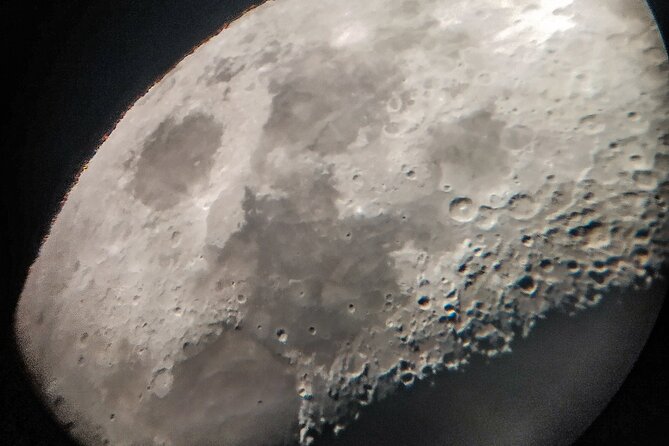
Reviewed · ANDAMAN ISLANDS TOURS
Exploring the Skies with Newtonian Telescope
A dark sky turns everything upside down. On Havelock Island, this nighttime session pairs clear views with a hands-on look through a Newtonian telescope. You start in a darker patch away from the main street lights and spend your evening learning the sky in plain, human terms.
I love the way the guide blends sky facts with stories. It makes the constellations feel less like classroom diagrams and more like something you can point at, even if you are brand new. I also love the telescope time, with many highlights like Saturn’s rings and Jupiter and its moons.
One thing to consider is the group format. If you end up in a mixed group that includes kids not fully engaged, the vibe can get a little choppy, simply because attention is divided.
In This Review
- Key highlights from this Havelock Island stargazing session
- Stargazing on Havelock Island, why dark skies matter more than you think
- Where you meet SeaShell, and the 500-meter light shift that upgrades everything
- The 8:00 PM to 10:00 PM flow, what happens during your night session
- Newtonian telescope views, the targets you are likely to spot
- Constellations and Moon talk, learning that sticks when it is dark outside
- Comfort and practical night-sky tips for a 1.5 to 2 hour session
- Price and value, is $33.71 per person worth it
- Weather, rescheduling, and how to protect your booking
- Who this astronomy session is best for on Havelock
- Should you book the Newtonian telescope sky session on Havelock?
- FAQ
- What time does the stargazing session run?
- Where is the meeting point, and do you return there?
- How far do you start from the meeting point?
- How long is the experience?
- Is it suitable for beginners?
- What if the weather is cloudy?
Key highlights from this Havelock Island stargazing session
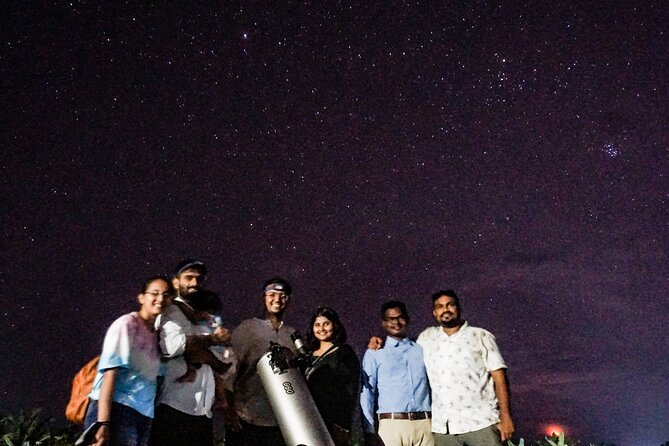
- A darker start point about 500 meters from the meeting area, for less light pollution
- Beginner-friendly structure with naked eye constellations first, then telescope views
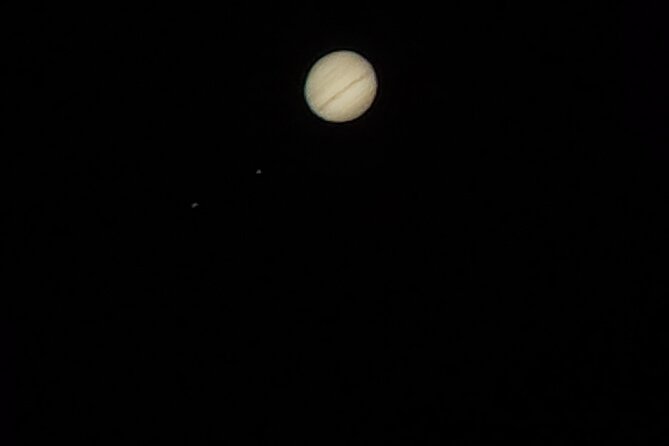
- Telescope targets you can recognize like Saturn’s rings and Jupiter
- Story-led learning about the Moon, constellations, and even star navigation
- Small groups up to 15 so you can ask questions without shouting into the dark
- Runs nightly in a set window from 8:00 PM to 10:00 PM, when the sky is best
Stargazing on Havelock Island, why dark skies matter more than you think
Havelock Island has that rare vacation gift, where the night can actually look like a night sky, not a dim movie screen. That is the real value here. You are not just paying for a telescope, you are paying for a chance to see the sky in better contrast.
The session also understands something most first-time astronomy tours miss. When you rush straight to telescope eyepieces, you can feel lost. Here, you start with naked-eye constellations. That gives your brain hooks, so telescope views make sense faster.
And yes, the Andamans are about water and forests in the daytime. But at night, the stars can be equally mesmerizing. This tour is built for that exact moment.
A few more Andaman Islands days to compare
- Experience Andamans® – 6 Days Andaman Tour Package with Havelock & Neil
★ 4.5 · 570 reviews - Experience Andamans® – Andaman Honeymoon Package
★ 5.0 · 201 reviews - Scuba Diving For Non Swimmers at Havelock Island
★ 5.0 · 97 reviews
Where you meet SeaShell, and the 500-meter light shift that upgrades everything
You meet at SeaShell, Havelock No-02, Swaraj Dweep, Beach, Govind Nagar, Havelock Island, Andaman and Nicobar Islands 744211, India. The activity then starts about 500 meters away from the meeting point.
That 500 meters is not trivia. It is the difference between street-glow and a darker sky. Less stray light means stars pop more, and planets look steadier and more obvious when you are spotting them through the telescope.
You finish back at the meeting point, so you do not have to worry about getting stranded in the dark with no clear plan.
Timing is also straightforward. The session runs daily, Monday through Sunday, between 8:00 PM and 10:00 PM. It is listed at about 1 hour 30 minutes, but nighttime tours often run by the sky, so I mentally budget around that 1.5 hour mark and plan to stay flexible.
The 8:00 PM to 10:00 PM flow, what happens during your night session
The session is designed like a friendly training arc. You are guided step by step, not thrown into the deep end.
First, you get an intro to the telescope. That matters because a Newtonian telescope is not just a magic eye. Learning where to look and how the view works makes your experience feel smoother and more rewarding.
Next comes naked-eye observing of constellations. This part is underrated. It helps you recognize patterns before you zoom in. Even if you cannot name every star right away, you will get better at seeing them, and that confidence carries into telescope time.
Then you move to telescope observations of selected celestial objects. The focus is on what you can actually see, not what you wish you could see from your apartment back home.
Finally, there are basic storytelling discussions around the observable sky. This is where the tour becomes memorable, because the guide turns what you see into a narrative you can keep thinking about after you go back to your room.
Also, groups are capped at a maximum of 15 travelers. That small size makes it easier to get personal attention, especially if you have questions while you are looking up.
Newtonian telescope views, the targets you are likely to spot
This is not a one-thing telescope show. The format is structured so you start wide and end up zoomed in.
With the telescope, the highlights that stand out include Saturn (often described with a focus on its rings), and Jupiter (with visibility of multiple moons mentioned in the experience). You should also expect other recognizable celestial objects and constellation guides based on what the night sky allows.
Why this matters for you: planets feel special because they are not just random points of light. When you see Saturn and Jupiter through a telescope, your brain instantly goes, I can connect this to the sky, not just a textbook. That is the moment where beginner skywatching stops feeling like guesswork.
If you are traveling with friends who are not super into science, this tour still works. You do not need a background. The telescope views are meant to be visually satisfying, and the guide explains what you are looking at in plain language.
Another way to spend a day in India:
- Marine Trail
★ 5.0 · 93 reviews - Ancient Lava Stream Trek through dense Tropical forest.
★ 5.0 · 58 reviews - Baratang Island LimeStone Caves
★ 5.0 · 40 reviews - Hinterland Cycling Tour, Havelock
★ 4.5 · 17 reviews
Constellations and Moon talk, learning that sticks when it is dark outside
One of the strongest parts of this experience is the way the guide explains the sky like a story you can follow.
You will learn about constellations in a way that helps you recognize patterns. You are also likely to hear surprising facts, like why we only see one face of the Moon from Earth, and why stars and sky knowledge were used for navigation. Those bits are fun, but they also give your viewing a purpose.
Another topic that pops up in the learning style is how we end up with a limited set of constellations tied to our modern way of talking about the sky. It is a small insight that makes the whole sky feel less fixed and more like something humans organized over time.
I like this approach because it avoids the trap of turning astronomy into memorization. Instead, you leave with a few mental models that help you notice things the next time you look up.
Guides you might encounter include Aditya, who is described as warm and welcoming, with fun and engaging storytelling tied directly to what people see. Another host named Harshal is also mentioned for detailed explanations. So regardless of the specific guide on your date, the vibe you should expect is friendly, patient, and focused on translating what the sky shows.
Comfort and practical night-sky tips for a 1.5 to 2 hour session
Night sky tours test your comfort faster than you might expect, because you are standing or waiting while your eyes adjust.
Here is the practical part I recommend for you:
- Wear shoes you can stand in comfortably for a while. This is not a sit-down theater experience.
- Bring patience for the first few minutes. Your eyes need time to adjust to darkness, and the guide often starts with naked-eye observing before you get telescope time.
- Consider asking about extra seating. There is a suggestion that recliner chairs would make it easier to star gaze during the longer end of the session. I cannot promise recliners are available, but if you like the idea, it is worth checking when you book.
You do not need to dress like you are camping, but you should plan to be outside during an evening window. Keep your plans simple after the tour, since you will be winding down and talking about what you saw.
Price and value, is $33.71 per person worth it
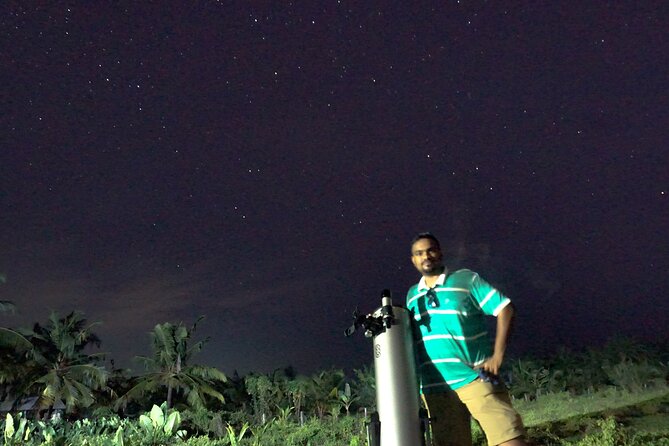
At $33.71 per person, you are not paying for a fancy multi-hour observatory trip. You are paying for a focused night session: a small group, a telescope setup, a guided explanation, and a structured path from constellations to planets.
Here is why that can be good value:
- Small group size up to 15 means you are less likely to feel ignored.
- The tour is aimed at beginners, so you are less likely to waste your money on an experience that assumes you already know the sky.
- The content is not only visual. The guide tells stories and gives context, so you leave with something to remember besides just the sight of lights in the dark.
If your priority is a hands-on telescope night with guided learning, this price makes sense for Havelock Island. If your priority is solitude, you might find a group night less satisfying, since the whole format is social and guided.
Weather, rescheduling, and how to protect your booking
This experience depends on clear skies. That is stated directly: it requires good weather. If it is canceled due to poor weather, you will be offered a different date or a full refund.
I treat a stargazing booking like a weather-dependent activity for planning purposes. The smart move is to book it with a bit of flexibility in your schedule so you can accept a new date if needed.
If your trip is short and you only have one night available, consider booking this early enough that you have time to adjust. The average booking window is about 13 days in advance, which suggests many people plan their sky time thoughtfully.
Who this astronomy session is best for on Havelock
This tour is aimed at people who are intrigued by the universe, especially beginners. If you want to learn how to see the night sky without feeling intimidated, it fits well.
It is also a strong choice if you want something different from the usual Andaman routine of ocean days, snorkeling, and beach time. The night setting makes it feel like a separate side of the island, not just an add-on.
If you are traveling with kids, keep expectations flexible. The experience is beginner friendly, but it is still an adult-style night observation session. A group with young kids not interested can make the flow feel less focused. If you do bring children, I would consider whether they can stay engaged for about 1.5 hours while you look up.
Should you book the Newtonian telescope sky session on Havelock?
Book it if you want a guided, beginner-friendly stargazing night on Havelock Island that includes real telescope views of planets like Saturn and Jupiter, not just a casual walk and a quick look. The small group cap, the start away from major lights, and the storytelling style make it more than a simple “look through the scope” activity.
Skip it or think twice if you know you hate cold waiting in the dark, or if you are chasing a fully private experience. This is a shared, guided night, and the charm comes from that human pacing, not from silence.
If you do book, your best strategy is simple: plan for clear skies, dress for standing outside, and come with a curious attitude. You will get more out of the constellation portion than you expect, and the telescope moments will feel like a real payoff instead of a blur.
FAQ
What time does the stargazing session run?
It runs daily, Monday through Sunday, from 8:00 PM to 10:00 PM.
Where is the meeting point, and do you return there?
You meet at SeaShell, Havelock No-02, Swaraj Dweep, Beach, Govind Nagar, Havelock Island, Andaman and Nicobar Islands 744211, India. The activity ends back at the meeting point.
How far do you start from the meeting point?
The activity starts about 500 meters away from the meeting point, where light pollution is lower.
How long is the experience?
The session is about 1 hour 30 minutes, approximately.
Is it suitable for beginners?
Yes. It is described as a beginner level session, with naked eye constellation observations first and then telescope viewing, plus basic storytelling about the sky.
What if the weather is cloudy?
This experience requires good weather. If it is canceled due to poor weather, you will be offered a different date or a full refund. You can also cancel for a full refund if you cancel at least 24 hours before the experience start time.
Recently added around Andaman Islands
- Hinterland Cycling Tour, Havelock★ 4.5 · 17 reviews
- Kalapathar Sunrise, Birdwatching and Village Tour★ 5.0 · 9 reviews
- Ancient Lava Stream Trek through dense Tropical forest.★ 5.0 · 58 reviews
- Niel Island Star Gazing★ 4.5 · 8 reviews
- 6D/5N Offbeat Walking Holiday in South and Middle Andamans★ 4.5 · 6 reviews
- Baratang Island LimeStone Caves★ 5.0 · 40 reviews
- Marine Trail★ 5.0 · 93 reviews
- Scuba Diving For Non Swimmers at Havelock Island★ 5.0 · 97 reviews
Andaman Islands Tours, compared.

Experience Andamans® – 6 Days Andaman Tour Package with Havelock & Neil
Read our review →
Experience Andamans® – Andaman Honeymoon Package
Read our review →Scuba Diving For Non Swimmers at Havelock Island
Read our review →

Ancient Lava Stream Trek through dense Tropical forest.
Read our review →

Kalapathar Sunrise, Birdwatching and Village Tour
Read our review →Browse the lists this tour appears in