
Reviewed · WALKING TOURS
Mahabalipuram walking tour by tourism ministry approved company
Rock-cut temples feel like time travel. This Mahabalipuram walking tour is interesting because you get a tight, story-driven route through 7th-century Pallava sites in about 3 hours. I love the small group size, which keeps the pace human instead of herded, and I love how the guide turns stone carvings into clear scenes you can actually picture. One drawback: you cover a lot in a short window, so if you want a slow, museum-style read, you may feel slightly rushed.
You start at the Shore Temple area and end at the Five Rathas, with the option to walk parts or use an autorickshaw if you prefer. It also uses a mobile ticket, and the biggest repeat praise centers on the guide, especially Ramesh, who is known for making the sculptures and techniques easy to follow.
In This Review
- Key highlights to look for
- Why Mahabalipuram feels different on foot
- Price and what $50 really buys you in value
- Meeting point to finish line: the simple route logic
- Stop-by-stop: what you’ll actually see in those 3 hours
- Pancha Rathas, the rock-cut “chariots” (Stop 1)
- Pancha Pandava Cave, with Yali guardians (Stop 2)
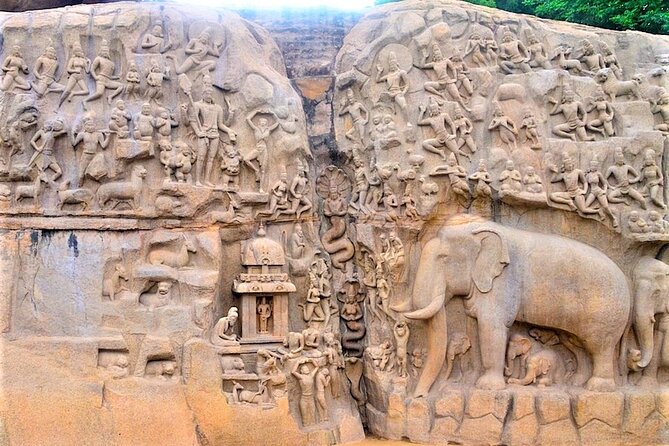
- Arjuna’s Penance, a giant relief scene (Stop 3)
- Krishna’s Butter Ball, the rock that refuses to move (Stop 4)
- Varaha Cave Temple, 7th-century stonework (Stop 5)
- Trimurti Cave, carved elephants and the three gods (Stop 6)
- Ganesh Ratha Temple, one-stone chariot form (Stop 7)
- Old Light House, built in 640 (Stop 8)
- Mahishasura Mardini Cave, two dramatic bas-reliefs (Stop 9)
- Shore Temple, temple over the Bay of Bengal (Stop 10)
- What makes the guide matter, especially Ramesh
- Who this tour fits best, and who might rethink it
- Tips to get the most out of the walk
- Should you book this Mahabalipuram walking tour?
- FAQ
- How long is the Mahabalipuram walking tour?
- How many people are in the group?
- Where does the tour start and end?
- Are admission tickets included?
- Do I have to walk the whole way?
- What happens if the weather is poor?
Key highlights to look for
- A UNESCO World Heritage Site route built around the most recognizable Pallava monuments
- Admission tickets included for the listed stops, so you do not need to sort entries on the spot
- Small group capped at 15 travelers, meaning you can ask questions without shouting
- A guide-led “story” approach, with clear background on the Pallavas and the artwork
- Flexible pacing, including options to reduce walking effort for seniors
- A practical walk setup, with the route ending at Five Rathas instead of looping back
Why Mahabalipuram feels different on foot
Mahabalipuram is one of those places where the details reward attention. The temples are carved into granite, and the “wow” moment is not only how old the structures are, but how much work went into shaping stone without modern tools. On a walk, you naturally slow down at the key carvings and you can look from different angles, which is where things start to make sense.
This tour is built for that. You move from site to site in a logical order, spending enough time at each stop to actually notice features like pillars, relief scenes, and sculpted figures. The Pallavas matter here because they shaped the architectural language of the region, and this route focuses on that 7th-century visual style.
More Walking Tours in Chennai
- Gods of Mylapore walking tour- tourism ministry approved company
★ 5.0 · 267 reviews - Georgetown heritage walking tour in Chennai about the founding of Chennai
★ 5.0 · 144 reviews - Chennai Walking Tour ( 2 hours guided tour)
★ 3.8 · 85 reviews
Price and what $50 really buys you in value
At $50 per person, the value hinges on two things: how much is included and how tightly the time is used. Here, admission tickets are included for each stop on the route, so you are not paying additional entry fees as you go. The tour also runs with a small cap of 15 travelers, which often means you get more attention and less waiting.
Two added pluses that matter in real life:
- You get a mobile ticket, which helps when you arrive at a busy, ticket-check area.
- There are group discounts, so if you are traveling with friends or family, the per-person cost can drop.
The time commitment is also efficient. About 3 hours is long enough to hit the major highlights like Arjuna’s Penance and the Shore Temple, but short enough that you can still plan the rest of your day in Chennai or nearby.
Meeting point to finish line: the simple route logic
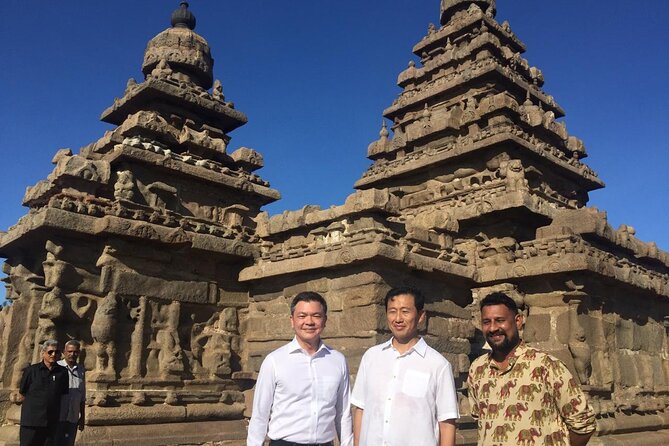
The start point is the Mahabalipuram Shore Temple area on Beach Road. The walk ends at Five Rathas (Pancha Rathas) on W Raja Street. That matters more than it sounds. If you are arranging your own autorickshaw or other transport, you do not want to schedule a late pickup only to discover the tour finishes at a different corner.
There is also a practical tip worth taking seriously: the busiest temple zones can get congested, so it helps to plan drop-off and pickup a bit away from the thickest crowd areas. That keeps your time smoother, especially if you are using a tuk tuk or autorickshaw.
Stop-by-stop: what you’ll actually see in those 3 hours
This tour moves through ten major stops, with short, focused visits at each one. The best way to enjoy it is to treat each stop like a chapter, not a checklist.
A few more Chennai days to compare
- Sowcarpet Street Food Walking Tour in Chennai with guide
★ 5.0 · 83 reviews - Private Bazaar Trail Walking Tour in George Town
★ 5.0 · 66 reviews - British Architecture Walk, an immersive walking tour in Chennai
★ 5.0 · 60 reviews - Private Peacock Trail Walking Tour in Mylapore
★ 5.0 · 50 reviews
Pancha Rathas, the rock-cut “chariots” (Stop 1)
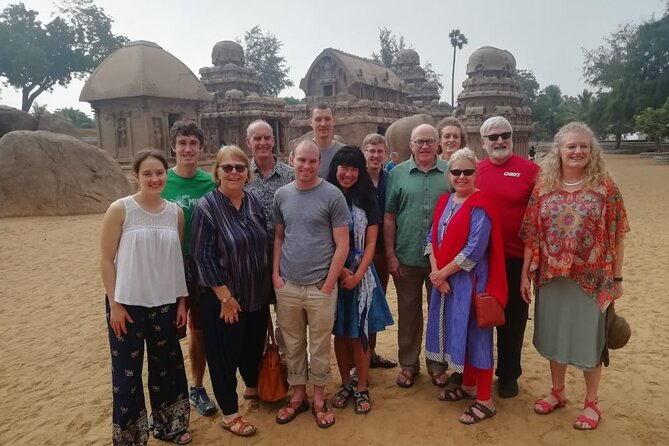
You begin with the Pancha Rathas, often called the five chariots. These are rock-cut monolith structures, and even the name gives you a clue: they are shaped like chariot forms, but carved from solid stone. The guide’s job here is to help you see the architectural details that signal Pallava craftsmanship, not just the overall silhouette.
If you like architecture, this is a strong opener because you get your visual bearings quickly. You learn what to look for before the tour gets more dramatic.
Pancha Pandava Cave, with Yali guardians (Stop 2)
Next is the Pancha Pandava Cave, described as the largest cave-temple at Mahabalipuram in this route. The cave is supported on six pillars, plus two pilasters, and it features Yali sculptures on the pillars.
Why this stop matters: you start connecting stone shapes to story and symbolism. The Yali figures are a visual signature you will keep noticing as you move through later carved spaces.
Arjuna’s Penance, a giant relief scene (Stop 3)
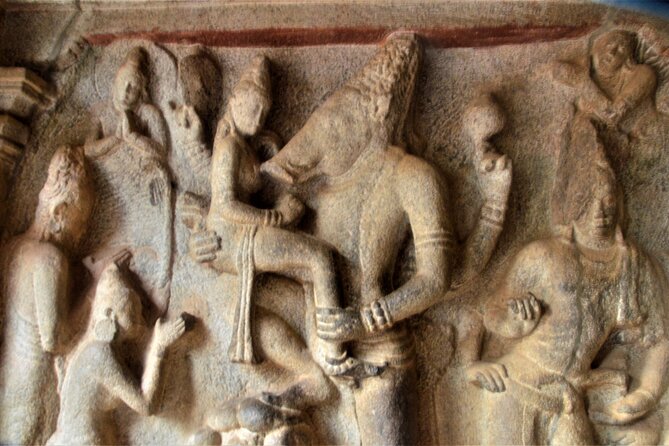
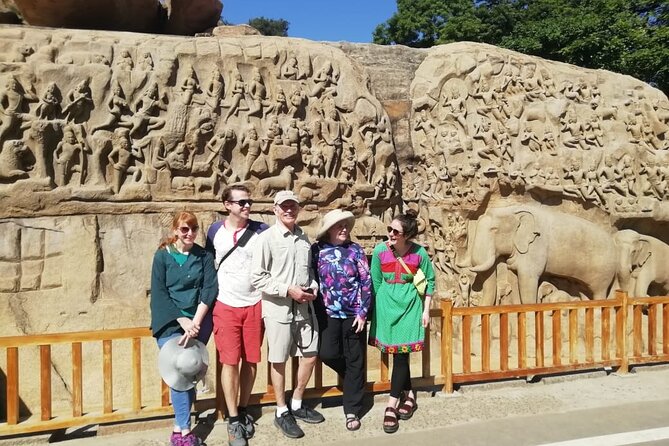
Then comes Arjuna’s Penance, a bas-relief monument that is famous for scale. It is about 100 feet long and 45 feet tall, and it depicts scenes from the Mahabharata.
This is the “pause and stare” stop. The relief is long, so your attention will naturally jump from figure to figure. The guide’s storytelling approach makes it easier to follow the scenes instead of feeling like you are looking at a random wall of carvings.
Krishna’s Butter Ball, the rock that refuses to move (Stop 4)
After the big narrative relief, you shift to something quirky: Krishna’s Butter Ball. This is a granite boulder positioned on a stony slope, and it looks like it should slide down, yet it does not seem to have moved.
Do not treat it as a physics lesson. Instead, treat it like a conversation starter about how people interpret natural and carved features in the same place. It is a memorable break in the pace.
Varaha Cave Temple, 7th-century stonework (Stop 5)
The route moves into the Varaha Cave Temple, carved from a huge piece of granite and dating back to the 7th century. Squatting lions adorn the pillars that support the structure.
This stop feels more enclosed than the open monuments, which helps you focus on surfaces and carvings. It is also a good moment to slow your gaze and look at the support elements, because those pillars are part of the story.
Trimurti Cave, carved elephants and the three gods (Stop 6)
Next is the Trimurti Cave, highlighted as a fine example of Pallava architecture. It is dedicated to the Hindu holy trinity, Brahma, Vishnu, and Shiva, and it also has fine elephant carvings.
If you want a practical tip: stand back first, then step in closer. The carvings read differently at different distances, and the elephant details become easier to see once you have the overall layout in your head.
Ganesh Ratha Temple, one-stone chariot form (Stop 7)
The Ganesh Ratha Temple is an imposing chariot carved out of a single stone. Originally dedicated to Lord Shiva, it now has the deity of his son Lord Ganesh.
This is a clever stop for learning how sacred spaces can evolve over time. You still get the Pallava-era architectural style, but you also learn that religious use can change with history.
Old Light House, built in 640 (Stop 8)
After all the temple stone, you get a maritime history note with the Old Light House, built in the year 640. It is presented as India’s oldest lighthouse and one of the oldest in the world. The reason it matters is Mahabalipuram was a busy port since the 7th century, so keeping mariners safe was critical.
This stop adds balance. It reminds you the site is not only about temples. It is also about a coastal hub where travel, trade, and sea routes shaped life.
Mahishasura Mardini Cave, two dramatic bas-reliefs (Stop 9)
The Mahishasura Mardini Cave has two imposing bas-reliefs. One shows Lord Vishnu sleeping atop the coils of a serpent, and the other shows Goddess Durga fighting the demon Mahishasura on a lion.
This is another “look for the scene” stop. If you remember only one thing here, remember how the two carvings contrast mood and power: rest and movement, calm and battle.
Shore Temple, temple over the Bay of Bengal (Stop 10)
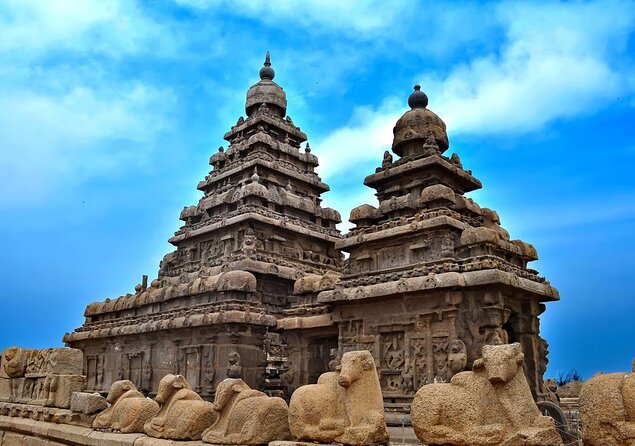
You end at the Shore Temple, which overlooks the Bay of Bengal. It was important during Pallava rule when Mahabalipuram served as their main port.
This finale works because you finish with a broader sense of place. You have spent most of the tour staring at stone narratives and carved forms, and then you get the bigger view of sea, sky, and coastal setting.
What makes the guide matter, especially Ramesh
The most praised element in the experience is the guide, and Ramesh comes up again and again for a reason. His approach is practical and story-driven, with extra attention to how the Pallava sculptures were made and why certain techniques show up where they do.
What this means for you:
- You are not just reading a label. You are being walked through what to notice.
- The carvings and symbols become easier to interpret, not harder.
- If the group stays interested, the guide can adjust timing. One consistent theme is flexibility, including extending the tour by another hour when the moment calls for it.
There is also a strong fit for travelers who do not want to grind out every step. The setup allows for options such as tuk tuk or buggy rides for seniors, so you can still enjoy the monuments without turning the day into a painful stair-and-stone marathon.
Who this tour fits best, and who might rethink it
This is a great match if:
- You care about history and architecture
- You want a guided structure so you can understand the Pallavas quickly
- You like small groups and hate long waits
- You want a short, focused highlight loop in Mahabalipuram
You might reconsider if:
- You want lots of free time inside each cave temple without time pressure
- You are extremely sensitive to heat and walking, since it does require good weather and movement between sites
- You are traveling with people who need very long explanations and a slow pace at every stop
Even then, the tour’s flexibility helps. The choice between walking and using an autorickshaw means you can tailor effort without losing the core route.
Tips to get the most out of the walk
- Bring a hat, water, and sun protection. You are outdoors for a good chunk of the route.
- Wear shoes you trust on uneven stone near temple areas.
- If you are using a tuk tuk or autorickshaw, plan your drop-off and pickup slightly away from the densest temple crowd zones. That makes the start and finish smoother.
- When you reach Arjuna’s Penance, take a moment to find a starting point in the relief. Looking left to right helps you avoid getting lost in the middle.
Should you book this Mahabalipuram walking tour?
I would book this if you want an efficient, guided, small-group introduction to Mahabalipuram’s best-known Pallava monuments. The combination of admission tickets included, a cap of 15 travelers, and a guide like Ramesh who explains both meaning and method is what makes the experience feel worth the price.
Skip it or choose a slower alternative if you want a long, independent exploration with lots of downtime. This tour is built for momentum, not wandering.
If you are short on time, or you want a guided path that covers the essentials without guesswork, this is a solid way to spend half a day in Tamil Nadu.
FAQ
How long is the Mahabalipuram walking tour?
It runs for about 3 hours, approximately.
How many people are in the group?
The tour has a maximum of 15 travelers.
Where does the tour start and end?
It starts at Mahabalipuram Shore Temple on Beach Road, and it ends at Five Rathas (Pancha Rathas), on W Raja Street.
Are admission tickets included?
Yes. Admission tickets are included for each listed stop on the route.
Do I have to walk the whole way?
No. The tour description says you can visit on foot or by autorickshaw, depending on what you prefer.
What happens if the weather is poor?
This experience requires good weather. If it is canceled due to poor weather, you are offered a different date or a full refund. You can also cancel for a full refund up to 24 hours in advance.
Recently added around Chennai
- St Thomas Trail in Chennai by Wonder tours★ 4.5 · 11 reviews
- Wild life tour in Chennai with guide and private car★ 5.0 · 9 reviews
- Exploring Georgetown: A Heritage Walking Tour of Chennai★ 4.5 · 16 reviews
- South India Tour- Temple Architecture and Backwaters★ 5.0 · 7 reviews
- Private Tour: Pondicherry Day Trip from Chennai★ 5.0 · 6 reviews
- Discover Georgetown: Guided Bazaar Walk Through Vibrant Markets★ 5.0 · 9 reviews
- Full-Day Private Tour to the Kanchipuram Temples from Chennai★ 5.0 · 73 reviews
- Chennai City Highlights – Government Museum & Temple Discovery★ 4.0 · 7 reviews
Walking Tours, compared.

The Great Indian Food Tour: Old Delhi Food and Heritage Walk
Read our review →


Old Delhi Food, Heritage&Cultural Walk with Rickshaw ride to Masterji Kee Haveli
Read our review →
Fontainhas Heritage Walk At Latin Quarters of Goa
Read our review →Browse the lists this tour appears in