
Reviewed · WALKING TOURS
Himalayan village walk to Khati Uttarakhand
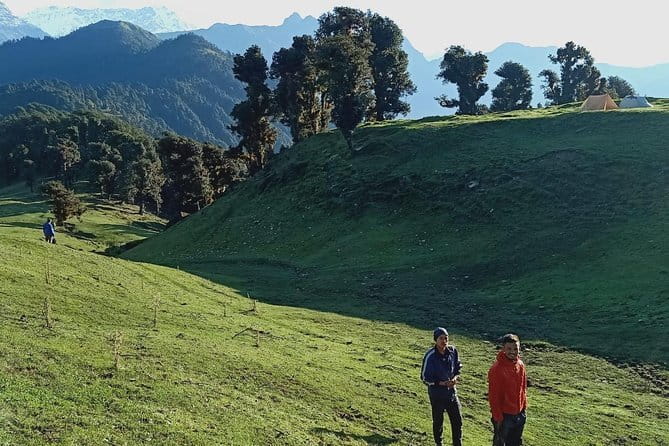
Himalaya village trekking feels like a reset. This 6-day Khati walk in Uttarakhand blends steep, rewarding trails with hands-on birdwatching, led by a local guide and paced around local villages and mountain viewpoints. You start from Kathgodam, spend nights in a mix of hotel and village stays, and get your days structured around walking and the moments in between.
I like that it is a private trek with a local guide, so your group keeps control of the pace and you have support on the harder climbs. I also like that the price includes meals throughout the hike days, so you are not budgeting for food stops every time the trail gets quiet. One possible drawback to keep in mind: roads leading toward Khati can be under construction or bumpy, and that can affect how smoothly the travel day feels.
From Kasar Devi Temple near the start, to ancient Shiva temples in Bageshwar, and then up into rhododendron and oak forest toward high meadows, this trip has a clear rhythm. If you enjoy small, remote places and early starts, it is the kind of itinerary that can feel like a real change of pace, not just a checklist of sights.
In This Review
- Key highlights to know before you go
- Khati, birds, and real village rhythm in Kumaon
- Kathgodam timing, pickup, and how to plan your ride
- Price and value: what $599.87 covers and why it is not just a number
- Day 1: Kasar Devi Temple and Bageshwar at the river confluence
- Day 2: Drive past Kapkote, cross toward Vinayak pass, and reach Khati
- Day 3: Sunrise timing, the climb to Bajling dhar, and bird chances
- Day 4: Khati village walk, homes for winter, and keedajadi talk
- Day 5: Dau and Jaikhuni for high altitude birds, then Kausani viewpoints
- Day 6: Sunrise in Kausani and the return drive to Kathgodam
- Accommodation and meals: what you can expect from a hotel, homestay, and tent mix
- What the trekking demands feel like, and who this fits best
- Birdwatching and viewpoints: how to maximize your odds
- Should you book the Himalayan village walk to Khati?
- FAQ
- What is the meeting point and start time?
- Is pickup included?
- How long is the tour?
- What is included in the price?
- What accommodation types are provided?
- Are temple or other admission tickets included?
- What is not included?
- Do I need a certain fitness level?
- Is this tour private or shared?
- What happens if weather is poor?
Key highlights to know before you go
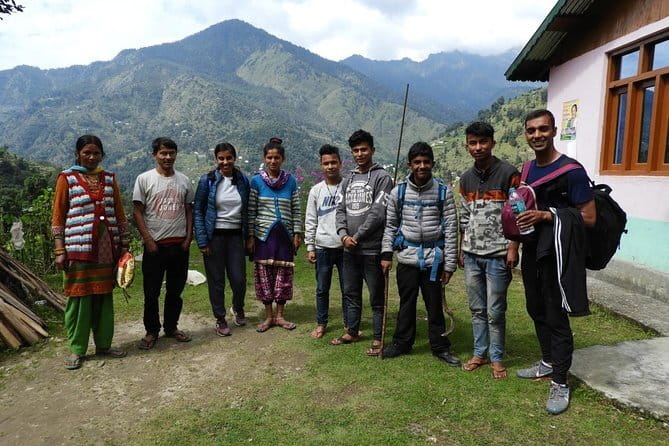
- Private group trekking, with local guidance: You are not sharing the trail with strangers, and you can get practical help during ascents and descents.
- Khati to Bajling dhar meadow is the payoff: The steep climb to a high-altitude meadow is where the views and bird chances tend to peak.
- Birdwatching is built into the schedule: You have early starts, forest walk sections, and high point detours like Dau and Jaikhuni.
- You see multiple village levels: Khati village life, a visit to neighboring hamlets, and the temple town vibe in Bageshwar.
- Kausani adds a major viewpoint finish: A 180-degree view and sunset timing, subject to clear weather.
- Accommodation shifts with the terrain: Hotels, homestays, and tent-style nights may appear depending on the days and conditions.
Khati, birds, and real village rhythm in Kumaon
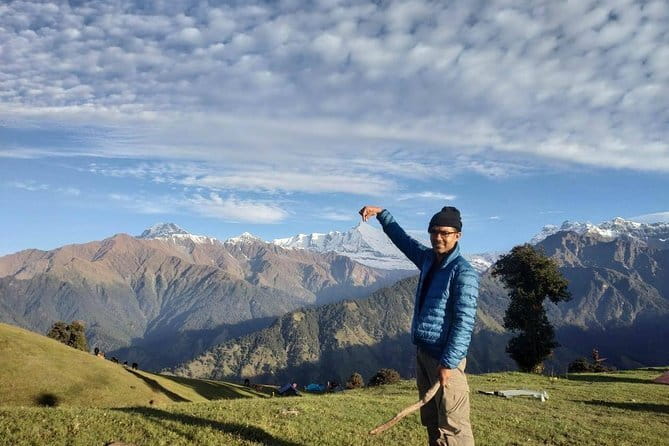
The heart of this walk is the Khati area, a remote Kumaon village base where the days feel tied to the mountains. You are not racing through stops. Instead, you spend enough time moving from one place to the next that you notice the change in air and trail texture as you climb.
What makes it especially appealing is how naturally birdwatching fits into the physical route. The plan includes forest sections through rhododendron, oak, and deodhar, plus early-morning timing and high-altitude meadow time. That matters because birds react to light, temperature, and quiet. If you prefer wildlife spotting over photo-only sightseeing, this itinerary is set up for you.
I also like the village angle. You get a walk through Khati with a focus on customs and day-to-day life. You even talk about harsh winter housing and the work tied to high glacier regions, including keedajadi, a caterpillar used in Chinese medicine. That kind of local context can turn a hike into something more personal and memorable.
A few more India days to compare
- Fontainhas Heritage Walk by Make It Happen
★ 5.0 · 2,834 reviews - The Great Indian Food Tour: Old Delhi Food and Heritage Walk
★ 5.0 · 1,698 reviews - Group Guided Walking Tour in Fort and Colaba
★ 5.0 · 1,073 reviews
Kathgodam timing, pickup, and how to plan your ride
This trip starts at Kathgodam Railway Station at 12:00 pm, with pickup offered. The itinerary notes an easy rail option from Delhi: Shatabdi runs daily from Delhi to Kathgodam at 6:20 am, reaching around 11:35 am. That gives you a workable window to get to the station, meet your team, and settle before the afternoon departure.
Why this matters: the schedule is built around one day of driving and then trail time the next morning. If you arrive late, you can lose daylight for the first transition, and that can shift how comfortable the first trekking day feels.
Your return timing also uses the same rail connection pattern. On the final day, you head back to Kathgodam by road, and the itinerary references a 3:35 pm Shatabdi for onward travel to Delhi. So when you book your flights or hotel in Delhi, build in time for that return schedule.
Price and value: what $599.87 covers and why it is not just a number
At $599.87 per person for roughly 6 days, this is not a cheap hike. But it is easier to judge the value when you look at what you are getting for that price.
You are paying for:
- Private transportation for the travel legs
- A local guide for all trekking segments and village walks
- Included meals across the trip (breakfasts on 5 days, lunches on 6 days, dinners on 6 days)
- Accommodation in a mix of hotel, homestay, and tent-style options
The big value play here is that the itinerary is guide-led and fully structured around food, lodging, and movement. When you include meals and transport, you cut down on the messy parts of independent travel in remote regions: finding open places to eat, managing cash logistics, and guessing which roads are workable on a given day.
Two practical cautions, though. Mineral water is not included, and tips are not included. Also, the itinerary lists conveyance charges to Kathgodam and back as not included, so you need to budget for how you get to the station from your starting city. If you can already get to Kathgodam and you want a guided experience that handles the rest, the price makes more sense.
Day 1: Kasar Devi Temple and Bageshwar at the river confluence
Day 1 starts with pickup from Kathgodam around noon. You then head toward Kasar Devi Temple, stopping for lunch en route. Kasar Devi is noted for its historic hippie culture from the 1970s, and there are cafes around, which can make the first transition feel more relaxed before trekking days begin.
After that, you reach Bageshwar by late evening and check into a hotel. Bageshwar sits at the confluence of the Sarju and Gomti rivers, and it is especially known for ancient Shiva temples. The next stop is a temple visit there.
What I like about Day 1 is that it is a gentle on-ramp. You are traveling, eating, and seeing a spiritual landmark without pretending it is a full trekking day. The main consideration is that you are arriving in the dark hours and settling quickly, so keep your expectations grounded. This is your setup day, not your scenic summit day.
Another way to spend a day in India:
- Old & New Delhi City Tour – Half or Full Day Options Available
★ 5.0 · 4,811 reviews - Half Day Private Delhi City Tour
★ 5.0 · 4,474 reviews - Same Day Taj Mahal, Agra Fort & Baby Taj Tour from Delhi by Car
★ 5.0 · 4,304 reviews - Taj Mahal Day Tour from Delhi by Superfast Train – TOP RATED TOUR
★ 5.0 · 4,166 reviews
Day 2: Drive past Kapkote, cross toward Vinayak pass, and reach Khati
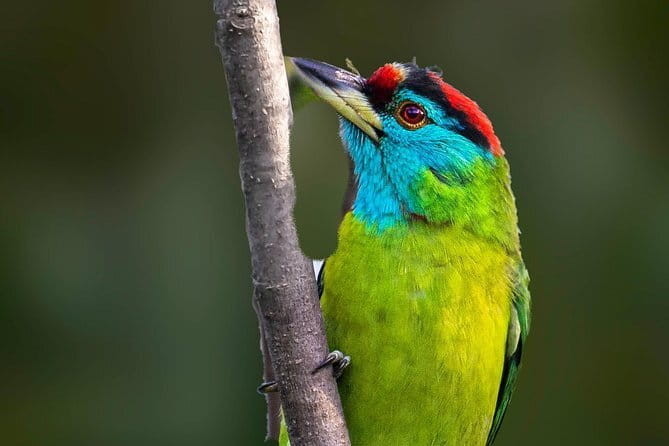
Day 2 is where the hike truly begins. After breakfast, you take a 3-hour drive to the roadhead at Kharkiya. Then you do a 5 km trek through rhododendron and oak forests into Khati village, described as fairly easy at about 1.5 hours.
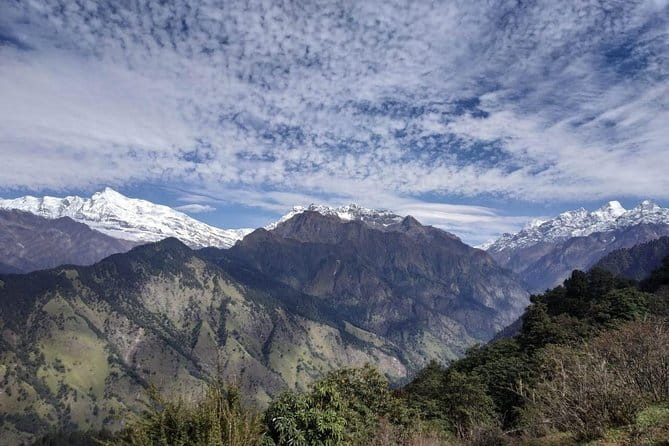
The drive segment is not just getting from point A to B. The route is described as scenic once you cross Kapkote, and it includes moving into the high, vertical middle Himalayan zone. Along the way you climb up to a mountain pass near Vinayak, around 2700 m above sea level, then descend toward the Pindar valley. The payoff is the view line, including mountains listed as Maiktoli, Panwali dwar, and Nanda Devi.
Why Day 2 is a big deal: it is the day you start feeling the altitude rhythm and the forest mood. If you like a gradual start, this is the right kind of day to ease into things. If you hate long drives, you may want to mentally treat it as a “travel plus a short forest walk” day.
One more real-world note: the road toward Khati can be rough, and at least one itinerary outcome has included staying in a nearby place instead of Khati. So if you are trying to plan around a specific accommodation location, keep flexibility in mind.
Day 3: Sunrise timing, the climb to Bajling dhar, and bird chances
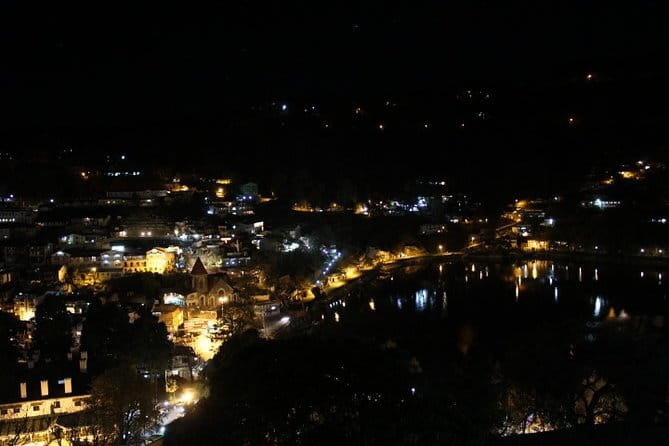
Day 3 starts early, aiming for sunrise over the peaks of Maiktoli, assuming clear weather. Then it is breakfast and a trek of about 4 to 5 km, with a steep ascent from Khati toward the high-altitude meadow of Bajling dhar.
This is the first day that feels clearly strenuous. The climb is described as 2 to 3 hours, and the trail passes a local school as you leave the village and enter rhododendron, oak, and deodhar forest. You also cross a couple of streams along the way.
Once at the meadow, the birdwatching becomes a highlight. The plan specifically hopes for a glimpse of the Monal, a colorful mountain bird associated with the region. Even if you do not spot it, you are in the right habitat for high altitude bird activity, and the meadow setting tends to give you visibility without constant dense-cover searching.
What to watch: this is the day to pace yourself with water. The plan explicitly asks you to carry enough water in your backpack for the steep climb. In practical terms, bring a small buffer. If you feel behind on hydration, you will feel it more on steep ascents.
Weather is the other variable. Sunrise views and the quality of sighting windows can depend on cloud cover.
Day 4: Khati village walk, homes for winter, and keedajadi talk
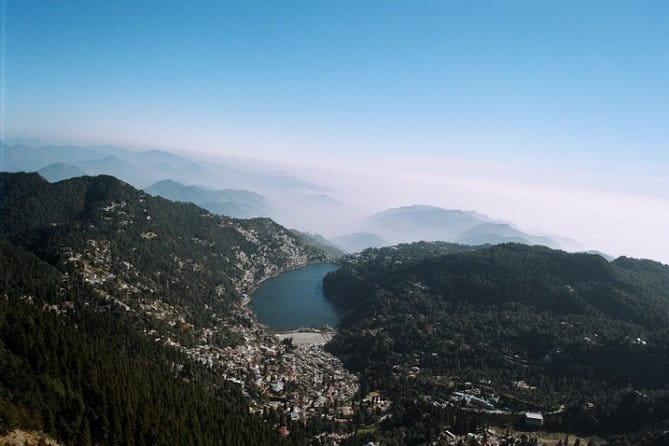
Day 4 begins with a descent back to Khati village by noon. After lunch, you slow down with a village walk that focuses on local customs, traditions, and day-to-day life in remote parts of the Himalayas.
This is one of the most meaningful parts of the trip because you are not only seeing houses and fields. You are hearing the reasons behind local practices. The itinerary mentions discussion of what locals grow, how homes are built to keep warm in harsh winters, and how villagers navigate long journeys to glacier regions.
The most specific cultural detail is keedajadi, described as a caterpillar collected from glacier areas and used in Chinese medicine that can fetch a very high price. You are also given time for evening tea and snacks at the guest house, then dinner and overnight at Khati.
Why this day works: after three days of moving and climbing, you get an “understanding” day. It can turn the trip into a more complete story, not only a hiking loop.
If you are short on patience for discussion, this day might feel slower than the trekking days. But if you enjoy learning how people adapt to cold, altitude, and remoteness, it is exactly the kind of pacing you should hope for.
Day 5: Dau and Jaikhuni for high altitude birds, then Kausani viewpoints
Day 5 starts with one more early-morning push, because birdwatching stays central. You trek about 1 km to neighboring villages, Dau and Jaikhuni, and those are described as great places for high altitude birds. The schedule also includes visiting a couple of local houses before returning to Khati for breakfast.
Then you shift back into travel mode. After breakfast, you pack and do a 1.5-hour trek back to Kharkiya, followed by a 5-hour drive to Kausani. In Kausani, you check into a hotel.
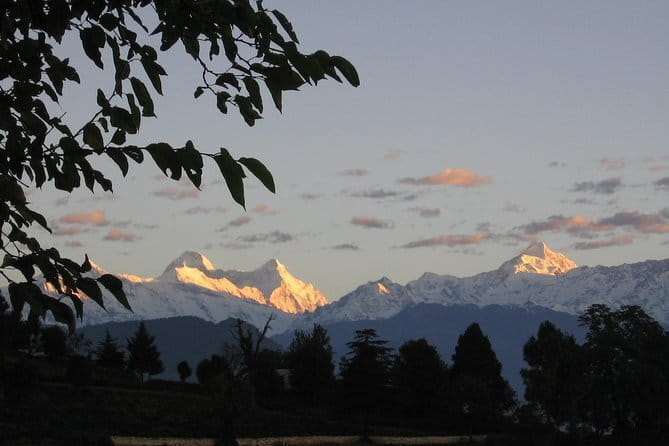
Kausani is known for its large Himalayan viewpoint. The itinerary notes a 180-degree view of the greater Himalayas, plus a sunset view, again subject to clear weather. Dinner and overnight are in Kausani.
This is a strong day because it balances nature and settlement. It also feels like your “reward day” after the earlier climbs. If you want to see peaks again and end with bigger sight lines, Kausani gives that.
The only catch is weather. If clouds roll in, you may lose some of the dramatic view payoff. Still, the town setting can help you decompress after long walking hours.
Day 6: Sunrise in Kausani and the return drive to Kathgodam
Your final morning is another sunrise attempt, this time over the Himalayan range from Kausani. After breakfast, you return to Kathgodam by road, with the itinerary giving a 5 to 6 hour drive. The experience then ends back at the meeting point, aligned with the onward Shatabdi option noted earlier.
Why this ending matters: it prevents that awful feeling of rushing. Instead, you have one final viewpoint window and then a clear departure plan. It also helps if you are organizing your Delhi connection, since the train timing is already built into the schedule.
Accommodation and meals: what you can expect from a hotel, homestay, and tent mix
The trip includes accommodation types across the journey: hotel, homestay, and tent accommodation. Your exact setup depends on the day and conditions, but the structure is consistent: you will sleep somewhere planned, and meals are included.
From a comfort standpoint, the main practical difference is not only “which bed.” It is temperature and daily routine. Nights in higher areas can get cold, and village nights may be more basic than a city hotel. That is also part of what makes the experience feel authentic, especially when you get a local-style welcome.
Meal inclusion is a real plus. With breakfast, lunch, and dinner covered, you can keep your focus on walking and spotting birds. You can also avoid the energy drain of searching for food when you are tired.
Water is the one thing you will likely need to manage yourself since mineral water is not included. Carry a reusable bottle if you can, and plan to purchase as needed.
What the trekking demands feel like, and who this fits best
This is listed as suitable for travelers with moderate physical fitness. That label is believable based on the itinerary structure: you have repeated multi-hour walks, steep climbs, and daily travel legs.
Day 3 is the most demanding part, with a steep ascent to Bajling dhar taking about 2 to 3 hours. Days 2 and 5 have shorter trek segments, but they still add up across the full plan.
So who fits best:
- You want a guided trek with local depth, not a fast sightseeing route.
- You enjoy early starts for sunrise and bird activity.
- You are comfortable with uneven paths and forest terrain.
Who should think carefully:
- If you dislike any steep ascent, this trip may feel too challenging.
- If you hate driving days that can be long, you may want a shorter itinerary.
- If you are very heat-sensitive or have limited stamina, build cushion into your preparation.
The nice part is that it is a private trek, so the guide can adapt within reason to your group. Still, the terrain is the terrain, so choose honestly based on your fitness.
Birdwatching and viewpoints: how to maximize your odds
This itinerary gives you several “bird windows” rather than one random chance. You are in forest habitat on Day 2, meadow habitat on Day 3, and you visit neighboring villages like Dau and Jaikhuni on Day 5. Add to that early morning starts and the chance for sunrise timing, and the schedule is built for animals that prefer the right light.
For viewpoints, the plan repeatedly notes that sunrise and sunset views depend on clear weather. That is not just a technical note. In the Himalayas, cloud cover can flip your day from “wow” to “okay.” So treat weather as a co-star. Keep your camera ready, but also plan to enjoy the walk even if the big view moment is muted.
A small practical tip: when you reach meadow or open edges, stop and slow down. Bird spotting usually improves when you are not rushing and when you let your senses adjust to the new soundscape.
Should you book the Himalayan village walk to Khati?
Book this if you want a private, village-centered Himalayan trek that takes birdwatching seriously and gives you time to learn how people live in remote Kumaon. The best reasons to choose it are the structure around early starts, the climb to Bajling dhar, and the mix of mountain viewing plus Khati village context.
Skip it or choose a gentler alternative if your biggest goal is “easy walking” or if you need consistently smooth roads and predictable weather visuals. Roads toward Khati can be affected by construction, and many key scenic moments depend on clear skies.
If you are okay with that mix of nature, uncertainty, and real local life, this trip is the kind that can stick in your memory long after you get home.
FAQ
What is the meeting point and start time?
The meeting point is Kathgodam Railway Station, and the start time is 12:00 pm.
Is pickup included?
Yes. Pickup is offered, and private transportation is included.
How long is the tour?
The duration is about 6 days.
What is included in the price?
Private transportation, breakfast (5), lunch (6), and dinner (6).
What accommodation types are provided?
You’ll have accommodation in hotels, homestays, and tent accommodation during the journey.
Are temple or other admission tickets included?
Kasar Devi Temple includes an admission ticket. The Bageshwar Shiva temples stop lists admission ticket as free.
What is not included?
Mineral water, conveyance charges to Kathgodam and back, tips, and insurance.
Do I need a certain fitness level?
You should have a moderate physical fitness level.
Is this tour private or shared?
It is private, and only your group participates.
What happens if weather is poor?
This experience requires good weather. If it is canceled due to poor weather, you’ll be offered a different date or a full refund.
Recently added around India
- 10 Day Colorful Rajasthan Tour with Taj Mahal and Wildlife★ 5.0 · 8 reviews
- 10-Days Golden Triangle with Pushkar & Varanasi from Delhi★ 5.0 · 7 reviews
- 10 Days Private Golden Triangle Tour with Amritsar and Rishikesh★ 5.0 · 16 reviews
- 1-Day Trip to The Taj Mahal and Agra from Delhi★ 5.0 · 76 reviews
- 1 Day tour to Agra from Delhi by Car with 5 Star Lunch★ 5.0 · 34 reviews
- 10-Day Private Golden Triangle and Holy City Tour from Delhi★ 5.0 · 32 reviews
- Taj Mahal Day Tour from Delhi By Car (Award Winner)★ 5.0 · 19 reviews
- Private Day Tour of Taj Mahal-Agra Fort from Delhi All Inclusive★ 5.0 · 29 reviews
Walking Tours, compared.
The Great Indian Food Tour: Old Delhi Food and Heritage Walk
Read our review →

Old Delhi Food, Heritage&Cultural Walk with Rickshaw ride to Masterji Kee Haveli
Read our review →
Fontainhas Heritage Walk At Latin Quarters of Goa
Read our review →Browse the lists this tour appears in