
Reviewed · HERITAGE WALKS
Heritage walk in Old Goa to relive the golden age of Velha Goa
One street at a time, Velha Goa comes alive. This guided Old Goa heritage walk takes you through the 16th-century heart of Portuguese power, with stops built to remember victories, rulers, and saints.
I especially liked two things: the way the guide turns architecture into a story you can picture, and how the route hits major churches and monuments without feeling rushed. The main drawback is practical, the walk is about 3 hours on foot and there is no pick up or drop off, so you’ll want to plan how you get to Basilica of Bom Jesus.
In This Review
- Key highlights if you want to know what matters
- How this Old Goa heritage walk works in real life
- Viceroy’s Arch: the doorway into Portuguese Old Goa
- Chapel of St Catherine of Alexandria: mica shells and a victory on St Catherine’s Day
- Church of St Francis of Assissi: Tuscan exteriors, Baroque altar focus
- Se Cathedral: Manueline architecture and the Golden Rose for Francis Xavier
- Basilica of Bom Jesus: baroque masterpieces and St Francis Xavier’s remains
- St Augustine’s Tower: a belfry and a once-bigger church complex
- Church of Our Lady of the Rosary: fortress-like design and a vow
- What to focus on during a 3-hour guided heritage route
- Price and value: is $48 good for Velha Goa heritage time?
- Who should book this Old Goa walk?
- Should you book this Velha Goa heritage walk?
- FAQ
- How long is the Old Goa heritage walk?
- What does the tour cost?
- Where does the tour start and end?
- Are entrance fees included?
- Does the tour include pick up or drop off?
- Is there a limit on group size?
- Do I need to buy tickets separately?
- Is the tour run in any weather?
- When will I get confirmation after booking?
Key highlights if you want to know what matters

- Seven heritage stops across Velha Goa, from Viceroy’s Arch to Our Lady of the Rosary
- UNESCO World Heritage sites included, including Chapel of St Catherine of Alexandria and Basilica of Bom Jesus
- Portuguese styles in real buildings, from Manueline and Baroque to Tuscan details and fortress-like church forms
- Stories tied to dates and feasts, like St Catherine’s Day and Portuguese military victories
- Small groups (up to 15) with an expert guide, often with guides like Ram or Sawani leading the narration
- Entrance charges and coffee or tea included, so you can focus on the sights
How this Old Goa heritage walk works in real life

This is a 3-hour guided walk through Old Goa, timed for a comfortable pace and structured around seven major landmarks. The group size is capped at 15 travelers, which usually helps keep the experience personal and question-friendly.
You’ll start at the Basilica of Bom Jesus on Old Goa Road, then finish at the Church of Our Lady of the Rosary, and the tour ends outside that church. There’s no pick up or drop off, and the meeting point is near public transportation, so build your plan around getting yourself there.
Tickets are handled with a mobile ticket, and entrance charges are included. Coffee and/or tea are also included, which matters here because you’re moving through multiple church sites where time can pass quickly.
The route also depends on weather. The experience requires good weather, and if it gets canceled due to poor conditions, you’ll be offered another date or a full refund.
More Heritage Walks in Goa
- Fontainhas Heritage Walk by Make It Happen
★ 5.0 · 2,834 reviews - Old Goa Heritage Walk by Make It Happen
★ 5.0 · 797 reviews - Fontainhas Heritage Walk At Latin Quarters of Goa
★ 5.0 · 531 reviews
Viceroy’s Arch: the doorway into Portuguese Old Goa
Your first stop is Viceroy’s Arch, erected in 1599 by Viceroy Francisco da Gama. It used to function as a main entry street into Old Goa, so it’s a smart starting point for building context before you step into the churches.
The arch was built as a memorial to the achievements of Vasco da Gama, and there’s a detail I really liked: Francisco da Gama was Vasco’s great grand son. That kind of family connection helps the big-picture history feel less abstract and more anchored.
Plan to spend about 20 minutes here. It’s not a long pause, but it sets your mental map, especially because later stops reference Portuguese victories and power structures that shaped the city.
If you like storytelling that connects names, dates, and architecture, this first stop does the heavy lifting.
Chapel of St Catherine of Alexandria: mica shells and a victory on St Catherine’s Day
Next up is the Chapel of St Catherine of Alexandria, a UNESCO World Heritage Site. The chapel was built in 1510 by Afonso de Albuquerque after he defeated Adil Shah on St Catherine’s Day, November 25, 1510.
Look closely for the architectural detail that turns this into more than a generic old chapel: the windows are rectangular and reflect an old Portuguese style, with mica shells used in the design. Even if you’re not into materials, this is the kind of feature that helps you slow down and actually see what you’re standing in front of.
You’ll get around 30 minutes at this stop. The story matters because St Catherine’s Day keeps showing up again and again in Old Goa, especially in how religious sites commemorate military victories.
One consideration: chapel interiors can feel dim compared with the street. If you care about photos, keep your expectations realistic and focus on the details the guide points out.
Church of St Francis of Assissi: Tuscan exteriors, Baroque altar focus
At the Church of St Francis of Assissi, you’re looking at the physical outcome of Portuguese Franciscan friars arriving in 1517. The church they established follows a mixed construction style, which is exactly why this stop works on a heritage walk.
On the exteriors, the Tuscan order shows up, while the main altar shifts into rich Baroque style with Corinthian features. In other words, you see restraint outside, drama inside, and that contrast helps you understand how different artistic styles were layered during the Portuguese period.
Spend about 30 minutes here. The guide’s job is key at this stop, because the best way to appreciate mixed style buildings is to know what to compare, not just to observe randomly.
A small drawback: if you’re short on attention span, church stops can feel similar to one another. The way to avoid that is to keep one question in your head, what style dominates and why does it change?
More History Tours in Goa
- Panaji: Heritage Walk through Goa’s Latin Quarter
★ 4.8 · 291 reviews - The Cultural And Historical Walking Tour in Margao
★ 5.0 · 280 reviews - Heritage Houses of Goa-Chandor by Soul Travelling
★ 5.0 · 199 reviews - Private Aguada Jail Heritage Walk Tour
★ 5.0 · 102 reviews
Se Cathedral: Manueline architecture and the Golden Rose for Francis Xavier
Now you get one of the biggest names on this route: Se Cathedral. Built in Manueline style, it was constructed to highlight the Portuguese victory over an invading Muslim army in the early 16th century. That victory is connected to the feast of Saint Catherine, which ties directly back to the earlier chapel story.
This is also where the walk feels extra rewarding if you like little religious details with historical weight. In the 20th century, Pope Pius XII presented the honorary Golden Rose to the cathedral, and it is placed on the tomb of Saint Francis Xavier inside.
You’ll have about 30 minutes here, which is enough time to notice both the architecture and the specific objects that make Se Cathedral more than a scenic stop.
If you want the best experience, take your time with the guide’s explanation before you rush through to the next site. This is the kind of stop where one well-timed fact can change how you see the whole building.
Basilica of Bom Jesus: baroque masterpieces and St Francis Xavier’s remains
The Basilica of Bom Jesus is the anchor of Old Goa for many visitors. It’s UNESCO World Heritage and is described as one of the finest examples of Baroque architecture in India.
The big draw is spiritual and historical: the basilica holds the mortal remains of St Francis Xavier, who along with St Ignatius Loyola founded the Society of Jesus. If you’ve ever wondered why certain places become pilgrimage magnets, this is a strong answer in stone and ritual space.
There’s also a detail about the Blessed Sacrament that you might not expect to hear on a walk like this. It was earlier kept on the main altar under the statue of St Ignatius, and now it is preserved in a gold tabernacle. That change tells you something about how worship practices and the preservation of sacred items evolve over time.
You’ll spend about 30 minutes at Bom Jesus. It’s a lot to take in, so keep your mental checklist: Baroque style features, the identity of Francis Xavier, and what stands out visually inside the basilica.
St Augustine’s Tower: a belfry and a once-bigger church complex
After the major basilicas, St Augustine’s Tower offers a different kind of payoff. The tower was built in 1600 and served as one of the four towers of St Augustine Church that once stood at the site.
This is a useful stop if you like understanding how church complexes worked as systems, not isolated monuments. The tower functioned as a belfry, and the larger church complex had eight richly adorned chapels and four altars, plus a convent with numerous cells.
You’ll have around 20 minutes here. That short time can feel almost like a teaser, but it’s also a breather between bigger interiors. You’ll likely enjoy it most if you let your mind picture the whole complex that used to exist rather than focusing only on the tower you see now.
Church of Our Lady of the Rosary: fortress-like design and a vow
The final stop is Church of Our Lady of the Rosary, described as the oldest surviving church in Goa. This matters because old survival often means the building has absorbed more layers of meaning over time.
The story goes back to Afonso de Albuquerque during a fight against the Islamic army of the Deccan Sultanate. He took a vow to build this church as a token of gratitude to Our Lady of Victory.
Architecturally, the church has striking features that make it feel defensive. High altitude windows and round towers give it a fortress-like look. It’s a great closing image because it connects the religious purpose to the realities of conflict and power in that era.
You’ll spend about 20 minutes here, and the tour ends outside the church. This is a nice way to finish, because you can pause, look around, and decide what you want to revisit on your own.
What to focus on during a 3-hour guided heritage route
A walk like this is at its best when you don’t treat each church like a separate postcard. I like to use a simple set of questions as I move from stop to stop.
First, ask yourself what the building is trying to remember. In Old Goa, many sites tie back to Portuguese victories and St Catherine’s Day, and you’ll feel that thread as you move through the route.
Second, compare architectural styles. You’ll see Portuguese influences across different forms, like Tuscan order on the exteriors of St Francis of Assissi, Manueline style at Se Cathedral, and Baroque design at Bom Jesus. The contrast helps you understand that this wasn’t a single uniform style, it was layered taste and priorities.
Third, pay attention to the small material and object details the guide highlights, like mica shells or the gold tabernacle. These are the things your memory keeps long after you’ve left.
Finally, use the guide’s pace. Guides such as Ram and Sawani (among others) have been especially effective at keeping the history lively without turning it into a lecture. The result is that you come away with a story you can explain, not just photos.
Price and value: is $48 good for Velha Goa heritage time?
At $48 per person for about 3 hours, the value depends on what you want out of Old Goa. If you’re the type who walks into a church and immediately wonders what you’re looking at, a guided route is usually the best investment. You get an organized path, a guide who connects details to meaning, and time in key sites without paying entry fees one by one.
Here, the pricing includes a guide, entrance charges, and coffee or tea. That’s the difference between simply visiting churches and having a coherent, explained route. It also reduces decision fatigue on the day, because you’re not stopping to figure out where tickets come from or whether a site is covered.
Group discounts are also mentioned, and the small group size helps keep the tour from feeling like a factory line.
The one cost to factor in is your own transport to the meeting point. Since pick up or drop off isn’t included, you’ll want to plan your arrival time around Basilica of Bom Jesus.
Overall, $48 feels fair for a focused route through multiple UNESCO and major Portuguese-era landmarks, especially with included entry fees.
Who should book this Old Goa walk?
This is a strong fit if you want Old Goa in a short time window. Three hours lets you cover a lot of ground without turning the day into a marathon.
It’s also a great option for travelers who enjoy stories anchored to specific places. Old Goa’s Portuguese-era identity isn’t just in the look of the churches, it’s in how the sites commemorate dates, victories, and saints.
If you prefer small groups and like asking questions, the maximum of 15 travelers is a plus. If you’re traveling solo or as a couple, it also helps that the route doesn’t require a long wait for others.
If you have mobility concerns, keep in mind it’s still a walk and it runs about 3 hours. And because there’s no pick up or drop off, make sure you can comfortably get to the starting point.
Should you book this Velha Goa heritage walk?
I’d book it if you want a clear, guided route through the most important Portuguese-era sites in Old Goa, with UNESCO stops and baroque masterpieces that come with context. The included entrance charges and coffee or tea add up, and the small group size makes it easier to actually follow what the guide is pointing out.
Skip it, or at least consider alternatives, if you’re only after a slow self-guided wander or if you strongly prefer not to spend time in multiple churches back to back. Also, if you’ll struggle to reach Basilica of Bom Jesus on your own, this tour’s structure may feel inconvenient.
If you do book, go with one mindset: you’re not just visiting buildings, you’re learning why Velha Goa once mattered globally, and why these stones still carry those stories. That’s where the tour earns its value.
FAQ
How long is the Old Goa heritage walk?
It lasts about 3 hours.
What does the tour cost?
The price is $48.00 per person.
Where does the tour start and end?
It starts at Basilica of Bom Jesus on Old Goa Road, and it ends at the Church of Our Lady of the Rosary (tour ends outside the church).
Are entrance fees included?
Yes. Entrance charges are included, and coffee or tea is also included.
Does the tour include pick up or drop off?
No. Pick up and drop off are not included.
Is there a limit on group size?
Yes. The tour has a maximum of 15 travelers.
Do I need to buy tickets separately?
No. You’ll use a mobile ticket, and entrance charges are included.
Is the tour run in any weather?
The experience requires good weather. If it’s canceled due to poor weather, you’ll be offered a different date or a full refund.
When will I get confirmation after booking?
Confirmation is received at the time of booking.
More Historical Tours in Goa
- Chandor Heritage Trail by Make It Happen
★ 5.0 · 79 reviews - CULTURAL & HISTORIC DAY TOUR ATTRACTIONS – Churches, Temples & Spice Plantation
★ 4.5 · 53 reviews - Old Goa Heritage & Culture E-Bike Tour
★ 4.5 · 46 reviews - Candolim: Heritage Walk of Fort Aguada Port and Jail Complex
★ 4.9 · 25 reviews
More Walking Tours in Goa
- Food And Drink Walking Tour In Panjim
★ 5.0 · 286 reviews - Old Goa: Walking Tour of Heritage Churches
★ 4.9 · 81 reviews - Panaji: Heritage Walking Tour in Fontainhas Latin Quarter
★ 4.9 · 31 reviews - Fontainhas Heritage Walk With Guide Mario
★ 5.0 · 29 reviews
Recently added around Goa
- Private 2-Day Tour to Taj Mahal, Agra from Goa with Both side Commercial Flights★ 5.0 · 7 reviews
- 3-Day Private Taj Mahal, Agra and Delhi Tour from Goa or Mumbai★ 5.0 · 26 reviews
- Private Fort Aguada Port and Jail Complex Night Walk★ 4.5 · 13 reviews
- Old Goa Churches, Temples & Spice Plantation With “Goan” Lunch★ 4.5 · 34 reviews
- Panjim Heritage Walk for a cultural immersion in Goa★ 5.0 · 16 reviews
- Margao City Food Trail by Make It Happen★ 5.0 · 16 reviews
- Highlights of South Goa with Spice Plantation Tour (Guided Fullday Tour by Car)★ 5.0 · 6 reviews
- Traditional Indian Cooking Class in Goa, Anjuna [vegetarian]★ 4.5 · 39 reviews
Heritage Walks, compared.

The Great Indian Food Tour: Old Delhi Food and Heritage Walk
Read our review →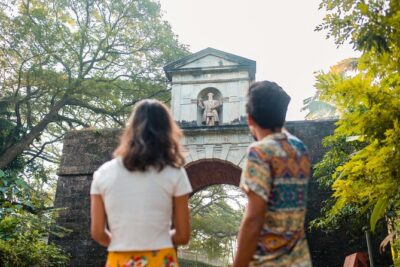
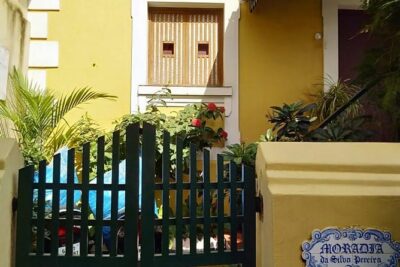
Fontainhas Heritage Walk At Latin Quarters of Goa
Read our review →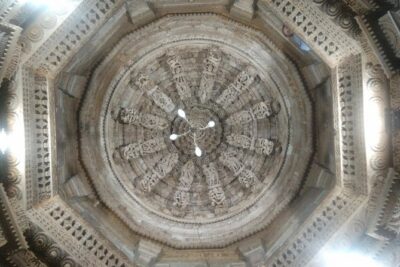
Private Heritage Walking Tour in Jaisalmer Fort and Old Bazaar
Read our review →
Panaji: Heritage Walk through Goa’s Latin Quarter
Read our review →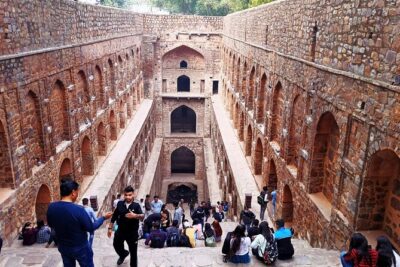

Browse the lists this tour appears in