
Reviewed · DELHI TOURS
Essence of India with Varanasi with domestic flight
Varanasi changes your pace fast. This 11-day cultural loop links Delhi, Agra, Jaipur, Orchha, Khajuraho, and Varanasi into one organized trip, with a domestic flight back to Delhi so you do not lose days to long travel. I love how the plan pairs iconic sights with guided context, and I also like that you get serious hands-on experiences like a Ganges boat ride and the Ganga Aarti. One thing to plan for: monument entry fees are not included, so you will want a separate cash budget for tickets and optional extras.
You start each day at 8:00 am, and the trip keeps moving, mostly by private AC vehicle. The biggest drawback is not the intensity, it is the need to manage your energy and clothing, because temple and mosque visits require covered arms and legs.
In This Review
- Key highlights worth your attention
- Why this Delhi-to-Varanasi route actually makes sense
- What you get for the $1,300 price (and why it can be good value)
- Delhi in two days: Akshardham, Old Delhi markets, and the big Mughal landmarks
- Jaipur’s top sights: Amber Palace, Hawa Mahal photos, and royal tomb quiet
- Agra and Fatehpur Sikri: sunrise Taj Mahal and the story behind deserted walls
- Orchha: medieval palaces, temple stops, and a slower, local feel
- Khajuraho temples: long visit time for carvings you can actually study
- Varanasi: boat ride, Ganga Aarti, and Sarnath’s early Buddhism roots
- Driver, timing, and stamina: how to enjoy the long days without losing your mind
- Domestic flight back to Delhi: why this is a smart finish
- Should you book this Essence of India with Varanasi?
- FAQ
- What cities are included on this 11-day tour?
- What is included in the tour price?
- Are monument entry tickets included?
- What luggage limits apply for the domestic flight?
- What about food during the trip?
- What dress guidance do you get for temples and mosques?
Key highlights worth your attention
- Private AC transport that keeps long days practical, from Delhi down through Rajasthan and onward to central India.
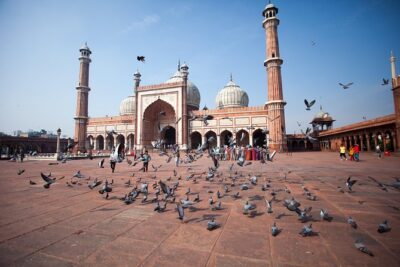
- Old Delhi by rickshaw, so you see Jama Masjid surroundings up close instead of only from a bus window.
- Sunrise Taj Mahal with a guide, giving you time for one of the most memorable morning routines in India.
- Orchha and Khajuraho away from the biggest crowds, with real temple and fort atmospheres.
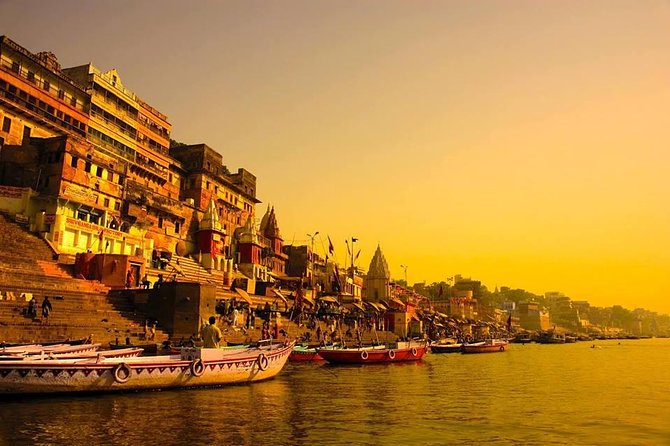
- Varanasi from multiple angles, including ghats by boat and a night-time Ganga Aarti.
- A return flight from Varanasi to Delhi, which helps you finish without backtracking over the same ground.
Why this Delhi-to-Varanasi route actually makes sense
This is the kind of trip that works because it builds meaning, not just a checklist. Delhi gives you the modern city layer plus Mughal-era landmarks. Jaipur and Agra add palaces and power. Then Orchha and Khajuraho shift you toward temples and story-based architecture.
Finally, Varanasi brings it home with spirituality on the water. The Ganges is not just scenery here, it is the schedule, the prayers, the daily routines. If you like travel that feels emotional and not only scenic, this itinerary is made for you.
A few more New Delhi days to compare
- Old & New Delhi City Tour – Half or Full Day Options Available
★ 5.0 · 4,811 reviews - Half Day Private Delhi City Tour
★ 5.0 · 4,474 reviews - Same Day Taj Mahal, Agra Fort & Baby Taj Tour from Delhi by Car
★ 5.0 · 4,304 reviews
What you get for the $1,300 price (and why it can be good value)

At $1,300 per person for about 11 days, the value depends on what you would otherwise pay to piece together yourself. This package includes 3-star hotels with AC and private bathrooms, local guides in major stops, and private AC transport across multiple cities. It also includes breakfast (11), bottled water, and the internal flight from Varanasi to Delhi.
The rickshaw ride in Delhi and the morning boat ride in Varanasi are also included, which are the types of activities that can be annoying to arrange on your own. And because this is described as a private tour where only your group participates, you are not stuck syncing your timing with random schedules.
The main cost gap is simple: monument entry admission is not included. So your real budget is your tour price plus tickets for places like Humayun’s Tomb, Qutub Minar, Amber Fort, Agra Fort, and the Khajuraho temples.
Delhi in two days: Akshardham, Old Delhi markets, and the big Mughal landmarks
Day 1 is built for contrast. You start with Swaminarayan Akshardham, a modern Hindu temple complex. The ticket is listed as free in the plan, so it is a great way to begin without immediately adding costs. You then shift into Old Delhi energy with a Jama Masjid visit by rickshaw, which is one of the smartest ways to experience the tight lanes and market buzz.
From there, you stop for photos at the Red Fort. The plan does not promise full entry time, so treat that as a quick orientation moment. You then get a quieter, reflective stop at Raj Ghat, Mahatma Gandhi’s cremation site. It is short, but it changes the mood.
You finish Day 1 at Gurudwara Bangla Sahib, and this is more than sightseeing. The plan highlights the canteen where meals are prepared for large numbers of people daily. If you like seeing how faith shows up in daily service, this is a meaningful capstone to the day.
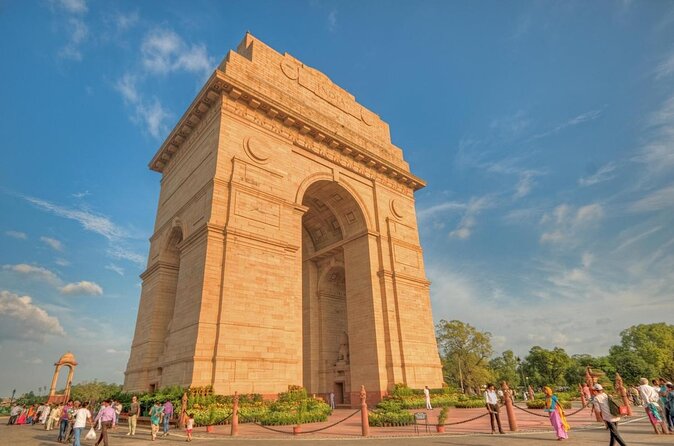
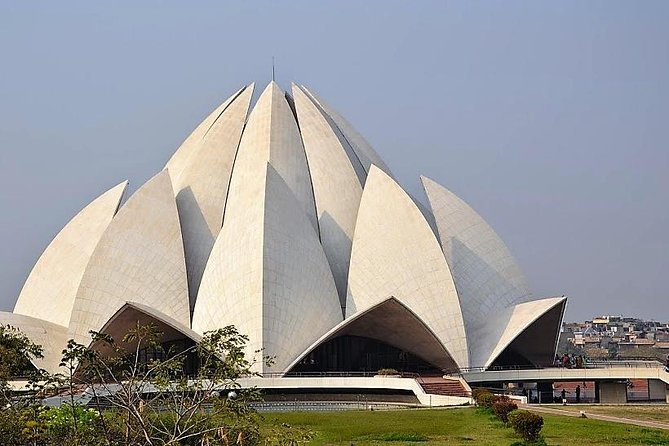
Day 2 keeps the Delhi mix going. You start with India Gate and the nearby diplomatic district views, including the Parliament House and administrative buildings area. Then you go to the Lotus Temple, a place built for quiet contemplation and designed for all faiths. It is listed as free, which helps.
You end with UNESCO heavyweights: Humayun’s Tomb and Qutub Minar. Both are time-efficient, but the plan notes admission is not included, so you will want to be ready to pay entry fees if you want full access.
Practical note: Delhi can be intense, even with AC driving. Build in a slower pace for Day 1 evening, because Old Delhi and the rickshaw ride can be sensory-heavy.
Jaipur’s top sights: Amber Palace, Hawa Mahal photos, and royal tomb quiet
After an early start, Day 3 includes a Monkey Temple stop en route to Jaipur. It is listed as a sightseeing stop with no ticket included, so it functions as an atmospheric break in the drive. If you are wary of monkeys, treat this as a watch-from-a-distance moment and do not get too close for photos.
Day 4 is your big Jaipur day. You start at Amber Palace, one of the most famous fort-palace complexes in the region. This is where you start to see why Rajasthan’s royal power was expressed through architecture and views, not just battle history.
You then pause at Jal Mahal, the Water Palace. The plan is clear that it is mainly a photo stop, which is exactly the right use of time if you want the image without turning it into a time sink. Next is Hawa Mahal, the Palace of Wind. The plan notes the chance to see inside, so if it is open when you arrive, that extra look can be worth it.
You then visit City Palace of Jaipur, including museum and royal exhibition areas. This is the best “slow your feet” part of the itinerary, since museums let you absorb details without constant walking uphill.
You finish with Royal Gaitor Tombs. The plan frames them as quiet and set among hills, which is a nice counterbalance after busy palace complexes. If you like calmer spaces to reset before moving on, this stop has that job.
Another way to spend a day in India:
- Taj Mahal Day Tour from Delhi by Superfast Train – TOP RATED TOUR
★ 5.0 · 4,166 reviews - Full Day Taj Mahal, Agra Fort & Baby Taj Tour from Delhi by Car
★ 5.0 · 3,647 reviews - From Delhi: Taj Mahal & Agra Private Day Trip with Transfers
★ 4.9 · 3,181 reviews - Taj Mahal Tour from Delhi by Express Train (Viator Award Winner)
★ 5.0 · 2,849 reviews
Agra and Fatehpur Sikri: sunrise Taj Mahal and the story behind deserted walls
Day 5 includes Fatehpur Sikri Fort, on the way to Agra. This is a fascinating kind of place because it is described as an abandoned city. That makes it feel different from a palace that is still thriving. You get the architecture plus the feeling of a city that once mattered a lot and then changed.
In Agra, you do Agra Fort with a guide. A fort is not only about walls. In India, forts often hold the story of who lived there, how power worked, and how daily life was structured within defenses.
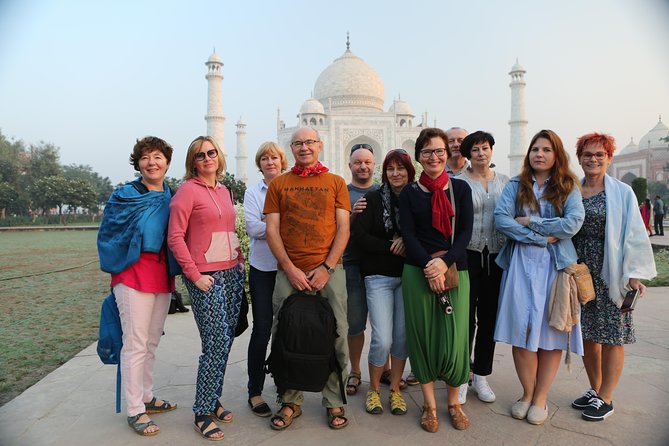
Day 6 is the star move: Taj Mahal at sunrise with a guide. The plan emphasizes that timing, and honestly, that is the difference between a Taj Mahal you see and a Taj Mahal you remember. After the visit, you return to the hotel for breakfast, which helps keep the day from turning into an exhaustion spiral.
If you are sensitive to crowds or heat, sunrise is your friend. If you are not a morning person, set your expectations. The whole point is to get there early enough for atmosphere, light, and cooler walking conditions.
Orchha: medieval palaces, temple stops, and a slower, local feel
Orchha is a smart switch in the itinerary. After the grand scale of Agra and the royal architecture of Rajasthan, Orchha brings something smaller and more human-scaled.
Day 6 includes a drive to Orchha and local sightseeing of temples and medieval palaces. Then Day 7 repeats Orchha in a productive way: it focuses on a Rama temple plus a palace with a view over town. The plan also leaves time for leisure, which is rare in a packed trip and exactly what you want here. Orchha works best when you can linger.
The big benefit of Orchha for your experience is that you are not just collecting stops. You are giving yourself time in a place where the details matter, and where the pace is less about ticket lines and more about quiet streets and temple shapes.
Khajuraho temples: long visit time for carvings you can actually study
Day 8 goes to Khajuraho, with a 5-hour visit covering the western and eastern UNESCO temple complexes. That time window is important. If you only had an hour, you would miss the way the carvings and layout create stories across multiple temples.
The plan notes admission is not included, so budget for tickets here. But the time allocation suggests the tour expects you to do more than snap photos. You will get a real chance to look closely and to understand the overall plan of the temple grouping.
Khajuraho is also a good place for you to ask questions of your guide. Even if you do not remember every name, you will walk away with better context for symbolism and style because you are not rushing.
Varanasi: boat ride, Ganga Aarti, and Sarnath’s early Buddhism roots
Day 9 focuses on the water and the ritual: Ganga Aarti. The plan describes it as a spectacular ceremony of offerings to the gods. This is one of those experiences where the value is not only what you watch, it is what it makes you notice. The river becomes a stage for devotion and daily life.
Day 10 adds the sensory part. You have a Ganges boat ride and the plan specifically says you will observe ghats, temples, and cremations. That is not a casual photo stop. It is a view of how Varanasi functions on a spiritual and practical level at the same time.
After the boat time, you go to Sarnath, about 6 km from Varanasi. The itinerary highlights key places: Dhamek Stupa, the Sarnath Museum, and Chaukhandi Stupas. It is a strong pairing because Sarnath gives you the historic thread behind the region’s spiritual reputation.
You also visit Alamgir Mosque. That gives you a different religious architecture perspective in Varanasi, showing how many faiths overlap in the city’s story.
If you are worried about intensity, Varanasi is one of those places where your feelings will vary day to day. That is normal. I like that the itinerary spreads Varanasi experiences across two different days, so it does not dump everything at once.
Driver, timing, and stamina: how to enjoy the long days without losing your mind
Your day starts at 8:00 am, and you travel by a private AC vehicle between cities. This is a real advantage if you want a guided flow, not a logistics hunt. You also get bottled water, which sounds small until you are doing multiple stops in hot weather.
The quality of the trip often comes down to the driver and guide. From the feedback names show up like Prakash, Sanjay, and Mithuna, with an emphasis on being attentive and helpful. That kind of service matters in India, where you do not only need directions, you need someone who understands timing and how to handle small surprises.
Roads can be rough, but the vehicle is described as comfortable, which helps. Still, if you are prone to motion sickness, plan ahead with your usual remedies.
Clothing also matters. The plan asks for dress properly so arms and legs are covered for temples and mosques. Pack light layers so you can comply easily without sweating through the day.
Hotel comfort can vary by stop. One piece of feedback notes the first hotel was a bit underwhelming, while later stays improved. That pattern is not unusual in multi-city itineraries, so I recommend you keep your expectations flexible and focus on the included guides and experiences.
Domestic flight back to Delhi: why this is a smart finish
Finishing with a flight from Varanasi to Delhi is a practical move. It prevents a long overland return that can eat time you would rather spend sightseeing. On the last day, you are transferred to the airport and then picked up after landing for drop off to your Delhi hotel or central location.
The tour also lists luggage limits for the flight: 15 kg main luggage and 7 kg hand luggage. It states that 1 extra kilogram costs 5 USD. This is not a detail to ignore. If you like souvenirs or shop for textiles, weigh your bag before you arrive at the airport.
Should you book this Essence of India with Varanasi?
Book it if you want a structured way to see a lot of India with less stress. You get private guides, a private AC vehicle, multiple major UNESCO stops, and the kind of Varanasi ritual access that is harder to orchestrate alone. The itinerary also gives you meaningful variety, from Delhi mosques and temples to Jaipur forts, to Taj sunrise, to Khajuraho temple time, and finally to the Ganges.
Skip it or consider adjusting expectations if you hate early starts or if you have a tight budget for monument tickets, because admission fees are not included. Also, because this is a moving circuit with multiple hotel nights, you should be okay with hotels that may not all feel identical in comfort level.
If you want an efficient first-time India path that still makes room for emotion, this is a strong choice.
FAQ
What cities are included on this 11-day tour?
The route centers on Delhi, then Jaipur, Agra, Orchha, Khajuraho, and ends with Varanasi, with a flight from Varanasi to Delhi on the last day.
What is included in the tour price?
The tour includes 3-star hotels with AC and private bathrooms, local guides in Delhi, Agra, Jaipur, Orchha, Khajuraho, and Varanasi, AC private vehicle transport, rickshaw in Delhi, Ganges boat ride, the flight Varanasi to Delhi, pick up and drop off in Delhi, bottled water, and breakfast (11).
Are monument entry tickets included?
No. The tour states that entry admission to monuments is not included.
What luggage limits apply for the domestic flight?
The plan lists 15 kg maximum for main luggage and 7 kg for hand luggage. It also notes that 1 kg extra costs 5 USD.
What about food during the trip?
Breakfast is included (11). Lunch and dinner are not included, so you will need to plan meals on your own.
What dress guidance do you get for temples and mosques?
You should dress properly for temples and mosques, with arms and legs covered. A vegetarian option is available if you advise at booking.
Recently added around New Delhi
- Delhi Street Art Walk in Lodhi Art District with Chai & Food★ 5.0 · 34 reviews
- Five-Day Private Golden Triangle Tour (Delhi Agra and Jaipur) From New Delhi★ 5.0 · 7 reviews
- Facets of Archaeology and Mehrauli, Mehrauli Archaeological Park★ 5.0 · 8 reviews
- Half-Day Trip of Delhi’s Temples & Spiritual Sites★ 5.0 · 6 reviews
- From Delhi: All-Inclusive Taj Mahal Tour by Train with Escort★ 4.5 · 7 reviews
- Exclusive Sunrise Taj Mahal Excursion from Delhi all Inclusive★ 5.0 · 75 reviews
- Delhi Food Tour : Best Way To Experience Authentic Indian Food★ 5.0 · 80 reviews
- Exclusive North India with Varanasi (Delhi-Jaipur-Agra-Orcha-Kamasutra Temple)★ 5.0 · 45 reviews
Delhi Tours, compared.
Old & New Delhi City Tour – Half or Full Day Options Available
Read our review →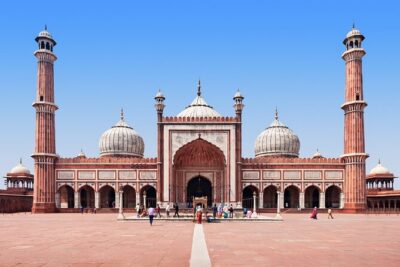
Same Day Taj Mahal, Agra Fort & Baby Taj Tour from Delhi by Car
Read our review →
Taj Mahal Day Tour from Delhi by Superfast Train – TOP RATED TOUR
Read our review →
Full Day Taj Mahal, Agra Fort & Baby Taj Tour from Delhi by Car
Read our review →
Taj Mahal & Agra Private Day Trip with Transfers
Read our review →
Taj Mahal Tour from Delhi by Express Train (Viator Award Winner)
Read our review →