
Reviewed · DELHI TOURS
Facets of Archaeology and Mehrauli, Mehrauli Archaeological Park
Mehrauli has a habit of surprising you, especially if you only know Qutub Minar. This 2-hour guided walk through the 200-acre Mehrauli Archaeological Park connects you to more than 100 monuments, from Lal Kot (Tomar Rajputs, 11th century) to layers from the Khalji, Tughlaq, Lodhi, Mughal, and British periods. I like how the story is told in a clear, street-level way, and I love the way guides bring landmarks to life with names and details, like Tushar explaining sites in a lucid, interesting manner. One thing to plan for: monument access has an on-the-spot fee, so you will pay extra at the park for actual monument entry.
You will start near Qutub Minar Metro and spend your time on foot inside an area that is still continuously inhabited, which gives the whole place a real, current feel rather than a museum-only vibe. The biggest drawback is simply the walking, so bring moderate fitness and comfortable shoes, and be ready for uneven ground.
In This Review
- Key highlights you will feel on the walk
- Mehrauli Archaeological Park, right by Qutub Minar, but way calmer
- Where you meet, what “two hours” really means, and how to prepare
- The heart of the park: Lal Kot and the Tomar Rajputs story
- Tomb of Balban and the 1287 CE architecture clues you can actually spot
- Jamali and Kamali Mosque, Djinn lore, and how local belief shapes the visit
- Quli Khan’s tomb: early 17th century roots, British-era summer retreat twist
- What the guides really add, from Tushar to Amir to Nidhi
- Price, on-the-spot monument fees, and getting good value out of the 2 hours
- Who should book this walk, and who might prefer something else
- Should you book Facets of Archaeology in Mehrauli?
- FAQ
- How long is the Mehrauli Archaeological Park walk?
- Where does the tour start?
- Is this tour private?
- What is included in the price?
- Do I need to pay for monument tickets separately?
- How much are monument tickets for nationals and foreign nationals?
- What fitness level do I need?
- Can I get a full refund if I cancel?
Key highlights you will feel on the walk
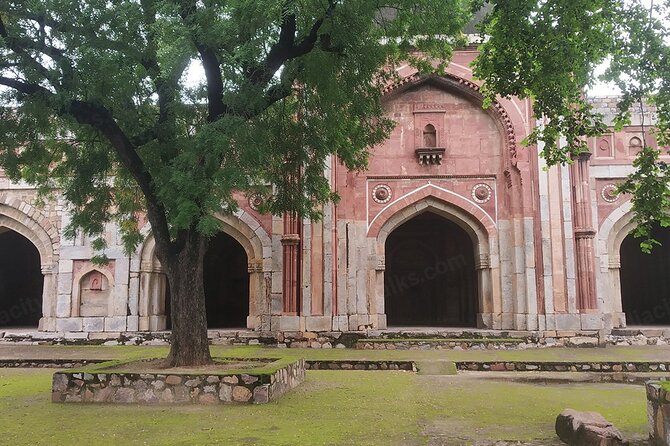
- A continuously inhabited archaeology park, right beside Qutub Minar, with life happening around the ruins
- Lal Kot to later dynasties, so you get the long timeline in a single, focused walk
- Tomb of Balban (1287 CE), including the guide’s explanation of early architectural features like the arch and true dome
- Jamali and Kamali Mosque, tied to local Djinn lore, including the haunted reputation
- Quli Khan’s tomb and the British “summer retreat” makeover, a surprising layer of Delhi’s later history
- Top guide energy, with storytellers like Tushar and Amir praised for clear facts and even shayari, and leaders like Nidhi described as making everyone comfortable
Mehrauli Archaeological Park, right by Qutub Minar, but way calmer
If your Delhi plan is built around famous monuments, Mehrauli can feel like the quieter sibling with the better stories. The Mehrauli Archaeological Park covers about 200 acres in South Delhi, next to the World Heritage site of Qutub Minar, so you can pair them easily. But the experience here is different because the park is not sealed off. It is an area people still live in, so you are not only looking at stone, you are seeing how the city sits on top of its own timeline.
What I like most is the way the park holds many eras in one place. You can encounter remnants connected to the Delhi Sultanate, including the Khalji, Tughlaq, and Lodhi dynasties, then later traces of the Mughal Empire and even the British Raj. That mix matters because it lets you understand Delhi as a place that keeps changing, not just a place that preserves a single moment in time.
The “lesser known” part is real, too. You may find it easier to listen and look carefully without feeling rushed by crowds that usually follow the headline sites. Still, you should expect a guided walk, not a free-for-all sightseeing drive.
A few more New Delhi days to compare
- Old & New Delhi City Tour – Half or Full Day Options Available
★ 5.0 · 4,811 reviews - Half Day Private Delhi City Tour
★ 5.0 · 4,474 reviews - Same Day Taj Mahal, Agra Fort & Baby Taj Tour from Delhi by Car
★ 5.0 · 4,304 reviews
Where you meet, what “two hours” really means, and how to prepare
You will meet at WalkAnuvrat Marg, opposite Qutab Minar Metro Station, in Christian Colony, Mehrauli, New Delhi. The session is listed at about 2 hours, so this is a compact experience built for learning and walking, not checking every monument you can see from the path.
Bring moderate physical fitness, because you are spending the time on your feet through a historical site with uneven surfaces. Wear shoes you do not mind getting a little dusty, and carry water. If you have any medical conditions or special requirements, the instructions are clear that you should tell the tour operator ahead of time.
You also get a mobile ticket, which is convenient. You will still want to show up on time so the group starts together, since the meeting point is specific and tied to the Qutub Minar Metro area.
Finally, this is private, meaning only your group participates. That usually makes it easier to ask questions and keep the pace aligned to your comfort level.
The heart of the park: Lal Kot and the Tomar Rajputs story
One of the best reasons to come here is that you get more than “postcard monuments.” The park includes the ruins of Lal Kot, described as the oldest existing fort in Delhi, built by the Tomar Rajputs in the 11th century.
On a guided walk like this, Lal Kot is not just a name on a sign. It becomes your anchor point. The guide can connect the idea of a fort settlement to what you are seeing around you, helping you understand that Delhi’s history starts long before the better-known dynasties you may already know.
Why this matters for you: when you learn history out in the open, your brain starts building a map of cause and effect. You see how later rulers inherited, expanded, or replaced what came before. Even if you do not read every stone, the guide’s framing makes the ruins feel like part of one continuous city story.
A small caution: Lal Kot and other ruins can be spread out and partially preserved. You may need the guide’s pointers to know what you are looking at and why it mattered.
Tomb of Balban and the 1287 CE architecture clues you can actually spot
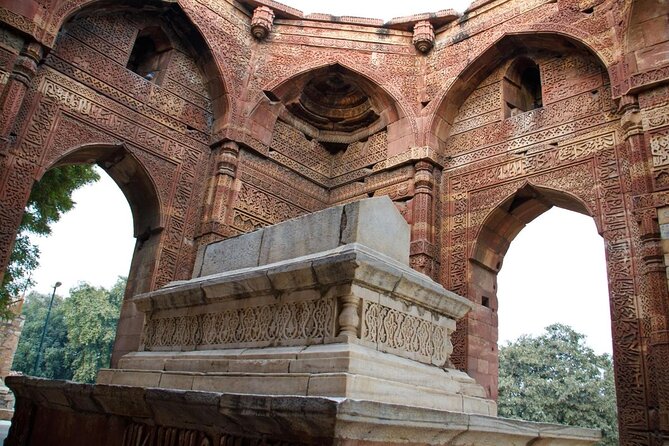
Among the most talked-about stops is the Tomb of Balban, established in 1287 CE. It is tied to an architectural achievement noted in the tour details: the creation of India’s first real arch and a true dome.
This is where a good guide earns their keep. The value is not just hearing a date, it is learning what to look for. When someone explains the “why” behind the arch and dome, you start noticing proportions, curvature, and structural logic rather than treating it as decoration.
If you like architecture, this stop is especially satisfying because it gives you a tangible link between engineering and empire history. You are seeing how rulers used form to project authority, and you are also learning how design ideas developed across time.
If you are not an architecture person, do not worry. The best reviews emphasize that guides explain historical aspects in a lucid, interesting way, and that kind of clarity makes even technical points feel approachable. Expect the storytelling to do the translation for you.
Another way to spend a day in India:
- Taj Mahal Day Tour from Delhi by Superfast Train – TOP RATED TOUR
★ 5.0 · 4,166 reviews - Full Day Taj Mahal, Agra Fort & Baby Taj Tour from Delhi by Car
★ 5.0 · 3,647 reviews - From Delhi: Taj Mahal & Agra Private Day Trip with Transfers
★ 4.9 · 3,181 reviews - Taj Mahal Tour from Delhi by Express Train (Viator Award Winner)
★ 5.0 · 2,849 reviews
Jamali and Kamali Mosque, Djinn lore, and how local belief shapes the visit
Next, you will likely be drawn toward the Jamali and Kamali Mosque, believed to be the abode for Djinns. The park is also described as including a haunted site linked to these beliefs, and that adds a layer most official sightseeing circuits skip.
Here is the important part for you: this is not about chasing sensationalism. It is about understanding how communities live with history and belief side by side. When a place is tied to Djinn stories, people remember it through folklore as well as through stone and dates.
On a guided walk, you will typically get both. You will hear the names and the setting, and you will also get the cultural context for why a mosque might be surrounded by legends. That combination can make the stop feel memorable, especially for visitors who like a blend of cultural detail and physical sighting.
One thing to consider: if you prefer strict, academic-only explanations, you may feel the haunted reputation is more atmospheric than factual. But the local belief is part of the experience, and your guide should keep it respectful and informative.
Quli Khan’s tomb: early 17th century roots, British-era summer retreat twist
Another highlight is the Quli Khan’s tomb, described as early 17th century and later refurbished by a British resident in Delhi into his summer retreat palace.
That British layer is a useful reminder for you. Many Delhi walks focus only on medieval or only on Sultanate and Mughal periods. Here, the park can show how later outsiders and residents reshaped parts of the city and reused historic spaces. Even when you do not know every architectural term, the story gives you a mental timeline of adaptation.
This stop is also a good moment to pay attention to how the guide transitions between dynasties. The park covers multiple ruling periods, and Quli Khan’s tomb provides a “bridge” between local Islamic architecture and the British period’s reinterpretation.
A practical note: parts of tombs and ruins can be quieter in terms of what you can physically access. The guide helps you focus on the meaningful bits so the stop does not feel like a quick peek and move on.
What the guides really add, from Tushar to Amir to Nidhi
The strongest praise centers on communication and storytelling, not just facts. In the kind of feedback this tour collects, you repeatedly see the same theme: the guides made history sound interesting, and they did it in a clear, organized way.
Tushar is specifically called out for explaining Mehrauli Archaeological Park in a lucid and interesting manner. Amir gets credit for knowledge of historical facts paired with storytelling, including shayari. And Nidhi appears in praise for making people comfortable, which matters because a walk works best when the group feels relaxed enough to listen.
Why you should care: archaeology sites can be confusing on your own. There are names, dynasties, dates, and partial ruins that do not automatically tell you what order to think in. A guide’s job is to give you the “story thread,” so you leave with a coherent sense of what you saw and how it fits.
Also, the walk leaders are described as young, energetic, and passionate. That energy can change your experience. Instead of staring at stone and guessing, you are following a narrative built around the most meaningful landmarks.
Price, on-the-spot monument fees, and getting good value out of the 2 hours
The tour price is $60.00 per person for about 2 hours, and the experience includes a tour guide plus a mobile ticket. Based on the details you get, the core guided portion is what you are paying for.
The key cost consideration is that monument tickets are not included in the base price and come with an on-the-spot charge. The listed rates are:
- National: INR 30
- Foreign national: INR 500
So how do you judge value? If you think you will spend your time reading slowly, taking photos, and still ending up confused about what you are looking at, the guided walk becomes better value quickly. In just two hours, a guide can place the Tomb of Balban, Jamali and Kamali Mosque, and Quli Khan’s tomb into the wider layers of Delhi’s history.
If you already know a lot about Delhi Sultanate architecture and you do not need much interpretation, you might feel the extra guide cost. But if you like context, names, and explanations you can carry home, the money tends to feel well spent, especially in a park like this where the ruins can be scattered and the story is not obvious on the ground.
Also, because the tour is private for your group, you are paying for a more controlled, less chaotic experience. That often translates to better questions and a smoother pace.
Who should book this walk, and who might prefer something else
This walk fits best if you:
- like archaeology that is tied to real places people still use
- want a guided overview across multiple dynasties and later periods
- enjoy storytelling where facts get explained in plain language
- appreciate the added flavor of local legends, like the Djinn lore around Jamali and Kamali Mosque
You might skip it or look at alternatives if:
- you want only the most famous monuments with minimal walking
- you are not comfortable paying separate on-the-spot monument fees
- you prefer to visit completely independently without a guide
Given the moderate physical fitness note and the fact that it is a walking experience, I suggest coming with a comfortable stride and the mindset that you are there to learn, not to rush.
Should you book Facets of Archaeology in Mehrauli?
If you want Delhi history with breathing room, this is a strong choice. The park gives you more than one era, and the guided format helps you make sense of Lal Kot, the Tomb of Balban, Jamali and Kamali Mosque, and Quli Khan’s tomb without turning it into a frustrating scavenger hunt.
Book it if you enjoy clear guiding, a lively pace, and the kind of storytelling praised from guides like Tushar and Amir. Factor in the on-the-spot monument fees so there are no surprises, and wear good shoes.
If that sounds like your style, this is an easy yes.
FAQ
How long is the Mehrauli Archaeological Park walk?
The tour lasts about 2 hours.
Where does the tour start?
You meet at WalkAnuvrat Marg, opposite Qutab Minar Metro Station, Christian Colony, Mehrauli, New Delhi, Delhi 110030, India.
Is this tour private?
Yes. It is a private tour or activity, so only your group participates.
What is included in the price?
The tour includes a tour guide. You also receive a mobile ticket.
Do I need to pay for monument tickets separately?
Yes. Monument tickets have an on-the-spot cost charge, which is an additional fee.
How much are monument tickets for nationals and foreign nationals?
National monument ticket: INR 30. Foreign national monument ticket: INR 500.
What fitness level do I need?
A moderate physical fitness level is recommended. You are responsible for assessing your own fitness.
Can I get a full refund if I cancel?
Yes, free cancellation is available. You can cancel up to 24 hours in advance for a full refund. If you cancel less than 24 hours before the start time, the amount paid is not refunded.
Recently added around New Delhi
- Delhi Street Art Walk in Lodhi Art District with Chai & Food★ 5.0 · 34 reviews
- Five-Day Private Golden Triangle Tour (Delhi Agra and Jaipur) From New Delhi★ 5.0 · 7 reviews
- Half-Day Trip of Delhi’s Temples & Spiritual Sites★ 5.0 · 6 reviews
- From Delhi: All-Inclusive Taj Mahal Tour by Train with Escort★ 4.5 · 7 reviews
- Exclusive Sunrise Taj Mahal Excursion from Delhi all Inclusive★ 5.0 · 75 reviews
- Delhi Food Tour : Best Way To Experience Authentic Indian Food★ 5.0 · 80 reviews
- Exclusive North India with Varanasi (Delhi-Jaipur-Agra-Orcha-Kamasutra Temple)★ 5.0 · 45 reviews
- 3 Days Private Golden Triangle Tour to Agra Jaipur Frm New Delhi★ 5.0 · 17 reviews
Delhi Tours, compared.

Old & New Delhi City Tour – Half or Full Day Options Available
Read our review →

Same Day Taj Mahal, Agra Fort & Baby Taj Tour from Delhi by Car
Read our review →
Taj Mahal Day Tour from Delhi by Superfast Train – TOP RATED TOUR
Read our review →
Full Day Taj Mahal, Agra Fort & Baby Taj Tour from Delhi by Car
Read our review →
Taj Mahal & Agra Private Day Trip with Transfers
Read our review →
Taj Mahal Tour from Delhi by Express Train (Viator Award Winner)
Read our review →