
Reviewed · CITY TOURS
Agra, The City through Poetry
Agra is more than the Taj Mahal, and this walk proves it. You’ll follow a poetry thread through the old city, starting at Jama Masjid, then moving to poet-linked stops like Mirza Ghalib’s Birthplace and a calligraphy workshop tied to Urdu literary culture. I especially like how the guide turns street scenes into something you can actually read and remember, with a handout of poetry verses and photos you take home.
Two other things I like: you set the pace, and your guide can help with photos, so you are not just rushing from one photo spot to the next. The one drawback to keep in mind is that this is still a walking experience, with a moderate fitness level needed, and it depends on good weather since it runs outdoors.
In This Review
- Key highlights worth your time
- A poetry walk that starts at Jama Masjid
- Mirza Ghalib’s Birthplace, and the Urdu poetry shift
- A calligraphy workshop where language becomes visual art
- Nazir Akbarabadi on Agra’s silk-route shopping street
- Khankhana Katra and Abdur Rahim Khankhana’s literary footprints
- The take-home handout: your memory, but portable
- How the private format changes the whole experience
- Price and value in plain terms
- Who should book this, and what to consider first
- Should you book Agra, The City through Poetry?
- FAQ
- What is the duration of Agra, The City through Poetry?
- Where does the tour start?
- Is this tour private?
- What is included with the experience?
- Do I need to print a ticket?
- What happens if the weather is poor or I need to cancel?
Key highlights worth your time
- Start at Jama Masjid, then move through Agra’s older neighborhoods with a poetry lens
- Mirza Ghalib’s Birthplace stop connects you to the rise of Urdu poetry in the late Mughal period
- Urdu calligraphy workshop ties language, literature, and Mughal-era cultural life together
- A 16th-century silk-route shopping street, with verses from Nazir Akbarabadi and social details from his writing
- Khankhana Katra and Abdur Rahim Khankhana’s literary footprint, read through the places where ideas took shape
- A take-home handout with poetry excerpts and photographs so the walk lasts past the final photo
A poetry walk that starts at Jama Masjid
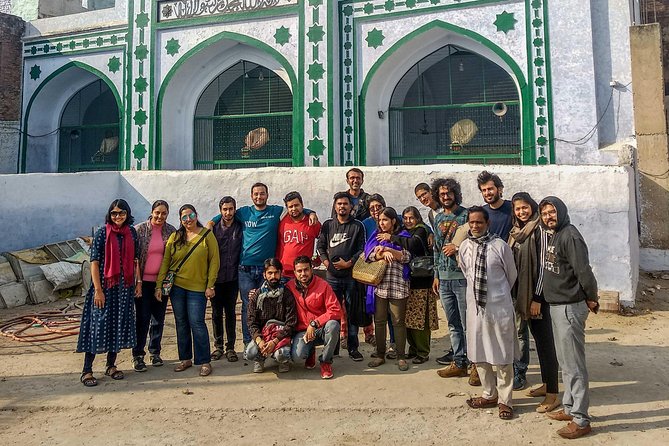
If your Agra plans are Taj Mahal first, then a little bit of shopping, this tour gives you a better second chapter. It is short, private, and designed for the part of Agra that most people skip because it is not on a postcard.
You start at Jama Masjid around 5:00 pm. That timing matters. Late-day light is easier for photos, and the old city feels more like real life than a schedule. From the first steps, the walk is less about monuments and more about how Agra sounds and thinks through poetry.
You also have control. It is private, so you can move at your pace, pause for pictures, or ask questions without the usual tour-group squeeze. If you want to understand why a street name matters, or how Urdu literary culture worked in Mughal times, you can steer the conversation.
One practical note: you will be on foot for the full 2 to 3 hours. Wear comfortable shoes and plan for uneven sidewalks. It is listed for moderate physical fitness, so do not treat this as a casual stroll if you hate walking in the evening heat or crowds.
A few more Agra days to compare
- From Delhi: Taj Mahal Sunrise, Baby Taj & Agra Fort Day Tour
★ 4.9 · 2,020 reviews - Agra: Skip-the-Line Taj Mahal & Agra Fort Private Tour
★ 4.9 · 1,546 reviews - Agra: Taj Mahal Express Entry Tickets
★ 4.8 · 684 reviews
Mirza Ghalib’s Birthplace, and the Urdu poetry shift
The tour’s first major “writer stop” is Mirza Ghalib’s Birthplace. Here the guide frames Ghalib not just as a famous name, but as a key figure in how Urdu poetry evolved during the late Mughal period.
What I find useful about this kind of stop is that it gives you a viewpoint. Instead of treating poetry like something that lives only in books, you see it as a living part of the city’s culture. The guide briefly explains writing genres and why Urdu poetry rose when it did, which helps you understand what you are about to read later in the walk.
This is also where a private format pays off. If Urdu poetry history is new to you, you can ask basic questions. If you already know a bit, you can ask sharper ones about themes or the way poets expressed ideas in their era.
And yes, you will still want photos. The good part is you are not forced to take them and move on immediately. Your guide can help you pause where you can get clean shots without blocking foot traffic.
A calligraphy workshop where language becomes visual art
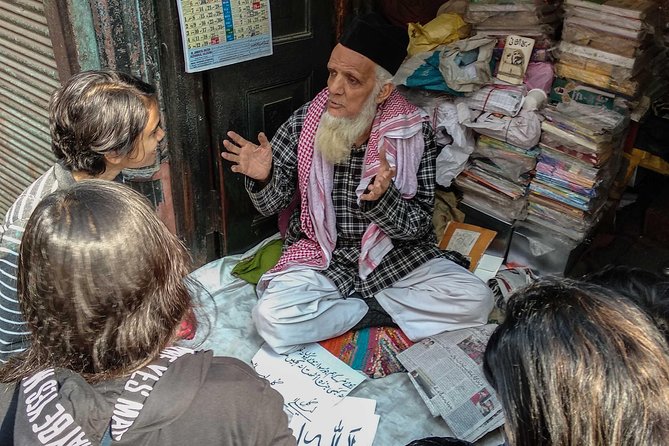
After Ghalib, the walk includes a calligraphy workshop focused on Urdu. Urdu is famous for its script, and the tour uses that visual identity as a doorway into literature under Mughal rule.
This part works because it turns “text on a page” into something you can see. Even if you cannot read Urdu calligraphy yet, watching how the script is shaped helps you understand why the language became tied to art and status. The guide also discusses how language and literature developed during Mughal rule, so the workshop is not just a demo. It is part of the story of how ideas traveled.
One smart way to get value here is to treat it like a translation lesson. Ask how the script connects to meaning, and how calligraphy carried cultural weight in that period. If you are the kind of person who likes to connect culture to daily life, this stop will click.
Also, because the tour is private, you can spend extra time here without feeling guilty. If the workshop grabs your attention, ask if you can stay a bit longer for photos or explanations.
Nazir Akbarabadi on Agra’s silk-route shopping street
Then you walk down a 16th-century shopping street that was once an important part of the silk route. This is one of the most “Agra-feeling” segments because it is built for people movement, trade, and everyday conversation, not museum timing.
The poetry angle is where it gets interesting. You read verses associated with Nazir Akbarabadi, and the guide explains how he documented the city’s socio-economical details. That is a big deal. It means the poetry is not just romance or philosophy. It can function like a snapshot, capturing what life looked like, how people worked, and what the city valued.
For you, that changes how you see the street. Instead of only noticing the shops, you listen for the story the city tells. You start noticing details you might have walked past, like the rhythm of commerce and the mix of visitors and locals moving through the area.
If you like historical writing that feels grounded in real life, this is a highlight. If you prefer pure monument history, you might still enjoy it, but expect the tone to be more social and observational.
Pro tip for this section: if your phone camera does poorly in evening light, consider switching to portrait mode or backing up a step before taking photos. The guide will help with photos, but the lighting and crowd flow are still your best friend.
Another way to spend a day in India:
- Agra: Taj Mahal and Mausoleum Guided Tour with Skip-the-Line
★ 4.8 · 631 reviews - Private Guided Taj Mahal Tour with Skip The Line Entry Ticket
★ 5.0 · 562 reviews - Agra: Taj Mahal & Mausoleum Skip-the-Line Tour with Options
★ 4.9 · 456 reviews - Private Guided Tour of Agra
★ 5.0 · 420 reviews
Khankhana Katra and Abdur Rahim Khankhana’s literary footprints
The walk continues toward Khankhana Katra, another stop built around a literary connection. Here you read about Abdur Rahim Khankhana, linking him to the Mughal-era world of poets and patrons.
What you should take from this section is that poetry in Agra did not float in a vacuum. It belonged to specific people and places, often tied to courts, learning circles, and the cultural machinery that made art possible. The tour uses physical locations like Khankhana Katra to make that idea tangible.
A private guide also helps you keep the names straight. Poetry history has a lot of big labels, and without guidance it is easy to feel lost. With a guide, you can ask how these poets fit together in time, style, or influence.
This is also where the “old city walking” part becomes valuable. Even if you only remember one poetic theme from the entire tour, you will still carry away a sense of where ideas lived in Agra’s neighborhoods.
The take-home handout: your memory, but portable
One of the practical perks is the handout you receive at the end. It includes poetry verses and photographs that match the stops along the route.
I like this because it fixes a common problem with short tours. When you rely only on photos, you forget the meaning behind them. When you have the verses in your hand, you can revisit the ideas later, share them, or look them up to understand the language a bit more.
It also helps you continue the experience at your own speed. After a walk like this, you are often hungry for more context. A take-home page gives you a clean starting point.
If you want to get even more value, take a quick photo of the handout for your notes before you store it away. Then, later, you can pair the lines with the places you visited.
How the private format changes the whole experience
This is a private tour/activity, meaning it is just your group with the guide. That matters for three reasons.
First, you can go slower when something catches your attention, especially in the workshop portion or when you hear a poet’s line you want to understand line by line.
Second, you can ask questions that would be hard to fit into a group schedule. If you want the difference between poet eras explained simply, or why Urdu carried cultural weight during the Mughal period, you can get direct answers.
Third, photo help is part of the offer. Your guide can help you take pictures without the awkward shuffle that happens when everyone crowds for the same shot.
And based on a strong review track record, guides on this walk are not treating it like a scripted checklist. One highly rated experience with guide Kaleem highlighted how he guided guests across multiple religions and tied history to what the poets expressed. That kind of care tends to make the whole walk feel more thoughtful and less rushed.
Price and value in plain terms
The price is $44.28 per person for a 2 to 3 hour private walking tour. That sounds simple, but value comes from what is included.
You are paying for a guide who can connect places to poets, plus a calligraphy workshop stop, plus a photo-friendly walking route, plus a take-home handout with poetry and images. In other words, you are not just paying for walking, you are paying for interpretation.
Also, it is scheduled around 5:00 pm, which can be a smart fit if you are already sightseeing during the day. And because it is a mobile ticket, you do not have to fuss with printouts.
Is it “cheap”? No. But for a short private experience that changes the way you see Agra, it is well positioned. If your time is limited and you want a memorable theme beyond monuments, this is a good use of an evening.
One more detail that signals value: it is often booked about 86 days in advance on average, which usually means the people who want it tend to plan ahead. If you are traveling in peak season or want a specific day, book early rather than waiting for a last-minute decision.
Who should book this, and what to consider first
This tour is a great fit if you:
- want Agra culture beyond big-ticket monuments
- enjoy poetry, reading lines aloud, or learning how literature shaped everyday life
- like walking tours where you can ask lots of questions
- prefer a private guide who can tailor the pace and photo stops
You might want to think twice if:
- you dislike walking or have limited mobility
- you are visiting in weather that could be unreliable, since the experience needs good conditions
- you only want “one famous site, one famous photo” sightseeing, because this is more about interpretation and literary context than monument crowds
Should you book Agra, The City through Poetry?
If you are the type of traveler who wants a city to feel human, not just photographed, I would book it. The best part is the combination: a walk through the old city, poet-linked stops, and a Urdu calligraphy angle that makes the language feel real. Add the handout, and you keep something beyond the trip.
Before you book, do one simple check: are you comfortable with a 2 to 3 hour outdoor walk starting at 5:00 pm? If yes, you will likely come away with a stronger sense of Agra’s culture, not just its monuments.
If you want Taj Mahal memories, do that on another day. For this evening, give Agra’s poets your attention. It is a different kind of sightseeing, and it pays off.
FAQ
What is the duration of Agra, The City through Poetry?
It runs for about 2 to 3 hours.
Where does the tour start?
The meeting point is Jama Masjid Agra, located at Subash Bazar, Kinari Bazar, Hing ki Mandi, Mantola, Agra, Uttar Pradesh 282003, India. The activity ends back at the meeting point.
Is this tour private?
Yes. It is private, so only your group participates.
What is included with the experience?
You get a handout with curated poetry verses and photographs, plus a walking route that includes stops like Ghalib’s Birthplace and a calligraphy workshop. Your guide can also help with photos.
Do I need to print a ticket?
No. It uses a mobile ticket.
What happens if the weather is poor or I need to cancel?
The experience requires good weather. If it is canceled due to poor weather, you will be offered a different date or a full refund. Cancellation is free up to 24 hours in advance for a full refund.
Recently added around Agra
- Agra local walking tour★ 5.0 · 6 reviews
- Private Taj Mahal city tour★ 5.0 · 13 reviews
- Taj Mahal with Local Agra Tour★ 5.0 · 14 reviews
- Private Day Tour Of Tajmahal And Agra Fort From Delhi By Car★ 5.0 · 43 reviews
- Taj Mahal & Agra Fort Half-Day Private Tour★ 5.0 · 38 reviews
- Skip The Line Taj Mahal, Agra Fort & Mehtab Garden Tour★ 5.0 · 82 reviews
- Agra Half-Day Tour: Taj Mahal & Agra Fort★ 5.0 · 11 reviews
- Tajmahal Skip -the- line- Sunrise Tour With Private Guide★ 4.5 · 11 reviews
City Tours, compared.
Old & New Delhi City Tour – Half or Full Day Options Available
Read our review →

Old & New Delhi Private City Tour – Traveler’s Choice (Top Rated)
Read our review →
Jaipur City Private Day Tour from Delhi by Car – All Inclusive
Read our review →
Full Day City Highlights Day Tour & Ganges Cruise
Read our review →
Full-Day City Tour with Car, Guide & Skip-the-Line
Read our review →Browse the lists this tour appears in