

Reviewed · HISTORICAL TOURS
1 day private tour of Hampi world heritage site in car with professional guide
Hampi makes the 16th century feel close by. I love the way a professional guide turns ruins into stories, especially around the Vijayanagara kingdom. I also like the smart pacing for a full day, with admission tickets included at key stops. The one drawback is that 9 hours is a sprint, and Hampi really earns a slower 2-day visit if you can.
This is a private setup, so you and your group move as one unit in a car, typically with AC comfort for long breaks between temples. You start at 8:00 am, which helps you avoid the worst heat later in the day and gives you more shade time for climbing up to viewpoints. If you’re hoping for a relaxed wander with zero pressure, you might feel the time boxing in toward the end.
In This Review
- Key highlights worth your time
- A tight 1-day schedule that still feels complete
- Morning start: Vijaya Vittala Temple and the stone chariot
- King’s Balance: a legend you can stand under
- Virupaksha Temple: Hampi’s oldest temple feeling
- Single-block stops: Sasivekalu Ganesha and Ugra Narsimha
- Royal Enclosures and Queen’s Bath: court life in stone
- Zanana Enclosure and Lotus Mahal: the palatial “women’s quarters”
- Hazara Rama Temple and the underground Shiva surprise
- How the private car changes the whole experience
- Price and value: what $125 buys you here
- Who this tour fits best, and who might feel boxed in
- Should you book this private Hampi day tour?
- FAQ
- How long is the private Hampi tour?
- What time does the tour start?
- Is pickup included?
- What does the tour price include?
- Is this tour private or shared?
- Do I need to buy tickets in advance?
- What is the cancellation window?
Key highlights worth your time
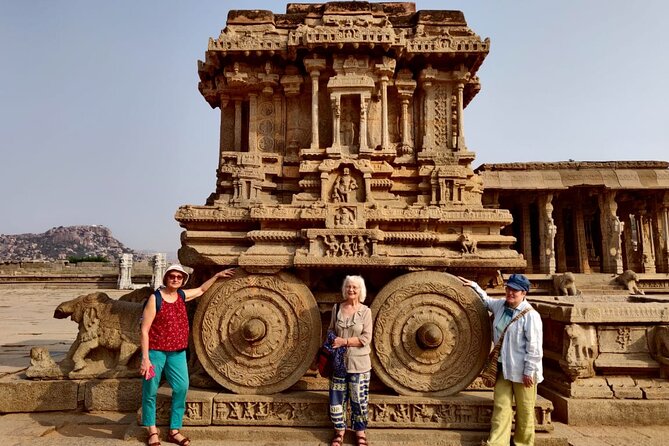
- Vijaya Vittala Temple and its stone chariot: the star stop that makes photos feel like history.
- Virupaksha Temple’s tall, multi-storey tower: Hampi’s oldest temple vibe, with serious vertical drama.
- Single-block rock sculpture stops: Sasivekalu Ganesha and Ugra Narsimha give you scale fast.
- Royal Enclosures plus Queen’s Bath: power, water management, and court life in one area.
- Zanana Enclosure and Lotus Mahal: women’s quarters and one of Hampi’s most elegant structures.
- Underground Shiva Temple: a last stop that shifts you from daylight to mystery.
A tight 1-day schedule that still feels complete

A private Hampi day tour is built for people who want the big hits without losing a whole week. You get about 9 hours to cover multiple clusters of ruins, with a guide who can explain what you’re seeing while you’re standing in front of it. That matters at Hampi, because many buildings look like piles of stone until someone connects the dots for you.
Starting at 8:00 am is a practical choice. Early light makes carving details easier to spot, and the day stays more comfortable before the afternoon heat gets pushy. Also, with a private car, you spend less time figuring out transport and more time on the temples themselves.
One more reality check: Hampi is huge, and you are not seeing everything in one day. Your best experience will come from treating this as a greatest-hits sampler. If you want deep exploration of lesser sites, you’ll feel the “not enough time” urge by late afternoon.
A few more India days to compare
- Fontainhas Heritage Walk by Make It Happen
★ 5.0 · 2,834 reviews - The Great Indian Food Tour: Old Delhi Food and Heritage Walk
★ 5.0 · 1,698 reviews - Old Goa Heritage Walk by Make It Happen
★ 5.0 · 797 reviews
Morning start: Vijaya Vittala Temple and the stone chariot
You begin at Vijaya Vittala Temple, and yes, it is the headliner. This is often called Hampi’s grand masterpiece, and it’s easy to see why once you’re there in the open air. The temple is set on a polyhedron foundation, which helps explain why it feels so anchored even after centuries of weather.
Then you reach the stone chariot, the famous monolithic sculpture that anchors so many Hampi photos. Up close, it’s not just “a chariot,” it’s a whole small world of stone detailing. What you’ll enjoy most is how the structure reads from different angles. From one spot it looks like a parade prop. From another, it feels more architectural than decorative.
Practical note: the visit is about 30 minutes in the plan, which is just enough to take in the major features if you’re not doing long pauses for every single carving. If you’re the kind of person who stops for every inscription or texture, you’ll want to keep moving, or you’ll run behind later stops.
King’s Balance: a legend you can stand under
Next you head to King’s Balance, a huge stone frame east of Purandara Mantapa. This one is short in time, roughly 15 minutes, but it’s memorable because it’s so visually specific. You can literally see the shape of the mechanism: a stone beam set on two stone pillars.
The legend attached to it is the kind of story that makes people lean in closer. The idea is that the generous kings of Vijayanagara used the balance concept for weighing gifts or measuring value. Whether you believe every detail or not, the point is clear when you’re there. This was a place where power, fairness, and public display could be tied together in one symbolic structure.
Drawback to consider: because the time window is tight, you don’t get long to explore nearby fragments. If you like to roam, bring the curiosity, but keep an eye on the group pace.
Virupaksha Temple: Hampi’s oldest temple feeling
Virupaksha Temple is next, and it has a different energy from the Vittala complex. This is described as one of the oldest temples in Hampi, and the tour framing connects it to the Hoysala period. That background matters, because the architecture feels older, sturdier, and less showy than some of the grand showpieces.
The main visual is the tower, with eleven storeys and an estimated height of 165 ft. Even if you cannot comfortably take in every level at once, the tower’s presence makes the whole temple area feel taller than it looks on the ground. It’s the kind of building that helps you understand how early South Indian temple design used vertical rhythm to guide your gaze.
You’ll spend about 30 minutes here. That’s usually enough to appreciate the main tower view, walk around key areas, and understand why this temple became the steady center of religious life at Hampi.
Tip for your visit: focus on the tower shape and the way the structure meets the ground. In a short day, that’s the best “return on attention” move.
Another way to spend a day in India:
- Old & New Delhi City Tour – Half or Full Day Options Available
★ 5.0 · 4,811 reviews - Half Day Private Delhi City Tour
★ 5.0 · 4,474 reviews - Same Day Taj Mahal, Agra Fort & Baby Taj Tour from Delhi by Car
★ 5.0 · 4,304 reviews - Taj Mahal Day Tour from Delhi by Superfast Train – TOP RATED TOUR
★ 5.0 · 4,166 reviews
Single-block stops: Sasivekalu Ganesha and Ugra Narsimha
Two sculpture-focused stops follow, and together they deliver scale in a fast, satisfying way.
At Sasivekalu Ganesha Temple, you see a huge statue of Lord Ganesha carved out of a single block of rock. The height is about 8 feet, so you can’t miss it. Single-block carving has a “how did they do that” quality, and your guide’s explanation helps you appreciate the engineering and skill behind the simple silhouette.
Then you move to the Statue of Ugra Narsimha, described as the biggest idol of Hampi, around 22 feet tall. It’s carved during the time of Krishnadevaraya, and there’s a serpent with an open hood behind it. That back detail is exactly the sort of thing you’d miss if you only glanced and walked on. With a guide pointing it out, you get a fuller read of the scene.
Each of these stops is about 15 minutes. This is ideal if you like variety. It’s also a good reminder: you don’t need 45 minutes in every spot to feel like you saw something real. You just need the right vantage points and a reason to look closely.
Royal Enclosures and Queen’s Bath: court life in stone
Then the tour enters the Royal Enclosures, the seat of power of the Vijayanagara kingdom. This is where Hampi starts to feel less like a collection of temples and more like a functioning capital. Expect a spread of durbar halls, platform areas, tanks, underground chambers, and temples, all connected to how rulers lived and governed.
You begin here at Queen’s Bath, which is one of the most talked-about features in the royal complex. Even with a short time block of about 1 hour for the enclosures area, the key is to understand the layout. You’re not just looking at buildings. You’re looking at a system for water and prestige.
Why this stop is valuable for you: many visitors can photograph a temple easily, but it takes interpretation to grasp why these places mattered day after day. A good guide ties the bathing area and tank structure to the idea of elite access to water, daily ritual needs, and political symbolism.
What to watch for: plan for uneven ground and some walking between platforms. You’re moving through open stone spaces, and footwear matters.
Zanana Enclosure and Lotus Mahal: the palatial “women’s quarters”
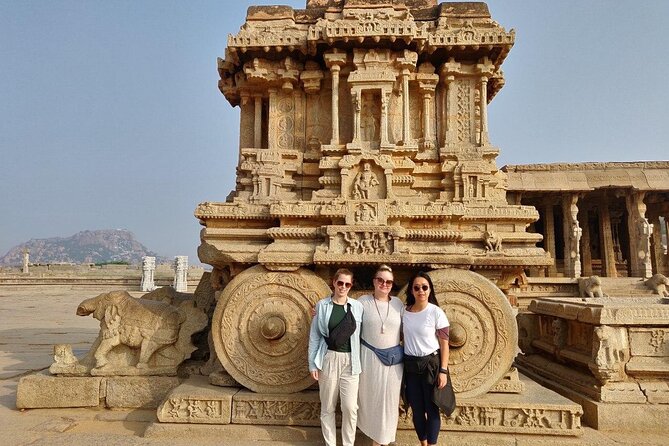
Next is the Zanana Enclosure, described as the place for royal women. This is a shift in tone from temples and public power symbols into palace design and court spaces.
The Lotus Mahal is the standout structure here. The plan calls it a two-storied building surrounded by a rectangular wall. It’s impressive because it mixes palace elegance with the stone-and-geometry style that Hampi is known for. If you like architecture you can describe, this is the one where you’ll probably find yourself saying, “Oh, I get why this is famous.”
This stop is about 20 minutes. That’s enough time to appreciate the outside form, take photos, and then let the guide explain how this palace relates to the royal complex around it.
Possible drawback: if you’re expecting a lot of interior access, you might find it more about exterior viewpoints and understanding the site’s purpose. Your guide can help you “read” what’s visible, which is the point.
Hazara Rama Temple and the underground Shiva surprise
After Lotus Mahal, the tour heads to Hazara Rama Temple, noted as the only temple in the Royal Enclosure and dedicated to Lord Ram, an incarnation of Vishnu. This is a smaller stop in time, about 20 minutes, but it fits nicely as a religious counterpoint to the court buildings around it.
Then you end with the Underground Shiva Temple area. This part includes an excavated water tank, an administrative enclosure, and an underground temple of Shiva. It’s a smart ending, because it flips the mood. Instead of only thinking about sunlit stone facades, you’re confronted with how practical and controlled the underground spaces were.
This final section is again around 20 minutes. You get the feeling of Hampi’s planning mentality, how administration and worship could sit in the same overall landscape. The underground aspect also makes Hampi feel less like a museum and more like a built environment.
If you’re sensitive to tight, shaded areas, take your time. The guide can help you pace yourself so you don’t feel rushed at the end of a long day.
How the private car changes the whole experience
The private car is not just convenience. It shapes the experience by removing stress. You start at 8:00 am, go from one cluster to the next, and you’re not stuck negotiating for transport between ruins.
AC in the car is a real upgrade in this part of India, especially in a 9-hour window. The comfort matters because the stops themselves are outdoors. When you’re finished walking, you want the ride to help you recover, not drain you.
Also, being private means your guide can adjust the pace to your group. If your group is photo-heavy, you can move slower for a bit. If your group is history-focused, the guide can slow down for explanations where they matter most.
One consideration: because it’s private, you are paying for that flexibility. If you’re traveling with a small group, this can still feel good value, because admission tickets are included at the stops listed.
Price and value: what $125 buys you here
At $125 per person for an approximately 9-hour private tour with a professional guide and a car, the value comes from two things: access to guided interpretation and included admission tickets for the major stops you’ll hit.
Admission tickets included across the listed temple stops saves you the mental math of calculating separate entrances. More importantly, guided context at Hampi is not a nice-to-have. It changes how you understand what you’re seeing, from the polyhedron base story to the symbolism behind King’s Balance.
Booking 44 days in advance on average suggests people plan this deliberately. That’s not surprising because Hampi is a popular day trip for people who do not want to spend weeks on research before arriving. This tour gives you structure, which is especially useful if you want the highlights without getting lost.
What would reduce value for you: if you already know Hampi well and want unstructured wandering, a private guided day might feel like you’re paying for someone else’s plan. But if you’re the kind of traveler who wants your photos to match your understanding, this price starts to make sense.
Who this tour fits best, and who might feel boxed in
This is a good match if you:
- Have limited time and want the major Hampi sites in one day
- Prefer a guide who can translate ruins into a story while you stand there
- Want the comfort of a private car with pickup
It may be less ideal if you:
- Want lots of free time at each stop for long wandering
- Prefer an unstructured day where you choose every turn on the fly
- Plan to cover Hampi at peak heat without the early start
There’s also a practical travel note if you’re coming from Bangalore. The drive can be long, so you’ll likely get more out of the day if you’re not forcing everything into a same-day squeeze. An overnight before your tour gives you a fresher start and less stress at 8:00 am.
Should you book this private Hampi day tour?
If you want a high-impact day that covers Vittala, Virupaksha, the royal enclosures, and the sculpture stops, this is an easy yes. The guide-led explanations are the difference between looking at old stone and understanding why it mattered.
Book it if your goal is a focused greatest-hits visit with minimal logistics. Pass or consider adding a second day if you want to slow down, linger, and chase the smaller corners of Hampi. Hampi is the kind of place where one extra day turns “I saw it” into “I really got it.”
FAQ
How long is the private Hampi tour?
The tour runs for about 9 hours.
What time does the tour start?
The start time is 8:00 am.
Is pickup included?
Pickup is offered.
What does the tour price include?
The price is $125.00 per person, and admission tickets are included for the listed stops.
Is this tour private or shared?
It is a private tour/activity, meaning only your group participates.
Do I need to buy tickets in advance?
A mobile ticket is provided.
What is the cancellation window?
You can cancel for a full refund up to 24 hours in advance of the experience start time.
Recently added around India
- Private One Day Trip to Pushkar from Jaipur★ 5.0 · 14 reviews
- Jaipur by locals : Private Tour of Hidden & Iconic Sights★ 5.0 · 32 reviews
- Private Full-Day Jaipur Sightseeing by Car★ 5.0 · 103 reviews
- Night Tour in Open Jeep★ 5.0 · 19 reviews
- One Day Local Sightseeing of Jaipur★ 5.0 · 7 reviews
- Full-Day Ajmer and Pushkar Guided Sightseeing Private Trip★ 4.5 · 6 reviews
- Best of Jaipur 1, 2-Day Private Full-Day Delhi Sightseeing★ 4.5 · 8 reviews
- Namaste Bollywood | Dance Like a Bollywood Star★ 5.0 · 17 reviews
Historical Tours, compared.


The Great Indian Food Tour: Old Delhi Food and Heritage Walk
Read our review →

Old Delhi Food, Heritage&Cultural Walk with Rickshaw ride to Masterji Kee Haveli
Read our review →
Fontainhas Heritage Walk At Latin Quarters of Goa
Read our review →
Blue City Heritage Private Walking Tour With Pickup and Drop-Off
Read our review →
Private Heritage Walking Tour in Jaisalmer Fort and Old Bazaar
Read our review →Browse the lists this tour appears in