
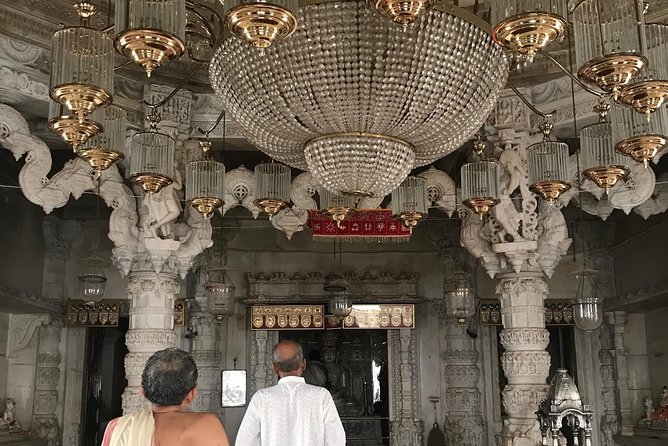
Reviewed · MUMBAI TOURS
Travel 12 days in wonderful Maharashtra
A spiritual tour sounds big and vague, until you see the places. This 12-day Maharashtra route connects faiths in real neighborhoods and working religious sites, from Mumbai’s coastal dargah walk to the cave worlds of Ajanta and Ellora. I especially liked the balanced mix of sacred sites across traditions and the practical pacing, with train travel between cities so you spend more time where the action is. One drawback to flag up front: it includes a moderate amount of walking and temple time, so you’ll want a decent fitness level and some flexibility in your schedule.
What makes it feel special is the way the guide keeps bringing meaning back to what you’re actually seeing, not just reciting facts. Also, this tour runs as a private group, so you’re not shuffled with strangers halfway through the day. If you’re expecting a long beach holiday, this isn’t that, but if you want religion in context, it’s a strong match.
In several reviews of the Akvin Tourism experience, guides Vincent and Akash get praised for being friendly and expert, and that matters here because the tour is all about interpretation. One extra bonus if your dates line up: you might catch festival energy, including Diwali time mentioned by guests during their visit to western India.
In This Review
- Key moments you should look for
- Price and logistics: what you’re really paying for
- Day 1 to Day 3: arriving in Mumbai with purpose, not sightseeing bingo
- Malabar Hill, Babulnath, and Haji Ali: faith you can actually walk through
- Dharavi and Colaba: the city’s realities, then its postcard face
- Nashik temples and a night by the Godavari: Hinduism in lived space
- The Ramayana trail: Laxmanji, Sita Agni Kund, and Kalaram
- Godavari River worship at night
- Ajanta and Ellora: the cave day you’ll remember for its scale
- Ajanta caves: timing matters because Tuesday closure exists
- Ellora caves: 32 caves, 3 religions, including Kailash temple
- Khuldabad and Aurangabad: Sufism sites that feel active, not just historical
- Malik Ambar’s tomb and the tolerance angle
- Aurangzeb’s tomb near the Sufi master
- Burhanuddin Gharib Dargah and the Khuldabad spiritual center
- Nanded’s Hazur Sahib and the Sikh evening program
- Hazur Sahib: the Sikh centerpiece
- Takhat Sachkhand Sri Hazur Abchalnagar Sahib and local dinner
- Day 11: more gurudwara time on the river
- Day 12 and travel back to Mumbai: flexible exit options
- What kind of traveler this Maharashtra tour fits best
- Sustainability and health care notes you should take seriously
- Should you book this Maharashtra spiritual circuit?
- FAQ
- Which cities and main areas does the tour cover?
- Is airport pickup and transfer included?
- Does the price include guides, meals, and monument access?
- Are train tickets included between cities?
- Is there an option for a homestay in Aurangabad?
- Which faith-related sites are included?
- What are the basic requirements and dress expectations?
Key moments you should look for
- Mumbai’s religious cross-currents, from Malabar Hill’s step-well area to Haji Ali’s dargah out over the sea
- Local train texture in your itinerary, including the ride to Dharavi and a UNESCO-class station stop at Chhatrapati Shivaji Terminus
- Nashik’s Ramayana-focused temple circuit, plus a night ceremony by the Godavari River
- Ellora’s 32 caves from 3 religions, including the famous Kailash temple within the complex
- Khuldabad’s Sufism sites, with Burhanuddin Gharib Dargah and stories tied to saintly tradition
- Nanded’s Sikh centerpiece, Hazur Sahib, plus evening gurudwara time and a local dinner prepared by locals
Price and logistics: what you’re really paying for
At $586.43 per person for 12 days, this trip is best understood as a guided, in-vehicle, ticketed circuit across multiple cities. The inclusions are the real value lever: you get an air-conditioned vehicle, a professional guide, lunch, entrance in all monuments, and 3-star accommodation. On top of that, train tickets are included for the long jumps that would otherwise eat your energy.
You’re also not stuck dealing with a dozen separate bookings. The tour provides pickup logic in the first day (airport welcome and transfer), plus mobile ticket support. There’s even flexibility hinted in the itinerary with an option for a homestay in Aurangabad, which can change the whole feel of the trip if you want something more hands-on than a hotel bubble.
What to consider is time and effort. This is a full 12 days with religious sites, and not all days are “relax and wander.” Dressing should be decent, and you should expect temples and ceremonial spaces where you’ll be standing, walking, and moving at a local pace. The tour also notes a moderate physical fitness level, which is honest for this kind of itinerary.
Finally, there’s a stated safety approach for health precautions, including sanitization of the car, cleaning protocols, and steps like wearing a mask and temperature checks. That doesn’t change the geography, but it can make your day-to-day comfort easier.
A few more Mumbai days to compare
- Dharavi slum tour in Mumbai by Female tour guides of the slum
★ 5.0 · 1,976 reviews - Mumbai: Full-Day Sightseeing Tour of Mumbai
★ 4.9 · 1,822 reviews - Private Mumbai Sightseeing Tour (Traveller’s Choice Award Winner)
★ 5.0 · 1,565 reviews
Day 1 to Day 3: arriving in Mumbai with purpose, not sightseeing bingo
Mumbai can feel overwhelming on day one, which is exactly why starting with guided structure helps. You land at Chhatrapati Shivaji International Airport (Sahar), and you’re welcomed and transferred to your hotel. That simple handoff is more important than it sounds in a city of traffic, moving parts, and jet lag.
Malabar Hill, Babulnath, and Haji Ali: faith you can actually walk through
On the Malabar Hill stop, the tour uses a step-well setting as an anchor for explaining the wider religious landscape of India. It’s a smart move, because it’s not just “here’s a temple.” It’s “here’s a place that shows how people have lived, prayed, and gathered.”
Then comes Babulnath Temple, a Shiva temple built in the 12th century. It’s also associated with the Netflix series Sense 8, which gives you an instant pop-culture bridge if that’s your thing. From there, you head to Haji Ali Mosque, a dargah constructed in 1431 and known for being in the middle of the sea. You get a nice walk, and more importantly, you get space away from the city noise.
Even if you’re not a deep religious-history person, these are different experiences: one is inland and urban, the other is coastal and reflective. The guide’s job is to help you read those contrasts without flattening them into stereotypes.
Dharavi and Colaba: the city’s realities, then its postcard face
Day 3 shifts the mood. You take a train from Churchgate Railway Station (W) toward Dharavi. This isn’t framed as a simple “tourist attraction.” The visit to Dharavi is described as seeing the biggest slum area of Asia and learning about the economy, with the explicit goal that it might change your view about slum areas.
Next is Colaba and South Mumbai classics: Gateway of India, Chhatrapati Shivaji Terminus (UNESCO), and the Cathedral of the Holy Name. You also stop at Jehangir Art Gallery for a look at newer Indian artists. The mix matters. It prevents your Mumbai experience from becoming only colonial-era monuments or only modern city issues.
Also note: you’ll have some free time on Day 2 and Day 3 around Mumbai. That helps you keep your energy for the heavier days ahead.
Another way to spend a day in India:
- Elephanta Caves & Island Guided Private Tour
★ 5.0 · 1,327 reviews - Group Guided Walking Tour in Fort and Colaba
★ 5.0 · 1,073 reviews - Mumbai: Elephanta Caves Half-Day Guided Tour with Expert
★ 4.8 · 1,032 reviews - Highlights of Mumbai Sightseeing Tour: TRAVELLERS CHOICE AWARDED
★ 5.0 · 915 reviews
Nashik temples and a night by the Godavari: Hinduism in lived space
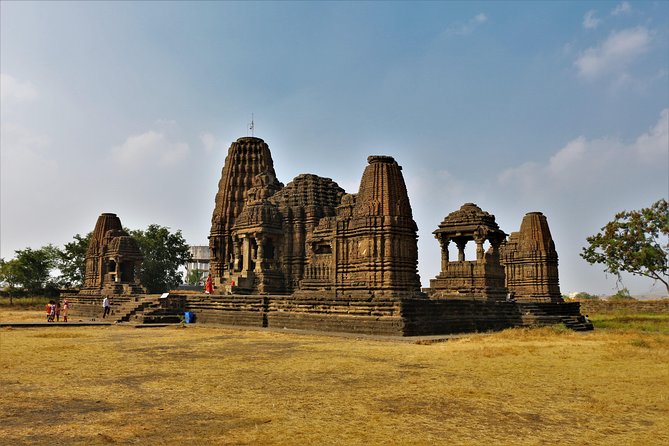
Nashik is where the tour leans into Hindu spirituality through a sequence of temples and story-linked sites. The travel to Nashik includes a train ride where you also experience local train culture. Expect a few hours of movement, but the point is that it’s part of the journey, not something you try to eliminate.
The Ramayana trail: Laxmanji, Sita Agni Kund, and Kalaram
The daily temple circuit starts with Shree Laxmanji Temple, followed by Sita Agni kund Samarpan Sthal, which the itinerary describes as the end point of Ramayana’s story, known as a place of miracle.
Then you head to Naroshankar Temple to get at what the tour calls the heart of Hindu spirituality. After that is Kalaram Temple, built around 1788, connected to a story about Rangarao Odhekar dreaming of a black statue of Rama in the Godavari River.
You finish with additional temple stops, including a site famous for intense activity and then Ramkund, described as the main sacred place in Nashik. The tour explicitly brings up funerals and ceremony in Hinduism here, which is important context. It helps you understand that religion is not only festivals and prayers, it’s also life-cycle rituals.
Godavari River worship at night
A different tone appears on Day 4: after resting, you go near the river for a night ceremony to worship Godavari River. If you think you’re coming for architecture alone, this is one of the stops that can surprise you. Night ceremonies tend to feel more personal and less like a checklist.
If you prefer calm, you might want to pace yourself on the temple-heavy blocks so the evening ritual feels like a reward rather than another demand.
Ajanta and Ellora: the cave day you’ll remember for its scale
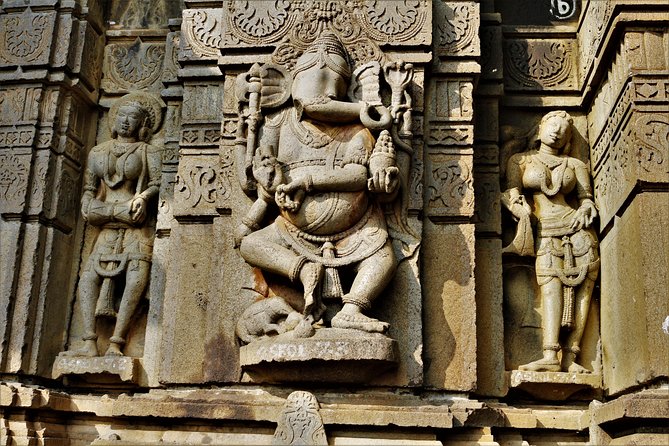
Ajanta and Ellora are the tour’s big “wow” section. It’s also the area where you get long, immersive time in a single complex, which is a change from Mumbai’s many shorter stops.
Ajanta caves: timing matters because Tuesday closure exists
On Day 7, a private AC vehicle brings you to Ajanta caves, with a note that Ajanta caves are closed on Tuesday. The itinerary says the order can be changed depending on your dates. So if you’re booking, it’s worth knowing your day of travel could affect the sequence, even if the sites remain the same.
Ajanta is described as known for painting and surrounding nature, and as one of those man-made arts that you can’t fully picture until you’re there. That’s fair. When a site is mainly visual, your best advantage is time on-site and the guide’s framing.
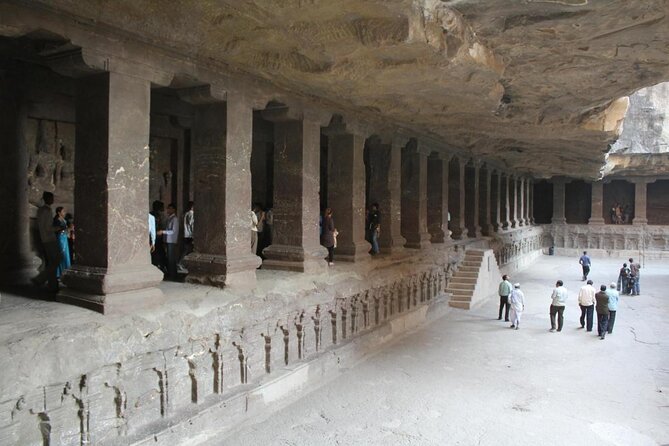
Ellora caves: 32 caves, 3 religions, including Kailash temple
Day 8 is Ellora, with you being dropped near the UNESCO site first and able to explore on your own before the main guided time. Ellora is described in a clear, practical way: 32 caves from 3 religions, plus the Kailash temple within the complex, and the biggest monolithic monument in the world.
The guide provides extra tips to visit, which you’ll appreciate because cave complexes are easy to navigate poorly if you don’t know where to focus first. After the long block of time inside Ellora, the tour returns you to your hotel or homestay.
This portion is included with admission tickets, and it’s also where your legs get a workout. Wear comfortable shoes, and expect some stair or uneven paths typical of cave terrain.
Khuldabad and Aurangabad: Sufism sites that feel active, not just historical
The spiritual theme shifts toward Sufism on Day 9. You head to Khuldabad, described as the capital of Sufism in the 14th century, and still a major place for Sufi practice.
Malik Ambar’s tomb and the tolerance angle
The itinerary includes Malik Ambar’s tomb, presented as a story where Malik Ambar was a slave who became prime minister of the sultanate of Nizam and created Aurangabad. The tour connects him to extreme religious tolerance, which gives the day a purposeful lens: you’re not only looking at tombs, you’re learning how pluralism was framed in political and spiritual terms.
Aurangzeb’s tomb near the Sufi master
You also visit Aurangzeb’s Tomb, described as near his Sufi master. That proximity is the kind of detail that makes a religion-focused tour more than a set of landmarks. It’s a reminder that different faith layers overlapped in real spaces.
Burhanuddin Gharib Dargah and the Khuldabad spiritual center
Then comes Khuldabad and Burhanuddin Gharib Dargah, a Sufi saint where miracles are attributed. Even if you don’t treat miracle stories literally, you should still pay attention to how belief shapes a place’s atmosphere and what people choose to do there.
The day also includes Daulatabad Fort and a botanical garden stop. These are helpful breaks from purely sacred spaces, especially if you need a breather between heavier visits. Daulatabad Fort is listed with a long time allocation, and the tour frames it as helping you understand how a small village became a capital.
Nanded’s Hazur Sahib and the Sikh evening program
Day 10 is a train day again, taking you to Nanded. The itinerary lists a rail block of about four hours, and then it continues with a village and temple stop at Hottal.
Hazur Sahib: the Sikh centerpiece
Hazur Sahib Nanded is the main religious anchor. The tour then adds a walk into Sikh life through night time gurudwara experience, with the text specifically saying you’ll discover the Gurudwara by night as a Sikh temple.
This is one of the strongest design choices in the itinerary: it doesn’t just show you a building. It gives you an evening view of practice.
Takhat Sachkhand Sri Hazur Abchalnagar Sahib and local dinner
Later, you visit Takhat Sachkhand Sri Hazur Abchalnagar Sahib. You’ll also have dinner prepared by locals, which is included. That’s a big practical plus because it reduces the guesswork of “where do we eat tonight” after a full day of visiting.
If you’re the kind of traveler who remembers people and meals as much as monuments, this stop is likely to stick with you.
Day 11: more gurudwara time on the river
On Day 11, the tour includes Gurudwara Shri Nagina Ghat, near a river, as an introduction to Sikh religion. Then you return to Takhat Sachkhand Sri Hazur Abchalnagar Sahib in the daytime for more insight into how the Sikh community works together, described as a strong united community.
You also get free time in the afternoon, which is exactly what your brain needs after two consecutive days of religious focus.
Day 12 and travel back to Mumbai: flexible exit options
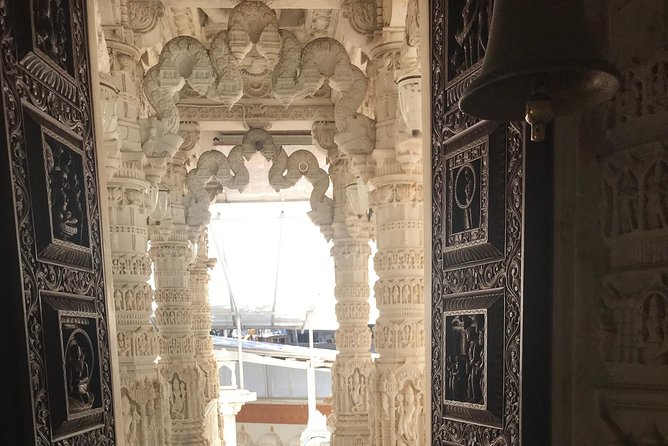
Day 12 starts with breakfast and then moves toward the airport at Nanded to fly back to Mumbai. The itinerary also gives you an option to book a train if you’d rather not fly.
This is a useful flexibility note. Some people hate flying after a long string of travel days, while others prefer to maximize rest by choosing the fastest option. Either way, you have a supported path.
What kind of traveler this Maharashtra tour fits best
This tour is best for people who want religion and culture taught through places, not through lectures. If you like the idea of comparing different faith traditions in the same region, with real site visits, you’ll probably find it satisfying.
It’s also a good fit for travelers who prefer structured guidance. The guide’s interpretation is a major part of the value, especially because you’re moving through multiple cities and multiple types of sites.
If you’re traveling with moderate mobility, plan for a few days that are temple and cave heavy. If you get tired easily of group tours, this private group setup can make the day feel more personal and less hectic.
And if you’re a foodie-by-default, the included local dinner in Nanded is a small highlight worth counting on.
Sustainability and health care notes you should take seriously
The tour mentions working on sustainable tourism and includes a straightforward list of COVID-era safety precautions: regular sanitization of the car, cleaning protocols, wearing masks, and temperature checks. Even now, those habits can translate to a smoother, cleaner travel day.
It doesn’t replace common sense. You should still carry your own basics like water, sun protection, and any personal health items. But it’s a sign the provider is thinking about day-to-day comfort.
Should you book this Maharashtra spiritual circuit?
I’d book it if you want a guided, multi-faith Maharashtra experience with a clear route: Mumbai, Nashik, Ajanta and Ellora, then Sufism in Khuldabad, and Sikh sites in Nanded. The biggest reasons are the site variety, the included train travel between cities, and the practical inclusions that keep your planning load low.
I wouldn’t book it if you want a slow-paced vacation, heavy luxury, or a strictly off-the-beaten-track route that never touches famous sites. You will see major UNESCO caves and iconic Mumbai landmarks. That’s not a bad thing, but it’s not a “only tiny villages” trip either.
If you’re ready for a full, meaningful itinerary with strong guidance, this is one of those tours that can turn your idea of Maharashtra from a dot on the map into a set of lived places.
FAQ
Which cities and main areas does the tour cover?
The route is based in Mumbai, then travels to Nashik, Aurangabad (Chhatrapati Sambhaji Nagar), and finally Nanded, with day trips and stops tied to each region.
Is airport pickup and transfer included?
Yes. On the first day, the tour includes welcoming you at Chhatrapati Shivaji International Airport (Sahar) at your arrival time and transferring you to your hotel.
Does the price include guides, meals, and monument access?
Yes. The tour includes a professional guide, lunch, entrance in all monuments, and accommodation in 3-star hotels. Breakfast is included for 10 mornings and dinner is included for 4 dinners.
Are train tickets included between cities?
Yes. The itinerary uses train travel between different cities unless otherwise stated, and train tickets are included.
Is there an option for a homestay in Aurangabad?
Yes. In Aurangabad, there is an option of a homestay for discovering Indian culture more closely.
Which faith-related sites are included?
The tour is designed to cover Hinduism, Jainism, Buddhism, Sufism, and Sikhism, with specific stops such as Shiva and Ramayana-linked temples in Nashik, cave visits at Ajanta and Ellora, Sufi sites in Khuldabad, and gurudwara experiences in Nanded.
What are the basic requirements and dress expectations?
The tour states a moderate physical fitness level is required, and dressing should be decent. The tour also notes you should follow recommended safety precautions for public health during the crisis period.
Recently added around Mumbai
- Mumbai Spice Markets and Bazaars Tour with Guide and Transport★ 5.0 · 42 reviews
- Customize private tour with pickup★ 5.0 · 95 reviews
- Private Guided Bandra Half Day City Tour in AC Vehicle★ 5.0 · 72 reviews
- Mumbai 800 Year Worli Village: Talking Goddess, Old Fort & more★ 5.0 · 94 reviews
- Private Walking Tour in Dharavi Slums★ 5.0 · 7 reviews
- Mumbai by Night Guided Tour★ 5.0 · 6 reviews
- Gufran’s Slum Home Tour in the Mumbai Slums★ 5.0 · 19 reviews
- The Panoramic Ridge Hike near Mumbai★ 5.0 · 7 reviews
Mumbai Tours, compared.
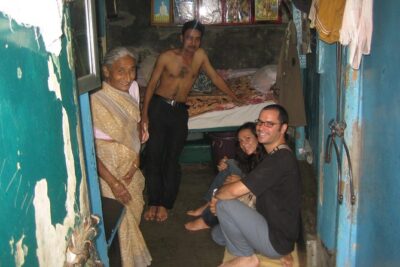
Dharavi slum tour in Mumbai by Female tour guides of the slum
Read our review →
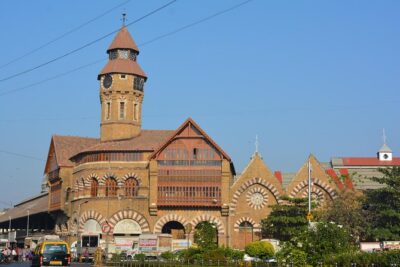
Private Mumbai Sightseeing Tour (Traveller’s Choice Award Winner)
Read our review →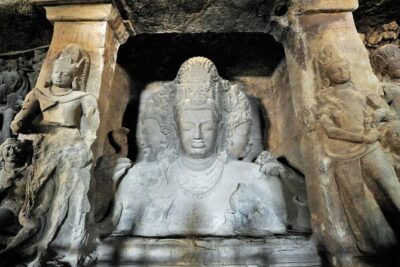

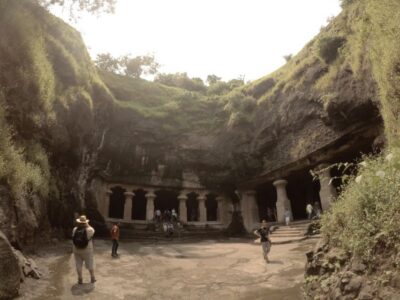
Elephanta Caves Half-Day Guided Tour with Expert
Read our review →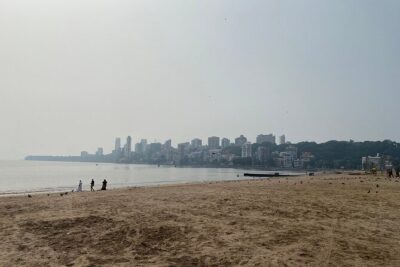
Highlights of Mumbai Sightseeing Tour: TRAVELLERS CHOICE AWARDED
Read our review →