
Reviewed · JODHPUR TOURS
Traditional Art and craft tour
A quiet village beats the city noise every time. This half-day Bishnoi Village safari around Jodhpur mixes hands-on craft demonstrations with a look at how families actually live in rural Rajasthan, with private pickup and drop-off to keep it easy. You’ll see pottery, textiles, and printmaking traditions up close, plus a proper lunch rather than a quick snack.
I especially liked the direct artisan-to-you demonstrations and the way the day centers on craft families, not a scripted show. I also enjoyed the human touch, including warm welcomes and conversation at a home setting, with hot drinks and bottled water included.
One drawback to consider: this is a village visit with some walking and active moments, so it helps to have a moderate fitness level and wear comfortable shoes.
In This Review
- Key things you’ll notice on this tour
- Why Bishnoi Village craft days feel different from typical sightseeing
- The “half-day” timing and how the logistics usually feel
- What happens once you reach the village: safari, animals, and greetings
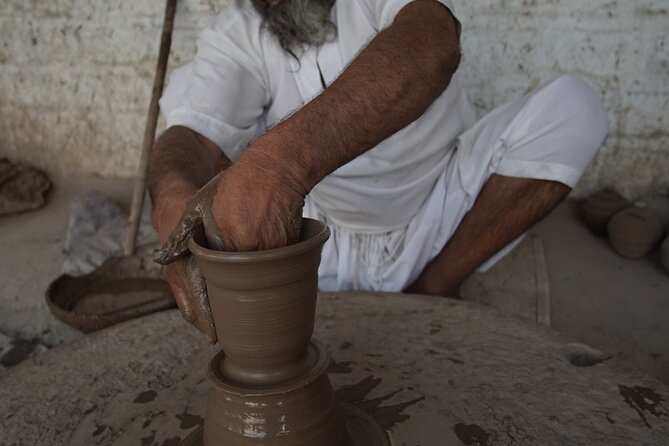
- Pottery on the wheel: more than watching, you get the idea fast
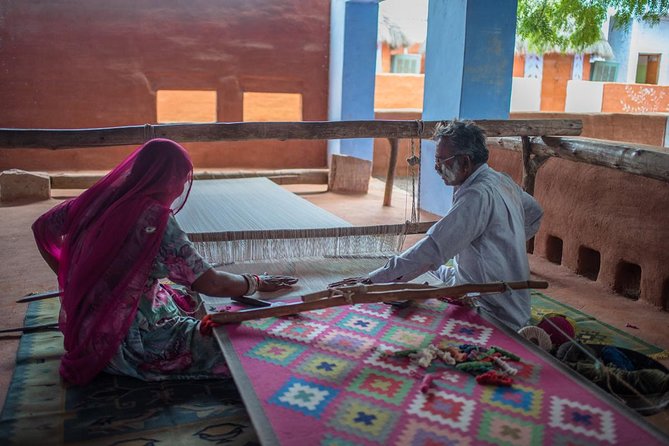
- Textiles and weaving: interlock durrie and why it matters
- Indigo dyeing, Dabu prints, and block printing explained in plain steps
- The home-cooked lunch, tea, and what you should expect
- Shopping for crafts: how to buy smart without getting overwhelmed
- Price value: why $30 can be a good deal here
- Who this tour suits best, and who should skip it
- The people make the difference: guides and hosts to look out for
- Should you book this Jodhpur traditional art and craft tour?
- FAQ
- How long is the traditional art and craft tour?
- Where does the tour take place?
- Does the tour include pickup and drop-off?
- What food and drinks are included?
- Is there a vegetarian option?
- Is this a private tour?
- Are alcoholic drinks included?
Key things you’ll notice on this tour
- Bishnoi Village focus: you get more than one craft, tied to village families and daily life
- Crafts you can recognize: pottery, weaving, block printing, and related textile dyeing and pattern methods
- No-stress pace: you can watch, ask questions, and then decide what you want to buy
- Home-cooked meal: lunch plus coffee or tea, with bottled water throughout
- Private group feel: you only share the experience with your group
Why Bishnoi Village craft days feel different from typical sightseeing
If you come to Rajasthan expecting forts and big-ticket landmarks only, this tour redirects you fast. In Bishnoi country, craft is not a side attraction. It is part of how people earn a living, pass skills to the next generation, and keep their traditions going.
You’ll spend the bulk of the time meeting artisans and their families, watching them work, and learning what each process actually takes. That is the big advantage of doing it in a village setting versus a shop stop. It is easier to understand what you’re looking at when you see tools, materials, and hands-on steps.
From the craft side, you can expect demonstrations around:
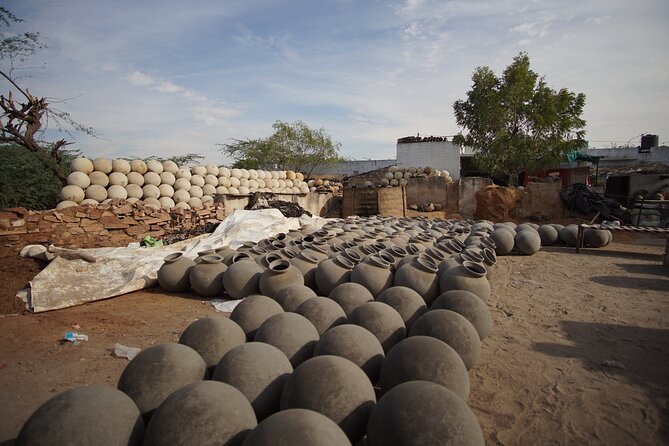
- Pottery, including wheel-throwing
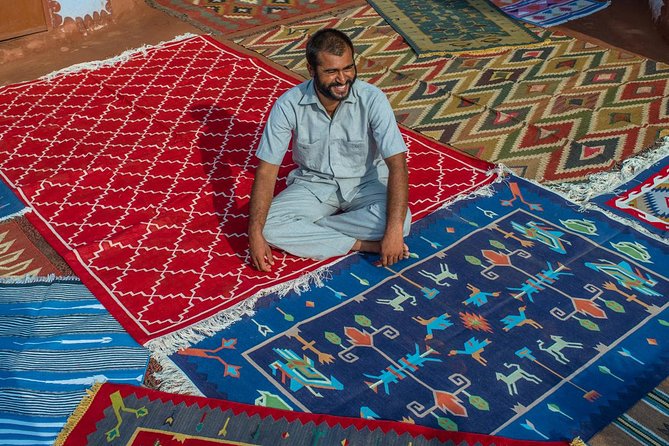
- Textiles and weaving, including interlock durrie-style weaving (a technique tied to practical, durable floor coverings)
- Dye and print methods, including indigo dyeing and pattern printing such as block printing and Dabu-style printing
From the life side, you’ll also see how families cook over an open fire and how hospitality works in their everyday rhythm. A few hosts also share local Bishnoi practices for welcoming visitors, so it feels like a visit to people, not a performance for tourists.
A few more Jodhpur days to compare
- Private Jodhpur Blue City Tour with Hotel Pickup and Drop-off
★ 5.0 · 461 reviews - Blue City Heritage Private Walking Tour With Pickup and Drop-Off
★ 5.0 · 441 reviews - Private Jodhpur Blue City Walking Tour with Guide
★ 5.0 · 321 reviews
The “half-day” timing and how the logistics usually feel
This tour runs about 4 to 5 hours, and the schedule is built for a straightforward day in Jodhpur. You get hotel pickup and drop-off, so you’re not trying to coordinate taxis or buses once you’re already tired from city exploring.
One travel-friendly detail: your ticket is provided digitally, which makes it simple to show up without hunting for paper. Also, the day includes fuel surcharge and local taxes, so you’re less likely to get surprised by add-on costs once you’re out.
In at least one commonly described flow, you’re driven out of town along country roads for a short stretch before reaching the village area. Some guests mention the pickup happens in a jeep, with a drive around 20 km, which matches the feel of a quick rural escape rather than a long expedition.
What this means for you: it is a good choice if you want an authentic craft experience but you still have energy for one more thing later that day.
What happens once you reach the village: safari, animals, and greetings
The day centers on a Bishnoi Village Safari style visit. “Safari” here does not mean you’re spending hours in a jeep chasing wildlife like a big game tour. Instead, it’s a safari-shaped village walk and experience, with chances to see local wildlife in the area and learn how the Bishnoi community approaches coexistence.
A highlight from the experience: you might see animals like peacocks and peahen, kingfisher, deer, and even species such as blackbuck, nilgai, and blue bull in the broader wildlife-rich setting. Wildlife sightings are never guaranteed everywhere, but this route is popular specifically because the area can feel alive.
You’ll also get a glimpse of local ways of greeting and welcoming people. Several guests note the host takes time to explain Bishnoi practices, and that helps you feel less like you’re just watching from the sidelines. When someone explains what you’re seeing, even basic things like how people hold themselves, where they work, and how they interact with visitors become more meaningful.
Pottery on the wheel: more than watching, you get the idea fast
Pottery is one of the clearest “skill to object” crafts. If you want to understand why handmade items cost what they do, this is a strong stop.
You’ll see artisans making pottery, often with demonstrations that show the steps from shaping to finishing. One of the most memorable moments described is the chance to try throwing a pot on the wheel. Even if your first attempt is more abstract sculpture than dinnerware, it’s a useful reality check. You feel how much control and timing it takes, and that changes how you view the final products.
Practical tip for your visit: watch the hand positions and how the artisan corrects quickly. Pottery looks slow when you’re watching from afar, but the work is active and precise. If you ask questions, focus on process details like drying times, how they manage cracks, and what they use for finishing. Those answers often lead to a deeper appreciation than just hearing a general story.
Another way to spend a day in India:
- Jodhpur Blue City Heritage Walking Guided Tour
★ 5.0 · 240 reviews - Blue City Heritage Walking Tour With Pick Up & Drop Off
★ 4.8 · 164 reviews - Desert Camel Safari Day Tour In Jodhpur
★ 5.0 · 161 reviews - Private Guided Cooking Workshop Experience in Jodhphur
★ 5.0 · 158 reviews
Textiles and weaving: interlock durrie and why it matters
Textiles can sound like a blur when someone only shows you finished pieces. Here, you get the chance to see how textiles are produced and how weaving works as a livelihood.
Guests specifically mention interlock durrie weaving, a technique used for durable floor coverings. That matters because you start to understand why these textiles are built to last. They are not fragile art objects meant for a shelf only. They are functional, and that helps explain both the pattern density and the practical feel of the materials.
You’ll also see weaving demonstrations that give you a sense of the workflow: preparing materials, setting up patterns, and using the loom method to create the final texture and design.
If you’re a textile person, you’ll probably enjoy this stop more if you let yourself slow down. Ask what makes one pattern easier or harder. Ask about the difference between simple and detailed designs. The craft people tend to explain in plain terms once they see you care about how it’s made, not just how it looks.
Indigo dyeing, Dabu prints, and block printing explained in plain steps
Printing and dyeing are where pattern can become confusing if the explanation is vague. This tour is built for watching the process, not just browsing results.
You can expect to see:
- Indigo dyeing, tied to the deep color look many people associate with Rajasthan textiles
- Dabu-style printing, a resist-style method where patterns resist dye in specific areas
- Block printing, using carved blocks to transfer designs onto fabric
What I think is especially valuable here is how the steps relate. Dyeing is one part. Pattern transfer is another. Resist methods bridge the two. When you can see each step, the final cloth stops looking like magic and starts looking like technique.
Practical advice if you want to shop afterward: bring up questions like how the design is planned, how they check whether a color has set correctly, and how long pieces take between steps. That gives you a better sense of labor time, and you’ll be happier with what you choose.
The home-cooked lunch, tea, and what you should expect
Food is not an afterthought on this tour. It’s part of the day’s rhythm.
You’ll have a home-cooked lunch, plus a hot drink such as coffee or tea, and afternoon tea. Bottled water is included too. Several guests mention cooking over an open fire, which adds a noticeable village flavor to the meal.
If you’re vegetarian, you should be able to choose a vegetarian option when booking. For many people, that’s a relief because rural meals can be unpredictable. Here, you’ll at least have the chance to plan it in advance.
One more practical note: since you’re spending the afternoon in a village environment, it’s smart to treat the meal as part of your schedule. Eat when it’s served. Don’t try to time your energy around city snack habits, because this day is paced differently.
Shopping for crafts: how to buy smart without getting overwhelmed
It would be easy for a craft tour to turn into a hard sell. The better version of this tour does not do that. Guests describe the feeling as low-pressure, with plenty of beautiful items to browse if you want them.
Still, you should go in with a plan. Decide what you actually want before you get distracted by all the colors and textures. For example:
- Are you buying for everyday use, like textiles for the home?
- Or are you buying for collecting, like printed fabric or smaller craft items?
- Do you want something you can realistically transport, considering your travel days?
Also, this is a good place to ask the simplest questions. What is the material? How is it made? How should it be used or cared for? If you get straight answers, you’re far more likely to end up with something that makes sense for your trip.
Finally, watch for price fairness. Handmade work varies in size, time, and complexity. If you’re comparing items, compare craft labor, not just the visual design.
Price value: why $30 can be a good deal here
At $30 per person, the price can feel surprisingly fair when you look at what you receive. You’re not just paying for a walk and photos. You’re getting:
- Hotel pickup and drop-off
- A village craft safari experience focused on artisans
- Included lunch and drinks, including coffee or tea and afternoon tea
- Bottled water
- Local taxes and fuel surcharge
For a half-day experience, that is solid value, especially in a city where tours can cost more for less. The big reason it holds up is that food and transportation are rolled into the day, and the craft demonstrations are the point, not a bonus.
If your priority is hands-on craft learning and meeting real artisans, this price tends to make sense. If your priority is fast monument hopping and you hate any amount of rural walking, you might find better fit elsewhere.
Who this tour suits best, and who should skip it
This tour is ideal if you:
- Love textiles and craft processes and want to understand how objects are made
- Want an authentic slice of rural Rajasthan life around Jodhpur
- Appreciate home-style meals and conversation more than a checklist of sights
- Prefer a private group experience so you can ask questions without rushing
It may be less ideal if you:
- Have very limited mobility or strong discomfort with moderate walking
- Want only air-conditioned, city-based attractions with minimal change in scenery
- Need a tightly scheduled, constant-seeing-it format like a big bus tour
The people make the difference: guides and hosts to look out for
A recurring strength is how friendly the hosts are and how willing they are to answer questions.
One guide and host name that comes up clearly is Chhotaram Prajapat. Guests describe him as friendly and good at explaining what you’re seeing. Another name that appears in the experience is Om, also described as a great guide who answers questions and helps you connect with the crafts and traditions.
Even when names change, the common thread is that the craft families run the day. That helps explain why questions feel welcome and why the pace stays human rather than commercial.
Should you book this Jodhpur traditional art and craft tour?
I’d book it if you want a real Rajasthan craft day without turning it into a shopping sprint. The combination of Bishnoi village life, craft demonstrations like pottery and weaving, print and dye processes, and a home-cooked lunch makes it a strong use of half a day.
I might skip it if you are only interested in monuments, or if you want zero walking and zero rural immersion. But if you like hands-on learning, and you’re happy to ask questions and spend time with artisans, this one is a very practical choice.
If you do book, wear comfortable shoes, bring a bit of curiosity, and decide your shopping category before you start browsing. Your future self will thank you when you’re back in the city with fewer regrets and more meaningful souvenirs.
FAQ
How long is the traditional art and craft tour?
It runs about 4 to 5 hours.
Where does the tour take place?
The tour is based in Jodhpur and includes a visit to Bishnoi Village.
Does the tour include pickup and drop-off?
Yes, hotel (or airport) pickup and drop-off are included.
What food and drinks are included?
You get a home-cooked lunch, hot drinks such as coffee or tea, afternoon tea, and bottled water.
Is there a vegetarian option?
Yes. A vegetarian option is available, and you should advise the provider at the time of booking.
Is this a private tour?
Yes, it is private, so only your group participates.
Are alcoholic drinks included?
No, alcohol is not included, but it may be available to purchase.
Recently added around Jodhpur
- Jodhpur Experience with bantu private tour★ 5.0 · 14 reviews
- Private Walking Tour in Blue City Jodhpur★ 5.0 · 36 reviews
- Jodhpur City & Blue City Tour By Car With Guide★ 5.0 · 80 reviews
- Private Jodhpur Tuk Tuk Tour★ 5.0 · 18 reviews
- Guided Jodhpur City Tour With Lunch & Entry Including Pick & Drop★ 5.0 · 7 reviews
- Private Tour: Village Safari Half-Day Tour In Jodhpur★ 5.0 · 21 reviews
- Full Day City Tour of Jodhpur visit Mehrangarh Fort and Jaswant Thada★ 5.0 · 8 reviews
- Private Jodhpur City Sightseeing Tour By Car with Tour Guide★ 5.0 · 18 reviews
Jodhpur Tours, compared.

Private Jodhpur Blue City Tour with Hotel Pickup and Drop-off
Read our review →
Blue City Heritage Private Walking Tour With Pickup and Drop-Off
Read our review →
Private Jodhpur Blue City Walking Tour with Guide
Read our review →

Blue City Heritage Walking Tour With Pick Up & Drop Off
Read our review →
Private Guided Cooking Workshop Experience in Jodhphur
Read our review →Browse the lists this tour appears in