
Reviewed · MORNING
The Colourful Early Morning Tour
Waking up early pays off. This 5:30 am Mumbai tour is built for cooler mornings, when locals run rituals, markets are already awake, and the streets feel easier than later in the day.
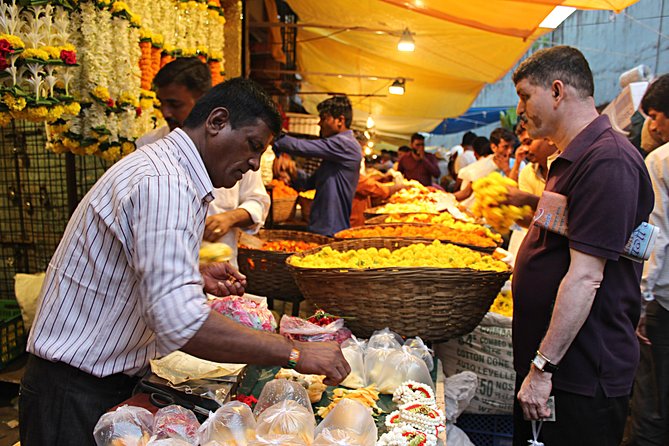
What I like most is the sheer sensory punch of the flower world. The Dadar West flower market is where saffron marigolds and red roses get turned into garlands, and you see the colors before most buses even start moving.
My second favorite moment is the working waterfront. At Sassoon Dock, you get a real look at the Koli fisherfolk and the arrival and grading of about 60 tonnes of fish every morning. One thing to consider: it is early and focused, so the days feels fast-paced, and food is not included unless your guide specifies otherwise.
In This Review
- Key moments worth getting up for
- Why a 5:30 am Mumbai morning makes the whole tour work
- Dadar West flower market: marigolds, roses, and garland-making in motion
- Iskcon Temple in Girgaon: offering flowers and learning the meaning behind devotion
- Chhatrapati Shivaji Maharaj Terminus (CSMT): trains, motion, and a station that never really sleeps
- Sassoon Dock: Koli fisherfolk, and watching around 60 tonnes of fish get sorted
- Marine Drive early light: a calm break that helps everything else click
- Pickup, private transport, and guides who connect dots
- Price and value: why $35 for three hours can be a smart deal
- What to wear and how to handle religious sites and markets
- Who this tour fits best
- Should you book this early morning Mumbai tour?
- FAQ
- What time does the Colourful Early Morning Tour start?
- How long is the tour?
- Does the tour include hotel pickup and drop-off?
- What’s included in the tour price?
- Is food included?
- Which stops are included in the itinerary?
- Is this a private tour?
- What is the cancellation policy for a refund?
Key moments worth getting up for
- Dadar West flower market: saffron marigolds and red roses made into garlands, in the morning rush
- Iskcon Temple in Girgaon: a spiritual stop with Hindu context and flower offering traditions
- CSMT at dawn: Chhatrapati Shivaji Maharaj Terminus, with huge daily foot traffic around trains
- Sassoon Dock fish grading: watch the daily arrival and grading, tied to the Koli fisherfolk community
- Marine Drive in early light: a quick, calm breather after markets and docks
Why a 5:30 am Mumbai morning makes the whole tour work
If you only do Mumbai at midday, you miss the city’s rhythm. This tour is timed for the part of the day when it is still cooler, and the roads are less crowded. That matters because you spend less time stuck in traffic and more time watching how daily life actually runs.
You also get a different kind of atmosphere at religious sites and markets. Morning is when people show up for prayers, flower buying, and early work. The tour leans into that, with stops that feel like they belong to locals, not just tourists.
The schedule is tight, but it is designed that way. Each stop gives you a taste, not a long lecture. In around three hours, you see how Mumbai moves from worship to commerce to transport to the sea.
A few more Mumbai days to compare
- Dharavi slum tour in Mumbai by Female tour guides of the slum
★ 5.0 · 1,976 reviews - Mumbai: Full-Day Sightseeing Tour of Mumbai
★ 4.9 · 1,822 reviews - Private Mumbai Sightseeing Tour (Traveller’s Choice Award Winner)
★ 5.0 · 1,565 reviews
Dadar West flower market: marigolds, roses, and garland-making in motion
Stop one is Dadar West, and you have about 20 minutes here. The vibe is color first: saffron-colored marigolds and red roses, arranged and sold in ways that quickly connect to temple garlands. If you care about texture and scent, this is your start-of-tour payoff.
Why this works for you as a visitor: flower markets are more than pretty photos. They show you supply chains you never think about at home. You see what arrives early, what people pick, and how quickly vendors and customers understand each other. In the best sense, it feels like you are watching a system do its job.
Practical note: markets can be crowded even early. You will want comfortable clothing and a calm pace. If you are sensitive to strong smells, be ready for that first wave of fragrance.
Iskcon Temple in Girgaon: offering flowers and learning the meaning behind devotion
Next you head to Girgaon for the Iskcon Temple, also known for Hare Rama Hare Krishna Temple. You get around 30 minutes, which is enough time to slow down and take in the spiritual side of Mumbai without rushing through it.
One of the most praised parts of this experience is the temple context. You learn Hinduism, spirituality, and everyday life through your guide, not just by looking at buildings. And you get to participate in a local-style ritual by offering flowers at the temples, the way many people do.
This is also where the tour shifts from spectacle to meaning. Flower markets explain the raw material. Temples explain the purpose.
What to watch for during your visit:
- how flowers are used during worship
- how people move through the space with clear routines
- how your guide connects religion to daily habits, not only festivals
Dress and behavior matter here. Keep your clothing comfortable and respectful, and plan for a quieter, more reflective moment than at the docks.
Chhatrapati Shivaji Maharaj Terminus (CSMT): trains, motion, and a station that never really sleeps
Stop three takes you to Chhatrapati Shivaji Maharaj Terminus, commonly known as CSMT. Your time here is about 20 minutes, and it is one of those Mumbai landmarks you can sense even before you fully process it. The architecture is often singled out as stunning, but the bigger point is what the station represents.
This is a major transport hub, with massive daily footfalls, and the morning energy is tied to that. You see how the station functions as a living place, not just a photo backdrop. In fact, some guides and groups note early bustle that goes beyond travelers, including sorting and operational activity.
Why this matters on this tour: it is not random sightseeing. You are seeing different parts of the city’s engine in a row. Worship leads to commerce, commerce leads to transport, and transport leads you toward the sea.
Even in a short stop, you can get a lot if you focus on process:
- how people enter and move through space
- how workers and travelers are connected
- how architecture and function exist side by side
Another way to spend a day in India:
- Elephanta Caves & Island Guided Private Tour
★ 5.0 · 1,327 reviews - Group Guided Walking Tour in Fort and Colaba
★ 5.0 · 1,073 reviews - Mumbai: Elephanta Caves Half-Day Guided Tour with Expert
★ 4.8 · 1,032 reviews - Highlights of Mumbai Sightseeing Tour: TRAVELLERS CHOICE AWARDED
★ 5.0 · 915 reviews
Sassoon Dock: Koli fisherfolk, and watching around 60 tonnes of fish get sorted
After the station, you move to Sassoon Dock for about 30 minutes. This is one of the stops that earns the highest marks for showing Mumbai’s working roots. You learn about the Koli fisherfolk, described as the original inhabitants of Mumbai, and you watch morning arrivals and grading firsthand.
Here are the specifics that make this stop feel real:
- you witness the arrival and grading of 60 tonnes of fish every day in the morning
- you see fish handled in a way you would never notice from a distance
- your guide points out an unusual fish, described as one of a kind
This is also a sensory stop. Expect sights, smells, and sounds that come with an active dock. That is not a flaw, it is the point. If you like travel that makes you notice your own assumptions, this one does it fast.
A quick way to get more from this stop: ask your guide what the morning routine means for the community. The tour is designed to explain the connection between the people, the work, and the broader city needs.
Marine Drive early light: a calm break that helps everything else click
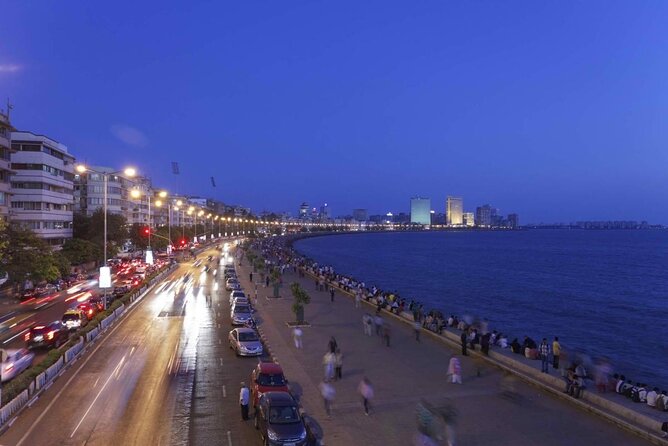
You end with Marine Drive for about 10 minutes. It is short by design, but it gives your brain a breather. After markets and docks, Marine Drive feels like a reset, with early morning calmness and the kind of views that help you orient yourself in the city.
This is the moment where the tour’s logic becomes obvious. You have been moving through Mumbai’s daily cycles. Ending by the water gives you a visual rhythm shift and a moment to breathe without rushing to the next photo.
If you want a smoother experience here, keep your expectations simple. Treat it as a quick scenic pause, then plan to go back to your day feeling more grounded in how Mumbai actually works.
Pickup, private transport, and guides who connect dots
This tour includes round-trip hotel transfers, plus private transportation and an English speaking guide. That means you are not trying to figure out early morning routes on your own, and you are not stuck waiting for a large group.
It also helps that this is a private experience for your group. Only your group participates, so the guide can pace the day around your questions and your comfort level.
The strongest pattern in the feedback is how guides bring structure. People mention guides like Alam, Ganesh, Naynish, Maze, Dawood, and Nano, along with drivers such as Mujib. The recurring theme is clear explanations, good pacing, and feeling safe while moving through busy areas.
One practical win: bottled water is included. That sounds small, but early starts add up. You are more likely to enjoy the markets when you are not thinking about hydration from the first stop.
Price and value: why $35 for three hours can be a smart deal
At $35 per person for about three hours, the value comes from what is bundled, not from the number alone. You are paying for:
- hotel pickup and round-trip transfers
- private transportation
- an English speaking guide
- bottled water
- access to multiple morning-focused sites where the itinerary notes free admission
The stops also cluster into a theme that is hard to replicate on your own quickly. Flower market, temple, railway terminus, fishing docks, and a final scenic stretch. If you tried to assemble that yourself on a tight morning schedule, you would spend time, money, and energy just getting from point to point.
A couple of cost realities to keep in mind:
- food is not included unless specified
- your time at each stop is limited, so you get highlights, not long free time
- because the tour starts at 5:30 am, you need to be ready to commit to an early wake-up
For many people, that trade is exactly the point. You are buying a guided hit of Mumbai’s early-day rhythm, delivered efficiently.
What to wear and how to handle religious sites and markets
The tour recommends comfortable clothing, and that is the right baseline. You will be in active public areas. Your comfort helps you focus on what you came for: the sights, the routines, and the explanations.
At temples, keep your approach respectful and quiet when needed. The ritual component, like offering flowers, works best when you follow the guide’s lead and keep your pace steady.
At markets and docks, be prepared for crowds and stronger smells. If you get overwhelmed easily, slow down and let your guide move you through. A guide who knows the flow can prevent you from feeling lost in the busiest moments.
Who this tour fits best
This is a great fit if you want Mumbai with less tourist gloss and more daily-life texture. It suits:
- first-timers who want an orientation to how the city operates
- people who like morning travel because it feels cooler and calmer
- travelers interested in religion and culture through real local practice, not only architecture
- small groups who value a private guide and a tight schedule
It may not be the best choice if you hate early starts or you want long time for each site. This tour is fast, focused, and built for highlights.
Should you book this early morning Mumbai tour?
Yes, if you want Mumbai at its working hour and you are okay with the early alarm. The biggest reason to book is the balance of theme and access: you go from flower market color to temple devotion to transport to the docks, with the city’s morning rhythm as the connecting thread.
Book it especially if you care about:
- seeing how flowers connect to worship
- understanding the Koli fisherfolk and what dock mornings look like
- getting a real sense of the city’s pace without spending your morning trapped in traffic
Skip it if you want a relaxed half-day with lots of free time, or if you are not ready to start at 5:30 am. Also, plan to handle meals on your own since food is not included.
If you are the kind of traveler who enjoys watching the city do what it does every day, this is a smart use of a morning.
FAQ
What time does the Colourful Early Morning Tour start?
The tour starts at 5:30 am.
How long is the tour?
The duration is about 3 hours.
Does the tour include hotel pickup and drop-off?
Yes, round-trip hotel transfers are provided.
What’s included in the tour price?
The tour includes bottled water, private transportation, and an English speaking guide.
Is food included?
Food and drinks are not included unless specified.
Which stops are included in the itinerary?
The tour stops at Dadar West flower market, Iskcon Temple in Girgaon, Chhatrapati Shivaji Maharaj Terminus (CSMT), Sassoon Dock, and Marine Drive.
Is this a private tour?
Yes. Only your group will participate.
What is the cancellation policy for a refund?
You can cancel for free up to 24 hours in advance for a full refund. If you cancel less than 24 hours before the start time, the amount paid will not be refunded.
Recently added around Mumbai
- Golden Triangle Tour 4 Days From Mumbai with Return Flights★ 5.0 · 27 reviews
- Mumbai Sightseeing By Motorbike★ 5.0 · 15 reviews
- Bollywood Tour with Original founder★ 4.5 · 44 reviews
- Dharavi Tour and Family Lunch★ 5.0 · 17 reviews
- Mumbai Private Full-Day Sightseeing Tour★ 5.0 · 88 reviews
- Full-Day Food Tour of Mumbai with Spice Bazaar Visit★ 5.0 · 7 reviews
- Full Day Mumbai Sightseeing Tour with Dharavi Slum★ 5.0 · 12 reviews
- Cultural & Heritage Trails of Old Town Mumbai Guided Walking Tour★ 4.0 · 24 reviews
Morning, compared.


Sunrise Taj Mahal, Agra Fort & Baby Taj Tour from Delhi by Car
Read our review →
Taj Mahal Sunrise, Baby Taj & Agra Fort Day Tour
Read our review →
Private Sunrise Taj Mahal Trip from Delhi all Inclusive
Read our review →
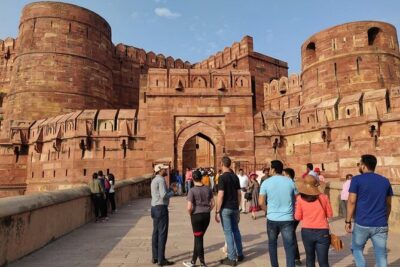
Private Taj Mahal Sunrise, Baby Taj & Fort Tour
Read our review →

Private Taj Mahal at Sunrise and Agra Day Tour from Delhi
Read our review →Browse the lists this tour appears in