
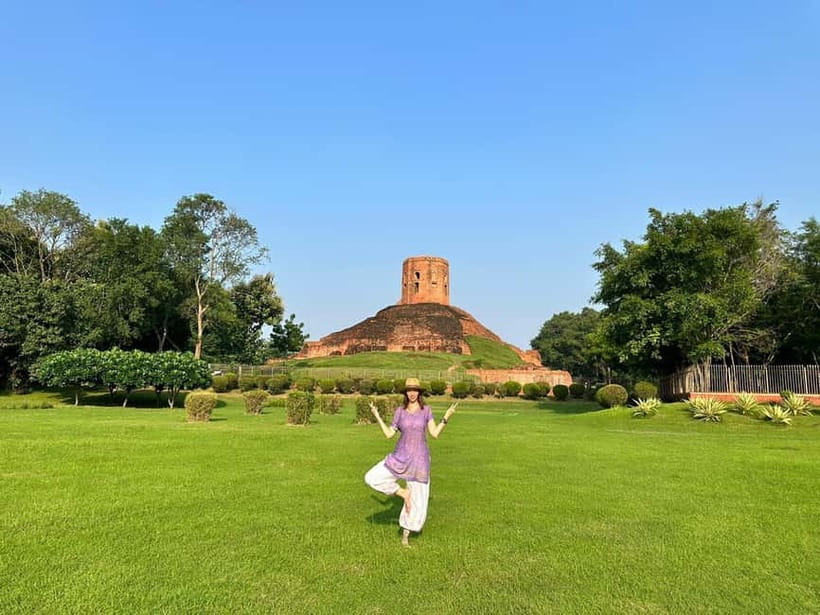
Reviewed · VARANASI TOURS
Sarnath Tour- Where Buddhism Originated
Buddha’s first sermon site feels wonderfully calm. Sarnath sits about 15 kilometers outside Varanasi’s center, so this 4-hour outing gives you a breather from the noise while still getting you to Dhamekh Stupa. I also love how the guide keeps the story clear and respectful, especially around the places tied to Buddha’s first teaching.
You’ll get a smooth, well-paced route through the main monuments: Mulgandh Kuti Vihar, plus the stupa complex where relics are associated with the post-Buddha period. In the same visit, you also step into the on-site museum, built in 1910 by the British, and see statues that help translate the site from sacred space into something you can study.
One consideration: food and drinks are not included, so you’ll want your own water and a snack plan, especially if you’re doing this as part of a busy day in Varanasi.
In This Review
- Key highlights worth planning for
- Getting to Sarnath, and why the 15 kilometers matter
- Your route: what makes these stops connect as a story
- Dhamekh Stupa, where the teaching tradition takes form
- Dharmarajika Stupa, relics and the post-Buddha period
- Mulgandh Kuti Vihar, the meditation connection in Gupta-era terms
- Museum time, from sacred markers to study tools
- Walking the grounds without getting overwhelmed
- Price value check: is $40 a fair deal?
- Who this tour suits best (and who might want a different plan)
- Respectful site behavior, without killing your enjoyment
- Quick practical tips for your day
- Should you book the Sarnath Tour, Where Buddhism Originated?
- FAQ
- How long is the Sarnath Tour, Where Buddhism Originated?
- Where is the tour located?
- What’s included in the price?
- What is not included?
- Which stops are included in the tour?
- What time or start times are available?
- Is there a live guide?
- Where do I meet the guide?
- Is free cancellation available?
- Can I reserve now and pay later?
Key highlights worth planning for
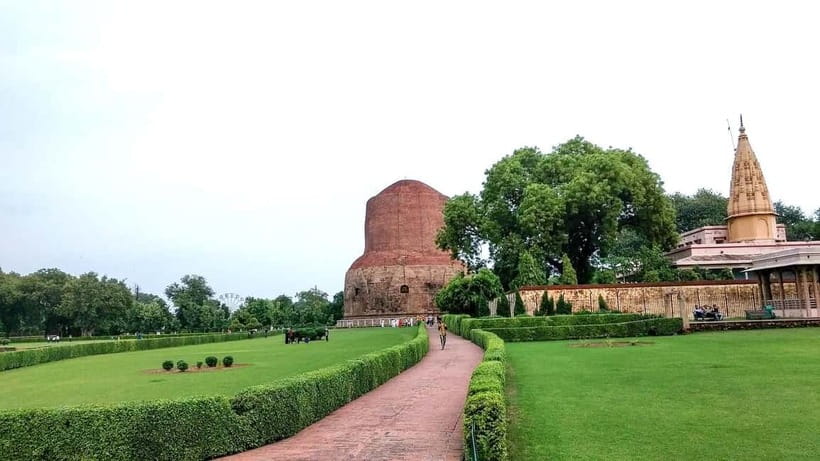
- Dhamekh Stupa, tied to Ashoka and the teaching site tradition
- Dharmarajika Stupa, linked to the Buddha’s relics after his passing
- Mulgandh Kuti Vihar, associated with where Buddha is said to have meditated
- A 1910 British-built museum with statues that add context fast
- English live guidance that handles entry details smoothly
- A 4-hour format that is long enough for meaning, short enough for your schedule
Getting to Sarnath, and why the 15 kilometers matter
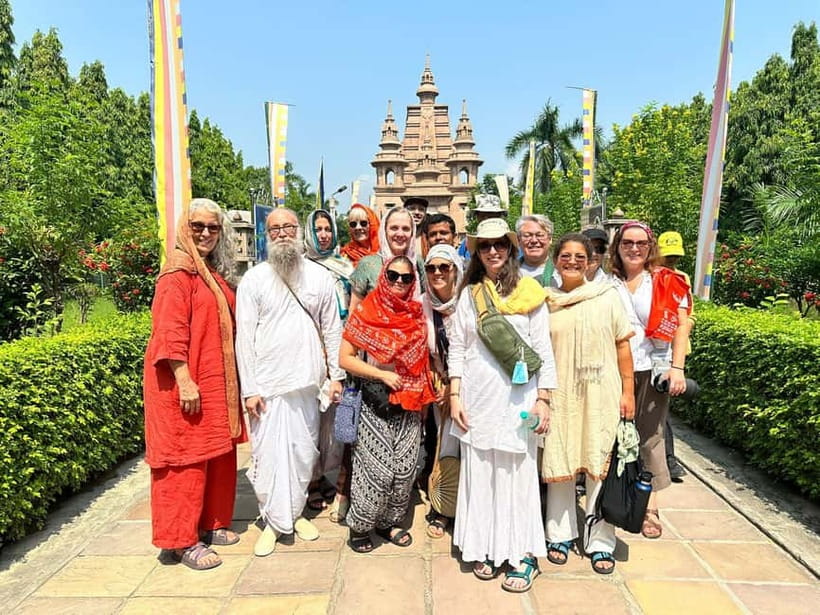
If your Varanasi plan includes crowds, schedules, and constant horns, Sarnath is your reset button. This tour runs from the Varanasi area to Sarnath, roughly 15 kilometers from the city center, which naturally cools down the atmosphere once you arrive.
The other practical win is the comfortable A/C car. In a half-day like this, transport comfort matters more than people think, because you want your energy for walking the grounds and sitting for museum time, not for fighting the heat or traffic.
You’ll start with a clear meeting routine too. You wait outside Hotel Ganges Grand Godowlia, and the guide reaches out over WhatsApp using the number you provide at booking. That kind of handoff is one of those details that makes the difference between a relaxed start and a stressful one.
A few more Varanasi days to compare
- Varanasi : Full Day City Highlights Day Tour & Ganges Cruise
★ 4.8 · 520 reviews - Hidden Secrets of Varanasi: Vibrant Tradition (Guided Tour)
★ 5.0 · 429 reviews - Varanasi: Sunrise Boat Tour with Arti Ceremony
★ 5.0 · 375 reviews
Your route: what makes these stops connect as a story
This tour is built around a simple idea: Sarnath is not just a place you look at. It’s a place you understand, step by step. Over 4 hours, you move through major monuments tied to the life and teaching tradition of the Buddha, then you switch gears into the museum to see how later eras interpreted the same sacred ground.
You’ll see several kinds of sites: stupas, a meditation-area tradition, a museum, and some ruined elements that stretch the scale of time beyond your typical “tourist” loop. The value here is that the route is tight enough to feel focused, while still covering the main landmarks that give Sarnath its reputation.
The guide’s job is to connect the dots in plain language. Based on the strong feedback, they tend to explain what you’re looking at and also remind you how to behave respectfully in sacred spaces.
Dhamekh Stupa, where the teaching tradition takes form
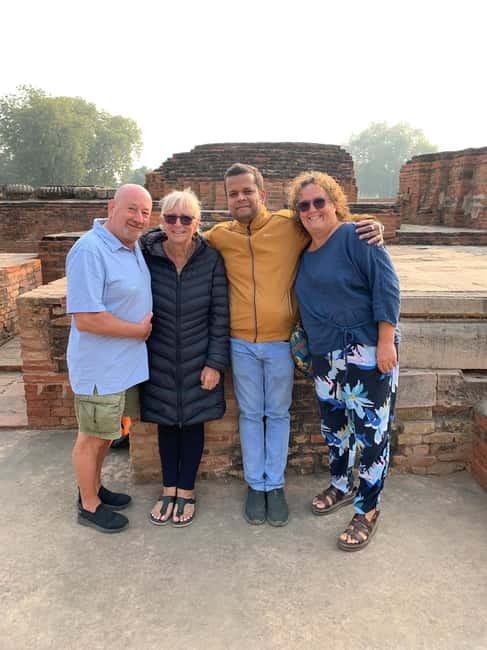
Your visit centers on Dhamekh Stupa (often spelled Dhamakeh in tour materials). This is the stupa associated with the tradition of Buddha teaching his Dhamma, which is why so many visitors treat it as the spiritual anchor of Sarnath.
What I find useful as a framing tip, even before you arrive, is to think of Dhamekh as more than a monument. It is a physical marker for an important moment in Buddhist memory: the idea that the first sermon happened here, turning Sarnath into a destination for pilgrims long after Buddha’s lifetime.
The stupa is also tied to King Ashoka, who is mentioned as the builder in the tour description. That detail matters because it moves you from the story-level of Buddhism into the real-world question of who supported religious culture across centuries. Standing there, you’re not just seeing a structure, you’re seeing the long tail of patronage and belief.
One practical note: stupas can be visually similar if you don’t have context. Having the live guide explain what makes Dhamekh distinct helps you avoid the “I saw lots of towers” feeling.
Dharmarajika Stupa, relics and the post-Buddha period
Next is Dharmarajika Stupa, another key landmark in the Sarnath complex. The tour description connects this stupa to the tradition that relics of Buddha were brought here after his death.
Relics are a big deal in religious sites, even for people who are not deeply practiced. They turn an event from the past into something that feels present through objects, veneration, and story. So when the guide explains this connection, you start to understand why these locations were protected and rebuilt over time.
Also, Dharmarajika is part of why this tour feels more meaningful than a quick walk. You are seeing multiple sacred markers, each pointing to a different “chapter” of the same spiritual narrative, from the first teaching to the way tradition honored the Buddha afterward.
If you’re the type who likes to ask questions, this is a good stop to do it. The tone from the guide feedback comes across as respectful and open, not lecturing. That makes your visit feel more like learning with someone than being rushed through checkpoints.
Another way to spend a day in India:
- Banaras Wala Tours
★ 5.0 · 329 reviews - The Ultimate 1 Day in Varanasi – How to Spend 13 Hours – Private Guided Tour
★ 5.0 · 295 reviews - A Journey of A lifetime
★ 5.0 · 272 reviews - Varanasi: Hidden Secrets of Vibrant Tradition (Guided Tour)
★ 4.9 · 176 reviews
Mulgandh Kuti Vihar, the meditation connection in Gupta-era terms
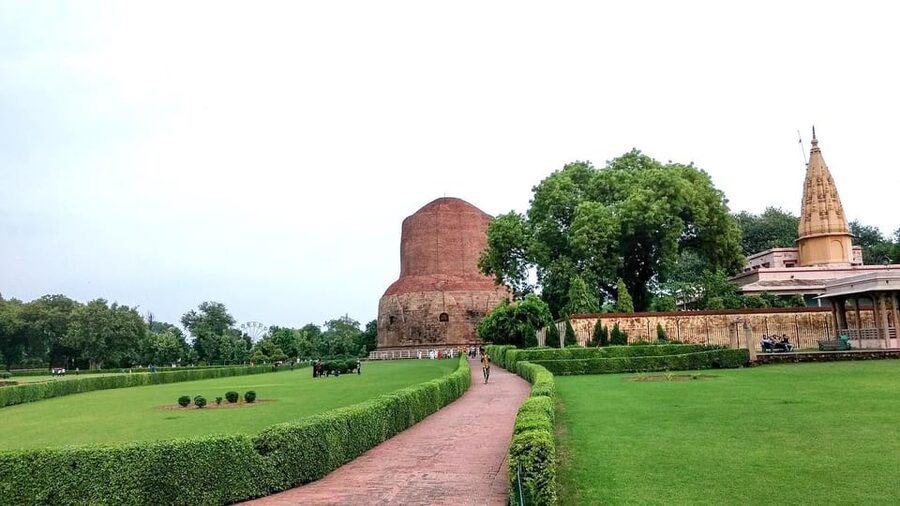
Then you reach Mulgandh Kuti Vihar, described as an example of the Gupta period that represents the place where Buddha used to meditate. This stop shifts the mood a bit.
Stupas tend to feel like monuments for the public story. A meditation-site tradition feels more intimate, even if you’re still outdoors. The guide’s explanation helps you imagine what kind of life and practice might have happened here, instead of treating the site like only a museum display.
The Gupta-era mention is another helpful anchor. It reminds you that Sarnath wasn’t frozen in time right after Buddha. Later periods shaped how the sacred geography was presented and understood.
If you want a practical tip, it’s this: give yourself a moment here to slow down. Even if the tour is structured, this kind of stop rewards a calmer pace. When I travel, I notice that the places people rush through are the ones they remember the least.
Museum time, from sacred markers to study tools
Sarnath also includes a large museum built in 1910 by the British. The tour description notes that it holds several different types of statues, which makes this a smart add-on, especially if you like visual context.
This is where a guide can really help you. Statues can overwhelm you if you don’t know what to look for. When the guide explains what categories you’re seeing and how they relate to the broader Buddhist tradition, the museum becomes more than a place to pass time while waiting for your next stop.
I like museum segments on monument tours because they help you translate what you see outside. You look at a stupa in the open air, then you see figurative or sculptural material inside, and suddenly the symbolic language feels less abstract.
A bonus: museum time gives your feet a break. The whole tour is only 4 hours, so having one indoor component makes the pacing more comfortable.
Walking the grounds without getting overwhelmed
Sarnath’s main sights are spread out enough that you’ll be moving around, but not so far that it becomes a full-day trek. For a half-day tour, that balance is ideal.
Still, the key factor is how the guide manages the flow. In feedback, the guide is described as making the half-day easy, handling entry details, and giving people time to savor the site rather than sprint between points. That approach helps you feel in control of your own pace.
Also, this kind of tour tends to work best when you go in with a light plan. Decide what you want most from the visit, either the spiritual narrative tied to the monuments or the study side via the museum. You can appreciate both, but having a priority keeps the experience from turning into a checklist.
Price value check: is $40 a fair deal?
At $40 per person for a 4-hour guided experience, the value depends on what you’d otherwise pay for your own setup. Here, the important inclusions are an A/C car and entry tickets for the monuments.
Those two items can quietly become expensive when you do everything alone. Local transport plus entry fees plus the time cost of figuring out what to see and in what order often adds up faster than expected.
You’re also paying for more than logistics. The strongest feedback points to detailed explanations, a respectful attitude toward the site, and smooth handling of entry details. If you care about understanding what you’re looking at, that guidance is the difference between a quick sightseeing day and a meaningful one.
Food and drinks are not included, which is normal for monument tours. That said, it is still your responsibility to plan a basic comfort kit: water and a snack, especially if you’re combining this with Varanasi activities before or after.
Who this tour suits best (and who might want a different plan)
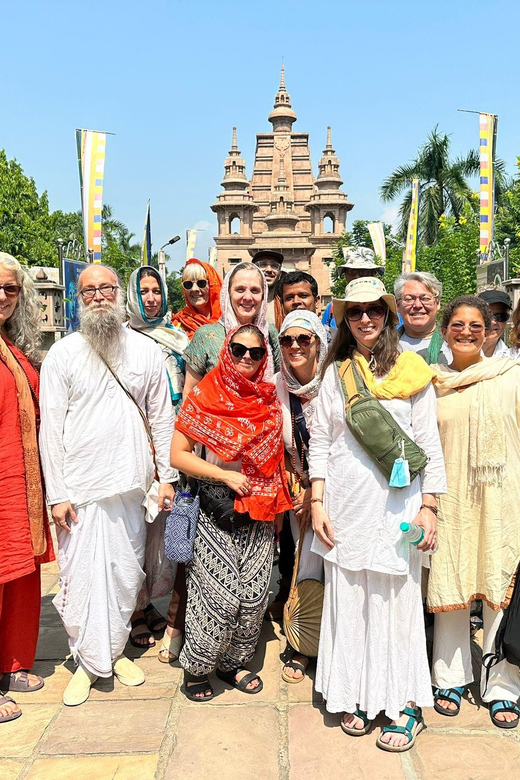
This Sarnath tour is a great match if you want a focused introduction to the origins of Buddhism without committing a whole day. It works especially well if you’re already in Varanasi and want something that feels calmer and more spacious.
It’s also a strong choice if you prefer learning with a guide rather than reading alone. The feedback highlights that the guide explains places in detail and is respectful, which usually means you can ask questions and get clear answers without awkwardness.
You might consider another approach if you dislike group pacing or if you want a deep, multi-day study style trip. With only 4 hours and a set list of stops, this is about breadth and clarity, not endless lingering in every room.
Respectful site behavior, without killing your enjoyment
Sarnath is sacred. The guide feedback points out that the experience includes reminders to be respectful to the place, not just to behave like a tourist. That matters because it improves the atmosphere for everyone.
Even if you’re not religious in the personal sense, you’ll enjoy the sites more when you treat them gently and keep voices low. It also helps you connect to the purpose of what you’re seeing: people have been coming here to think, pray, and remember for a very long time.
The guide’s respectful tone is part of why the experience feels smooth. You’re not just getting information, you’re getting the correct mindset.
Quick practical tips for your day
If you want the day to feel easy, do these small things before you go.
- Bring water and a simple snack since food and drinks are not included
- Wear comfortable footwear, because you’ll move between monuments and museum areas
- Keep your questions ready for stops like Dharmarajika, where relic tradition can use a little explanation to click
- Use the museum time as your mental “reset,” since statues often make the outside monuments easier to interpret
Also, because the guide uses WhatsApp to connect, it’s worth having your phone ready and battery charged enough to handle messages when you arrive.
Should you book the Sarnath Tour, Where Buddhism Originated?
If you’re in Varanasi and want a 4-hour experience that actually teaches as it shows, I’d say book it. The standout value is the combo of A/C transport, entry tickets included, and a live English guide who keeps explanations clear and respectful.
Choose this tour if you want the core monuments tied to Buddha’s first sermon tradition, plus the meditation-site association and the museum context. It’s short enough to fit smartly into a busy itinerary, but structured enough that you leave with a coherent sense of why Sarnath matters.
If you already know the basics and you’re mostly interested in independent wandering, you might feel constrained by the set route. But for most first-time visitors, the smooth, well-paced setup is exactly what makes it worth the $40 price.
FAQ
How long is the Sarnath Tour, Where Buddhism Originated?
The tour duration is 4 hours.
Where is the tour located?
The tour takes place in Uttar Pradesh, India, at Sarnath (about 15 kilometers from the city center of Varanasi).
What’s included in the price?
An A/C car and entry tickets to the monuments are included.
What is not included?
Food and drinks are not included.
Which stops are included in the tour?
The tour highlights include Dhamekh Stupa, Dharmarajika Stupa, and Mulgandh Kuti Vihar, plus visits to a temple and museum on-site.
What time or start times are available?
The duration is fixed at 4 hours, and starting times depend on availability.
Is there a live guide?
Yes, the tour includes a live tour guide in English.
Where do I meet the guide?
Meet outside Hotel Ganges Grand Godowlia. The guide will contact you on WhatsApp using the number you provide at booking.
Is free cancellation available?
Yes, you can cancel up to 24 hours in advance for a full refund.
Can I reserve now and pay later?
Yes, the option to reserve now and pay later is available.
Recently added around Varanasi
- Spiritual Tour in Varanasi with a local- 2 Hours Tour★ 4.8 · 13 reviews
- Private Sunset Boat Ride and Ganga Aarti with Reserved Seat★ 4.7 · 18 reviews
- Varanasi: Mysticism Tour with Boat Ride & Ganga Aarti★ 3.5 · 33 reviews
- Morning Boat Tour in Varanasi★ 4.8 · 9 reviews
- Marigold Boat trip to feel Kashi★ 5.0 · 7 reviews
- Guide francophone à varanasi – Rakesh★ 5.0 · 10 reviews
- Varanasi: Day Tour with Sarnath and Boat Ride★ 5.0 · 8 reviews
- Food Tour: Highlights Tour with Tasting &Sunset in Varanasi★ 4.5 · 7 reviews
Varanasi Tours, compared.
Full Day City Highlights Day Tour & Ganges Cruise
Read our review →
Hidden Secrets of Varanasi: Vibrant Tradition (Guided Tour)
Read our review →

The Ultimate 1 Day in Varanasi – How to Spend 13 Hours – Private Guided Tour
Read our review →
Hidden Secrets of Vibrant Tradition (Guided Tour)
Read our review →
Private Heritage and Spiritual Walk Tour – Varanasi Kashi
Read our review →Browse the lists this tour appears in