

Reviewed · DELHI TOURS
Royal Rajasthan: Whispers From The Past Curated Journey
Rajasthan can feel like a time machine. This 10-day route lines up Mughal landmarks, royal forts, and temple mornings from Delhi to Udaipur, with most big-ticket admissions built in. It is the kind of trip that helps you see patterns in India, not just postcards.
What I like most is how pickup and tickets reduce friction on a first trip. You start with an airport welcome (a signed board with your name), and many major sites have admission tickets included, so you spend less time planning and more time watching what is right in front of you.
The only real catch is the pace. Days are packed with back-to-back monuments and places of worship, so you will want good shoes and a flexible attitude about crowds, lines, and walking.
In This Review
- Key highlights worth planning around
- Delhi to Agra: the “power tour” start that sets the tone
- Taj Mahal sunrise or sunset: how to get the most from one perfect hour
- Agra’s second act: Fort and Itimad-ud-Daulah after the main event
- Jaipur palaces and fort circuits: where views and crowds both matter
- Jantar Mantar, Albert Hall, and temple mornings: Jaipur’s brain and soul
- Udaipur by water: Lake Pichola boat ride and Princess Garden
- Udaipur’s royal core: City Palace and Jagdish Temple
- Chandni Chowk before departure: a last hit of street energy
- Price and logistics: why $1,068 per person can make sense
- Should you book Royal Rajasthan: Whispers From The Past?
- FAQ
- Where does the tour start and end?
- Is airport pickup included?
- Is this tour private?
- Which cities are included?
- Are admission tickets included?
- Can I visit the Taj Mahal at sunrise or sunset?
- How do I receive tickets?
- Is the tour suitable for most people?
- What is the cancellation policy?
- What if the minimum number of travelers is not met?
Key highlights worth planning around
- Airport name-board pickup in Delhi, then a direct handoff to your first hotel and sights
- Admission included at most major stops, including Taj Mahal and the big Jaipur and Udaipur sites
- A real mix of eras: Qutb Minar, Humayun’s Tomb, Red Fort, Jama Masjid, and modern Akshardham
- Taj Mahal timing options for sunrise or sunset, depending on your day’s schedule
- Jaipur fort viewpoints on the same circuit, with Amer and Jaigarh positioned above the lake
Delhi to Agra: the “power tour” start that sets the tone
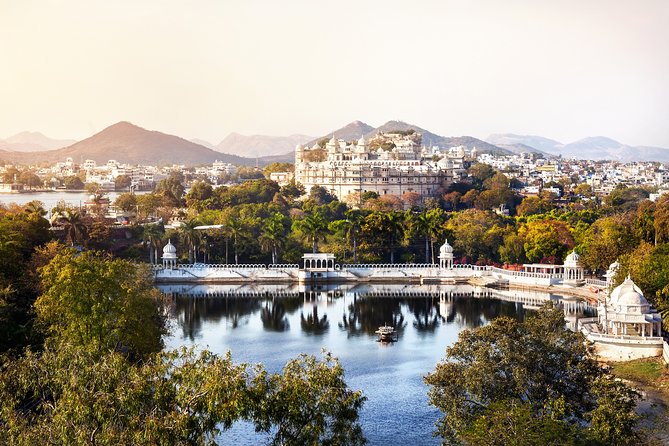
If you are new to Northern India, Delhi can be overwhelming. This route helps you get your bearings fast by showing you major monuments from different centuries in one tight block. You go from early Islamic architecture to Mughal grandeur, then into British-era memory, and finally into the Sikh and Hindu spiritual heart of the city.
The first stop is Qutb Minar, a towering landmark tied to early Delhi Sultanate history. I like starting here because it gives you a visual anchor for the rest of the trip. It also helps you understand why later Mughal builders leaned into height, geometry, and long sightlines. You get about two hours, which is enough time to appreciate details without feeling rushed.
Next comes the Mughal arc: Humayun’s Tomb and Red Fort. Humayun’s Tomb is a key stepping stone in the evolution of Mughal tomb architecture, and it is easier to take in than you might expect because the garden layout gives you breathing room. After that, Red Fort is more dramatic and more intense. It is the main residence of Mughal emperors, and the sheer scale makes it feel like you are standing inside power.
Then you swing to a modern spiritual campus: Swaminarayan Akshardham. This is not just a temple stop. It is also about cultural storytelling through architecture and displays, and it helps balance the older monuments you have already seen. One practical note: with places like this, dress codes can be strict, and security checks take time, so plan to be patient.
You also get two “big Delhi icons” for variety: India Gate and Gurudwara Bangla Sahib. India Gate is a war memorial along Rajpath. It is short and reflective, not a long sit-down visit, but it is a useful palate cleanser between monumental sites. Gurudwara Bangla Sahib is more active. The complex is known for its holy water tank, called the Sarovar, which adds a calming element to a very energetic city.
The day continues with Gandhi Memorial Hall and Jama Masjid. Gandhi Memorial Hall is a focused stop for the modern story of India, and Jama Masjid gives you a grand look at one of the largest mosques in Delhi. If you have not visited a large mosque before, pay attention to how the space organizes people, movement, and worship. You will likely spend about an hour at Jama Masjid, so go in with a mindset of seeing the overall architecture first, then returning for details if time allows.
By the time you reach Agra, you are not just collecting sites. You are building context. That is the real value of this opening run.
A few more New Delhi days to compare
- Old & New Delhi City Tour – Half or Full Day Options Available
★ 5.0 · 4,811 reviews - Half Day Private Delhi City Tour
★ 5.0 · 4,474 reviews - Same Day Taj Mahal, Agra Fort & Baby Taj Tour from Delhi by Car
★ 5.0 · 4,304 reviews
Taj Mahal sunrise or sunset: how to get the most from one perfect hour
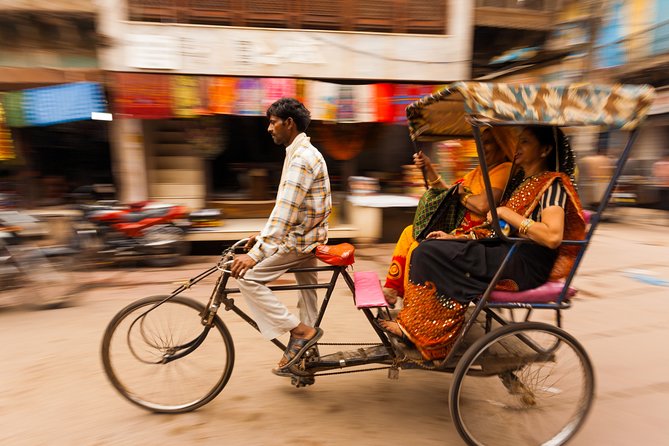
The route reserves a dedicated window for the Taj Mahal, with the option to visit at sunrise, sunset, or even both if schedules line up. I love that you are not locked into a single time. Light changes the entire feel of the marble, and getting it at either end of the day can make the experience feel less like a checklist item and more like a moment.
You get about three hours here, which is smart. Many people rush the main view only. You need time to walk the grounds, look back at reflections, and then decide whether you want to linger longer near the main structure or spend more time on surrounding views. Three hours also helps if you run into typical delays like entry lines.
Practical tip: bring water, and wear something comfortable for changing temperatures. Even if the weather is mild, mornings and evenings can feel cooler around marble and open courtyards. And yes, your shoes will get tested, because you will be doing a lot of walking across royal grounds.
Agra’s second act: Fort and Itimad-ud-Daulah after the main event
After the Taj Mahal, you go straight into Agra Fort. This matters because it shows you the city’s Mughal military and political side. Agra Fort was the Mughal dynasty’s main residence until the capital moved back to Delhi. That shift in meaning makes it more than a pretty fort. It is a reminder that power moved with strategy, not just romance.
You also visit the Tomb of Itimad-ud-Daulah, often described as a jewel box and sometimes called the Bachcha Taj. I like this stop because it is quieter and more intimate than the Taj. If you want to study how marble inlay works, how decorative patterns are laid out, and how details repeat across Mughal design, this is a strong follow-up. It also helps you understand why the Taj Mahal’s look feels both monumental and precisely crafted.
This part of Agra is where the trip starts to feel more like storytelling. The Taj is the headline. Agra Fort and Itimad-ud-Daulah become the supporting cast that makes the headline believable.
Jaipur palaces and fort circuits: where views and crowds both matter
Jaipur is where the route starts moving through layered royal spaces. You begin with the City Palace of Jaipur, tied to royal family life and today housing a museum. I like it because it is not only about one building. It is a complex where you can see how rulers used palaces for ceremonies, administration, and art patronage.
Then you hit Amber Palace, which is a big day. Amer Fort has ramparts, gates, and cobbled pathways that climb up toward commanding views over Maota Lake. There is a reason this stop stays on most Rajasthan travelers’ lists. When you look out from the fort, the geography explains why the palace belongs here. It is also one of the most physically demanding parts of the trip, so plan energy for it.
Next is Hawa Mahal, the Palace of Wind. It is instantly recognizable from the outside, and it gives you a different angle on Jaipur’s royal architecture. It is less about interior space and more about the design concept, with the facade doing the work visually. It is worth seeing, especially if you like architecture that tells a story through form.
On another day, you add the fort ring: Jantar Mantar, Jaigarh Fort, Nahargarh Fort, and Royal Gaitor Tumbas. That cluster works because it keeps you in the same hillside atmosphere. You get viewpoints over Amer Fort and the lake, and you also get a side of Jaipur that is not only about palaces.
Another way to spend a day in India:
- Taj Mahal Day Tour from Delhi by Superfast Train – TOP RATED TOUR
★ 5.0 · 4,166 reviews - Full Day Taj Mahal, Agra Fort & Baby Taj Tour from Delhi by Car
★ 5.0 · 3,647 reviews - From Delhi: Taj Mahal & Agra Private Day Trip with Transfers
★ 4.9 · 3,181 reviews - Taj Mahal Tour from Delhi by Express Train (Viator Award Winner)
★ 5.0 · 2,849 reviews
Jantar Mantar, Albert Hall, and temple mornings: Jaipur’s brain and soul
One of the best surprises in this route is Jantar Mantar. It is a UNESCO World Heritage site and a set of nineteen astronomical instruments. If you have ever wondered how people built serious science without modern tech, this is where you see it in stone. You also see the world’s largest stone sundial, which gives you a concrete way to imagine time measurement before electronics.
Then comes Jaigarh Fort, positioned on a promontory and overlooking Amer and Maota Lake. This stop is a great counterbalance to the more decorative palaces because it leans toward fortifications and strategic design. You will likely feel like you are climbing a little more than you planned, but the views help justify the effort.
For a cultural break, you get Albert Hall Museum, the oldest museum of Rajasthan. Museums in India can be hit-or-miss depending on expectations, but this one is a good way to regroup. It also gives you a mental reset so you can return to fort and palace thinking with less fatigue.
Then the route shifts into worship and faith sites, including Birla Mandir and Govind Devji Temple. Birla Mandir is a Hindu temple built in white marble, dedicated to Lakshmi and Vishnu, with images and religious texts referenced inside. Govind Devji Temple is a morning worship stop, which means you are not just looking at architecture. You are watching daily religious life happen in real time.
After that, you visit Royal Gaitor Tumbas, a royal memorial complex set at the foot of the mountain. The white marble exterior gives it a majestic look, and the valley setting feels more restful than some of the louder palace areas.
This is a lot for one city, but it keeps Jaipur from becoming only about selfies and facades. You get science, art, worship, and military design in the same week.
Udaipur by water: Lake Pichola boat ride and Princess Garden
Udaipur often feels different from the rest of Rajasthan, and this route reflects that. You start with Lake Pichola and a boat ride. The water changes your sense of scale. From the lake, the palaces and shoreline architecture look composed and intentional, like the city planned itself around the view.
You also get a look at the architecture of the Pichola Village while on the water. That matters because it reminds you that Udaipur is not only a backdrop. It is lived-in, with daily life moving alongside the tourist landmarks.
Then you visit Sahelion Ki Bari, also known as Princess Garden. It is known for fountains, kiosks, a lotus pool, and marble elephants. This is one of those stops where you can slow down. You also get a break from relentless fort climbing, which is helpful after the Jaipur days.
You are also able to see Jag Mandir, a palace on an island in Lake Pichola. Since it is listed as free for this stop, it can be a good add-on view without feeling like you paid extra for a quick photo.
Udaipur’s royal core: City Palace and Jagdish Temple
Next up is City Palace of Udaipur, a palace complex built over nearly 400 years with contributions from rulers of the Mewar dynasty. I like this kind of long construction story because it explains why different parts of a palace feel different. It is not one snapshot. It is a timeline you can walk through.
You then visit Jagdish Temple, a large Hindu temple near the royal palace area, with continuous worship since 1651. This stop is valuable because it keeps the trip grounded in everyday religious practice. Even if you focus mostly on architecture, the continuous worship history gives it weight.
If you like places that balance royal aesthetics with living faith, this pair of stops is a strong closer for Udaipur before you head back toward Delhi.
Chandni Chowk before departure: a last hit of street energy

Before your final day back in Delhi, you get time at Chandni Chowk (Pasar Chandni Chowk), a historic market area with clothing, housewares, hardware, and snack stalls. This is a fun final stop because it is not museum quiet. It is a place where you feel the pace of everyday commerce.
You get about two hours, which is long enough to wander, spot a few practical items, and grab something to eat if that is your style. If you shop, keep your expectations realistic. Choose smaller items and use it as a souvenir moment rather than trying to plan the entire trip’s budget around market bargains.
Price and logistics: why $1,068 per person can make sense
At $1,068 per person for about 10 days, this tour is not a budget play. But it can still feel like good value because many major admissions are included, and you are traveling between multiple cities with a private setup for your group.
What drives the price up in a good way here is the workload the trip handles for you. You are not only paying for transport. You are also paying for planned access to big landmarks and a tight sequence that reduces wasted time between cities. The tour also includes pickup and return service in New Delhi, which matters on India trips where logistics can otherwise eat a day.
Also, the feedback pattern around service quality is strong, including mentions of drivers like Bhanwar Singh and Modaram and the way they handled requests and kept the trip comfortable. One helpful real-life detail that came up is how a driver stepped in with problem-solving when cash ran short for a ticket. That is not something you should plan on, but it signals that the team is prepared to handle small emergencies calmly.
Just be honest with yourself about pace. If you want slow mornings and long rests, this kind of highlight-heavy route can feel tight.
Should you book Royal Rajasthan: Whispers From The Past?
Book it if you want a first-class route that hits Delhi, Agra, Jaipur, and Udaipur with admissions largely handled, plus a real mix of Mughal, royal, and temple experiences. It also seems like a good fit if you care about feeling looked after, since drivers and guides are repeatedly praised for thoughtful service and communication.
Skip it or adjust expectations if you hate packed days, have mobility limitations, or want a lot of downtime. The tour spends its time on important places, not long scenic breaks.
If you are the type who likes to see how empires and faith shaped the same geography, this trip does that job.
FAQ
Where does the tour start and end?
It starts at Indira Gandhi Intl Airport in New Delhi, and it ends back at the same meeting point in New Delhi.
Is airport pickup included?
Yes. You are picked up from Delhi Airport with a signed board under your name, based on your arrival details.
Is this tour private?
Yes. It is a private tour/activity with only your group participating.
Which cities are included?
The route includes Delhi, Agra, Jaipur, and Udaipur.
Are admission tickets included?
Admission tickets are included for many listed stops, including major sites such as Qutub Minar, Humayun’s Tomb, Red Fort, Taj Mahal, Amber Palace, and the major Udaipur palace and temple visits. Some stops are listed as free.
Can I visit the Taj Mahal at sunrise or sunset?
The Taj Mahal visit can be during sunrise, sunset, or both, if your schedule allows.
How do I receive tickets?
The tour uses a mobile ticket.
Is the tour suitable for most people?
It says most travelers can participate.
What is the cancellation policy?
This experience is non-refundable and cannot be changed for any reason. If you cancel or ask for an amendment, the amount you paid will not be refunded.
What if the minimum number of travelers is not met?
If it is canceled because the minimum is not met, you will be offered a different date or experience, or a full refund.
Recently added around New Delhi
- Private Same day Jaipur Tour from New Delhi★ 5.0 · 82 reviews
- Private Agra Day Tour★ 5.0 · 14 reviews
- Taj Mahal,Agra fort and Baby Taj tour from Delhi by Express train★ 5.0 · 7 reviews
- From Delhi: Full Day TajMahal & Agra Fort with 5 Star Lunch★ 5.0 · 64 reviews
- Taj Mahal & Agra City Private Tour from Delhi by Car – Fast Entry★ 5.0 · 13 reviews
- All Inclusive: Same day Taj Mahal Tour From Delhi★ 5.0 · 111 reviews
- Same Day Tour of Taj Mahal with Our Real Historical Experience★ 5.0 · 42 reviews
- Same Day Agra/Taj Mahal Tour from Delhi : Private & all inclusive★ 5.0 · 38 reviews
Delhi Tours, compared.
Old & New Delhi City Tour – Half or Full Day Options Available
Read our review →

Same Day Taj Mahal, Agra Fort & Baby Taj Tour from Delhi by Car
Read our review →
Taj Mahal Day Tour from Delhi by Superfast Train – TOP RATED TOUR
Read our review →
Full Day Taj Mahal, Agra Fort & Baby Taj Tour from Delhi by Car
Read our review →
Taj Mahal & Agra Private Day Trip with Transfers
Read our review →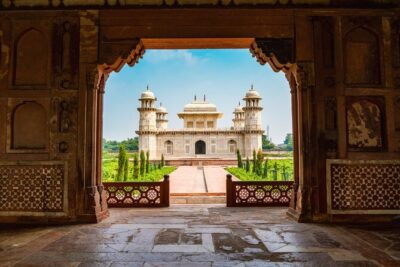
Taj Mahal Tour from Delhi by Express Train (Viator Award Winner)
Read our review →