
Reviewed · GOLDEN TRIANGLE TOURS
Private Golden Triangle Tour for 5 nights/6 days
A private Golden Triangle route feels made for real travel days. You get a car-and-guide setup that strings together UNESCO Mughal sites, plus classic Delhi markets and Jaipur architecture, without you wrestling transit or timing every ticket line. I especially like the smart mix of big-name icons and the in-between stops that make the trip feel lived-in.
My other favorite part is the pace. You’re not on a rigid group circuit, and the chauffeur-guide model helps you adjust when a monument runs long, traffic shifts, or you just want a little more time for photos and wandering. The one thing to watch is budget for entrance fees, because many of the major sights list admission as not included, and camera fees can add up.
In This Review
- Key highlights worth focusing on
- The value of a private Golden Triangle by car
- Meeting in Delhi and setting the tone for the trip
- Getting your bearings in Delhi: Connaught Place and India Gate
- Delhi’s Mughal-and-heritage loop: Humayun’s Tomb to Jama Masjid
- Agra Fort and Itmad-ud-Daula: Mughal stonework before the Taj
- Taj Mahal visit: plan for awe and time
- Fatehpur Sikri and the road toward Jaipur
- Bharatpur Bird Sanctuary: a real break from the stone
- Jaipur at golden hour vibes: stepwell and Jal Mahal
- City Palace, Hawa Mahal, and Jaipur’s royal layout
- Jantar Mantar and Albert Hall Museum: science and art in one city day
- Your chauffeur-guide: what I’d ask before you roll out
- What’s included, what isn’t, and how to budget without stress
- Where the schedule really matters: comfort vs. speed
- Who this Golden Triangle tour fits best
- Should you book this private Golden Triangle tour?
- FAQ
- How long is the private Golden Triangle tour?
- Where do I meet the tour, and what time does it start?
- Is the transportation private and air-conditioned?
- Are meals included?
- Are entrance tickets included for all monuments?
- Can I cancel for a full refund?
Key highlights worth focusing on
- Private car with chauffeur-guide so you can keep your schedule and skip transport stress
- UNESCO stops across Delhi, Agra, and Jaipur, including Humayun’s Tomb, Qutub Minar, and the Taj Mahal
- Icon plus local detail approach, from Chandni Chowk shopping to stepwell and astronomy at Jaipur
- A true Mughal-to-Rajput contrast, with marble tombs, forts, and royal city palaces
- Plenty of free-admission moments like Connaught Place, India Gate, Fatehpur Sikri, and Jal Mahal (per the plan)
The value of a private Golden Triangle by car
This tour is built around a simple idea: you should spend less energy figuring out getting around, and more energy noticing what you came for. For many people, that’s the real value of paying for a private Golden Triangle tour, not the number of monuments.
You also get an air-conditioned vehicle and a professional private guide cum driver for all excursions. That matters because the Golden Triangle is not just sightseeing. It’s also traffic, road time, and planning around light, crowds, and opening hours. Having one person handle the driving and the guiding keeps the day smoother.
At $850 per person for 6 days, the price can feel high or fair depending on what you compare it to. If you’re trying to build this route yourself, the costs you add up are usually transportation, guide time, and the hassle factor. If your priority is comfort and control, this package is aiming at exactly that.
Golden Triangle tours readers book most in New Delhi:
- 3-Days Private Golden Triangle Tour: Delhi, Agra & Jaipur by Car
★ 5.0 · 1,107 reviews - 3-Days Private Golden Triangle Tour: Delhi, Agra & Jaipur by Car
★ 5.0 · 1,098 reviews - 3-Day Delhi, Agra and Jaipur Private Tour – India Golden Triangle
★ 5.0 · 812 reviews
Meeting in Delhi and setting the tone for the trip
Your tour starts at Indira Gandhi Intl Airport in New Delhi at 9:00 am. From there, you’re essentially on a loop that moves you through Delhi, Agra, and Jaipur, ending with a drop at Jaipur Airport.
I like how that start time anchors your first day. You avoid the common problem of spending your first half-day just locating transport, gathering tickets, and syncing schedules. Instead, you go straight into sightseeing momentum.
You also receive a mobile ticket, which is helpful if you’re juggling travel documents and want fewer printed papers.
Getting your bearings in Delhi: Connaught Place and India Gate
Your first Delhi touches are classic for a reason. Connaught Place is the big commercial hub of New Delhi, built as a heritage structure in the early 20th century and named after the Duke of Connaught and Strathearn. It’s a good place to walk off the travel day, orient yourself, and feel the city’s modern pulse.
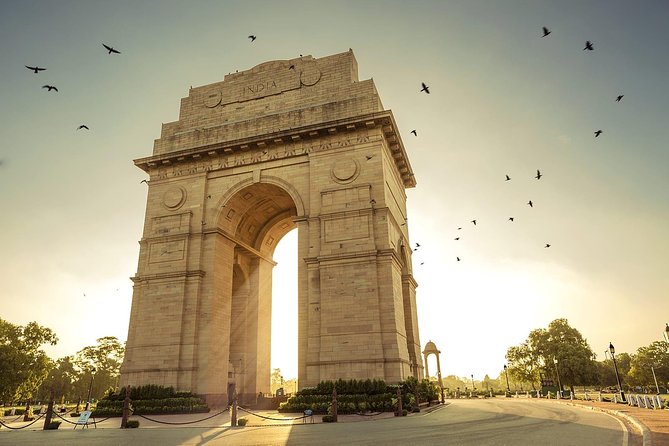
Then you head to India Gate, the 42-meter war memorial designed by Sir Edwin Lutyens. It’s often compared to the Arc de Triomphe, and even if you don’t need that reference, the scale does the talking. You’re standing in front of a monument that’s both ceremonial and human, a reminder that this country marks history in very public ways.
These two stops are also marked as free admission in the plan. That’s a small detail, but it helps your budget on day one.
Delhi’s Mughal-and-heritage loop: Humayun’s Tomb to Jama Masjid
The second day is where Delhi turns into architecture. Humayun’s Tomb is a UNESCO World Heritage Site and the final resting place of Mughal Emperor Humayun. What I like about this stop is that it’s described as the first garden-tomb, so you’re not just looking at a monument. You’re looking at a design idea that influenced later Mughal mausoleums.
Next comes Qutub Minar in the Qutub Complex. It’s a victory tower and noted as the second tallest monument in the world. Even if you’ve seen photos, being near it changes your sense of scale fast.
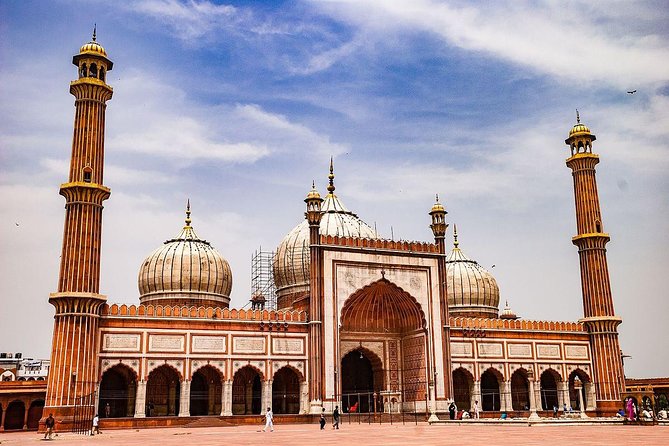
From there, you move into Old Delhi’s religious and historic core with Red Fort, built along the Yamuna with red sandstone and featuring museums. Then you go to Jama Masjid, described as the largest mosque built by Shah Jahan. It’s the kind of place where the setting matters as much as the structure, especially around prayer time.
Finally, you get two additional cultural stops: Gurudwara Bangla Sahib and Chandni Chowk. Gurudwara Bangla Sahib is important to Sikh pilgrimage, originally built in 1783. Chandni Chowk is one of the oldest and busiest markets in Old Delhi, still known for food and shopping.
A practical note: this day is packed. You’ll want comfortable shoes, and you’ll want to use your chauffeur-guide for smart timing. When you’re moving between monuments and markets, the secret is not rushing inside. It’s managing transitions so you don’t lose the day to fatigue.
A few more New Delhi days to compare
- Old & New Delhi City Tour – Half or Full Day Options Available
★ 5.0 · 4,811 reviews - Half Day Private Delhi City Tour
★ 5.0 · 4,474 reviews - Same Day Taj Mahal, Agra Fort & Baby Taj Tour from Delhi by Car
★ 5.0 · 4,304 reviews - Taj Mahal Day Tour from Delhi by Superfast Train – TOP RATED TOUR
★ 5.0 · 4,166 reviews
Agra Fort and Itmad-ud-Daula: Mughal stonework before the Taj
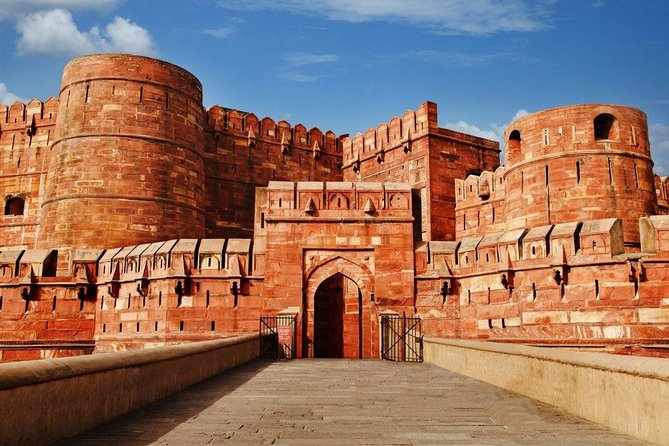
Agra is the other big anchor of the Golden Triangle, and your plan wisely doesn’t jump straight to the Taj. You start with Agra Fort, a UNESCO site on the Yamuna that offers a look at Mughal architectural legacy. The fortress setting is also useful because it frames the Taj afterward. You start to see the bigger system, not just one superstar building.
Then you visit Itmad-ud-Daula, often called the Baby Taj. This one is especially worth your attention because it’s described as the first tomb in India entirely built with marble. It sits on the Yamuna and is said to have inspired the construction of the Taj Mahal.
If you like architecture that shows its own evolution, Itmad-ud-Daula is a great lead-in. You’re training your eye before you walk into the Taj’s full effect.
Taj Mahal visit: plan for awe and time
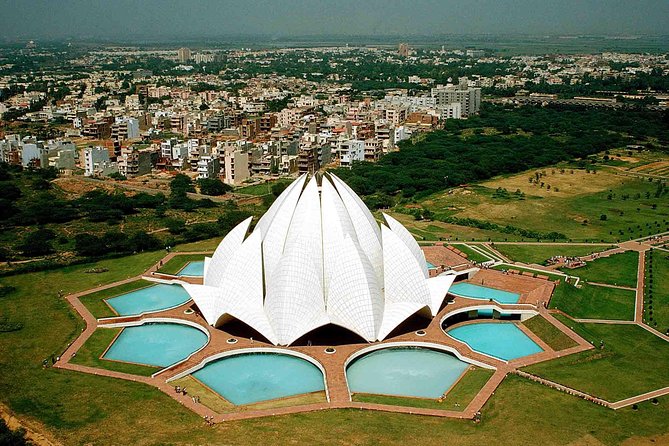
The Taj Mahal is listed as a UNESCO World Heritage Site and is described as the memorial built by Shah Jahan for Mumtaz Mahal. That story is famous, but what matters on the ground is how the building works in real light, real air, and real crowds.
This stop is listed for about 1 hour in the plan. I’d treat that as a guideline. The Taj is one of those places where you look first, then you notice details, then you look again. If you rush, you miss the garden symmetry and the marble finish that changes tone as you move.
If camera fees apply at any point, your tour plan flags that camera fees at monuments are not included. So if you use a camera beyond your phone, budget a bit extra.
Fatehpur Sikri and the road toward Jaipur
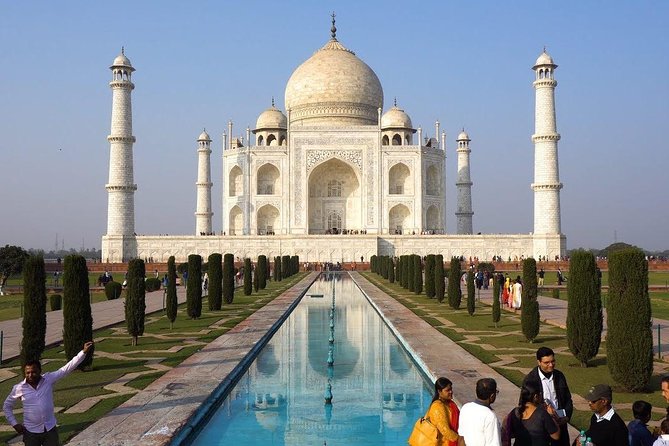
The itinerary then turns toward Jaipur with a stop at Fatehpur Sikri. This place is described as a fortified city founded in 1571 by Mughal Emperor Akbar, and importantly, it served as the empire’s capital for 14 years.
I like Fatehpur Sikri as a transition site. You’re leaving Agra’s river-and-fort mood, and entering the Rajput-and-royal-palace world of Rajasthan. Fatehpur Sikri also gives you a sense of how power reshaped space, creating a city that feels planned and ceremonial.
This stop is listed as free admission in the plan, which helps balance the days that include paid monuments.
Bharatpur Bird Sanctuary: a real break from the stone
One of the more refreshing parts of this route is Bharatpur Bird Sanctuary, a UNESCO World Heritage Site. Your plan describes it as a bird-watching paradise and notes a wide range of life, including exotic birds, flora, fishes, snakes, and other fauna.
Even if you’re not a hardcore birder, this stop matters because it breaks the pattern. After tombs, forts, and palaces, you get a nature-based rhythm. The environment also tends to calm the pace, which can make the Jaipur days feel more enjoyable rather than just another checklist.
This is also listed for about 1 hour. That’s enough time to take it in and reset, without turning into a full half-day detour.
Jaipur at golden hour vibes: stepwell and Jal Mahal
Your Jaipur day has three major “wow” moments, and two of them are about water and light.
First is Panna Meena ka Kund, a stepwell described as a sixteenth-century water structure with a miracle of stairs and steps. The design is more than pretty stairs. It’s a window into how communities engineered water access.
Next you visit Jal Mahal, called the Water Palace because it sits in the middle of Man Sagar Lake. The plan notes breathtaking sunrise and sunset views. Even if your timing isn’t perfect for those exact moments, the setting is still a visual pause that feels different from the rest of the trip.
Jal Mahal is marked as free admission in the plan.
City Palace, Hawa Mahal, and Jaipur’s royal layout
Then the day leans back into royal Jaipur with City Palace of Jaipur. This is described as the place where the Maharaja reigned, and the palace complex includes Chandra Mahal and Mubarak Mahal. City Palace is one of those sites where you get a clearer sense of how rulers lived, displayed power, and organized space for ceremonies.
After that comes the most instantly recognizable Jaipur silhouette: Hawa Mahal, or Palace of Wind. The plan highlights 953 small jharokhas, small windows built to let cool air pass through via the Venturi effect. Whether you’re a science fan or not, it’s a neat reminder that architecture can solve everyday comfort problems while looking gorgeous.
This is also where I recommend you slow down for photos, but don’t stay fixed on the facade. If you look around, Jaipur’s city blocks and street geometry start to make sense.
Jantar Mantar and Albert Hall Museum: science and art in one city day
You finish the Jaipur cultural stack with two UNESCO-listed style stops and a strong museum option.
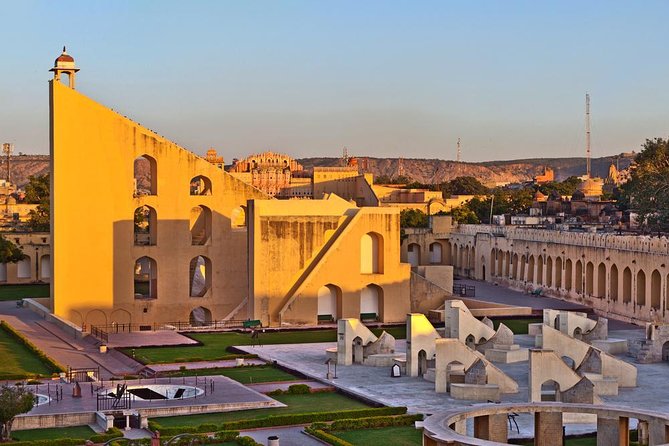
Jantar Mantar is described as a UNESCO World Heritage Site and home to the largest stone sundial in the world. It also has a collection of 19 architectural astronomical instruments. This is a great place if you like the idea of public science, where geometry becomes part of the city experience.
Then you go to Albert Hall Museum, located in Ram Niwas Garden. The plan calls out collections such as carpets, stones, paintings, and works in crystal, ivory, and metal sculptures. It’s one of those museums that can help ground the trip, especially after days focused mainly on outdoor architecture.
Your chauffeur-guide: what I’d ask before you roll out
This type of tour lives or dies on the driving and guiding. The best clue is in the service style described across the provider’s experiences: friendly, safe driving, flexible pacing, and a guide who offers context and sometimes hidden spots.
Names that have come up with this provider include Mohan Singh Rathore, Pushpendra, Nanda Kishore, Nemi Nayak, Kader, Avedesh Sharma, Rakesh Yadav, Guman, Santhosh Sharma, and Ranjeet Singh Khangarot. You might get someone else, but it’s a good sign that multiple drivers are described as polite, well behaved, and engaged.
Before your departure, I’d ask two practical questions:
- Will my guide handle ticket guidance and timing inside each site, or is it mainly self-paced with guidance at the door?
- Do you recommend booking any tickets in advance, or will the guide help with on-the-ground entry?
That way, you don’t lose time once you arrive.
What’s included, what isn’t, and how to budget without stress
Here’s the deal in plain terms based on what’s listed:
Included in the package:
- Private transportation in an air-conditioned vehicle
- Professional private tour guides cum driver for all excursions
- Mineral water bottle
- Accommodation with breakfast if booked with the suitable option
- Breakfast (5)
Not included:
- All fees and taxes
- Anything not mentioned in inclusions
- Camera fees at monuments
Also, many attractions on the plan list admission as not included. Some are explicitly marked as free in the plan, like Connaught Place, India Gate, Fatehpur Sikri, and Jal Mahal. The rest, like Humayun’s Tomb, Qutub Minar, Red Fort, Agra Fort, Itmad-ud-Daula, and the Taj Mahal, are marked as not included.
My advice: set aside a daily “entry fees and photo fees” budget. Don’t wait until you’re at the gate to figure it out.
Where the schedule really matters: comfort vs. speed
This is a car tour, and that means two things. One, you’ll cover ground without transit hassle. Two, you’ll spend meaningful time seated during city-to-city travel.
That’s not a flaw if you like the efficiency. It becomes a problem if you’re the type who gets cranky with road time. If you do get travel fatigue, build in small resets: water, quick snacks, and a short walk whenever the guide stops.
The upside is that your days are planned around major monuments and then woven with market and cultural texture. Instead of only castles-and-temples, you see how Delhi’s markets run, how Jaipur’s architecture works, and how Agra sets up the Taj with other Mughal landmarks first.
Who this Golden Triangle tour fits best
This tour is a strong match if you:
- Want a private, car-based Golden Triangle with minimal logistics
- Like major UNESCO sights plus a few character stops like stepwells, astronomy, and old-city markets
- Prefer a chauffeur-guide format that keeps you moving without feeling rushed by strangers
It may be less ideal if you:
- Want very long museum hours at a slower pace (this plan is more “see and move” than “linger all day”)
- Have a tight budget for entrance fees on top of the tour price
Also, the tour is marked as suitable for most travelers, and it’s only your group that participates. That privacy factor can be a big comfort upgrade.
Should you book this private Golden Triangle tour?
I’d book it if your priority is comfort, efficiency, and a guided route through Delhi, Agra, and Jaipur that doesn’t require you to manage transportation and timing alone. The structure hits the big icons, but it also includes stops that make the trip feel less like a photo drive, like Hawa Mahal’s jharokhas concept, Jantar Mantar’s instruments, and Bharatpur’s bird sanctuary break.
Before you commit, do one homework step: confirm which accommodation option you’re using and what “breakfast included” means for your specific stay. Also, budget separately for entrance and camera fees, since many of the key monuments list admissions as not included. If you handle those two items, this tour format is a smooth way to get the Golden Triangle experience without turning your vacation into a project.
FAQ
How long is the private Golden Triangle tour?
The tour runs for about 6 days, covering Delhi, Agra, and Jaipur.
Where do I meet the tour, and what time does it start?
You meet at Indira Gandhi Intl Airport in New Delhi at 9:00 am.
Is the transportation private and air-conditioned?
Yes. The tour includes private transportation with an air-conditioned vehicle.
Are meals included?
Breakfast is included for 5 days. Accommodation can also include breakfast if you book the suitable option.
Are entrance tickets included for all monuments?
No. The plan indicates that many monument admissions are not included, and camera fees at monuments are also not included. Some stops are listed as free admission, including Connaught Place, India Gate, Fatehpur Sikri, and Jal Mahal.
Can I cancel for a full refund?
Yes. You can cancel up to 24 hours in advance for a full refund. If you cancel less than 24 hours before the start time, the amount paid will not be refunded.
Recently added around New Delhi
- Private Same day Jaipur Tour from New Delhi★ 5.0 · 82 reviews
- Private Agra Day Tour★ 5.0 · 14 reviews
- Taj Mahal,Agra fort and Baby Taj tour from Delhi by Express train★ 5.0 · 7 reviews
- From Delhi: Full Day TajMahal & Agra Fort with 5 Star Lunch★ 5.0 · 64 reviews
- Taj Mahal & Agra City Private Tour from Delhi by Car – Fast Entry★ 5.0 · 13 reviews
- All Inclusive: Same day Taj Mahal Tour From Delhi★ 5.0 · 111 reviews
- Same Day Tour of Taj Mahal with Our Real Historical Experience★ 5.0 · 42 reviews
- Same Day Agra/Taj Mahal Tour from Delhi : Private & all inclusive★ 5.0 · 38 reviews
Golden Triangle Tours, compared.

3-Days Private Golden Triangle Tour: Delhi, Agra & Jaipur by Car
Read our review →3-Days Private Golden Triangle Tour: Delhi, Agra & Jaipur by Car
Read our review →
3-Day Delhi, Agra and Jaipur Private Tour – India Golden Triangle
Read our review →
Four-Day Private Luxury Golden Triangle Tour to Agra and Jaipur From New Delhi
Read our review →
5 Nights 6 Days Private Golden Triangle Tour – Delhi Agra Jaipur
Read our review →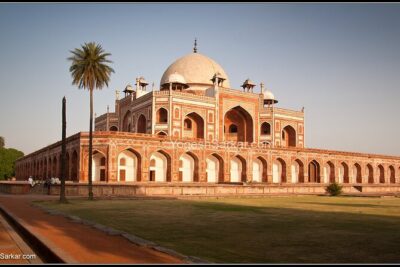

Private Car and Drive for Golden Triangle (4N/5D)
Read our review →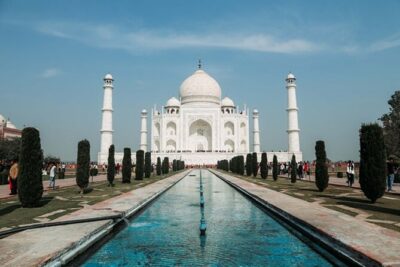
Private Golden Triangle Tour Delhi Agra Jaipur ( Top Rated )
Read our review →Browse the lists this tour appears in