
Reviewed · GOLDEN TRIANGLE TOURS
Private 4-Day Golden Triangle Tour – Delhi Agra and Jaipur
The Golden Triangle can feel chaotic. This private 4-day Delhi Agra Jaipur tour smooths out the tough parts with hotel pickup and local guides, and I especially love the Taj Mahal sunrise timing and the door to door driver comfort. One drawback to plan for: the days are packed, with lots of time on the road and early starts.
What makes it work is simple. You get an air-conditioned vehicle, an English-speaking driver, and private local guiding in each city, so you are not trying to figure out bus routes or where to stand for photos. At $270 per person, it is not the cheapest way to do the Golden Triangle, but it is strong value if you want private attention and a low-stress schedule.
In This Review
- Key highlights that matter in real life
- Why a private Golden Triangle tour beats DIY stress
- Price and what $270 really buys you
- Day 1 in Delhi: Old Delhi icons, Gandhi, and UNESCO Mughal stops
- Day 2 in Agra and Fatehpur Sikri: sunrise Taj, fort views, and the Baby Taj
- Day 3 in Jaipur: City Palace, Jantar Mantar, Hawa Mahal, and Albert Hall Museum
- Day 4 in Jaipur: cenotaphs at Royal Gaitor, stepwell at Panna Meena ka Kund, and Amer
- Your driver and guides: where the experience turns from good to great
- Comfort tips for a smooth 4-day Delhi Agra Jaipur run
- Should you book this private Golden Triangle tour?
- FAQ
- Is hotel pickup and drop-off included?
- Are the sightseeing tours guided?
- What transport do we use during the tour?
- Does the tour include accommodation and breakfast?
- Are entrance fees included for monuments?
- Is the Taj Mahal open every day?
- Is this a private tour?
Key highlights that matter in real life
- Hotel or airport pickup, plus drop-off so your trip starts and ends cleanly.
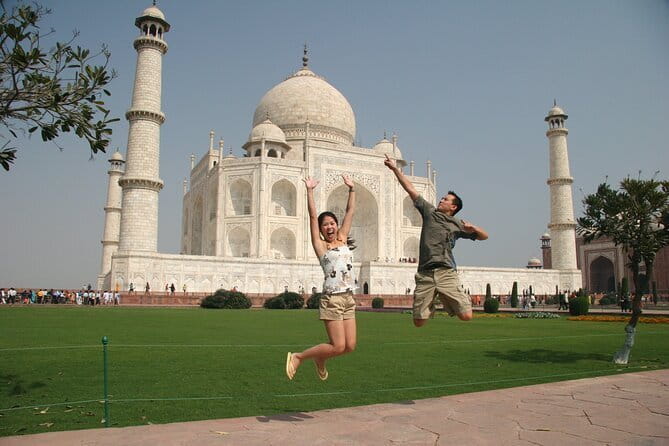
- A sunrise-focused Taj Mahal visit with guided time and a plan built around early hours.
- Private local guides in every city, not just a driver doing the heavy lifting.
- Golden Triangle classics plus UNESCO stops like Qutub Minar, Humayun’s Tomb, and Jantar Mantar.
- Driver guidance you can actually use, with names like Manoj and Vinodhji praised for timing and restaurant picks.
Why a private Golden Triangle tour beats DIY stress
If you have only a few days and it is your first time in India, the biggest enemy is not the sights. It is the logistics. Trains, buses, station lines, taxi negotiations, and “where do we meet?” moments can turn what should be an exciting route into a grind.
This tour tackles that head-on. You are traveling the Golden Triangle route, Delhi to Agra to Jaipur, but you are doing it with a private vehicle and an experienced driver who handles the driving and timing. That means you can focus on what you actually came for: the architecture, the history, and the daily rhythm of each city.
You also get guided tours in each city, which changes the feel of the trip. A guide helps you notice details you would otherwise miss, like how the design language shifts from Mughal-era monuments in Delhi to the later Rajput and colonial influences you see in Jaipur. It is still sightseeing, but it is not just walking and taking photos.
Golden Triangle tours readers book most in New Delhi:
- 3-Days Private Golden Triangle Tour: Delhi, Agra & Jaipur by Car
★ 5.0 · 1,107 reviews - 3-Days Private Golden Triangle Tour: Delhi, Agra & Jaipur by Car
★ 5.0 · 1,098 reviews - 3-Day Delhi, Agra and Jaipur Private Tour – India Golden Triangle
★ 5.0 · 812 reviews
Price and what $270 really buys you
At $270 per person for a four-day private experience, the headline number looks straightforward, but the value depends on what you choose. This is designed as a package with options that include hotels or not.
If you book the version that includes hotels, you get 3 nights accommodation and daily hotel breakfast (3 breakfasts). That matters because Delhi, Agra, and Jaipur can be expensive if you add hotels separately at the last minute. You also get monument entrance fees listed as part of the included items, which can add up quickly when you hit major sights across three cities.
Even without hotels, you still get the core benefits: hotel or airport pickup and drop-off, transportation by private air-conditioned vehicle, and guided tours with private local guides.
Two practical notes from the schedule you should keep in mind:
- Taj Mahal planning is time-sensitive. The Taj Mahal is closed for general viewing on Fridays.
- The tour pace is active. You will likely spend a lot of the day moving, which is great if you like structure, but not great if you want slow, flexible days.
One more reality check: this tour averages booking about 116 days in advance. That usually means it sells out around popular dates, especially when people want a smooth, low-stress way to see the Golden Triangle.
Day 1 in Delhi: Old Delhi icons, Gandhi, and UNESCO Mughal stops
Your Delhi day is a strong mix of religious, political, and architectural landmarks, which is exactly what you want on a first visit. The timing is built around short, focused visits, so you keep moving without feeling like you are standing in one place forever.
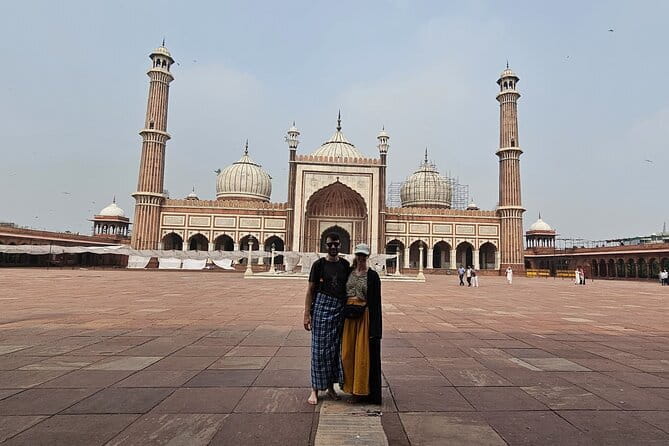
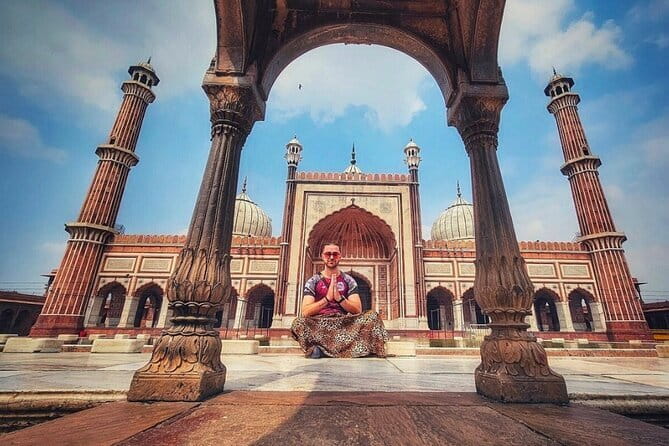
You start in Old Delhi at Jama Masjid, one of the largest and most impressive mosques in the city, built in the Mughal era under Shah Jahan. It is not just a building. It is a whole atmosphere, and your guide’s job is to help you read it, not just look at it.
Next is Raj Ghat, a memorial for Mahatma Gandhi at the site associated with his cremation in 1948. The space is simple by design, and that is the point. It is a quiet counterweight after the bustle of Old Delhi.
Then you hit India Gate, a 42-meter war memorial with the names of thousands of soldiers inscribed. If you want a quick pause with photos, this is a good one, and it is listed as free for viewing.
After that, the route brings you past major government landmarks, including Rashtrapati Bhavan and the Parliament House. You do not need a long lecture here to understand what you are seeing. You are looking at the core of New Delhi’s administrative architecture, created in the early 1900s by British-era designers.
Later, you move into Mughal-era grandeur with Humayun’s Tomb. This UNESCO World Heritage site is often described as a precursor to later Mughal tomb design, and your guide can connect the dots between the Persian-style garden layout and what you will see later in Agra.
You also stop at two major UNESCO landmarks:
- Lotus Temple, a Bahá’í House of Worship shaped like a lotus with 27 marble petals, open to all religions for worship and visitation.
- Qutub Minar, a UNESCO site and the towering brick minaret connected to early Indo-Islamic architecture.
By evening, you transition to Agra. The drive is about 3 hours via the Yamuna Expressway. You will want to eat something before you get too tired, because once the car is moving, the day keeps rolling.
Practical expectation for Day 1: comfortable walking shoes help. You are not doing a marathon, but you will move through courtyards and open areas, and Delhi heat can change how you feel about every stop.
Day 2 in Agra and Fatehpur Sikri: sunrise Taj, fort views, and the Baby Taj
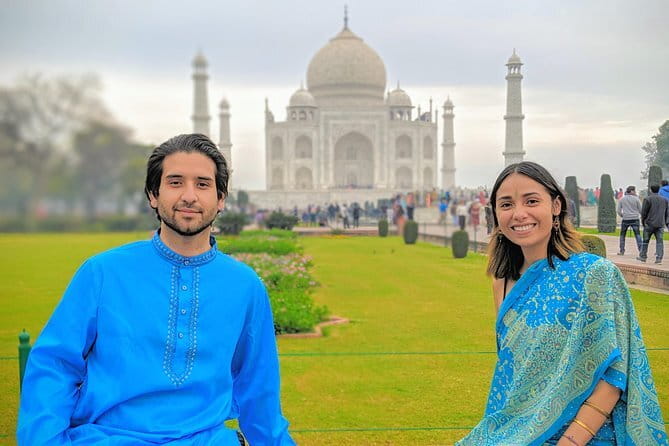
Day 2 is where the Golden Triangle earns its nickname. The star is the Taj Mahal, and the itinerary is built around a sunrise visit. That matters because sunrise light is when the monument looks its most dramatic, and the crowd energy is usually more manageable early.
You get guided time inside the Taj Mahal for about two hours. Your guide is there to explain the monument’s history and design choices, and to help you understand what you are seeing rather than just reading the signs.
Important scheduling note: the Taj Mahal is closed on Fridays for general viewing. If your dates land on a Friday, you will want to confirm what your tour does instead, since the plan here is specifically described as sunrise viewing.
After the Taj, you visit Agra Fort, a UNESCO World Heritage site that once served as the main residence of Mughal emperors. Agra Fort is different from the Taj because it feels more like a complex of power and daily life than a single grand masterpiece. You will spend about an hour exploring with your guide.
Next is Itmad-ud-Daula, often called the Baby Taj. It is a Mughal mausoleum and a great “bridge sight” between Delhi’s Mughal monuments and the full scale of the Taj. If you like noticing patterns and design evolution, this is the stop that rewards you.
Then comes Fatehpur Sikri, another UNESCO World Heritage site. The itinerary gives it about two hours. This place gives you a sense of how the Mughal capital shifted and why architecture got so ambitious during Akbar’s era.
From there, you head to Jaipur and check in to your hotel. The schedule leaves space to unwind, refresh, and get ready for Jaipur’s big day.
Practical expectation for Day 2: you will likely feel the early start. Hydrate in the morning, and don’t assume you will be fully hungry at every stop. Your guide can usually help with timing so you are not pushed into feeling rushed at the Taj or later at Fatehpur Sikri.
A few more New Delhi days to compare
- Old & New Delhi City Tour – Half or Full Day Options Available
★ 5.0 · 4,811 reviews - Half Day Private Delhi City Tour
★ 5.0 · 4,474 reviews - Same Day Taj Mahal, Agra Fort & Baby Taj Tour from Delhi by Car
★ 5.0 · 4,304 reviews - Taj Mahal Day Tour from Delhi by Superfast Train – TOP RATED TOUR
★ 5.0 · 4,166 reviews
Day 3 in Jaipur: City Palace, Jantar Mantar, Hawa Mahal, and Albert Hall Museum
Jaipur is a different flavor of India, and Day 3 is designed to show you the main beats. You start at City Palace, built in 1721 and once the Maharaja’s ceremonial and administrative seat. You spend about an hour here, which is enough to see the key spaces without tiring out.
Then you go to Jantar Mantar, a UNESCO site made of astronomical instruments created in the 18th century by Rajput king Sawai Jai Singh II. This stop is short in the schedule (about 45 minutes), but it can be surprisingly satisfying if you enjoy learning how older instruments measured the sky.
Next is Hawa Mahal, the Palace of Breeze. You get around 45 minutes. The five-story pyramidal facade made of red and pink sandstone is eye-catching, but the real value is in understanding what those small windows were for. Your guide helps you connect architecture to purpose, not just aesthetics.
You round out the day with Albert Hall Museum, Jaipur’s oldest museum, built in 1876. You spend about an hour, and it helps to shift from monument photography to artifacts, textiles, sculptures, and historical pieces.
If you want one tip that often changes the day: wear something comfortable for Jaipur’s sunlight. You spend time outdoors, and the heat can make every stop feel shorter than it should.
Day 4 in Jaipur: cenotaphs at Royal Gaitor, stepwell at Panna Meena ka Kund, and Amer
Day 4 gives you Jaipur outside the most obvious postcard list. It is still classic sites, but the sequence adds variety.
You start with Royal Gaitor Tumbas, the royal cenotaphs of Jaipur’s Maharajas at the base of the Aravalli Hills. The schedule lists this as a long stop, so expect more wandering time than you might have on earlier days. This is a good place to slow down a little and look at the marble and sandstone work, and how Rajput and Mughal design elements blend.
Then you have Jal Mahal, the palace that appears to float on Man Sagar Lake. Your visit is brief, about 15 minutes. Even though it is short, it is a classic visual break in a day that includes more walking and stepping into historic spaces.
Next is Panna Meena ka Kund, an ancient stepwell with geometric design and multiple levels of stairs down to the water. This is one of those sights that feels technical and artistic at the same time, and it lasts about 30 minutes on the plan.
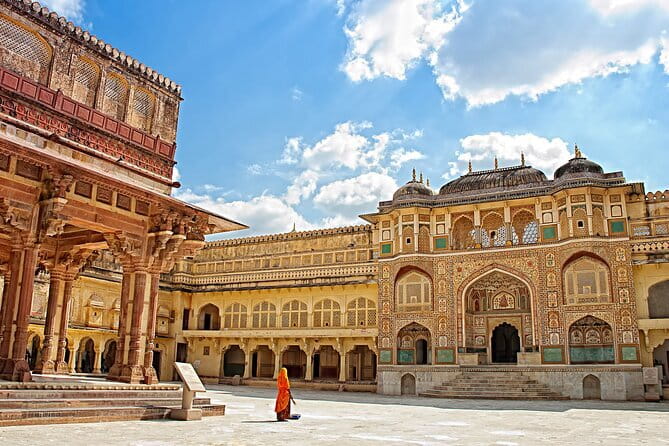
Finally, you visit Amer, near Jaipur in the Aravalli foothills, scheduled for about two hours. Amer’s mix of heritage buildings and scenic setting gives you a strong finish to the trip, especially if you like the feel of towns shaped by mountains and routes rather than flat city centers.
Practical expectation for Day 4: it is a mix of views and heritage sites. If you have a hot-weather sensitivity, plan to take shade breaks when your guide offers them.
Your driver and guides: where the experience turns from good to great
The transport and guiding are the spine of this tour, and the feedback is consistent about one thing: the driver matters.
I noticed repeated praise for professionalism and practical helpfulness. For example, Ajit is mentioned as polite and professional, and drivers like Vinodhji are praised for safe driving in city chaos and highway conditions, plus thoughtful suggestions that help avoid peak traffic. Those timing tips can save your mood more than you might expect.
Manoj shows up in the feedback with a slightly different strength: helping people connect the sights to everyday life. He is credited with sharing restaurant suggestions, helping guests handle Indian food smartly, and even taking people to craft-focused factory areas for a deeper understanding of the country. That kind of guidance can turn a standard sightseeing day into a more personal story.
Other names also show up, including Deepu and Amit Kasana, both described as friendly, punctual, and flexible with what the group wants. That flexibility matters because your day is not just a checklist. It is a sequence of timed stops, and sometimes one place runs long or a photo line moves faster than expected.
What you can do to make this work even better:
- Ask your guide about best photo timing for each stop, especially for outdoor areas.
- Tell your driver what you care about most, photos, architecture details, or a calmer pace.
- Be ready to shift plans slightly if traffic or crowd flow changes.
Because it is a private tour, the emphasis is on your comfort and your choices, not fitting into a bus schedule.
Comfort tips for a smooth 4-day Delhi Agra Jaipur run
This is not a slow vacation. It is a structured tour, which is great if you want maximum highlights without transport stress.
A few practical things I suggest you plan for:
- Bring a small day bag, a light layer, and water. Long sightseeing blocks add up.
- Wear shoes you can walk in for extended periods. Most stops involve courtyards and uneven ground.
- Keep your camera battery ready early, because sunrise at the Taj is time-dependent.
- Meals are not included. The tour includes breakfast when you choose the hotel option, but plan on lunches and dinners on your own, based on your driver or guide recommendations.
If you are traveling with family or older companions, this private format is still a good fit because you can pause, ask to move faster, or request shorter walks. The vehicle is air-conditioned, and it helps you reset between stops.
If you are traveling solo, it can also feel efficient. You get your own driver attention without needing to manage transit connections alone.
Should you book this private Golden Triangle tour?
If your goal is a first-time Golden Triangle with less stress, I think this is a solid pick. The biggest reasons are the things that affect your daily experience: hotel or airport pickup, private local guiding in each city, and private air-conditioned transport with an English-speaking driver.
You should strongly consider booking if:
- You want to see Delhi, Agra, and Jaipur without wrestling public transit.
- You prefer organized timing, especially for the Taj Mahal sunrise visit.
- You like learning from guides, not just collecting photos.
You might want to think twice if:
- You hate early mornings. The Taj timing is a key feature, and you will feel it.
- You want free-form days with no schedule. This tour is built around visiting specific highlights in a sequence.
One more confidence boost: you can cancel for a full refund if you cancel at least 24 hours before the experience start time, so you have a bit of flexibility if your plans shift. And double-check whether your dates include a Friday, since the Taj Mahal is closed for general viewing then.
FAQ
Is hotel pickup and drop-off included?
Yes. The tour includes hotel or airport pickup and drop-off.
Are the sightseeing tours guided?
Yes. Private local guides are included for the sightseeing in each city.
What transport do we use during the tour?
You travel by a private air-conditioned vehicle with an English-speaking driver.
Does the tour include accommodation and breakfast?
It depends on the package you choose. If you book with hotels, it includes 3 nights accommodation and daily hotel breakfast (3 breakfasts). Meals are not included.
Are entrance fees included for monuments?
Monument entrance fees are listed as included in the tour.
Is the Taj Mahal open every day?
No. The Taj Mahal is closed on Fridays for general viewing.
Is this a private tour?
Yes. It is private, meaning only your group participates.
Recently added around New Delhi
- Private Same day Jaipur Tour from New Delhi★ 5.0 · 82 reviews
- Private Agra Day Tour★ 5.0 · 14 reviews
- Taj Mahal,Agra fort and Baby Taj tour from Delhi by Express train★ 5.0 · 7 reviews
- From Delhi: Full Day TajMahal & Agra Fort with 5 Star Lunch★ 5.0 · 64 reviews
- Taj Mahal & Agra City Private Tour from Delhi by Car – Fast Entry★ 5.0 · 13 reviews
- All Inclusive: Same day Taj Mahal Tour From Delhi★ 5.0 · 111 reviews
- Same Day Tour of Taj Mahal with Our Real Historical Experience★ 5.0 · 42 reviews
- Same Day Agra/Taj Mahal Tour from Delhi : Private & all inclusive★ 5.0 · 38 reviews
Golden Triangle Tours, compared.

3-Days Private Golden Triangle Tour: Delhi, Agra & Jaipur by Car
Read our review →3-Days Private Golden Triangle Tour: Delhi, Agra & Jaipur by Car
Read our review →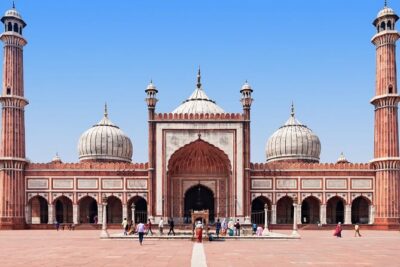
3-Day Delhi, Agra and Jaipur Private Tour – India Golden Triangle
Read our review →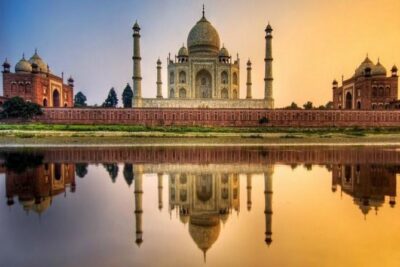
Four-Day Private Luxury Golden Triangle Tour to Agra and Jaipur From New Delhi
Read our review →
5 Nights 6 Days Private Golden Triangle Tour – Delhi Agra Jaipur
Read our review →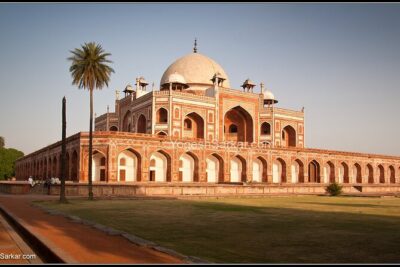

Private Car and Drive for Golden Triangle (4N/5D)
Read our review →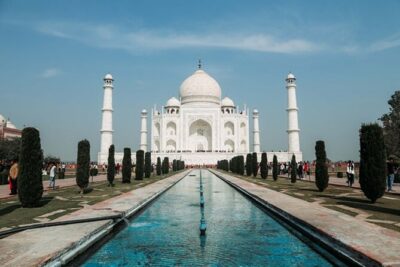
Private Golden Triangle Tour Delhi Agra Jaipur ( Top Rated )
Read our review →Browse the lists this tour appears in