
Reviewed · GOA TOURS
Panjim Art Saunter by Make It Happen
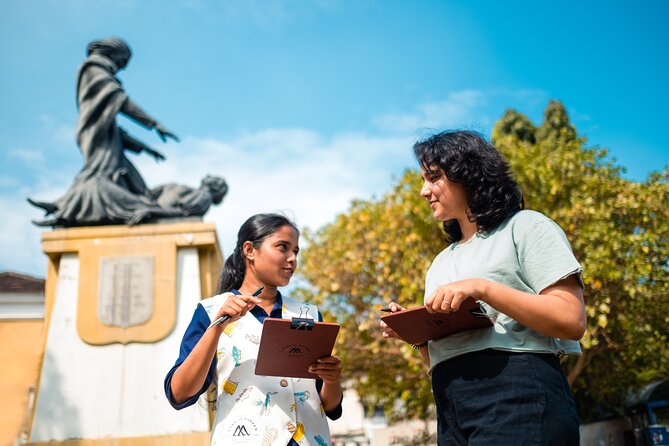
A 3-hour art saunter is the easiest way to see Panjim without rushing. This interactive route turns street corners into lessons in Goa’s art and politics, then hands you supplies to make your own pieces inspired by what you spot.
Two things I really like: you get a guided trail through major landmarks like the palace gateway and the church, and you also make actual artwork, not just photos. The Fontainhas stop adds real wow factor because you’re in a UNESCO-listed Latin Quarters area where architecture does the storytelling. One drawback to plan for, though, is weather. This runs only when conditions are good.
You’ll start in the Altinho area at Panaji Residency and end right back where you began. Expect a small group, up to 15 people, and a mix of looking, learning, and creating with materials provided like drawing paper, pencils, and natural dyes.
In This Review
- Key things to love about Panjim Art Saunter
- Why this Panjim walk feels more personal than a standard tour
- Starting point near Altinho, with a simple 3:30 pm rhythm
- Stop 1: Gateway of the Palace of Yusuf Adil Shah
- Stop 2: Church of Our Lady of the Immaculate Conception, built to watch over Panjim
- Stop 3: Fontainhas (Bairro das Fontainhas) and the UNESCO Latin Quarters feel
- The heritage cafe break in an Indo-Portuguese home setting
- Painting with natural dyes, plus turning your art into something portable
- Learning how art reflects politics and expression in Goan society
- Who this Panjim Art Saunter suits best
- Price and value: $24.91 for 3 hours, supplies included
- Practical notes that make the tour smoother
- Should you book Panjim Art Saunter?
- FAQ
- How long is the Panjim Art Saunter?
- What time does the tour start, and where is the meeting point?
- Where does the tour end?
- What is included in the price?
- Is transportation provided?
- How many people are in the group?
- What is the cancellation policy if weather is bad?
Key things to love about Panjim Art Saunter
- A guided art lens, not just a monuments list, with lessons on how art reflected local society
- Hands-on sketching and painting, including natural dyes, plus postcards you can send
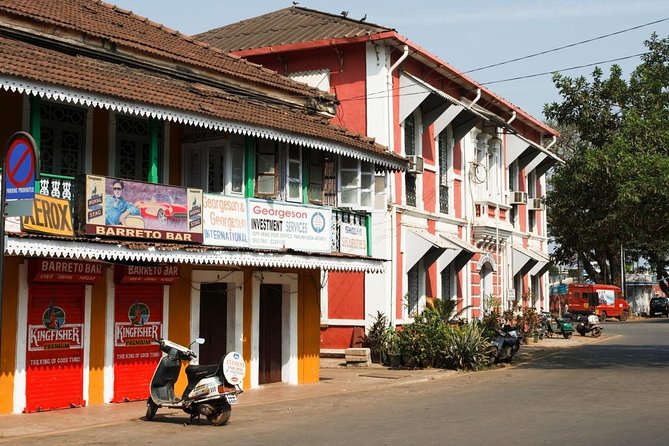
- Fontainhas in the UNESCO Latin Quarters, with lots of visual details to translate onto paper
- Heritage cafe interaction, set in an Indo-Portuguese home style space
- Local treats included, like Goan sweets and a soda/pop drink
Why this Panjim walk feels more personal than a standard tour
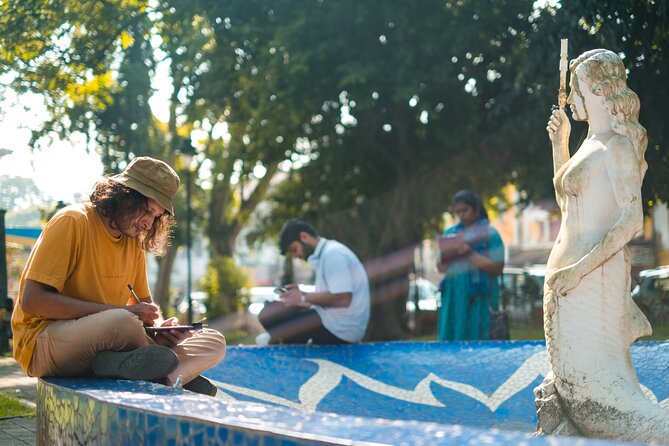
Panjim can look like just another pretty Indian city if you skim it. This tour nudges you to slow down and look closer, then asks you to turn what you notice into art. That small shift changes everything. You’ll stop thinking of buildings as backgrounds and start treating them like characters.
The best part is that the route is built around how Panjim evolved over time, including how art connects to politics and expression. That means you’re not studying art in a vacuum. You’re seeing how local life, power, and culture leave marks on walls, forms, and streets.
The group size also matters. With a maximum of 15, you’re more likely to get patient help with sketching and painting, instead of feeling like you’re watching from the back.
A few more Goa days to compare
- Fontainhas Heritage Walk by Make It Happen
★ 5.0 · 2,834 reviews - BLive Electric Bike Tours – Discovery of Divar Island
★ 5.0 · 1,147 reviews - Old Goa Heritage Walk by Make It Happen
★ 5.0 · 797 reviews
Starting point near Altinho, with a simple 3:30 pm rhythm
The walk begins at 3:30 pm at Panaji Residency on MG Road, near the District and Sessions Court, Altinho, Panaji. Ending back at the meeting point makes it easy to plan dinner or a drink afterward.
It’s also designed to be low stress for logistics: you get a mobile ticket, and the meeting area is near public transport. Private transport is not included, so if you are coming from far off, you’ll want to plan your ride into Panjim before the start time.
Stop 1: Gateway of the Palace of Yusuf Adil Shah
Your first stop is the Gateway of the Palace of Yusuf Adil Shah, one of the oldest heritage buildings in Panjim. Since admission here is free, you can focus on what you’re doing, which is observing and learning.
This kind of opening stop works well because it sets the tone early. You start with an important marker of how Panjim’s power and identity were shaped, then you carry that understanding into later stops. Practically, it also gives you a chance to settle in before you start sketching in earnest.
What to pay attention to:
- how the gateway frames space, like a stage for the city
- how older structures create visual “anchors” for your artwork
- any repeating shapes or lines you can mimic quickly in a sketch
If you like art because it trains your eye, this stop is a good warm-up.
Stop 2: Church of Our Lady of the Immaculate Conception, built to watch over Panjim
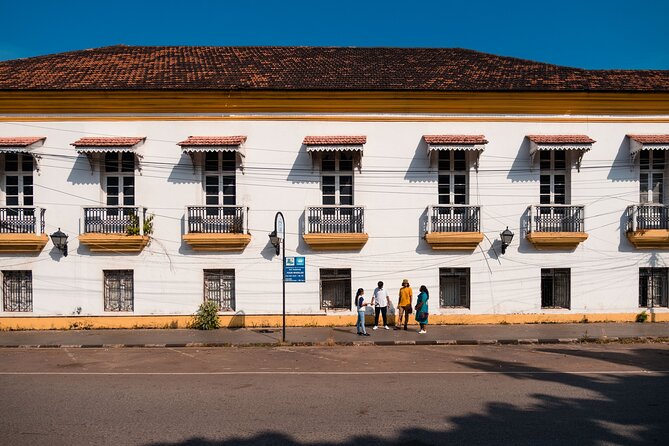
Next up is the Church of Our Lady of the Immaculate Conception, a majestic church built in the 1600s with views over Panjim. You’ll have around 20 minutes here, and it’s enough time to do two things: understand the place and capture details in your sketchbook.
Church stops can feel repetitive if they’re only about grandeur. Here, the value is in how you look. You’re meant to treat architectural features like design elements, not just sightseeing.
What you can focus on during your sketch session:
- edges and symmetry, which are great for quick line work
- the way the church’s position gives a sense of oversight over the city
- any textures or surfaces that translate nicely into pencil
This is a strong stop for people who want history without boredom. The church has presence, but your guide’s focus keeps it tied to how art shows up in daily identity.
Another way to spend a day in India:
- Varca Coastal E-Bike Tour: Scenic Beachside Adventure
★ 5.0 · 668 reviews - Fontainhas Heritage Walk At Latin Quarters of Goa
★ 5.0 · 531 reviews - Feni and Tapas – Food Trail with Tastings & Drinks by Make It Happen
★ 5.0 · 409 reviews - The Divar Island Exploration
★ 5.0 · 353 reviews
Stop 3: Fontainhas (Bairro das Fontainhas) and the UNESCO Latin Quarters feel
Then comes the star visual neighborhood: Fontainhas, also called Bairro das Fontainhas, part of the Latin Quarters and recognized as a UNESCO world heritage zone. You’ll spend about 30 minutes here, and that time matters, because Fontainhas rewards slow looking.
This is where the tour’s “make art” part really kicks in. You’re surrounded by layers of architecture and street character, the kind of scene that gives you options. You can sketch a doorway, trace a wall pattern, or capture a street corner that feels lived-in.
Why Fontainhas is so useful for art:
- it offers lots of small details, perfect for quick studies
- the building styles create natural compositions
- the color and texture cues help when you switch from sketching to painting
One more thing: this neighborhood helps you understand what the guide is talking about when it comes to how art and society connect. You’re not just seeing old buildings. You’re seeing a place where culture has been expressed for generations through form, layout, and design.
The heritage cafe break in an Indo-Portuguese home setting
Between monuments and art making, you also get an interaction at a heritage cafe that’s described as an Indo-Portuguese home. This is one of those stops that feels small on the schedule but big for the experience.
It’s a comfortable reset where you can settle your sketchbook, warm up a bit, and keep your creative brain switched on. You’re also not just given art materials in a vacuum. You’re learning in an atmosphere that matches the theme, with local flavor in the background.
What’s included here:
- Goan sweets
- a refreshing soda/pop drink
It’s a good reminder that cultural experiences in Goa are rarely separated into neat boxes. You take in architecture, then you take in taste, then you go back to making your own artwork.
Painting with natural dyes, plus turning your art into something portable
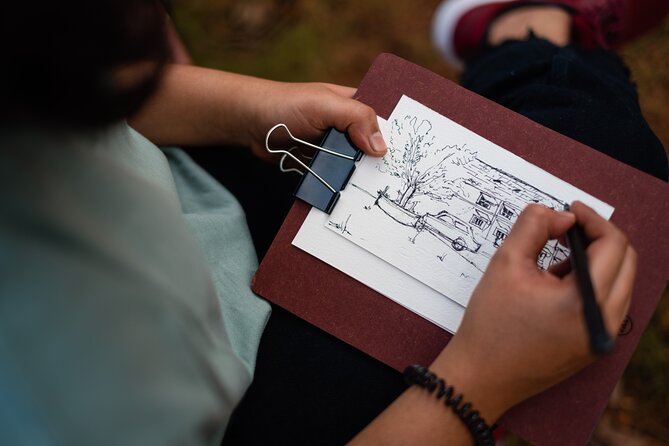
A major selling point is that you’re not leaving with blank pages. You receive a drawing pad, paper, pencils, and natural dyes for painting. That means the tour functions like a mini studio session while you’re still walking through real streets.
You’ll also get the creative prompt to make your own artworks inspired by Panjim’s history and culture. The goal is not perfection. It’s participation. The real win is that you’ll leave with something you made from observation, not something you copied from a screen.
You can also capture your creations in sketchbooks and send them as postcards to loved ones. That makes the “art experience” feel practical and memorable. Even if you’re not an artist, a postcard version turns your notes into a keepsake with a story.
Learning how art reflects politics and expression in Goan society
This is the quieter part of the tour, but it’s one of the reasons the experience works. The guide highlights how Panjim evolved and how art has reflected politics and expression of Goan society.
For me, that framing is key. It prevents the walk from becoming only a photo mission. Instead, you start noticing how power and cultural shifts show up through visible choices, like design style, public spaces, and what people choose to emphasize.
It also helps you connect stops that might otherwise feel separate. The gateway, then the church, then Fontainhas. When you view them through the art lens, they start to feel like a single conversation across time.
Who this Panjim Art Saunter suits best
This is a great fit if you:
- like art and architecture and want a guided way to look
- enjoy hands-on activities even if you’re a beginner
- want a short afternoon activity that feels more local and creative
It’s also a good match for people who have visited Goa before and still feel like they only skimmed the surface. The route is short, but it’s built to add context fast.
If you are only interested in big-ticket sightseeing with no time for sketching or painting, you might find the creative part less your speed. But if you like doing something with your hands, the format is excellent.
Price and value: $24.91 for 3 hours, supplies included
At $24.91 per person for about 3 hours, the price feels fair because the tour includes more than guiding. You get sketching materials (drawing pad, paper, pencils), plus natural dyes, plus snacks in the form of authentic Goan sweets and a soda/pop.
You’d normally pay separately for guided entry experiences, and art supplies add up quickly if you buy them for a one-time activity. Here, the supplies are part of the experience rather than an afterthought. That’s why the value holds even though the schedule is compact.
A small note: breakfast, brunch, and lunch are not included. So if you’re doing this on a day where you’ve skipped meals, plan a snack or meal earlier. You will get sweets and a drink, but not a full meal.
Practical notes that make the tour smoother
The session uses a mobile ticket and confirms at booking time. The group is capped at 15, which helps with instruction quality and pacing.
You should also know the tour depends on good weather. If conditions are poor and the experience is canceled, you’ll be offered a different date or a full refund.
If you’re someone who likes to get moving quickly, this timing works well. Starting at 3:30 pm gives you daylight to see details and enough time to finish before evening plans get complicated.
Should you book Panjim Art Saunter?
I’d book it if you want Panjim through the eyes of an artist, not just a visitor. The mix is smart: monuments with meaning, a UNESCO neighborhood with visual fuel, and a studio-style creative component with natural dyes. You also get a heritage cafe moment that adds texture, plus Goan sweets and soda/pop to keep energy up.
I’d skip it if you are not interested in sketching or painting at all. The tour’s heart is the act of creating. If that part sounds tiring rather than fun, a pure sightseeing route may fit better.
If you are happy to walk for about three hours, and you want your memories to come with paper you made yourself, this is a strong choice.
FAQ
How long is the Panjim Art Saunter?
It lasts about 3 hours.
What time does the tour start, and where is the meeting point?
The start time is 3:30 pm. The meeting point is Panaji Residency on MG Road, near the District and Sessions Court, Altinho, Panaji, Goa 403001, India.
Where does the tour end?
The experience ends back at the meeting point.
What is included in the price?
Included items are soda/pop, GST, interaction at a heritage cafe in an Indo-Portuguese home, drawing pad, paper, pencils for sketching, natural dyes for painting, and snacks of authentic Goan sweets.
Is transportation provided?
No, private transportation is not included.
How many people are in the group?
The tour has a maximum of 15 travelers.
What is the cancellation policy if weather is bad?
The experience requires good weather. If it is canceled due to poor weather, you will be offered a different date or a full refund. You can also cancel for a full refund if you do so at least 24 hours in advance of the experience start time.
Recently added around Goa
- Yin Yoga Therapy Training – 200 Hours (Yoga Alliance)★ 5.0 · 8 reviews
- Chef Kamal’s Indian Cooking Classes★ 5.0 · 8 reviews
- Saligao Village Saunter by Make It Happen★ 5.0 · 74 reviews
- Private Portuguese Heritage Tour: Se Cathedral, Basilica of Bom Jesus and Dona Paula Beach in Goa★ 4.5 · 21 reviews
- South Goa Sightseeing Full Day Tour ( 09 am – 06 pm )★ 3.0 · 32 reviews
- Private South Goa City Tour with Spice Plantation and Lunch from North Goa Hotel★ 4.0 · 12 reviews
- Private Tour of Fontainhas & Old Goa’s Portuguese Heritage★ 5.0 · 16 reviews
- Private Tour to Goa and Dudhsagar Waterfalls with Lunch★ 3.0 · 8 reviews
Goa Tours, compared.
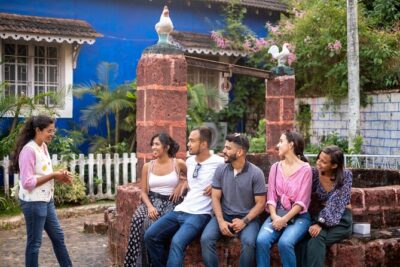

BLive Electric Bike Tours – Discovery of Divar Island
Read our review →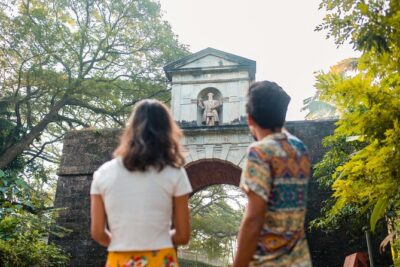
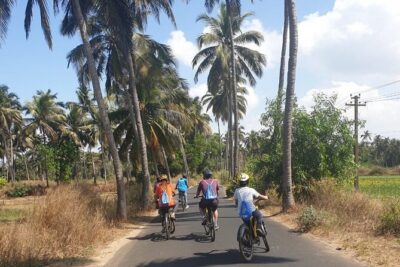
Varca Coastal E-Bike Tour: Scenic Beachside Adventure
Read our review →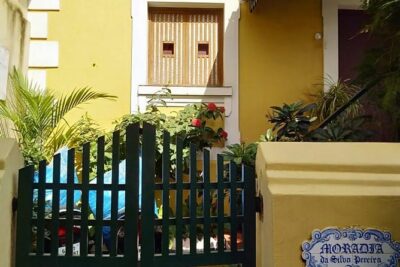
Fontainhas Heritage Walk At Latin Quarters of Goa
Read our review →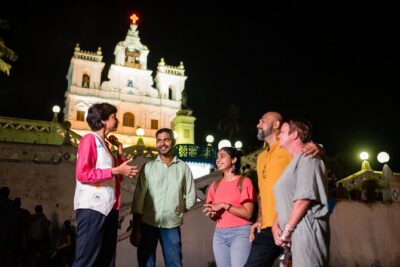
Feni and Tapas – Food Trail with Tastings & Drinks by Make It Happen
Read our review →

Chronicles and Echoes of Divar Island by Make It Happen
Read our review →Browse the lists this tour appears in