
Reviewed · DELHI TOURS
Old & New Delhi Full or Half Day Sightseeing Tour
Old Delhi gets loud, New Delhi gets grand, and this tour stitches both together in one practical day. I like the private setup, because you can actually spend the time you want at places like Jama Masjid and Chandni Chowk, instead of being herded. I also like the value of getting AC car comfort plus a personal guide, with water bottles and umbrellas included, even when you go half-day. One drawback to plan for: the schedule is packed, and some government-area sights like Parliament House can limit what you can do on-site, so you will mostly see what is accessible.
You can book a half-day (Old Delhi or New Delhi) or go full-day to cover the big names across both neighborhoods. Pickup is flexible, since you can start from almost anywhere across Delhi and the surrounding NCR, and you can choose your pickup time. If you hate early starts, you will want to pick a start time that keeps your pace comfortable.
In This Review
- Key things that make this tour work well
- Old Delhi meets New Delhi, without the travel headaches
- Choosing half-day vs full-day, and what you actually get
- Half-day, when you want impact fast
- Full-day, when you want the whole contrast
- Pickup across Delhi and NCR, and why it’s a big deal
- Old Delhi start: Jama Masjid’s courtyard scale and details
- Chandni Chowk by rickshaw: markets, wedding shopping streets, and strategy
- Red Fort and the Mughal mood shift
- Gurudwara Bangla Sahib: spirituality you can actually watch up close
- India Gate and the Lutyens-era memorial feel
- Rashtrapati Bhavan and Parliament House: grand buildings with access limits
- Humayun’s Tomb: first garden tomb energy, plus UNESCO significance
- Lotus Temple: a short, peaceful reset
- Qutub Minar: a tall icon and a quick architecture lesson
- Tuk-tuk and the rickshaw mix: how transport shapes your day
- What the private guide experience adds (names you might hope for)
- Ticket choices, water and umbrellas, and avoiding on-site surprises
- Practical tips so your day stays fun, not stressful
- Should you book this Old and New Delhi sightseeing tour?
Key things that make this tour work well

- Half-day or full-day choices let you match your energy level and your remaining sightseeing time.
- Pickup across Delhi and NCR means fewer hassles when you are staying outside the center.
- Old Delhi by tuk-tuk (if selected) plus a rickshaw ride gives you the right feel without the walking overload.
- Optional entrance-fee upgrade helps you avoid the stop-and-pay scramble at paid sites.
- Major landmarks in a sensible route from Jama Masjid and Chandni Chowk to Humayun’s Tomb, Lotus Temple, and Qutub Minar.
Old Delhi meets New Delhi, without the travel headaches
Delhi can feel like two different cities. Old Delhi is lanes, markets, and religious buildings that pull you into real street life. New Delhi is broad avenues, grand stone monuments, and planned government landmarks that look like they belong in a different era.
This tour is designed to bridge both worlds in one go. The setup matters because you get an AC car with a driver, plus a personal guide who can connect what you are seeing to the big story behind it. That means you spend less time guessing and more time enjoying. And the small comforts are not an afterthought: water bottles and umbrellas are included, which is useful in Delhi’s changing weather.
It is also truly private in the sense that it is just your group. That matters when you have specific interests, like architecture, religion and cultural practices, or photo stops. You get a cleaner flow through crowded areas.
A few more New Delhi days to compare
- Old & New Delhi City Tour – Half or Full Day Options Available
★ 5.0 · 4,811 reviews - Half Day Private Delhi City Tour
★ 5.0 · 4,474 reviews - Same Day Taj Mahal, Agra Fort & Baby Taj Tour from Delhi by Car
★ 5.0 · 4,304 reviews
Choosing half-day vs full-day, and what you actually get
You have two smart ways to book this: a half-day focus or a full-day combo.
Half-day, when you want impact fast
If you do half-day Old Delhi, you typically hit the essentials like Jama Masjid and the Chandni Chowk area, with time for the market atmosphere. If you do half-day New Delhi, you usually concentrate on the big modern-capital landmarks and famous monuments, such as India Gate and UNESCO-listed Humayun’s Tomb, plus iconic stops like Lotus Temple and Qutub Minar.
Half-day tours are ideal when:
- you land in Delhi with limited time,
- you already planned more activities for the rest of the day,
- you prefer fewer stops and more breathing room.
Full-day, when you want the whole contrast
If you go full-day, you connect Old Delhi’s Mughal and market energy with New Delhi’s monumental architecture. The advantage is continuity. You start with a massive mosque courtyard and a market rickshaw ride, then move into the capital’s planned layout with India Gate, Rashtrapati Bhavan (President’s House), and the Parliament area, and then finish with major tomb and temple highlights like Humayun’s Tomb, Lotus Temple, and Qutub Minar.
Full-day is the right move when you are new to Delhi and want a “greatest hits” overview that still feels structured.
Another way to spend a day in India:
- Taj Mahal Day Tour from Delhi by Superfast Train – TOP RATED TOUR
★ 5.0 · 4,166 reviews - Full Day Taj Mahal, Agra Fort & Baby Taj Tour from Delhi by Car
★ 5.0 · 3,647 reviews - From Delhi: Taj Mahal & Agra Private Day Trip with Transfers
★ 4.9 · 3,181 reviews - Taj Mahal Tour from Delhi by Express Train (Viator Award Winner)
★ 5.0 · 2,849 reviews
Pickup across Delhi and NCR, and why it’s a big deal
Pickup is one of the most underrated parts of any Delhi plan. This tour can pick you up from Delhi, Noida, Gurugram, Ghaziabad, and Faridabad, and you can choose the time that fits your schedule.
That flexibility helps because Delhi traffic can be brutal, and you might be traveling from a hotel far from the action. Starting the day with a driver already timed to your location means less wasted time, and it keeps you from burning energy on taxis, apps, and route decisions.
If you want to be efficient, I suggest you set your pickup time with two realities in mind:
- Old Delhi morning streets can be easier than mid-day congestion.
- Government-area monuments later in the morning can still work, but you should expect access limits at places like Parliament House.
Old Delhi start: Jama Masjid’s courtyard scale and details
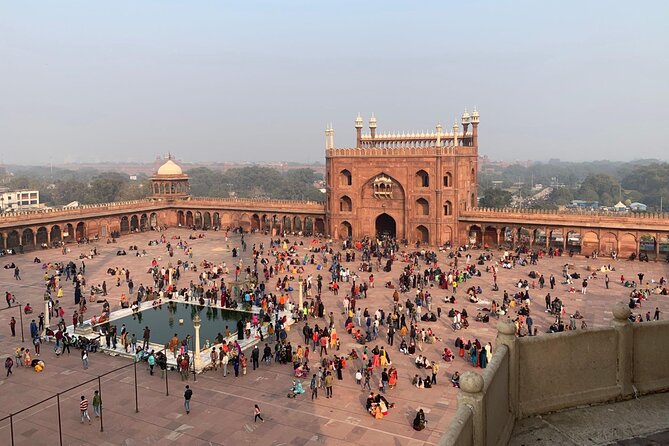
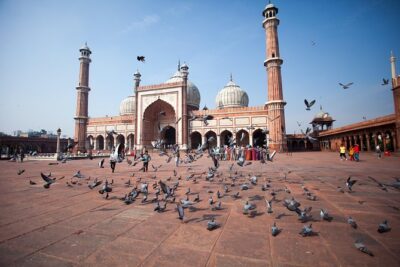
Jama Masjid is the kind of landmark that makes you look up instinctively. The tour first brings you to this major mosque, described as the biggest mosque in India. Construction dates back to 1656, and you can walk through the courtyard made of red sandstone.
The practical value here is your guide’s context. Jama Masjid is not just a photo stop. It is a working religious site, so your timing and behavior matter. The courtyard walk gives you a solid first impression of Old Delhi’s Mughal-era grandeur before you drop into the market maze.
The tour typically allows about one hour here, and admission is listed as included at least when the entry-fee option is selected where applicable. I like this stop early, because your senses are still fresh and you are not already exhausted from crowds.
Chandni Chowk by rickshaw: markets, wedding shopping streets, and strategy
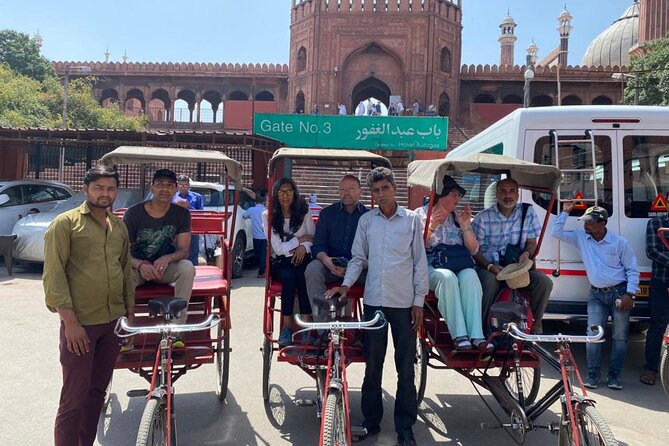
After Jama Masjid, you move toward Chandni Chowk, using a rickshaw for a short ride. That small vehicle change is smart. It saves your legs while still giving you the feel of being right inside the action.
You are given time at the Chandni Chowk market area, often around 30 minutes. Even in that short window, you will likely pass by streets tied to specific shopping habits, including:
- Cham Cham Gali, known for shopping related to weddings
- Parathe Vali Gali, famous for paratha sellers and food vibes
A simple tip: come with a plan for what you want to buy, or come with the mindset that you are browsing. Delhi markets can include strong sales pressure, especially around spices and souvenirs. If you are not buying, you still need patience. If you are buying, set a budget before prices and compliments start flying.
Red Fort and the Mughal mood shift
From the mosque and market world, the tour hits Red Fort, built by Shah Jahan between 1639 and 1648. This is the Mughal power statement that sits at the center of Old Delhi’s identity. The architecture mixes Indian-Islamic and Mughal design language, which makes it more interesting than just a large fortress.
One practical point: Red Fort is a major name, so it can feel like you are moving through a crowd rather than exploring at your pace. A private guide helps here, because you can get pointed to the best viewing spots and spend a little more time where you care most.
If you choose the upgrade with entrance fees, you reduce friction at the paid parts of the route. That is a real quality-of-life choice, not just a line item.
Gurudwara Bangla Sahib: spirituality you can actually watch up close
Next comes Gurudwara Bangla Sahib, a Sikh gurdwara that many people love for how accessible it feels. You get about one hour, and admission is listed as free.
What makes this stop meaningful is not only the place of worship, but also the chance to see the langar kitchen. Langar is a key part of Sikh tradition, and watching it in action helps you understand the idea in a concrete way rather than just hearing the concept.
I also like that this is a calmer pause after the energy of Chandni Chowk. If Old Delhi makes you feel like your senses are on high volume, Bangla Sahib gives you a reset.
India Gate and the Lutyens-era memorial feel
Moving into New Delhi, you will come to India Gate, described here as a big tall monument like a huge arch made of stone. It is tied to architect Edwin Lutyens, dated to 1921. The memorial connection is clear: it honors about 90,000 Indian Army soldiers who passed away in World War I.
Even if you are not a big war-history person, India Gate is a great “scale check” landmark. It helps you understand why New Delhi feels like a planned capital, not just an expansion of older neighborhoods.
Expect more walking on open grounds and more exterior viewing. It is still worth it, because India Gate sits in the middle of a broader monument corridor.
Rashtrapati Bhavan and Parliament House: grand buildings with access limits
From India Gate, the route includes Rashtrapati Bhavan, also called the President’s House. The description you get is very specific: it has long hallways, about 340 rooms, and a famous round Durbar Hall, plus a library area associated with the President.
Then you move to Parliament House (Sansad Bhavan), noted as a special place with its 1947 freedom milestone tied to Britain giving India independence. One big practical reality is access: the plan notes that people cannot go in, so your visit is about seeing and understanding the site from the outside.
That can sound disappointing until you realize what makes it valuable. A good guide helps you read what you are seeing, so you leave with a clearer mental map of where power sits in the city. This is also one of the parts where keeping your expectations realistic helps: think orientation and context, not an indoor tour.
Humayun’s Tomb: first garden tomb energy, plus UNESCO significance
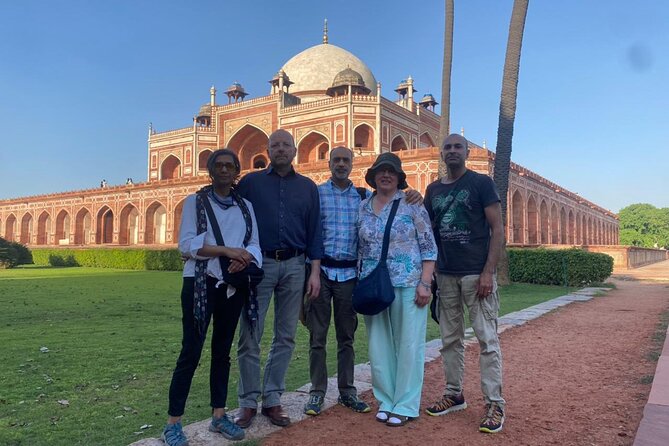
Humayun’s Tomb is one of those Delhi stops that feels like a breath of careful design after busy streets. The plan calls it UNESCO-significant, described as the first garden tomb of India.
You learn that Humayun’s wife wanted to build this special tomb for him after he passed away. The garden layout is part of the effect, giving you a sense of space and order, even while Delhi surrounds it.
You typically get about one hour, and admission is listed as included for paid-site options. I like this stop because it rewards slower looking. It is not just a monument, it is a layout, and your guide can point out the design reasons for why it feels so balanced.
Lotus Temple: a short, peaceful reset
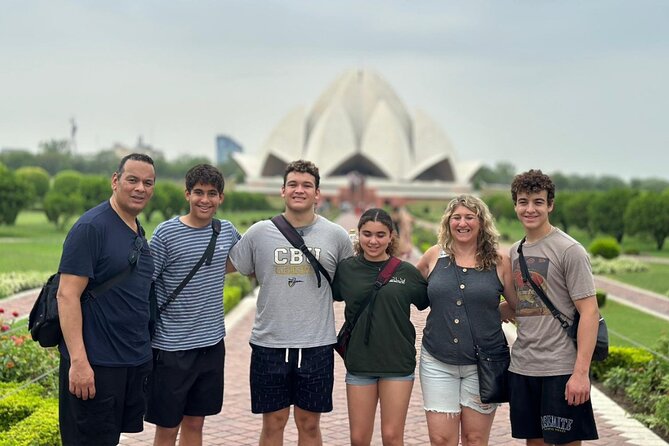
Then you swing to Lotus Temple, described as the Bahai House of Worship. The look is unmistakable, shaped like a lotus flower, made in 1986 by architect Fariborz Sahba.
The plan also frames the intention behind the building as a place for people from different backgrounds to pray peacefully. It is a good contrast stop after tomb and government-area views.
Time-wise, you typically get about 30 minutes. That is perfect here. You do not need a long detour to feel the quiet, and the short stay keeps you on track for the final monument.
Qutub Minar: a tall icon and a quick architecture lesson
Your tour ends with Qutub Minar, described as a super tall tower made to show authority, associated with Sultan Qutb-ud-din. The description notes it has five parts, and the height helps you see why it became an enduring symbol.
There is also a helpful way to think about this stop: Qutub Minar anchors the idea of Delhi as a long-running center of building styles and rulers. It is a fast wrap-up with a big visual payoff.
Time on this stop is typically about one hour, and admission is listed as included for paid-site options where applicable.
Tuk-tuk and the rickshaw mix: how transport shapes your day
A private tour can still feel tiring if you are doing it all by foot. Here, the transport choices actually change your experience.
- You get an AC car for transfers, which matters in Delhi heat or traffic delays.
- You get a rickshaw ride in Old Delhi, which keeps you close to the market environment without constant walking.
- You may also ride in a tuk-tuk in Old Delhi if that option is selected.
The key is that these modes reduce fatigue while keeping you in the right atmosphere. That is a big deal if you are traveling solo, have limited mobility, or just want to arrive at monuments with energy for photos and looking.
What the private guide experience adds (names you might hope for)
One of the strongest themes in the guide style here is balance and clarity. Guides are often praised for being on time, making you feel safe, and explaining what you are seeing in a way that sticks.
Names that come up include Ali, Tabrej, Suhail, Mayank, Prithivi, Raj and Saji, Anas, Jiten, Mark, and Manesh. You might also see Adil, plus drivers like Mr Khan, Faiz, VJ, and Sahajan.
Even if you do not get the exact person you hoped for, the tour format tends to reward good guides. It gives them room to tailor pacing, answer questions, and spend extra moments where your interests matter. Some guides are also noted for photography help, which is useful if you want photos at monuments without constantly stepping out of the flow.
Ticket choices, water and umbrellas, and avoiding on-site surprises
This tour includes several practical items, and the ticket strategy can change your day.
What is included:
- AC car with a driver
- Personal tour guide
- Parking, tolls, fuel, or taxes
- Free water bottles and umbrellas
- Entry tickets to monuments if you select the upgrade option
- Tuk-tuk in Old Delhi if that option is selected
What is not included:
- Tips or gratuities for your guide and driver
- Drinks
- Food
One more reality check: while water is listed as included, I would still treat the first stop as your moment to confirm you have it. Also, some entrances can involve small on-site rules or extra charges, like shoe storage or related handling. If you want a smooth day, pack simple, easy-to-manage footwear and keep a little cash handy for unexpected minor fees.
Practical tips so your day stays fun, not stressful
Delhi is busy, and a full itinerary can feel like a sprint if you let it.
Here are smart ways to keep it enjoyable:
- Start your day with the pickup time that gives you the calmest arrival, not the fastest arrival.
- At markets like Chandni Chowk, decide upfront if you are shopping or just browsing. That single choice reduces stress fast.
- In places of worship, move with respect and follow your guide’s instructions for entry flow.
- Bring your phone camera battery and keep your camera strap secure. With rickshaw lanes and monument stairways, slipping devices happen.
If you can handle short bursts of walking plus a lot of landmark viewing, you will love this format.
Should you book this Old and New Delhi sightseeing tour?
Book it if you want:
- a first-time Delhi overview that hits the signature landmarks on both sides of the city,
- a private guide who can explain what you are seeing and adjust pacing,
- a day that is structured enough to prevent decision fatigue, but flexible enough to slow down where you care.
Skip or consider alternatives if:
- you hate schedules and want long, uninterrupted time at fewer sites,
- you have very strong mobility limits, since you will do active walking around courtyards and monument areas,
- you prefer lots of indoor museum-style time, because some major buildings in the government zone have access limits.
If you match the tour to your pace, this is one of the easier ways to get Or maybe more accurately, two Delhi moods in one efficient day.
Recently added around New Delhi
- Taj Mahal Tour with Optional Wildlife Rescue Center Visit★ 4.9 · 12 reviews
- skip the line taj mahal tour with private tour guide★ 5.0 · 26 reviews
- From Delhi: Taj Mahal & Agra Private Day Trip with Transfers★ 4.9 · 38 reviews
- Delhi: All-Inclusive Day trip Taj Mahal with Elephant SOS★ 4.8 · 25 reviews
- Private Full-Day Jaipur City Tour with Hotel Pick-Up & Drop★ 5.0 · 7 reviews
- Magical Mathura Vrindavan Tour: Krishna’s Homeland★ 4.4 · 18 reviews
- From Delhi: All-Inclusive Taj Mahal Day Tour with transfers★ 5.0 · 38 reviews
- Hydrabad: Private 5-Hours Sightseeing Tour with Hotel Pickup★ 4.9 · 10 reviews
Delhi Tours, compared.
Old & New Delhi City Tour – Half or Full Day Options Available
Read our review →

Same Day Taj Mahal, Agra Fort & Baby Taj Tour from Delhi by Car
Read our review →
Taj Mahal Day Tour from Delhi by Superfast Train – TOP RATED TOUR
Read our review →
Full Day Taj Mahal, Agra Fort & Baby Taj Tour from Delhi by Car
Read our review →
Taj Mahal & Agra Private Day Trip with Transfers
Read our review →
Taj Mahal Tour from Delhi by Express Train (Viator Award Winner)
Read our review →
All Inclusive Private Taj Mahal Luxury Tour from Delhi by Car
Read our review →Browse the lists this tour appears in