
Reviewed · OLD DELHI TOURS
Old Delhi: Food Tasting Tour On Rickshaws With Audio Headsets
Old Delhi tastes better on a rickshaw. I love how the tour pairs wireless audio headsets with classic bites, so you get the stories while you’re eating, not after. I also like that the route is mostly rickshaw time with little walking, which makes it easier to handle the streets of Chandni Chowk without feeling wrecked. One possible drawback is that not everything is included, you will need extra cash for the Jama Masjid entrance fee.
This is the kind of outing where the street scenes do half the work for you. You ride through old lanes lined with chaatwallahs, halwais, and paranthewallahs, and the aromas of fried snacks, sweets, and masala chai do a lot more explaining than any brochure. The operator also emphasizes hygiene and safety, and you start and end right around the same meeting spot near Red Fort.
Think 2 to 4 hours of guided food sampling across multiple landmark stops, with bottled water, snacks, and live commentary built into the experience. You will hit Mughal-era sights like Red Fort and Jama Masjid, plus places of worship for Jain and Sikh communities, then finish in the food markets where parathas, jalebi, and street desserts are the main characters.
In This Review
- Key highlights you will actually notice
- Why Old Delhi on Rickshaws Feels Like the Real Deal
- What You Eat: The Tasting Lineup That Covers Savory, Sweet, and Drinks
- Stop-by-Stop: From Red Fort to Chandni Chowk’s Moonlight Square
- Red Fort: UNESCO walls and a Mughal to modern bridge
- Sri Digambar Jain Lal Mandir: gold and silver interiors, calm attention
- Chandni Chowk: temples, markets, and the moonlight square idea
- Sikh and Muslim Landmarks, Plus the Entry-Fee Thing You Should Plan For
- Gurudwara Sis Ganj Sahib: a memorial tied to Guru Tegh Bahadur
- Jama Masjid: big prayers, 17th-century foundations, and Rs. 300 you should budget
- Khari Baoli Spice Market and Paranthe Wali Gali, Where the Food Identity Gets Loud
- Khari Baoli: stepped-well lore and Asia’s biggest spice market energy
- Paranthe Wali Gali: where generations of cooks and bread obsession live
- Naughara Mansions and Old Delhi Bazaars: Narrow Streets and Specific Shops
- Audio Headsets, Hygiene, and How the Guide Makes the Route Make Sense
- Price and Value: What You Get for $102
- Best Fit: Who This Rickshaw Food Tour Will Suit
- Before You Go: Practical Comfort Tips That Actually Help
- Should You Book This Old Delhi Rickshaw Food Tour?
- FAQ
- How long is the Old Delhi food tasting tour on rickshaws?
- What food items are included in the tasting?
- Where does the tour start and where does it end?
- Is Jama Masjid admission included in the tour price?
- What is included in the price?
- What are the cancellation terms if I need to change plans?
Key highlights you will actually notice
- Rickshaws plus audio headsets so you follow the route without craning your neck or falling behind.
- Short walking time while still reaching the core Old Delhi landmarks and markets.
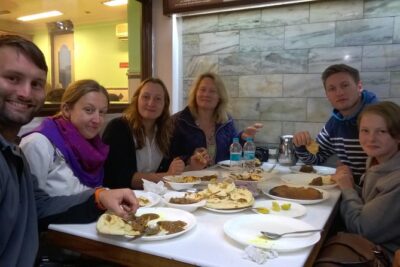
- A set tasting lineup that hits savory, sweet, and drinks, including samosa, bedmi poori, jalebi, chaats, kulfi, gulab jamun, and masala chai.
- Multiple faith landmarks in one loop, including Sri Digambar Jain Lal Mandir, Gurudwara Sis Ganj Sahib, and Jama Masjid.
- Khari Baoli spice market and Paranthe Wali Gali, where the area’s food identity is obvious fast.
- Naughara mansions on a side street for photos with those colorful havels and 18th-century facades.
Why Old Delhi on Rickshaws Feels Like the Real Deal
Old Delhi can be intense. The streets are narrow, the traffic is unpredictable, and the crowd density changes every few minutes. What I like about doing this by rickshaw is that it keeps you inside the neighborhood pace instead of dragging you around with big vehicle routes.
You get most of your movement by rickshaw, which helps if you do not want a long slog through alleys. The tour also mixes in a bit of walking, so you still get that up-close market feel, but you are not trapped doing it for hours. That balance matters when your main goal is food.
The biggest upgrade is the wireless audio headsets. You hear the guide clearly while you sit back and watch the street life flow by. It makes a difference with Old Delhi’s noise level, and it keeps you from losing context when you turn a corner. You also get live commentary throughout the ride, so the landmarks and the snacks feel connected instead of random.
There is also a practical attention to safety and hygiene. You are eating in busy food areas, so you want a tour that thinks about how the tastings are handled. This one explicitly says it takes extreme care on hygiene and safety, and it also provides bottled water.
More Food Tours in Delhi
- The Great Indian Food Tour: Old Delhi Food and Heritage Walk
★ 5.0 · 1,698 reviews - Old Delhi Food, Heritage&Cultural Walk with Rickshaw ride to Masterji Kee Haveli
★ 5.0 · 742 reviews - Old Delhi Street Food Tour
★ 5.0 · 497 reviews
What You Eat: The Tasting Lineup That Covers Savory, Sweet, and Drinks
This tour is built around sampling a focused set of Old Delhi favorites. You are not just grazing one or two items, you get a full spread across flavors.
Here is what is on the tasting list:
- Samosa, typically a triangular fried pastry with a savory filling
- Bedmi poori, a richer breakfast-style bread paired with a spiced base (you will taste it during the stops)
- Jalebi, the deep-fried batter in golden syrup rings
- Chaats, including variations like bhalla and tikki, loaded with yogurt, lentils, and mixed toppings
- Kulfi, a dense, creamy frozen dessert
- Gulab jamun, syrup-soaked sweet dumplings
- Masala chai, warm spiced tea
What I like is how the lineup forces variety. You start with crisp, savory comfort, then move into sweet syrup desserts, then finish with chai. That order matters because it helps you understand the area’s flavor logic. Old Delhi street food tends to hit contrast, crunchy with soft, tangy with sweet, and warm with cool. You get that in one loop without needing to decide each time.
Also, you do not have to figure out portion sizes or shopping logistics. You show up with an appetite and the guide handles the pacing so you can keep sampling without feeling overwhelmed.
Stop-by-Stop: From Red Fort to Chandni Chowk’s Moonlight Square
Your tour is structured like a story route, starting near Red Fort and then flowing through religious landmarks before it lands in the food heart of the city.
Red Fort: UNESCO walls and a Mughal to modern bridge
Red Fort is a UNESCO World Heritage site and one of the big anchors for this experience. It was built by Mughal Emperor Shah Jahan in 1648. Today you still see the scale of it, even with the scars of later events, including major damage during the War of Independence in 1857 when the British army demolished a large portion of the fort.
The practical value here is simple: you get a major landmark early, and then you transition into the dense market district right after. That gives you a better sense of why Old Delhi feels the way it does. This is not just food tourism, it’s also orientation.
The admission is listed as free for this stop, which helps keep the overall cost predictable.
Compare these Old Delhi tours in New Delhi:
- Old Delhi Bike Tour
★ 5.0 · 616 reviews - Breakfast Walk in Old Delhi
★ 5.0 · 449 reviews - New Delhi and Old Delhi Private Tour 4-8 Hours – Customizable
★ 5.0 · 342 reviews - Old Delhi Street Food Tour – Explore Spices in Chandni Chowk
★ 5.0 · 334 reviews
Sri Digambar Jain Lal Mandir: gold and silver interiors, calm attention
Next you visit Sri Digambar Jain Lal Mandir, described as the oldest Jain temple in the capital. The interior is said to be ornate with gold and silver, and the main idol is Lord Parshvanath. The atmosphere is described as peaceful, which is a nice contrast to the street noise outside.
There is also mention of a bird hospital on the premises, founded in 1956, tied to Jain principles around non-killing. Even if you are not a religion expert, it is a meaningful detail. It shows that this neighborhood is not only about markets, it also includes everyday compassion systems.
Admission is listed as free here too.
Chandni Chowk: temples, markets, and the moonlight square idea
Chandni Chowk is the center of Old Delhi energy. The street name ties to moonlight (chandni) and square (chowk). Historically, there was a canal running down the center with pools at major intersections, reflecting moonlight. Today, even after centuries of change, the street still works as a meeting point between different communities and buildings.
The tour gives you time to absorb that layered feel. You learn that different religious sites coexist peacefully on this street, even though the city has seen brutal historical events. That helps explain why Old Delhi street scenes can look crowded and still feel ordered.
Admission is listed as free for this stop.
Sikh and Muslim Landmarks, Plus the Entry-Fee Thing You Should Plan For
Old Delhi food tours often focus only on markets. This one also gives you major places of worship, which changes your sense of the neighborhood.
Gurudwara Sis Ganj Sahib: a memorial tied to Guru Tegh Bahadur
Gurudwara Sis Ganj Sahib is a Sikh place of worship. The guide explanation here centers on Sikhism’s founding by ten Gurus and the conflicts around forced religious conversion under Mughal rule. The narrative includes the ninth Guru, Guru Tegh Bahadur, and his execution in 1675, and the gurudwara is described as being built in his memory.
It is also described as a spacious open hall with a bronze canopy in the middle where Guru Granth Sahib is placed. The practical point for you is that you get a calmer pause between market intensity and the next big food corridor.
Admission is listed as free.
Jama Masjid: big prayers, 17th-century foundations, and Rs. 300 you should budget
Jama Masjid is the big Muslim landmark on the route. It is described as the largest mosque of India and one of the largest in the world. The foundation was laid by Shah Jahan in 1650.
The scale numbers are striking: about 25,000 people can pray together under the main hall, and up to around 68,000 including nearby spaces, stairs, and corridors. It is said to have a prayer hall with 260 pillars and two minarets, each 40 meters high.
Here is the practical drawback: Jama Masjid has an entrance charge of Rs. 300 per person, and it is not included in the tour price. If you do not budget for that, it can feel like an annoying surprise right when you are already in tour mode. Plan to carry enough cash for this.
You will likely feel the mosque’s scale once you get close. Even if you are not religious, the space communicates power and community in a way that a quick photo cannot fully capture.
Khari Baoli Spice Market and Paranthe Wali Gali, Where the Food Identity Gets Loud
After the landmark stops, the tour turns into what you actually came for: food streets and sensory browsing. This is where you start to notice how Old Delhi’s shopping and eating are tightly linked.
Khari Baoli: stepped-well lore and Asia’s biggest spice market energy
Khari Baoli is now known as the Spice Market. The tour notes it was constructed during Shah Jahan’s reign along with a fortified gateway, often called Lahori Gate, named because the road led toward Lahore (now in Pakistan). Today, the tour says there is no trace of the baoli or the gateway.
What you do get is the present-day reality: tight streets with shops selling spices, nuts, and herbs. The area is described as congested and chaotic in appearance, but also well managed in practice. That is a key mindset for you. If you go in expecting clean supermarket aisles, you will feel unsettled. If you go in expecting a working marketplace, you will enjoy how it flows.
Admission is listed as free.
Paranthe Wali Gali: where generations of cooks and bread obsession live
Paranthe Wali Gali is the food corridor for parathas and other deep-Old-Delhi meals. The tour description emphasizes that eateries are not fancy, but many are famous and run by the fourth, fifth, or sixth generation. That is the kind of detail that matters, because it points to why the food tastes consistent over time.
You will sample some of the popular food items here, including jalebi, samosa, and chaat varieties, plus the tour’s broader tasting plan. The guide portion connects the food to local preparation methods and spices.
Admission is listed as free.
Naughara Mansions and Old Delhi Bazaars: Narrow Streets and Specific Shops
The tour also includes a broader bazaar sweep, the type of market wandering where the street name tells you what you will find.
The tour explains that Old Delhi’s bazaars were designed by Shah Jahan’s daughter, Jahanara, inspired by her love of shopping. Each street specializes in a product, which is a fun way to decode what you are seeing as you move through lanes.
You also get time in a couple of bazaar-focused spots. Kinari is described as glittering borders used on fancy clothes, with 70-plus shops connected to traditional wedding decor. That is the kind of place where you can browse even if you do not plan to buy, because everything is visually specific: fabrics, accessories, ornamental lace, and the general “wedding supply” focus.
Then you reach Naughara, described as a nine-house street with a group of 18th-century mansions that retain their traditional appearance. It is also said to house an ornate Jain temple. For photography, this is a nice break from the tight market lanes. The facades and havels give you a more open background for shots.
Admission is listed as free for the Naughara stop.
Audio Headsets, Hygiene, and How the Guide Makes the Route Make Sense
The tour’s biggest practical strength is how it handles navigation. Old Delhi can scramble your sense of direction quickly, especially on busy days. Wireless audio headsets solve a lot of that. You listen to the guide while you ride, then you know why you are stopping at each point.
The tour also provides bottled water, snacks, and food tastings. That matters because food crawls can become chaotic if you are dehydrated or hungry between tastings. The plan keeps you fed, and you are not constantly scanning for your next drink.
Guides are a major part of the experience here. In the tour notes and feedback, I saw named guides like Ahmer Khan and Ritu. One account highlights how the guide’s explanations and English clarity made the experience smoother, which is exactly what you want if you do not speak Hindi fluently.
There is also an emphasis on modifying the tour slightly for different guest needs and interests. That is worth keeping in mind. If you love sweets more than savory, or you want extra time near a specific lane, a flexible guide can shape the experience without derailing the whole route.
Price and Value: What You Get for $102
At $102 per person, this tour is priced like a focused half-day experience rather than a quick snack stop. The value comes from three bundled elements:
1) Food sampling across a full spread, including savory snacks, sweets, and masala chai
2) Guiding plus live commentary, delivered through audio headsets
3) Transport via rickshaws with only limited walking
Also, the tour includes bottled water and snacks. That reduces the need to buy extra items between stops.
You do have one cost you should factor in: Jama Masjid entrance is Rs. 300 per person and not included. If you budget for that upfront, the rest of the tour should feel predictable.
Duration is listed as 2 to 4 hours, so you are not paying for an all-day commitment. This makes it a solid choice if you are short on time but still want to feel what Old Delhi tastes like.
Best Fit: Who This Rickshaw Food Tour Will Suit
I think this tour fits best when you want Old Delhi without the hassle of planning every turn. It is a strong match for first-time visitors because it packs multiple landmarks and food districts into one loop and uses audio to keep you oriented.
It also seems family-friendly based on feedback that included kids as young as 6. Shorter walking plus clear explanations can help when you are traveling with children who want the food parts more than the lecture parts.
If you dislike crowded places or hate noise, you might find the market streets stressful. Old Delhi is active, and even with headsets and rickshaw comfort, you will still experience the environment. In that case, you might prefer a calmer daytime itinerary elsewhere. But if you can handle busy streets for a couple of hours, this is a great way to get your bearings quickly.
Before You Go: Practical Comfort Tips That Actually Help
Old Delhi is about sensory overload, so prepare to enjoy it instead of fighting it.
- Bring cash for the Jama Masjid entrance fee, Rs. 300 per person, since it is not included.
- Wear comfortable shoes because the tour includes some walking even though most movement is by rickshaw.
- Come hungry, the tasting list includes multiple items plus chai, and the sweetness can stack up fast if you snack earlier.
- Use the audio headsets, they are a key part of how the guide connects the landmarks to what you are tasting.
If you are staying near Chandni Chowk, the meeting point makes this easy. You start near Charity Birds Hospital next to Shri Digambar Jain Lal Mandir, opposite Red Fort in the Chandni Chowk area, and the tour returns to that same spot.
Should You Book This Old Delhi Rickshaw Food Tour?
Yes, if you want a guided food experience that does more than list dishes. Booking makes sense when you value short walking time, clear explanations through audio headsets, and a tasting lineup that moves from savory to sweet without you having to plan it all.
Skip or reconsider if paying extra for Jama Masjid entry would feel like a hassle, or if you know you struggle in dense market streets. Old Delhi is not quiet, and this tour puts you in the middle of it.
If your main goal is to understand the flavors of Chandni Chowk and see key landmarks in a single half-day loop, this one is a smart bet.
FAQ
How long is the Old Delhi food tasting tour on rickshaws?
It runs about 2 to 4 hours.
What food items are included in the tasting?
The tour includes samosa, bedmi poori, jalebi, chaats, kulfi, gulab jamun, and masala chai.
Where does the tour start and where does it end?
It starts at Charity Birds Hospital next to Shri Digambar Jain Lal Mandir, opposite to Red Fort, Chandni Chowk, Delhi 110006. It ends back at the same meeting point.
Is Jama Masjid admission included in the tour price?
No. Jama Masjid has an entrance charge of Rs. 300 per person, and it is not included.
What is included in the price?
The price includes bottled water, food tasting, snacks, a professional guide, and headsets to hear the guide clearly, plus live commentary during the tour.
What are the cancellation terms if I need to change plans?
You can cancel for free up to 24 hours in advance for a full refund. If you cancel less than 24 hours before the start time, the amount paid is not refunded.
More Food & Drink in New Delhi
- Delhi Food Walk: Rickshaw Ride, Street Eats & Market Tour
★ 5.0 · 401 reviews - Old Delhi Food-Spice Market-Temples Tour Soon Featured on NETFLIX
★ 5.0 · 304 reviews - Chandni Chowk Delhi Food Tour with 15+ Tastings
★ 5.0 · 285 reviews - Old Delhi Odyssey: A Tour of Religion, Spice Market, & Best Food
★ 5.0 · 284 reviews
Recently added around New Delhi
- Taj Mahal Tour with Optional Wildlife Rescue Center Visit★ 4.9 · 12 reviews
- skip the line taj mahal tour with private tour guide★ 5.0 · 26 reviews
- From Delhi: Taj Mahal & Agra Private Day Trip with Transfers★ 4.9 · 38 reviews
- Delhi: All-Inclusive Day trip Taj Mahal with Elephant SOS★ 4.8 · 25 reviews
- Private Full-Day Jaipur City Tour with Hotel Pick-Up & Drop★ 5.0 · 7 reviews
- Magical Mathura Vrindavan Tour: Krishna’s Homeland★ 4.4 · 18 reviews
- From Delhi: All-Inclusive Taj Mahal Day Tour with transfers★ 5.0 · 38 reviews
- Hydrabad: Private 5-Hours Sightseeing Tour with Hotel Pickup★ 4.9 · 10 reviews
Old Delhi Tours, compared.
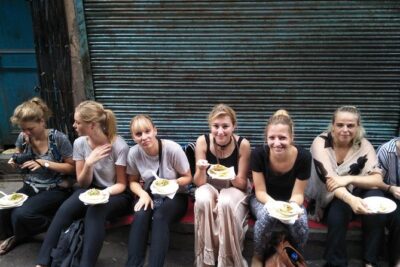
The Great Indian Food Tour: Old Delhi Food and Heritage Walk
Read our review →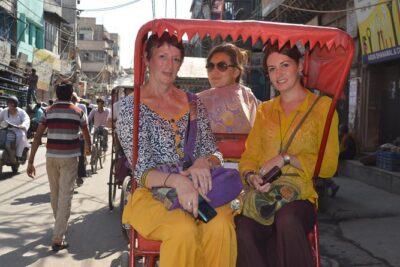
Old Delhi Food, Heritage&Cultural Walk with Rickshaw ride to Masterji Kee Haveli
Read our review →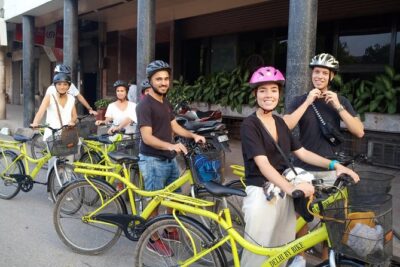
New Delhi and Old Delhi Private Tour 4-8 Hours – Customizable
Read our review →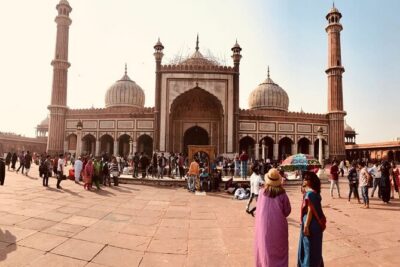
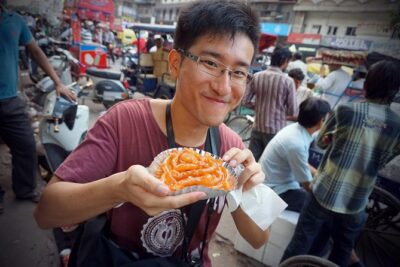
Old Delhi Street Food Tour – Explore Spices in Chandni Chowk
Read our review →
Browse the lists this tour appears in