
Reviewed · MUMBAI TOURS
Mumbai Must See tour
Mumbai can hit you all at once. This 4-hour route helps you sort the noise from the meaning. You get major waterfront icons, Art Deco promenades, and big Victorian-era architecture in a tight loop that makes the city feel understandable fast. I liked how the stops are chosen for both views and real context, and I really appreciated the way the guide turns landmarks into day-to-day Mumbai.
Two things I especially liked: the private format (just your group) and the clear, practical pacing that avoids dragging the experience out. One consideration, it does require good weather, so if the skies are ugly, you may need to shift plans.
In This Review
- Quick highlights you can bank on
- A smart way to start understanding Mumbai’s layers
- Gateway of India, Mumbai’s waterfront handshake
- Nariman Point and Marine Drive, Art Deco with sea views
- Hanging Gardens and Pherozeshah Mehta Gardens, built over water logic
- Tower of Silence (Parsee Bawdi), history you should treat quietly
- Dhobi Ghat, watching laundry as a living system
- Mani Bhavan Gandhi Museum, a focused dose of political Mumbai
- Victorian Gothic, clocktower stone, and the courthouse feel
- Chhatrapati Shivaji Terminus, the rail station that became a landmark
- Price and time, is $59.99 worth it?
- Who this tour fits best
- Should you book this Mumbai Must See tour?
- FAQ
- How long is the Mumbai Must See tour?
- How much does the tour cost?
- Is this a private tour?
- Is pickup included?
- What ticket format do I get?
- Do I need to pay admission at each stop?
- Which sites are included in the route?
- What does Dhobi Ghat mean?
- When does the tour operate?
- What happens if the weather is poor?
Quick highlights you can bank on
- Gateway of India at Apollo Bunder gives you the classic Mumbai waterfront mood immediately
- Marine Drive and Nariman Point show the city’s Art Deco face, plus great sea-facing sunset energy
- Pherozeshah Mehta Gardens are not just pretty, they are tied to how the city handled water and pollution
- Parsee Bawdi (Tower of Silence) adds a powerful, respectful look at burial traditions in Malabar Hill
- Dhobi Ghat lets you watch outdoor washing from a bridge viewpoint, no special ticket needed in the info
- Chhatrapati Shivaji Terminus shows why Mumbai became a rail and port powerhouse, with Victorian Gothic flair
A smart way to start understanding Mumbai’s layers
Mumbai feels like several cities stacked on top of each other. You can see it in the overview for this tour: Muslim, Portuguese, and British influences left architectural fingerprints, and in the Fort area you still get that British-era flavor. Meanwhile, the city’s work-and-traffic momentum is right there in the streets, the port energy, and the constant motion along the coast.
What makes this tour work is that it mixes landmark sightlines with small bits of cultural logic. You start at the waterfront, move through the Art Deco coastline, then shift toward the inland heritage pockets where you can read the city’s story in stone and layout. It is the kind of plan that helps you get your bearings fast, even if this is your first time in Mumbai.
The private setup also changes the feel. You are not squeezed into a herd. If you have questions, you can ask them and get real answers in plain language. Based on guide feedback I’ve heard for this company, names like Umar and Tauseef come up, and the common thread is patience plus fluent English.
A few more Mumbai days to compare
- Dharavi slum tour in Mumbai by Female tour guides of the slum
★ 5.0 · 1,976 reviews - Mumbai: Full-Day Sightseeing Tour of Mumbai
★ 4.9 · 1,822 reviews - Private Mumbai Sightseeing Tour (Traveller’s Choice Award Winner)
★ 5.0 · 1,565 reviews
Gateway of India, Mumbai’s waterfront handshake
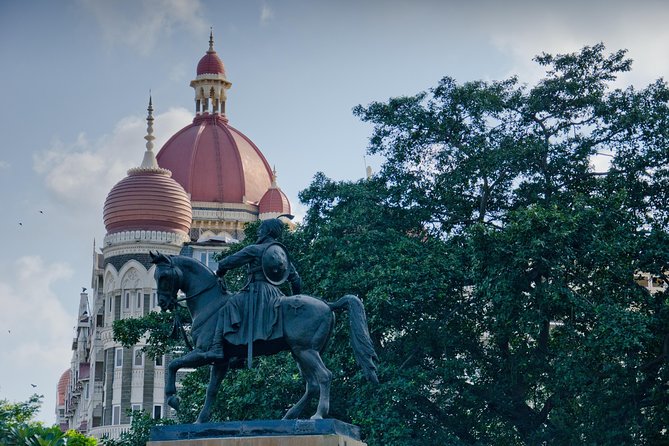
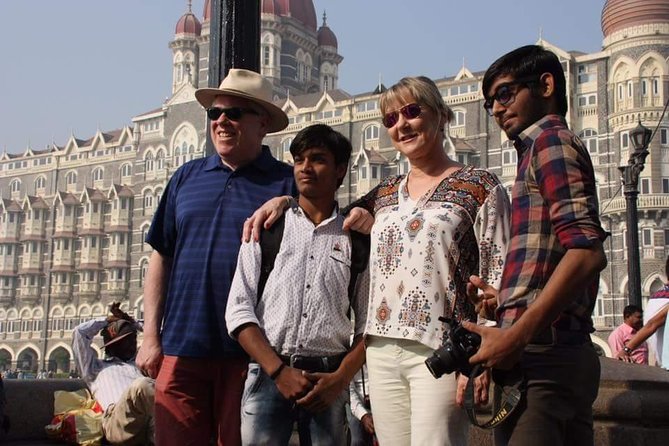
You begin at the Gateway of India, sitting on the waterfront at Apollo Bunder near Chhatrapati Shivaji Maharaj Marg. It looks over the Arabian Sea, and it is easy to see why people call it the Taj Mahal of Mumbai. It is a top tourist attraction, but it still works even if you think you have seen enough monuments.
This stop is valuable because it frames the rest of the day. The Gateway is not just a photo spot. It is tied to Mumbai’s role as a port, where people arrived for opportunity from all over India. Once you understand that, the rest of the architecture and coastal promenade stop feeling random. They feel connected.
Practical tip: this is a waterfront area, so you will likely notice sea breezes and open sightlines. If you are photographing, you may want to plan your shots early in the 4-hour flow, before the sun and crowds shift.
Nariman Point and Marine Drive, Art Deco with sea views
Next, you head to Nariman Point, one of Mumbai’s business districts. High-rises and upscale hotels mark the skyline here, and the area is especially known for sea-facing bars where people often settle in for sunset drinks. Even if you are not stopping for a drink, the point is that Nariman Point gives you a clear picture of Mumbai’s modern money side.
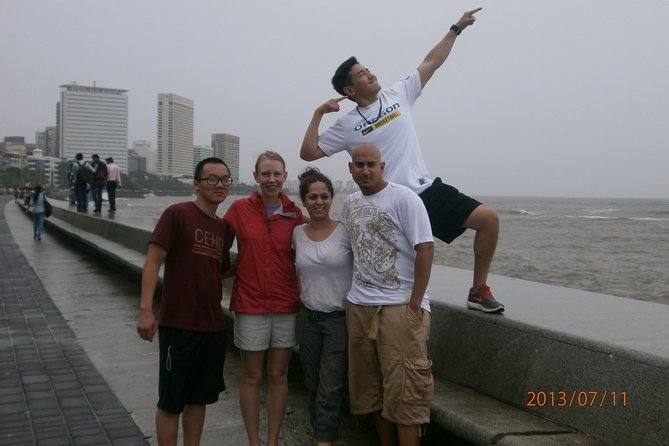
From there, you move to Marine Drive, which is often compared to the Miami of India. The reason is architectural: the promenade is lined with Art Deco buildings, along with offices and apartment blocks. The tour’s story here is about government-led finishing work, a kind of civic polish that turned a beautiful shoreline into a signature city promenade.
Why you will care: Marine Drive is one of those places where you can feel the rhythm of Mumbai. The ocean line, the curve of the road, and the Art Deco facades make the city readable. It is not just pretty. It is a way to understand how Mumbai branded itself as modern and international without losing its local intensity.
If you love design details, keep an eye on building facades along the drive. If you just want good photos, look for the coastline angle toward the sea and let the curve do the work for you.
Hanging Gardens and Pherozeshah Mehta Gardens, built over water logic
Then the tour shifts from coastline spectacle to a calmer patch of green with a deeper backstory. The Hanging Gardens, also known as Pherozeshah Mehta Gardens, were first built in 1881 and designed by Ulhas Ghapokar.
What I find interesting here is the engineering-and-purpose angle. The gardens are said to have been built over one of Bombay’s main water reservoirs, partly to protect it from pollution, including pollution linked to nearby towers of silence. Even if you do not study architecture, you can feel how Mumbai’s planners had to solve real constraints in real time.
This stop is short in the schedule, but it adds something the waterfront stops do not. It brings in the city’s practical side, the way land use, water, and sanitation shaped what got built. You get a break from street pace, and you also get a context clue for the next stop.
Another way to spend a day in India:
- Elephanta Caves & Island Guided Private Tour
★ 5.0 · 1,327 reviews - Group Guided Walking Tour in Fort and Colaba
★ 5.0 · 1,073 reviews - Mumbai: Elephanta Caves Half-Day Guided Tour with Expert
★ 4.8 · 1,032 reviews - Highlights of Mumbai Sightseeing Tour: TRAVELLERS CHOICE AWARDED
★ 5.0 · 915 reviews
Tower of Silence (Parsee Bawdi), history you should treat quietly
Next comes the Tower of Silence, also known as Parsee Bawdi, in the Malabar Hill region. The info tells you it is a sprawling graveyard area, about 55 acres, where the last rites of the Parsee community are performed.
This stop is meaningful, but it is also sensitive. You will want to approach it with a respectful mindset, and keep your voice down. It is not a place that begs for funny poses. The value is in witnessing a tradition that sits inside a very modern city.
If you are interested in faith, funerary customs, and how communities carve out space in a dense metropolis, this is the kind of stop that makes Mumbai feel bigger than headlines. It adds depth to the earlier colonial and coastal scenes, showing that Mumbai’s story is not only about empires. It is also about identity.
Dhobi Ghat, watching laundry as a living system
From there, you go to Dhobi Ghat, which the tour explains with the meaning behind the words. Dhobi means washerman, and ghat means laundry. You get a view from a bridge into an open-air washing laundry scene.
This stop is a classic Mumbai experience for one reason: it is working life on display. You are not just seeing a building. You are seeing how labor and water use happen in public spaces. That makes it real, fast, and a little overwhelming, especially if you are used to private services.
A practical note: since the viewpoint is from a bridge, bring your patience. You are dealing with crowds, angles, and movement. If you want a clear look, you may have to wait for brief openings in the walkway or adjust your position.
What I like about this stop, it connects back to the city’s historic water and port logic. Laundry here is not an isolated attraction. It is part of the city’s daily engine.
Mani Bhavan Gandhi Museum, a focused dose of political Mumbai
Next is Mani Bhavan Gandhi Museum, and this is one of the few stops where you have an included admission ticket in the tour info.
Mani Bhavan is a historical building dedicated to Mahatma Gandhi. It was the focal point of Gandhi’s political activities in Mumbai between 1917 and 1934. Even if you are not a museum person, this is worth it because it anchors Mumbai’s energy to a specific time, a specific set of choices, and a leadership story you can follow.
This stop works best when you slow down slightly. Let the rooms and displays do the talking, and pay attention to the timeline connection. The day has been architectural up to this point, and Mani Bhavan adds human stakes and political context.
If you prefer museums that feel like a real place with a purpose, this one tends to land well.
Victorian Gothic, clocktower stone, and the courthouse feel
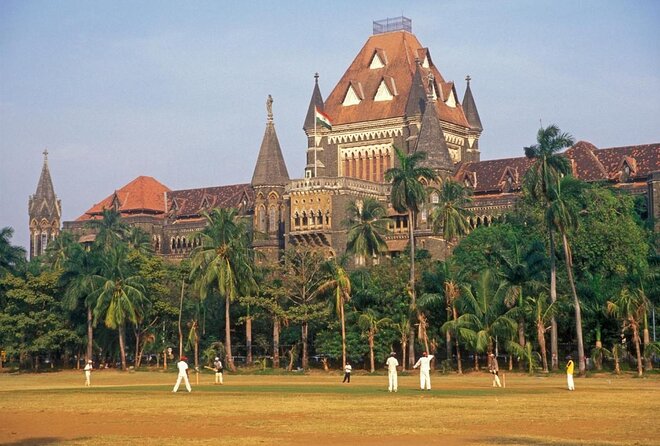
After Mani Bhavan, the route moves through major Gothic-era architecture you can recognize even if you do not know every name. The tour includes Gothic university administration buildings founded in 1857, sitting on 14 acres, with a 280-foot clocktower. You also pass a historic Gothic revival building that is home to one of the oldest High Courts of India.
Even with no extra narration, these buildings change how you see Mumbai. They show how the British-era civic plan tried to impose order through grand design, and how the city absorbed that style into its skyline. For photographers, clocktower angles and repeating arch shapes can make for excellent wide shots.
For practical travel value, this is a good segment for anyone who likes architecture but wants it explained in plain terms rather than a textbook lesson.
Chhatrapati Shivaji Terminus, the rail station that became a landmark
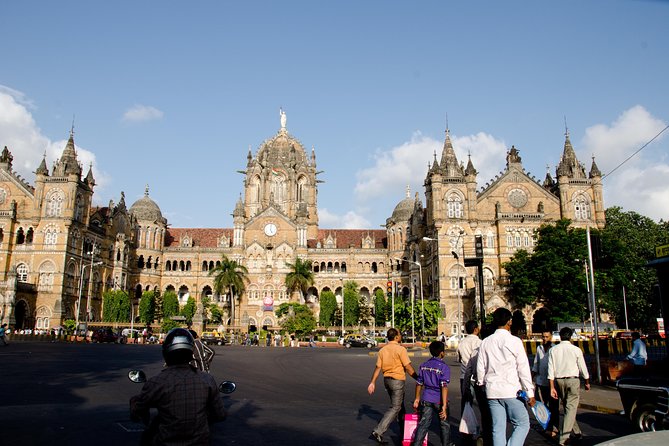
You finish at Chhatrapati Shivaji Terminus (formerly known as Victoria Terminus). The tour positions it as an outstanding example of Victorian Gothic Revival architecture in India, blended with themes deriving from Indian traditional architecture.
This is not just an ending stop. It is a payoff. Earlier you saw the port and the waterfront. You saw the city’s planning and civic buildings. Now you get a transport monument that explains why Mumbai mattered: rail connected people, trade, and work. It helped the city grow into a commercial magnet, and you can feel that in the scale and detail here.
What to do in this final stretch: take your time just for the facade and the main structure. The building is dramatic, even if you are in a hurry. If you still have energy, look for angles that show symmetry and the vertical thrust of the Gothic style.
Price and time, is $59.99 worth it?
At $59.99 per person for about 4 hours, this tour can be good value if you want structure without committing to a full-day program. You are paying for two things that matter in Mumbai: guided coherence and time efficiency. The stops are all “big name” places, and the route keeps you in motion without making you do a stressful navigation puzzle.
Also, the tour includes admission for Mani Bhavan Gandhi Museum, while the info lists free admission tickets for several outdoor stops like Gateway of India, Nariman Point, Marine Drive, Hanging Gardens, and Dhobi Ghat. That mix helps keep your on-the-day costs predictable.
It is private, so if you are traveling as a pair or small group, the value often feels stronger than you’d expect because the guide can adapt to your pace.
Who this tour fits best
I think this tour fits best if you:
- want a first-time Mumbai overview without trying to stitch together too many separate plans
- care about architecture and urban history, but you want it explained in simple, walkable chunks
- prefer the comfort of a private group rather than a big crowd experience
- like combining famous viewpoints with one or two places that add real context, like Mani Bhavan
If you already know Mumbai well and you want deep specialty topics, this may feel like a highlight reel rather than a full immersion plan. But for many people, that is the point. You get a solid foundation you can build on later.
Should you book this Mumbai Must See tour?
Yes, I would book it if you want a smart, efficient “greatest hits plus meaning” tour of South Mumbai. The biggest reasons: you get a coherent route through waterfront icons, Art Deco promenades, and major Gothic landmarks, and you also get a museum stop with included admission. Plus, the guide experience described in feedback, including names like Umar and Tauseef, points to patient, practical help that makes the city feel less overwhelming.
If the weather is unreliable during your dates, keep flexibility in mind since the tour requires good weather. Otherwise, this is a strong pick when you want to see the essentials and still leave with your head full of real context, not just photos.
FAQ
How long is the Mumbai Must See tour?
It lasts about 4 hours.
How much does the tour cost?
The price is $59.99 per person.
Is this a private tour?
Yes. It is private, and only your group participates.
Is pickup included?
Pickup is offered.
What ticket format do I get?
You receive a mobile ticket.
Do I need to pay admission at each stop?
The info shows free admission tickets for several stops, and admission to Mani Bhavan Gandhi Museum is included.
Which sites are included in the route?
The tour includes Gateway of India, Nariman Point, Marine Drive, Hanging Gardens, Tower of Silence (Parsee Bawdi), Dhobi Ghat, Mani Bhavan Gandhi Museum, Gothic university administration buildings with a 280-foot clocktower, a historic Gothic revival High Court building, and Chhatrapati Shivaji Terminus.
What does Dhobi Ghat mean?
Dhobi means washerman, and ghat means laundry.
When does the tour operate?
It runs Monday through Sunday, and the listed time window is 12:00 AM to 12:30 AM, within the dates 07/10/2023 to 06/05/2026.
What happens if the weather is poor?
The tour requires good weather, and if it is canceled due to poor weather, you will be offered a different date or a full refund.
Recently added around Mumbai
- Mumbai Spice Markets and Bazaars Tour with Guide and Transport★ 5.0 · 42 reviews
- Customize private tour with pickup★ 5.0 · 95 reviews
- Private Guided Bandra Half Day City Tour in AC Vehicle★ 5.0 · 72 reviews
- Mumbai 800 Year Worli Village: Talking Goddess, Old Fort & more★ 5.0 · 94 reviews
- Mumbai by Night Guided Tour★ 5.0 · 6 reviews
- Gufran’s Slum Home Tour in the Mumbai Slums★ 5.0 · 19 reviews
- Private Walking Tour in Dharavi Slums★ 5.0 · 7 reviews
- The Panoramic Ridge Hike near Mumbai★ 5.0 · 7 reviews
Mumbai Tours, compared.
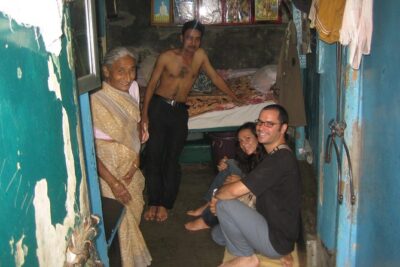
Dharavi slum tour in Mumbai by Female tour guides of the slum
Read our review →
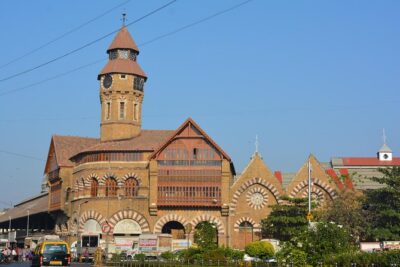
Private Mumbai Sightseeing Tour (Traveller’s Choice Award Winner)
Read our review →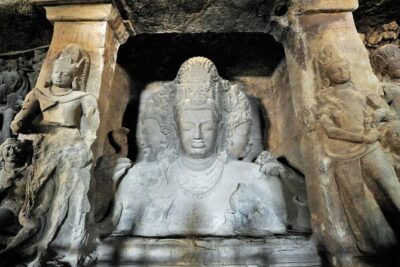

Elephanta Caves Half-Day Guided Tour with Expert
Read our review →
Highlights of Mumbai Sightseeing Tour: TRAVELLERS CHOICE AWARDED
Read our review →