
Reviewed · HERITAGE WALKS
Jaipur Heritage Walk – Artisans | Bazaars | Culinary | Temples (Awarded)
Jaipur looks different from the back streets. On this Pink City walk, you watch bangle makers and metal beaters at work, sample local food, and get the story behind temples and royal gates. It is a tight 2.5-hour route designed for real city life, not postcard stops.
Two things I especially liked were the way the guide turns Jaipur’s layout into something you can actually picture, and the hands-on artisan moments that feel matter-of-fact and long-running. I also liked that guides such as Nidhi or Ani tend to explain what you are seeing in plain language, including the temple stops, so it does not feel like you are just passing by.
One consideration: this is an active walking route through narrow market lanes, so if you get heat-slow or dislike crowds, you will want to go with a calm pace and good timing. The walk also depends on good weather.
In This Review
- Key Things You Will Notice on This Jaipur Heritage Walk
- Getting Oriented at Golcha Cinema and Jaipur’s Seven Gates
- Narrow Lanes, Metal Beaters, and Paani Puri Stops in the Inner City
- The Royal Gate Moment and Why It Changes the Walk
- Sodhiya Halwai Bridal Market and Mohanthal for Wedding-Season Sweetness
- Maniharo Ka Rasta Bangle Making From Sealing Wax
- Tripolia Bazar Flower and Spice Markets, Isarlat Sargasooli, and Your Finish
- What’s Included, What You Actually Eat, and the Value at $30.04
- Who This Jaipur Heritage Walk Is Best For
- Practical Tips for Making This Walk Comfortable
- Should You Book the Jaipur Heritage Walk With Artisans, Bazaars, Culinary, and Temples?
- FAQ
- How long is the Jaipur Heritage Walk?
- Where does the tour start and end?
- What is included in the price?
- Is admission included for all stops?
- What kind of group size should I expect?
- Do I need good weather for this experience?
- Can I get a full refund if I cancel?
Key Things You Will Notice on This Jaipur Heritage Walk
- Seven gates orientation at the start so the walled city grid makes sense fast
- Live metal beating and bangle making demos that show craft, not just shopping
- A bridal market stop at Sodhiya Halwai where wedding-season shopping is the main event
- Two tasting chances including mohanthal and pani puri style street snacks
- A market finish at the Flower Market for a strong end point, not a random drop
Getting Oriented at Golcha Cinema and Jaipur’s Seven Gates

The walk starts near Golcha Cinema on Chaura Rasta Road, by the New Gate area of the Pink City. Early on, the guide sets the scene with Jaipur’s planned layout, including the walled-city idea built around aligned quadrants and a city rhythm you can follow on foot.
A key moment here is learning about the seven gates of Jaipur. Even if you have visited Jaipur before, this kind of orientation changes how you read the streets. You stop treating everything like separate sights and start seeing how the city’s design guides movement, neighborhoods, and daily routines.
You also get a short visit to a priest family living in a heritage mansion. This is the kind of stop that tends to make the city feel human. It is not about a big formal monument, it is about lived tradition in an older home, and the guide keeps it grounded in what you can see.
Practical detail: that first stop runs about 15 minutes and includes admission.
More Heritage Walks in Jaipur
- Heritage Walk & Street Food Tasting in Jaipur
★ 5.0 · 158 reviews - Jaipur Heritage Walk with Rickshaw Ride
★ 5.0 · 105 reviews - Nahargarh Water Walk – Guided 2-Hour Heritage Tour in Jaipur
★ 5.0 · 89 reviews
Narrow Lanes, Metal Beaters, and Paani Puri Stops in the Inner City
After the opening orientation, you shift into the narrower by-lanes where Jaipur actually trades with itself all day. This part is about work spaces and street-food gravity, and it moves quickly enough to keep momentum.
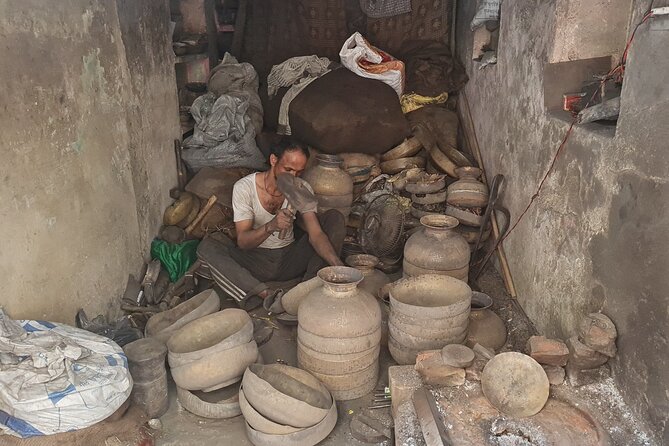
You’ll meet a community of metal beaters, families practicing metal work over generations. Watching the process matters here. It is easy to think of metalwork as art only, but this walk keeps the focus on craft technique, repetition, and the everyday demand that keeps the skills alive.
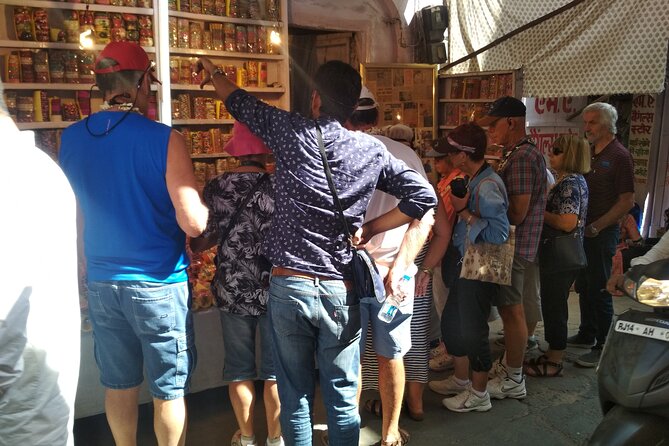
Right after, you pass by a wholesale market tied to pani puri, the snack that turns up everywhere in India. Here you are not just eating it, you are seeing where it comes from and how the market energy builds the day. It adds context to the flavor, because you understand what kind of preparation and hustle goes behind the scenes.
Then there is a stop at an Ayurveda center. The goal is not medical advice or a pitch, it is a small introduction to how traditional wellness fits into regular city life. If you have any curiosity about Ayurveda as a living system, you’ll likely enjoy this pause because it gives you a starting point you can recognize later.
One extra detail I found interesting from this route: you will also be shown heritage lanes that were visited by Prince Charles. That sort of historical note works best when the guide connects it to what is still there today, not just a name dropped for effect.
This whole stretch is about staying close to the city, not hovering in it. The trade-off is that you may feel the lane crowding, since markets pack people in where space is tight. Keep your camera ready, but keep your head up for foot traffic.
The Royal Gate Moment and Why It Changes the Walk
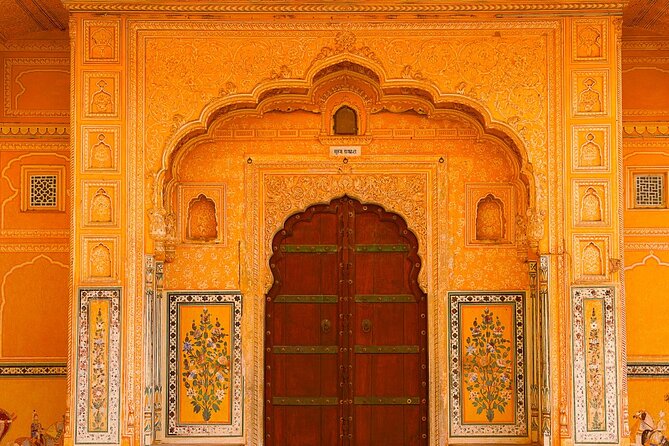
There is a standout pause at a major heritage gate that also serves as an entry gate for the residence of Jaipur’s royal family. This is one of those locations that works as more than a photo stop.
Why? Because the earlier talk about city structure suddenly clicks. You understand the logic of where power sat, where movement filtered, and how gated transitions shape street life. After walking craft lanes and food markets, the gate feels like a different layer of the same city, not a separate world.
It is short, but it gives the route a sense of hierarchy. You leave this gate understanding that Jaipur is not just colorful storefronts, it is planning plus tradition plus daily work.
Sodhiya Halwai Bridal Market and Mohanthal for Wedding-Season Sweetness
Next you head to Sodhiya Halwai, a stop built around Jaipur’s bridal market energy. This is where you see the wedding-season side of the city up close.
At the market, brides shop for traditional wedding attire, and you get the chance to watch that process rather than just glance at stalls. The effect is surprisingly personal. You see details that most city tours skip because they focus only on architecture or a few major landmarks.
Then comes a food highlight. You try mohanthal, a popular Jaipur sweet. It is the kind of tasting that makes the city’s taste profile feel specific, not generic. If you like dense, nutty sweets, this is likely to land.
Also, the broader food theme of the walk includes chances like masala chai along the way, so expect at least a warm beverage moment during the culinary portion. Two tastings are included total, and mohanthal is one of them.
This stop runs about 15 minutes, but it tends to be the kind of 15 minutes that slows you down, because you want to watch the fitting, the fabrics, and the quick negotiations that happen in any market.
More History Tours in Jaipur
- Jaipur Heritage Evening Walk – The Twilight Magic of Pink City
★ 5.0 · 93 reviews - Jaipur Heritage Walking Tour – Local life, Havelis and Temples
★ 5.0 · 72 reviews - Unlock Hidden Amber! – Guided 2-Hour Heritage Tour in Jaipur
★ 5.0 · 62 reviews - Jaipur: History Street Food Tour with Local Guide
★ 4.4 · 50 reviews
Maniharo Ka Rasta Bangle Making From Sealing Wax
From bridal wear, you jump to hands-on jewelry craft at Maniharo Ka Rasta. This is where bangle making artisans take center stage.
You watch a live demo of making traditional wrist bangles from sealing wax. That detail matters. It is a real craft process step, and it helps you understand how bangles move from material to wearable form.
The reason I like this kind of stop for value is simple: you are not buying first and learning later. You are watching the skill happen, and then the shopping feels informed. Even if you do not buy, you walk away able to tell the difference between what looks pretty and what is actually made with care.
Time-wise, this portion runs about 15 minutes. Short, focused, and very watchable.
If you are the type who likes to compare materials and methods, this is one of the better uses of your time in Jaipur because it is interactive in a way that major landmarks rarely are.
Tripolia Bazar Flower and Spice Markets, Isarlat Sargasooli, and Your Finish
The walk wraps up at Tripolia Bazar, and the final stretch is built around markets that smell like work. You visit the oldest flower market of Jaipur, plus spice shopping scenes.
This part gives you a natural contrast. Earlier stops focused on craft and wedding shopping, now you see everyday ingredients and decorations that support ceremonies, home cooking, and temple offerings.
You also pass by one of the taller minarets in the area, Isarlat Sargasooli. It is not the only tall structure in Jaipur, but it adds vertical scale at the end when your brain is already full of details from the ground level.
Then you finish at the Flower Market, around Choti Chaupar. Ending here is smart because it gives you a clear reference point for food or shopping after the walk, instead of leaving you at a random corner.
This stop runs about 20 minutes, and it is the kind of finale that makes your photos look grounded in real daily commerce.
What’s Included, What You Actually Eat, and the Value at $30.04
Let’s talk money and why this tour price works.
At $30.04 per person, you get a structured 2.5-hour route with an English-speaking city explorer, packaged drinking water, and two local food tasting opportunities. You also get a souvenir from local artisans, which helps justify the craft time since you are not leaving with only photos.
For food, you can expect tastings tied to Jaipur staples covered on this route. Mohanthal shows up at Sodhiya Halwai, and the pani puri wholesale market stop sets up the other snack tasting chance. The overview also points to masala chai, and it fits naturally with the food rhythm of the walk.
On top of that, admission is included for the first stop at Golcha Cinema related area with the priest family visit. Other stops are free per the route flow, so you are not constantly paying small fees as you go.
If you compare this to paying separately for a guide plus market snacks plus a craft workshop, the math usually favors the walk. You are paying for someone to connect the dots, pick the right moments, and keep you moving through tight lanes without losing your way.
Who This Jaipur Heritage Walk Is Best For
This is a great choice if you like:
- Artisan work and live demos, especially metalwork and bangles
- Markets with real shopping energy, including bridal-season sights
- A guided explanation of temples and what people are doing there
- A manageable route that shows the inner city fabric without a full-day commitment
It is also ideal if you want your Jaipur visit to feel practical, meaning you come away knowing how the city operates on an everyday level. You do that by watching crafts, eating simple snacks in context, and understanding why gates and lanes matter.
One mismatch to watch: if you want only major monument highlights and long ticketed visits, this walk might feel too focused on neighborhoods. The route is about streets, craft, food, and temple life, not a deep schedule of big-ticket landmarks.
Practical Tips for Making This Walk Comfortable
Because it is a walking tour through market lanes, wear shoes that handle uneven ground and crowds. Bring a light layer, even in warm weather, since you may bounce between shade and open lanes.
Also, plan your expectations around good weather. The experience requires it. If the day is rainy or too rough, the tour may be rescheduled or refunded, so it helps to keep your schedule flexible.
Finally, with market stops, pace your shopping. You’ll see crafts and sweets in short bursts. If you want to buy bangles or artisan items, give yourself time to compare while the demo is still fresh in your mind.
Should You Book the Jaipur Heritage Walk With Artisans, Bazaars, Culinary, and Temples?
I think you should book this Jaipur Heritage Walk if you want the Pink City to feel lived-in, with artisans and street food as the main characters. The mix is genuinely useful: city layout orientation, craft demos, a bridal market window, tastings like mohanthal, and a flower-and-spice market finish.
I would skip or swap this tour if you hate walking through busy lanes or you are chasing only big monument time. This is for people who like streets, not just stops.
If you book, go in curious. Ask your guide about what you are seeing at the metal beaters, how sealing wax ties into bangle making, and what temple routines look like on a normal day. That is where the tour turns from sightseeing into real understanding.
FAQ
How long is the Jaipur Heritage Walk?
It lasts about 2 hours 30 minutes.
Where does the tour start and end?
It starts at Golcha Cinema on Chaura Rasta Rd, New Gate, Bapu Bazar, Pink City, Jaipur, Rajasthan 302002. It ends at the Flower Market area at Choti Chaupar, Tripolia Bazar, Modikhana, Jaipur, Rajasthan 302002.
What is included in the price?
The tour includes packaged drinking water, an experienced English-speaking city explorer, two local food tasting opportunities, and a souvenir from local artisans.
Is admission included for all stops?
Admission is included for the first stop. Other stops on the walk are listed as admission free.
What kind of group size should I expect?
The tour has a maximum of 15 travelers.
Do I need good weather for this experience?
Yes. The experience requires good weather. If it is canceled due to poor weather, you will be offered a different date or a full refund.
Can I get a full refund if I cancel?
Yes. Free cancellation is available, and you can cancel up to 24 hours in advance for a full refund. If you cancel less than 24 hours before the experience start time, the amount you paid will not be refunded.
More Historical Tours in Jaipur
- Full-Day Private Tour Heritage of Jaipur with Amber Fort
★ 4.5 · 21 reviews - Cyclin’Jaipur – Pink City Heritage walking Tour
★ 5.0 · 18 reviews - Culture and Heritage Walk | Pink City Jaipur
★ 5.0 · 14 reviews - Jaipur: Cultural Tour with Artisan Craft Experiences
★ 4.9 · 13 reviews
More Walking Tours in Jaipur
- Jaipur Bazaar & Food Walking Tour
★ 5.0 · 281 reviews - Magical Walk of Jaipur
★ 5.0 · 121 reviews - Cultural Walk and Food Tasting In Jaipur
★ 5.0 · 118 reviews - “Jaipur Cultural Walk: Explore life behind the pink walls”
★ 5.0 · 36 reviews
Recently added around Jaipur
- Jaipur Pink City Tour by Car or Tuk-Tuk★ 5.0 · 38 reviews
- Cycle Through Jaipur’s Charm – Cuisine|Heritage|Temple(Awarded)★ 5.0 · 6 reviews
- Explore Jaipur at Night with Patrika Gate★ 5.0 · 10 reviews
- Jaipur Heritage and Old Market Shopping Tour★ 5.0 · 12 reviews
- Jaipur Nahargarh Fort Sunrise or Sunset Tour with Flower Market★ 5.0 · 9 reviews
- Jaipur Horse Riding Adventure★ 5.0 · 7 reviews
- Jaipur: Private Day Trip by Tuk-Tuk & Guide with Pick-Up & Drop★ 5.0 · 8 reviews
- Guide Service★ 5.0 · 24 reviews
Heritage Walks, compared.
The Great Indian Food Tour: Old Delhi Food and Heritage Walk
Read our review →
Fontainhas Heritage Walk At Latin Quarters of Goa
Read our review →
Private Heritage Walking Tour in Jaisalmer Fort and Old Bazaar
Read our review →
Panaji: Heritage Walk through Goa’s Latin Quarter
Read our review →
Browse the lists this tour appears in