
Reviewed · GOLDEN TRIANGLE TOURS
India Himalayas foothills & Golden Triangle 12 Days
Taj sunrise and hill air in one loop. This 13-day private circuit is built for people who want the big-name sights, but also like having time to understand what they are seeing, from Delhi’s Old City bazaars to the cool viewpoints of the Shimla region. You travel with an air-conditioned private car and a dedicated English-speaking team, so your days feel organized even when the route moves fast.
I really like two things here. First, the plan includes entry fees to the monuments on the itinerary, plus hotel stays and breakfast, so you are not constantly recalculating costs while you are sightseeing. Second, your transport and guide support are set up as a true private experience, with airport meet-and-greet in Delhi and professional handling throughout.
One thing to consider: this is a long, multi-city route with a lot of driving and a packed schedule. Some stops are scheduled tight, so if you want slow, lingering visits at every monument, you may wish you had more free time built in.
In This Review
- Quick take
- The route: Golden Triangle plus foothills, built for momentum
- Delhi day-by-day: markets, memorials, and Mughal landmarks
- Amritsar: Golden Temple, Jallianwala Bagh, and the Wagah ceremony
- Chandigarh: Sukhna Lake and Rock Garden for a calmer kind of sightseeing
- Shimla and Kufri: cool air, viewpoint time, and colonial-era strolls
- Back to Delhi, then Agra for the Taj Mahal at sunrise
- Agra highlights you can actually make time for
- Fatehpur Sikri and the drive into Jaipur’s Pink City atmosphere
- Jaipur in depth: Amber Fort, City Palace, Jantar Mantar, and Hawa Mahal
- Price and logistics: what $1,917 is really buying you
- Who should book, and who should think twice
- Should you book this Golden Triangle plus Himalaya foothills circuit?
- FAQ
- What cities are included on this tour?
- How long is the experience?
- Is the tour private, and will I have my own guide and vehicle?
- Do I get help when arriving at the airport?
- Are entrance fees to the attractions included?
- What about hotels and meals?
- Is the Taj Mahal visit included, and is it at sunrise?
- Is airfare included, and what is the cancellation rule?
Quick take
- Sunrise Taj Mahal timing gives you the best light for photos and the calmest feel before crowds.
- Private guide plus chauffeur means you spend time looking, not negotiating transport.
- Old Delhi to Mughal architecture pairs markets like Chandni Chowk with landmarks like Humayun’s Tomb and Qutub Minar.
- Amritsar’s mix of solemn and spectacular includes Jallianwala Bagh, the Golden Temple, and the Wagah Border ceremony.
- Shimla and Kufri add altitude and views after the heat of the plains, with viewpoint walks and Ridge time.
- Hotels and breakfasts included across the route help you budget and keep days simpler.
The route: Golden Triangle plus foothills, built for momentum

This tour does what many “Golden Triangle” trips do not: it keeps going north into the Himalayas foothills. You start with Delhi and its layered past, then continue through Agra and Jaipur, and you do not stop there. You break the pattern with Amritsar, Chandigarh, and Shimla, which helps the trip feel like a whole India sampler instead of one repeat loop of temples and forts.
The value here is not just the cities, it is the sequencing. You get the high-drama icon moments, like the Taj Mahal in Agra, then you swap gears for spiritual and civic sites in Delhi and Amritsar. After that you get a cooler pace in the hill air around Shimla and Kufri. If you like variety and hate wasting hours on logistics, the structure is friendly.
Because it is a private tour, your experience should match your group’s rhythm. That matters on days like Amritsar and Jaipur, where you can easily get “sightseeing fatigue” if the schedule is poorly managed.
Golden Triangle tours readers book most in New Delhi:
- 3-Days Private Golden Triangle Tour: Delhi, Agra & Jaipur by Car
★ 5.0 · 1,107 reviews - 3-Days Private Golden Triangle Tour: Delhi, Agra & Jaipur by Car
★ 5.0 · 1,098 reviews - 3-Day Delhi, Agra and Jaipur Private Tour – India Golden Triangle
★ 5.0 · 812 reviews
Delhi day-by-day: markets, memorials, and Mughal landmarks
Delhi often gets sold as a quick stop. Here, you get two solid days in the city, and that is a smart choice if you want to understand the geography of Old Delhi and the broader capital area.
On your first full sightseeing day, you start with Jama Masjid, the largest mosque in India. This is one of those sites where scale hits you fast. Standing there, you can feel why this is a major civic landmark, not just a tourist stop. From there you head into Chandni Chowk, one of the city’s famous old bazaars, with narrow lanes and dense local life. The most practical part of this setup is that you do not have to figure out where to go next. You get a guided path through the market while still having time to notice details like the shop rhythm and how people move through tight streets.
After Old Delhi, the mood shifts. You visit Rajghat, the memorial where Mahatma Gandhi was cremated, with the flame that burns there as a constant presence. Then you move into the Mughal world with Humayun’s Tomb, often described as a garden-style tomb with Persian influences and formal garden squares. This is where Delhi’s history feels architectural, not just political.
There is also time in the wider capital zone, including drives past landmarks such as Rashtrapati Bhawan and India Gate, plus Qutub Minar. Even if a couple stops are scheduled briefly, you still get the main “I’m here in Delhi” anchors.
Practical note: this kind of itinerary works best if you wear comfortable shoes and keep a light layer handy. Delhi days can move from busy market sidewalks to museum and tomb walking, often within the same morning.
Amritsar: Golden Temple, Jallianwala Bagh, and the Wagah ceremony
Amritsar brings a different tempo. The city is built around Sikh spirituality, but the day includes moments that are deliberately solemn, which gives the trip emotional balance.
You start with stops like Shree Durgiana Temple, dedicated to Goddess Durga. It follows a familiar temple style that people often connect to the Golden Temple look. Then you visit Jallianwala Bagh, a memorial tied to the Amritsar massacre in 1919. This stop matters because it places the city’s identity in a historical frame, not just a sightseeing frame.
From there, you move into the quieter side of royal legacy at Rambagh Gardens, which includes the summer palace of Ranjit Singh, founder of the Sikh Empire. Then, of course, you reach the Golden Temple. This is the moment many people come for, and it is also one of the easiest places to appreciate why religion here is lived, not performed. You will have time to experience the Golden Temple area and understand that it is a living center.
The day also includes the Wagah Border ceremony, held near the road border crossing and tied to India-Pakistan border life. The timing is short on the itinerary, but that is typical for this type of event. Even with limited time, it is memorable because the ceremony is loud, structured, and very much part of the local spectacle.
What I like about this Amritsar plan is the mix. You are not only chasing photo spots. You are seeing how a city can hold both remembrance and celebration in the same day.
Chandigarh: Sukhna Lake and Rock Garden for a calmer kind of sightseeing
Chandigarh is a break from the older fort-and-tomb rhythm. The city is known as India’s first planned city, and you feel that planning in the way areas are laid out and how built space relates to open space.
Your day includes Sukhna Lake, a man-made water body in the Shivalik foothills area. It is a useful stop in the overall itinerary because it slows you down a little after long drives and intense city days. It also helps you reset before the hills of Shimla.
Then you visit Rock Garden of Chandigarh, built using discarded industrial and urban waste. This is one of those places where you can enjoy it even if you are not the museum type. The practical value is that it is a different style of attraction, something creative and outdoorsy, rather than another palace or temple complex.
If you like your travel days to include at least one place that feels more relaxing than “run, see, exit,” this stop does the job.
A few more New Delhi days to compare
- Old & New Delhi City Tour – Half or Full Day Options Available
★ 5.0 · 4,811 reviews - Half Day Private Delhi City Tour
★ 5.0 · 4,474 reviews - Same Day Taj Mahal, Agra Fort & Baby Taj Tour from Delhi by Car
★ 5.0 · 4,304 reviews - Taj Mahal Day Tour from Delhi by Superfast Train – TOP RATED TOUR
★ 5.0 · 4,166 reviews
Shimla and Kufri: cool air, viewpoint time, and colonial-era strolls

Shimla is your altitude change. After Delhi’s heat and the intensity of the plains, Shimla feels like a different category of travel.
You drive to Shimla and check in, with an afternoon and evening that gives you room to walk the Mall area. The Mall is a promenade where you can browse curio shops and see the colonial-era architecture and street style that shaped the town.
The next day is where the foothills energy comes in. You visit Kufri, one hour or so from Shimla, at high altitude in the foothills region. Kufri is known for trekking and hiking, and also for skiing activities, which hints at why it feels different from the city itself.
Then you return to Shimla and do several major viewpoint and cultural stops. Jakhoo Hills is a key one, known as the highest point in Shimla, and the Jakhoo Temple is part of the visit. After that, you go to places around the Vice Regal Lodge area and down the Mall Road. The Ridge is an open space at the heart of Shimla, and the plan includes the route toward Chadwick Falls as well.
One more practical thing: plan your pace. This is “walk and take in the views” travel, not “only sit in cars.” If you like scenic mornings and gentle climbing, Shimla is a good match.
Back to Delhi, then Agra for the Taj Mahal at sunrise
Heading back to Delhi on Day 8 resets the logistics, then the itinerary pushes into Agra again for the iconic sights. This is where the trip’s biggest payoff is staged well.
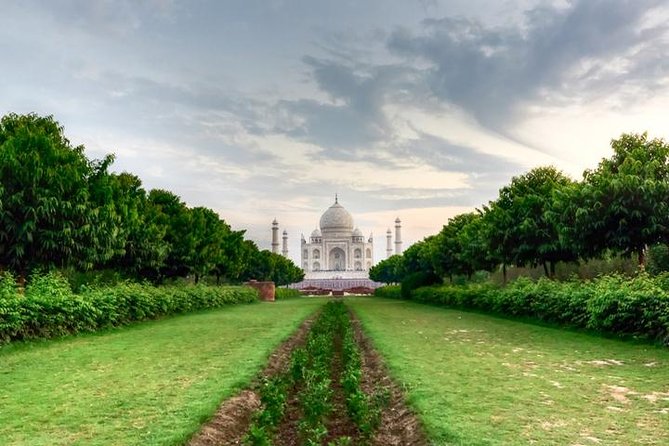
The Taj Mahal visit is scheduled for the morning at sunrise. That is not just a photo bonus. In real life, sunrise timing gives you calmer viewing conditions and better light. The tour also includes Agra Fort afterward, which helps you avoid the classic problem of seeing only the Taj and leaving with a single-sight memory.
The Taj Mahal itself is explained as an ivory-white marble monument built over almost 22 years by Mughal Emperor Shahjahan in memory of his wife, Mumtaz Mahal. The tour notes a color shift effect tied to the time of day, with the monument turning pinkish in the morning, milky white in the evening, and golden at night under moonlight.
Even if you focus on the structure details, this color shift concept helps you experience the Taj as something alive with changing light. It is easier to appreciate when your visit is timed to morning.
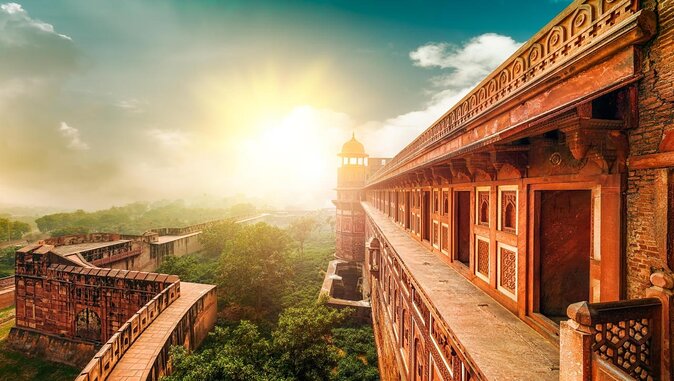
Agra Fort comes in as a strong counterpoint. If the Taj is all about symmetry and romance, the fort is about power and defense. It is similar in spirit to Red Fort in Delhi, but it feels distinct in materials and scale.
Agra highlights you can actually make time for

A lot of Taj trips feel rushed. This one is framed as an all-inclusive, take-your-time approach to Agra. That matters because the city rewards slower attention. You can notice how the Taj sits in its surroundings, how the fort’s layout changes the feel of the river area, and how the light affects marble surfaces.
You also get Mehtab Bagh listed as part of the Agra highlights. Mehtab Bagh is a well-known garden viewpoint idea used by photographers to look at the Taj from across the river. If it is included in your specific execution, it is one of the better “context” stops because it shows you the Taj not only as a monument you walk to, but as something placed in a landscape.
This is also where the tour’s inclusion style helps you. Entry fees for included monuments are covered, and you are not hunting down separate ticket counters mid-day. That can sound small, but it saves time and stress.
Fatehpur Sikri and the drive into Jaipur’s Pink City atmosphere
Once Agra is done, the trip moves to Jaipur, with a major stop in between: Fatehpur Sikri. Fatehpur Sikri is a UNESCO World Heritage Site tied to the Mughal Empire and built during Emperor Akbar’s reign.
The itinerary frames it as an abandoned Mughal city, which is exactly why it works as a transfer day stop. You arrive, you get a strong “big place, big story” introduction, and then you keep moving. Even if you only spend part of the day there, the setting gives you a sense of how this region once functioned as a center of power.
From Fatehpur Sikri you continue to Jaipur, often described as the Pink City. That name is not just branding. It reflects the old-city look and the way major buildings create a consistent visual feel across the core areas.
Then, you settle into Jaipur for the next day’s deeper fort and palace focus.
Jaipur in depth: Amber Fort, City Palace, Jantar Mantar, and Hawa Mahal
Jaipur is where you go from “icon sightseeing” to “full day of you-are-really-here” exploration.
In the morning, you start with Amber Fort, then you move through a cluster of major Jaipur landmarks. Amber Fort is the anchor. City Palace follows, and it gives you a sense of how Jaipur’s royal identity translated into architecture.
Next is Jantar Mantar, the astronomical site. This stop is especially good if you like the bridge between science and culture. It is not only about how it looks, it is about how people measured time and the sky long before modern instruments.
Then you visit Hawa Mahal, the Wind Palace. The tour also includes a drive-past of Jal Mahal, the Water Palace, as part of the overall circuit. For many people, Jal Mahal is a “blink and you remember it” visual, because it often looks like it is sitting out of place in its setting, which makes it easy to photograph even during quick passes.
Evening time is kept free for shopping in the Jaipur Bazaar. That is practical, because Jaipur is one of the best cities in India for browsing. Having an unscheduled evening lets you spend time on things you actually like, instead of forcing yourself into a rigid program.
Price and logistics: what $1,917 is really buying you
At $1,917 per person, this is not a budget trip. You are paying for a bundle of things that are hard to assemble yourself, especially across so many cities.
Here is what you effectively get for the money, based on what is included:
- Accommodation as per the program, with a 3-star or 4-star hotel option
- Breakfast included across the trip (breakfast is listed as included 11 times)
- Air-conditioned private car with a professional chauffeur
- A private professional English-speaking tour guide
- Delhi airport meet and greet
- All fuel and interstate tax included
- Parking fees of monuments and airports included
- Bottled water and wet tissue in the vehicle
- Monument entrances included for what is listed on the itinerary
That adds up quickly when you think about private transport, guides, and entrance fees across Delhi, Agra, Jaipur, Amritsar, Chandigarh, and Shimla. If you were to replicate this route on your own, you would likely spend far more in time and coordination, and you would still have gaps in what is covered.
One more value point: past guests have highlighted professional driver and guide support, with names like Manish and Garima coming up for coordination and a personal touch. People also praise comfortable vehicle quality and smooth day organization. That matters because “good logistics” is what makes an itinerary like this feel enjoyable rather than exhausting.
Who should book, and who should think twice
This is a strong choice if you:
- Want a private experience with an English-speaking guide and chauffeur
- Like mixing big-name sights with spiritual, memorial, and viewpoint stops
- Are comfortable with a multi-city route that includes driving days
- Prefer having entrance fees and breakfast handled for you
You might think twice if you:
- Want lots of free time in each city for independent wandering
- Get irritated by tight scheduling at some monuments
- Are traveling with very limited mobility and need longer breaks than the plan provides
The biggest trick to enjoying this tour is mindset. Treat it like a well-paced sampler. If you go in wanting to collect impressions and key landmarks, you will probably feel satisfied. If you go in wanting to linger like a local for days on end, you may feel time pressure.
Should you book this Golden Triangle plus Himalaya foothills circuit?
I would book it if your travel style is “I want the classics, plus a serious change of scenery.” The sunrise Taj Mahal, the mix of Delhi and Amritsar sites, and the shift to Shimla and Kufri foothill views create a trip that feels varied without being random.
I would not book it if you want unhurried days in just one or two locations. This is a route built for coverage and organization, not for slow living. If that sounds like your idea of a good vacation, this one is worth serious consideration, especially with the inclusion list that keeps costs and logistics under control.
FAQ
What cities are included on this tour?
The tour starts in New Delhi and includes Delhi sightseeing, Agra (Taj Mahal and Agra Fort), Jaipur (Amber Fort, City Palace, Jantar Mantar, Hawa Mahal, and more), and also Amritsar, Chandigarh, and Shimla, before returning to Delhi.
How long is the experience?
The duration is listed as approximately 13 days.
Is the tour private, and will I have my own guide and vehicle?
Yes. The experience is private, and it includes a private professional English-speaking chauffeur and a private professional English-speaking tour guide, with a comfortable air-conditioned private car.
Do I get help when arriving at the airport?
Yes. There is a meet-and-greet assistance included at Delhi International Airport, plus a transfer to your hotel in Delhi.
Are entrance fees to the attractions included?
Yes. Entrances fees of monuments as per the program are included, along with parking fees of monuments and airports.
What about hotels and meals?
Accommodation is included as per the tour program with an option for 3-star or 4-star hotels. Breakfast is included 11 times.
Is the Taj Mahal visit included, and is it at sunrise?
Yes. The plan includes a visit to the Taj Mahal and specifies a sunrise visit.
Is airfare included, and what is the cancellation rule?
Airfare is not included. The experience is non-refundable and cannot be changed for any reason.
Recently added around New Delhi
- Private Same day Jaipur Tour from New Delhi★ 5.0 · 82 reviews
- Private Agra Day Tour★ 5.0 · 14 reviews
- From Delhi: Full Day TajMahal & Agra Fort with 5 Star Lunch★ 5.0 · 64 reviews
- Taj Mahal,Agra fort and Baby Taj tour from Delhi by Express train★ 5.0 · 7 reviews
- Taj Mahal & Agra City Private Tour from Delhi by Car – Fast Entry★ 5.0 · 13 reviews
- All Inclusive: Same day Taj Mahal Tour From Delhi★ 5.0 · 111 reviews
- Same Day Tour of Taj Mahal with Our Real Historical Experience★ 5.0 · 42 reviews
- Same Day Agra/Taj Mahal Tour from Delhi : Private & all inclusive★ 5.0 · 38 reviews
Golden Triangle Tours, compared.

3-Days Private Golden Triangle Tour: Delhi, Agra & Jaipur by Car
Read our review →3-Days Private Golden Triangle Tour: Delhi, Agra & Jaipur by Car
Read our review →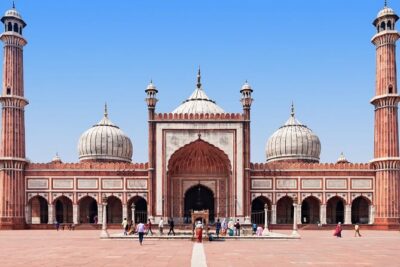
3-Day Delhi, Agra and Jaipur Private Tour – India Golden Triangle
Read our review →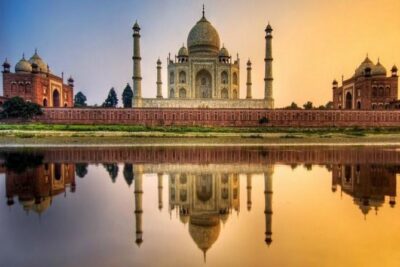
Four-Day Private Luxury Golden Triangle Tour to Agra and Jaipur From New Delhi
Read our review →
5 Nights 6 Days Private Golden Triangle Tour – Delhi Agra Jaipur
Read our review →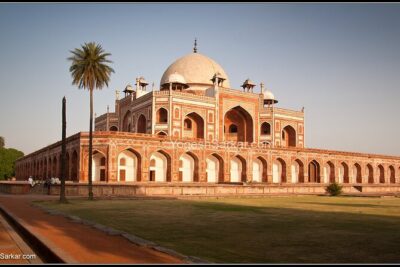

Private Car and Drive for Golden Triangle (4N/5D)
Read our review →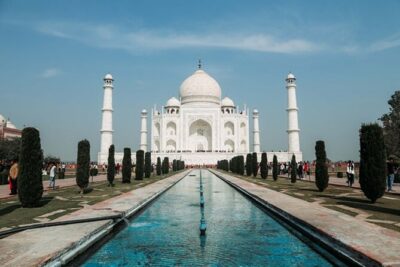
Private Golden Triangle Tour Delhi Agra Jaipur ( Top Rated )
Read our review →Browse the lists this tour appears in