
Reviewed · HERITAGE WALKS
Hyderabad: Heritage Walking Tour of Old City and Charminar
Hyderabad’s Old City tells its story on foot. I love how this 3 to 3.5 hour walk links Charminar, Mecca Masjid, and the Nizams’ royal heart in one logical route. I also like the street-level details, from the busy markets to the clock tower stop that explains why timekeeping here felt different. One consideration: it is a real walking tour, so comfy shoes matter, and it is not suitable for people with mobility impairments.
The best part is the guidance. I enjoyed hearing legends and context through an English-speaking guide, and the pace is set to keep you moving without rushing past the good stuff. Guides I heard from here include Ramu, Sainath Jonnagadda, Mohan, John, and Raize, and the common theme is clear explanations plus patience. Still, you should expect crowds around Charminar and inside mosque areas, so plan for sensory overload for the first 20 minutes.
If you want a compact taste of Hyderabad’s heritage that also shows how people actually live nearby, this is a strong match. It is structured enough to feel efficient, but flexible enough for small detours when the markets catch your eye.
In This Review
- Key highlights that make this walk worth your time
- Why this Old City walking route makes sense
- Price and logistics you should actually plan for
- Getting oriented near Charminar without losing your bearings
- Charminar: plague commemoration and a story about escape routes
- Mecca Masjid: scale you can feel, not just read about
- Bazaars, bangles, perfumes, laces, and the clock tower detail
- Moti Mahal and the Nizam-to-new-purpose twist
- Chowmahalla Palace: intricate carvings, glass chandeliers, and vintage cars
- Friday note: Chowmahalla is closed, so the tour shifts
- The guides make the difference, especially on real streets
- What you actually see, stop by stop (and what to watch for)
- Value check: is $46 a good deal for this kind of tour?
- Who should book this walk
- Should you book this Hyderabad heritage walking tour?
- FAQ
- Where do I meet the guide?
- How long is the tour?
- What is included in the price?
- Can I get hotel pickup and drop-off?
- What happens on Fridays?
- What should I bring?
- Is this tour suitable for people with mobility impairments?
Key highlights that make this walk worth your time
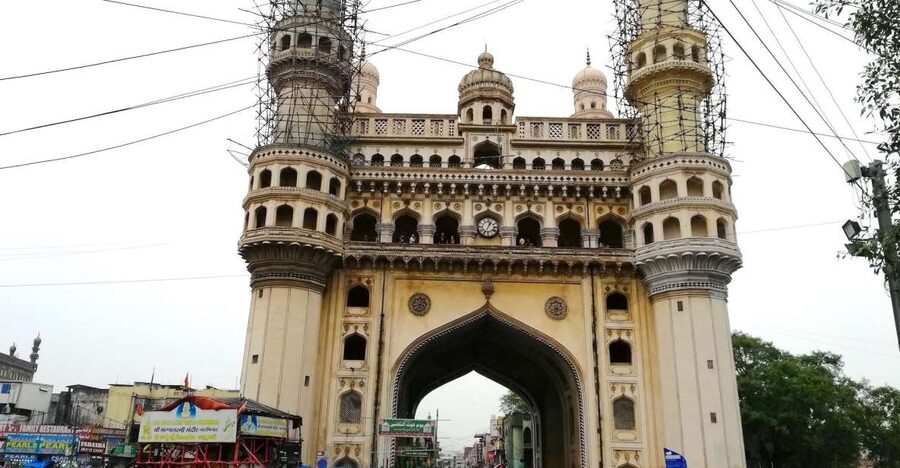
- Charminar’s 1591 origin story, built to mark the end of a deadly plague attack on the city
- Mecca Masjid at massive scale, with space for more than 10,000 people for prayers
- Old City bazaars on the route, including bangles, perfumes, laces, and bridalwear streets
- A historic clock tower stop, tied to a time when wristwatches and wall clocks were rare
- Chowmahalla Palace details, including intricate carvings, glass chandeliers, a water fountain, and vintage cars
- Friday plan built in, since Chowmahalla Palace is closed on Fridays and you visit Badshahi Asoorkhana instead
Why this Old City walking route makes sense
Hyderabad’s heritage does not sit neatly in one museum block. It’s scattered through neighborhoods, stitched together by the same landmarks you keep seeing on postcards and street signs. This tour works because it builds a chain of places that feel connected: Charminar leads you into the city’s old commercial lanes, those lanes lead you to major mosque history, and then the walk shifts toward the Nizams’ palace world.
I like that you are not just looking at famous buildings. You are learning how they fit into daily life. Charminar is a monument, but it is also a living reference point for the Old City. Mecca Masjid is a worship space first, and you get to see its scale in a very direct way. Then Chowmahalla Palace pulls the story into royal power, with details that you can actually spot up close instead of through distance and glare.
It also hits a sweet spot in time. At $46 per person for 3 to 3.5 hours, you are paying for local guidance plus the cost of entrances, not just for someone to walk beside you. You can see a lot, but you are not stuck doing a full day of temples and tunnels you never asked for.
More Heritage walks in Hyderabad:
- Fontainhas Heritage Walk by Make It Happen
★ 5.0 · 2,834 reviews - The Great Indian Food Tour: Old Delhi Food and Heritage Walk
★ 5.0 · 1,698 reviews - Old Goa Heritage Walk by Make It Happen
★ 5.0 · 797 reviews
Price and logistics you should actually plan for
This is priced at $46 per person, and the duration is 3 to 3.5 hours. You are walking outdoors most of the time, with a guide who manages the flow between landmarks. That matters in Hyderabad, because the Old City around Charminar moves fast, and you want someone who can steer you through without turning it into a frantic stampede.
You will meet your guide outside the Charminar entrance, located at Charminar Rd, Char Kaman, Ghansi Bazaar, Hyderabad, Telangana 500002. Uber and public transport can get you there, which is handy if you do not want to arrange anything fancy.
If you want less hassle, hotel pickup and drop-off are optional. That can be a real quality-of-life upgrade, especially if you are starting the day with a busy schedule elsewhere. Just keep in mind that even with pickup, the highlight moments happen on foot.
Also, come prepared for sun and pavement. Bring comfortable shoes, water, and a hat. This tour is not marked for long museum lines, but you will still want your feet to feel good from the start.
Getting oriented near Charminar without losing your bearings
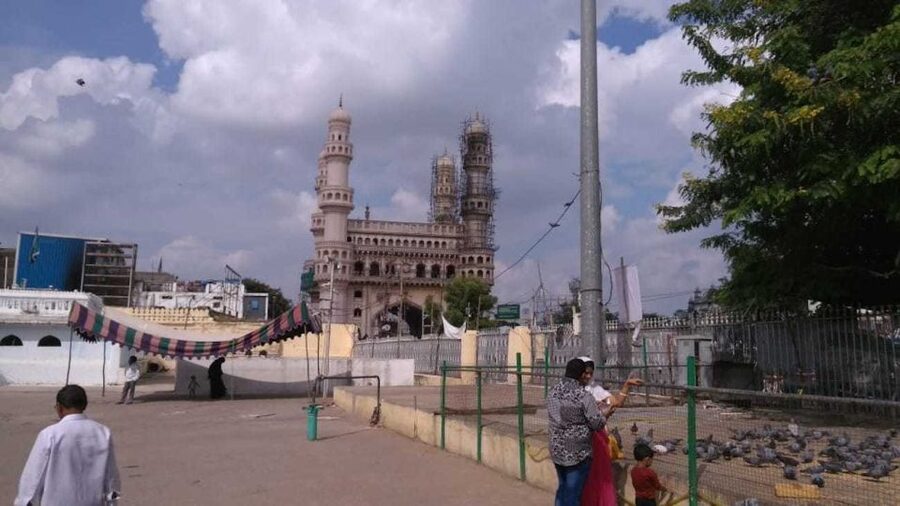
The tour starts at Charminar, and that is smart. Charminar is one of the city’s best starting points because it is recognizable fast. You can orient yourself even before the guide begins speaking, which helps when you are surrounded by lanes full of shops and people.
Expect the area to be active. You will be walking through a busy bazaar zone, and the guide will help you move through it so you are not just staring at everything randomly. A common detail I appreciated in how guides handled it is how they answered questions about what you are actually seeing in the street, not just what the monuments are called.
If you are the type who likes photos, this is one of the better walks for it. Guides mentioned here helped people find strong angles and keep the timing practical around crowds. Just remember: in places like this, good photos are about patience, not about sprinting.
Charminar: plague commemoration and a story about escape routes
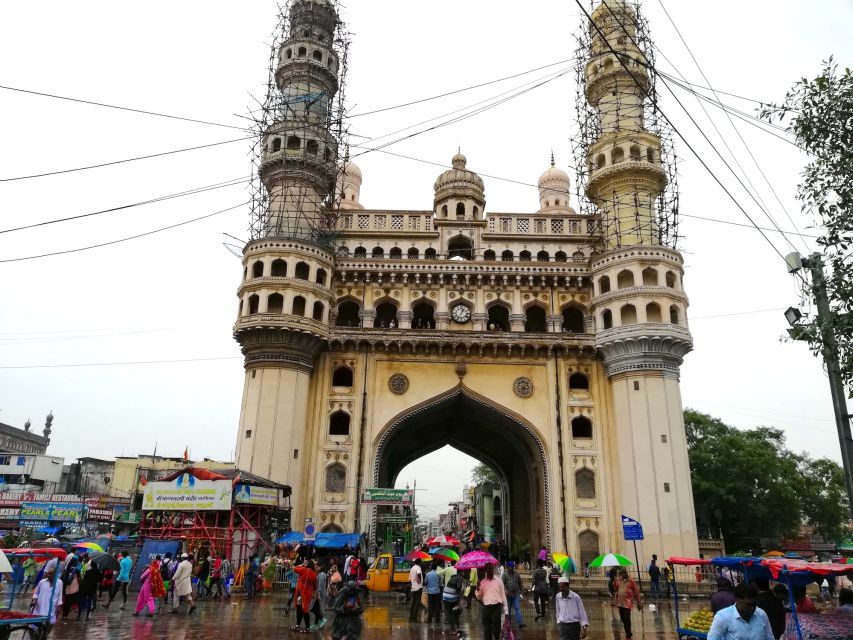
Charminar is the kind of landmark that looks simple from a distance, then turns fascinating when you stand close. Built in 1591, it commemorates the end of a deadly plague attack on the city. Your guide should explain how something so symbolic ended up becoming a core part of Hyderabad’s identity.
One legend you will hear is about a secret tunnel underneath Charminar that connected to Golconda Fort, described as an escape route for the royal family during times of distress. You do not need to treat every story like a documentary. What matters is the way the legend reflects fear, power, and the need for contingency in the 1500s and 1600s.
Practical tip: spend a few extra seconds looking outward from Charminar, not only up at the structure. The reason this monument works in stories is because it sits in the middle of the city’s real movement. If you only look at the building, you miss half the point.
A few more Hyderabad days to compare
- Old City Walking tour in Hyderabad, travel back 400 years in time
★ 5.0 · 108 reviews - Group Guided Walking Tour in Fort and Colaba
★ 5.0 · 1,073 reviews
Mecca Masjid: scale you can feel, not just read about

Next comes Mecca Masjid, one of India’s oldest and largest mosques. The foundation stone is said to have been laid by Muhammad Quli Qutub Shah, fifth ruler of the Qutub Shahi dynasty, and the bricks were made from soil sourced from Mecca. That is the kind of detail that makes a stop feel more specific than generic heritage sightseeing.
The biggest wow factor is the sheer capacity. The mosque can accommodate more than 10,000 people for prayers. Seeing that in person changes the way you understand the building. You stop thinking of it as a single viewpoint and start thinking of it as an event space designed for crowds, devotion, and order.
Because it is a working religious site, follow your guide’s directions closely. The goal is respectful observation and understanding. If you are visiting during prayer times, you may notice the space shifting from tourist viewpoint to worship focus, and that is exactly how it should feel.
Bazaars, bangles, perfumes, laces, and the clock tower detail
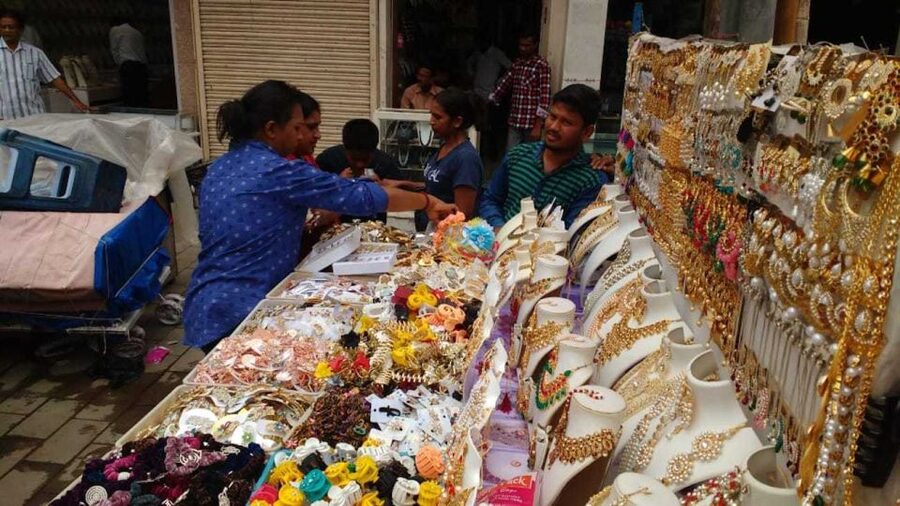
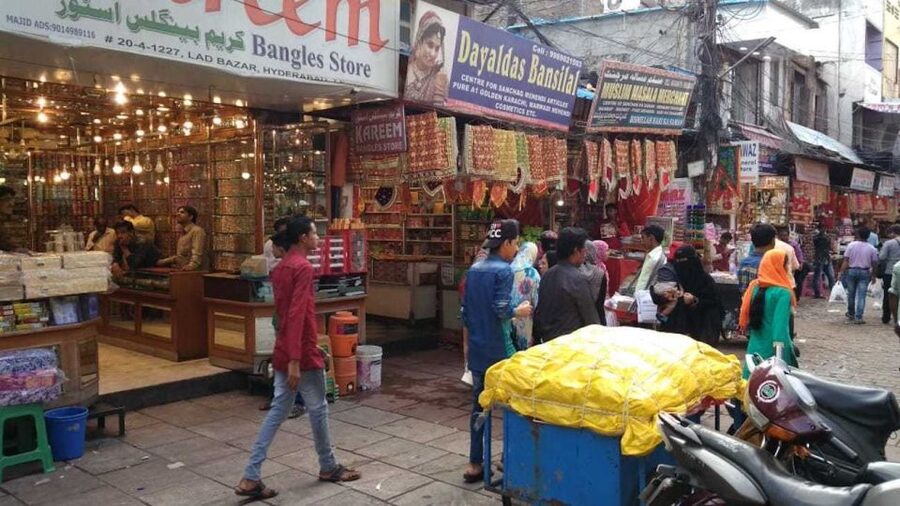
After the big monument and the big mosque, you move through the neighborhood economy: bazaars lined with bangles, perfumes, laces, and bridalwear. This is not a side quest. It is the bridge between history and the way Hyderabad still trades.
Here is the part I love for first-timers: the guide helps you interpret the street. You learn why certain goods show up in clusters, and how the market rhythm relates to the landmarks you just visited. If you like the feeling of local life, not just heritage, this segment delivers.
Then there is a unique stop, a historic clock tower. The clock is described as a gift to the people at a time when wristwatches and wall clocks were rare. It is a small detail compared to the grand architecture around you, but it is powerful because it places technology and everyday timekeeping into a historical context you can actually see.
A good guide also helps you pace this section. The Old City has a way of making you want to stop every five steps. You do not have to rush, but you should keep the group moving so you still make it to the palace finale with energy.
Moti Mahal and the Nizam-to-new-purpose twist
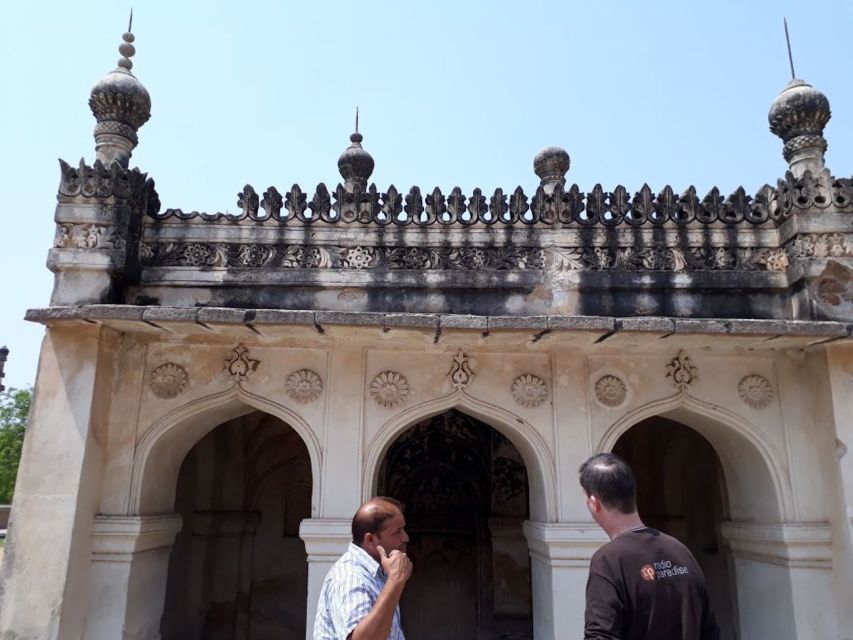
You will pass Moti Mahal, which used to be a palace of the Nizams. Since 1969, it has served as a homeopathic hospital. That is a fascinating reminder that heritage in cities like this is often layered, not frozen.
I like stops like this because they answer the question people do not ask until later: What happens to royal spaces after royal power fades? In Hyderabad, at least in this case, the answer is reuse. The building continues to serve real needs, even if the function changed.
This moment also helps you understand the tour’s tone. The tour is not only about monuments. It’s about continuity and change, and how the city repurposes spaces while keeping their identity visible.
Chowmahalla Palace: intricate carvings, glass chandeliers, and vintage cars
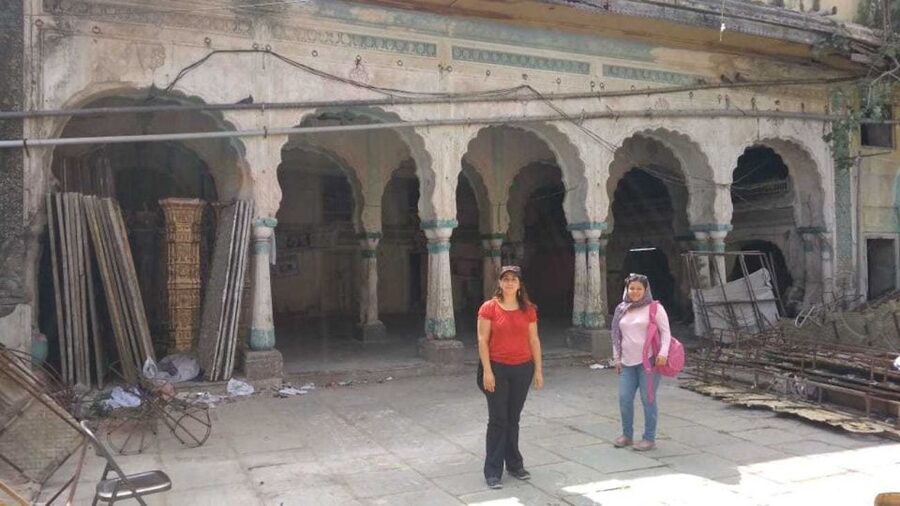
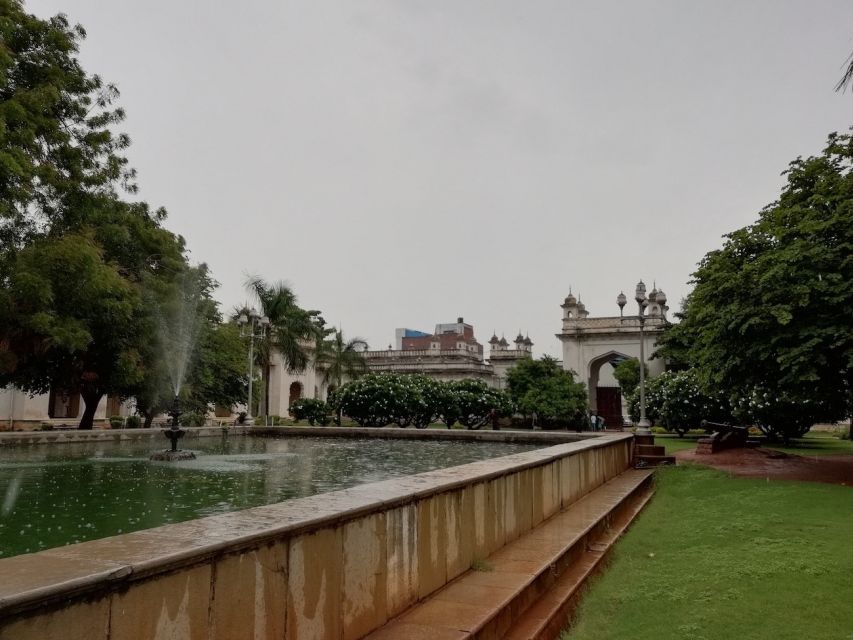
The final major stop is Chowmahalla Palace, the palace of the Nizams. If you like details, this is where the tour pays you back.
You should expect highlights such as a water fountain, vintage cars, intricate carvings, glass chandeliers, and a grand durbar hall. These are the kinds of elements that tell you the palace was designed for display, ceremony, and daily operations at a high level.
One statistic that helps you picture the scale: during the Nizams’ heydays, as many as 7,000 attendants used to manage life around the palace complex. That gives the palace a different feeling. It stops being a pretty building and becomes an entire working world.
Also, pay attention to how the palace layout supports movement and gathering. The grand hall is the star, but the supporting details are what make it convincing. The carvings and chandelier glass do not just look ornate. They communicate taste, wealth, and a lifestyle built around hospitality and ceremony.
Friday note: Chowmahalla is closed, so the tour shifts
If your day falls on a Friday, Chowmahalla Palace is closed. In that case, the tour visits Badshahi Asoorkhana instead. That swap matters, because it keeps you from losing an entire chunk of palace-area context when the main site is unavailable.
The guides make the difference, especially on real streets
This walk lives and dies by the guide, and the standout theme is consistency: English-speaking guides who explain patiently and handle questions without making you feel silly for asking them.
I heard names come up again and again in the guide roles: Ramu, Sainath Jonnagadda, Mohan, John, and Raize. Across these different people, the recurring strengths were clear communication and solid story delivery tied to what you are seeing right now, not what you read later in a book.
One detail I appreciated is how guides can make you feel safe in busy areas. That matters around Charminar because you are surrounded by people, shop counters, and constant motion. If you are nervous about street navigation, this kind of guided structure can help.
Another big plus is that the tour experience does not feel like it is trying to trap you in shopping. In at least one account, the guide asked politely about interest but did not push. That is exactly what you want on a heritage walk. You get to choose your pace, not be pressured into buying something you never planned to carry home.
What you actually see, stop by stop (and what to watch for)
Here is how the tour flow tends to land, and what you should watch for:
- Charminar: built in 1591, plague commemoration, plus the tunnel legend tied to Golconda Fort
- Watch for the way it connects the monument to the city’s everyday street life.
- Mecca Masjid: foundation linked to Muhammad Quli Qutub Shah, bricks sourced from Mecca, and the enormous capacity for prayers
- Watch for how crowd scale changes how you read the architecture.
- Bazaars: bangles, perfumes, laces, bridalwear
- Watch for what the stalls signal about local demand patterns.
- Clock tower: a gift to local people at a time when wristwatches and wall clocks were rare
- Watch for the human scale story, not just the building.
- Moti Mahal: Nizam palace past, now a homeopathic hospital since 1969
- Watch for continuity, not nostalgia.
- Chowmahalla Palace: carvings, glass chandeliers, water fountain, vintage cars, grand durbar hall, and the 7,000 attendants scale
- Watch for the ceremonial spaces, and how everything supports gatherings.
- Friday variation: Chowmahalla replaced with Badshahi Asoorkhana
- Watch for a similar historical tone, even if the main hall experience is different.
Value check: is $46 a good deal for this kind of tour?
At $46 per person, you are paying for more than transportation. You get an English-speaking guide, entrance charges, light refreshments, and optional hotel pickup and drop-off. For a 3 to 3.5 hour experience that covers multiple high-profile heritage sites plus marketplace context, it is solid value.
The best value component is the guide time. At street level, a well-directed route saves you from confusion and helps you catch meaning in what you see. If you try to stitch together Charminar, Mecca Masjid, bazaars, and palace areas on your own, you will likely spend more time figuring things out than learning.
Also, the guide structure helps you avoid the common heritage-walk problem: seeing the exterior of buildings without understanding what they were designed to do. Here, you get the stories, the practical context, and the respectful way to observe religious sites.
Who should book this walk
Book this tour if you:
- Want a focused Old City experience that does not swallow your whole day
- Like seeing monuments but also want street-level context through bazaars
- Prefer an English-speaking guide to help connect the dots across Nizam-era history
- Want a strong introduction to Hyderabad that feels authentic and local
It might not be the best fit if:
- You need a low-walking, step-free experience, since it is not suitable for people with mobility impairments
- You want a quiet, uncrowded tour, because Charminar and surrounding areas are busy
Should you book this Hyderabad heritage walking tour?
If you have limited time in Hyderabad and you want the highlights to make sense together, I think this is a smart book. The tour covers major landmarks and also adds the street details that turn sightseeing into understanding. The guides people mention here, like Ramu, Sainath Jonnagadda, Mohan, John, and Raize, seem to deliver what you care about most: clear explanations, patience, and a practical, safe-feeling pace through active neighborhoods.
My final advice is simple: wear the right shoes, bring water, and give the guide a chance to steer you. This is one of those tours where the city’s history lands faster because you are walking through it, not reading about it from a distance.
FAQ
Where do I meet the guide?
Meet your guide outside the Charminar entrance at Charminar Rd, Char Kaman, Ghansi Bazaar, Hyderabad, Telangana 500002, India.
How long is the tour?
The tour runs for 3 to 3.5 hours.
What is included in the price?
The price includes entrance charges, an English-speaking guide, light refreshments, and hotel pickup and drop-off only if you select that option.
Can I get hotel pickup and drop-off?
Yes, pickup and drop-off are optional. You can request it from your hotel lobby when available.
What happens on Fridays?
Chowmahalla Palace is closed on Fridays. The tour visits Badshahi Asoorkhana instead.
What should I bring?
Wear comfortable shoes, and bring water and a hat.
Is this tour suitable for people with mobility impairments?
No. The tour is not suitable for people with mobility impairments.
More Historical Tours in Hyderabad
- 4Hr Experiential Tour of Hyderabad’s Historic & Cultural Old City
★ 4.5 · 53 reviews - Old Delhi Food, Heritage&Cultural Walk with Rickshaw ride to Masterji Kee Haveli
★ 5.0 · 742 reviews - Fontainhas Heritage Walk At Latin Quarters of Goa
★ 5.0 · 531 reviews - Blue City Heritage Private Walking Tour With Pickup and Drop-Off
★ 5.0 · 441 reviews
Recently added around Hyderabad
- All Inclusive Hyderabad Full Or Half Day Tour★ 5.0 · 11 reviews
- 4Hr Experiential Tour of Hyderabad’s Historic & Cultural Old City★ 4.5 · 53 reviews
- Old City Walking tour in Hyderabad, travel back 400 years in time★ 5.0 · 108 reviews
- Private tour of Hyderabad with lunch for a cultural immersion★ 5.0 · 152 reviews
- Full-Day Experiential Hyderabad Tour★ 5.0 · 215 reviews
Heritage Walks, compared.
The Great Indian Food Tour: Old Delhi Food and Heritage Walk
Read our review →
Fontainhas Heritage Walk At Latin Quarters of Goa
Read our review →
Private Heritage Walking Tour in Jaisalmer Fort and Old Bazaar
Read our review →
Panaji: Heritage Walk through Goa’s Latin Quarter
Read our review →
Browse the lists this tour appears in