
Reviewed · WORKSHOPS
Hands-on Block Printing Workshop
Block printing turns simple fabric into something personal. In Rajasthan, this hands-on workshop at Creatis teaches the tools and rhythm behind wearable art you make yourself in about two hours.
What I love most is how fast you get from instructions to actual printing. After a short intro, you pick from designs inspired by Sanganeri prints, choose your colors, and then you repeat the process long enough to feel it click.
A small consideration: 2 hours is enough to make a great one-of-a-kind scarf or sarong, but it is not long enough to master every technique like a professional artisan.
In This Review
- Key takeaways
- Why Rajasthan block printing is more than a souvenir workshop
- Your 2-hour rhythm: from tools and blocks to a finished scarf
- Gad, Rekh, Datte: the simple pattern system you actually use
- Picking Sanganeri-inspired designs and making them yours
- Water-based pigments and layering: how your final look is built
- The studio experience at Creatis, with Mohit, Vivek, and Aftab
- What you take home: a pico stitch scarf or sarong with real character
- Price and value: why $24 is fair for a 2-hour craft session
- Who should book this block printing class (and who should reconsider)
- Quick decision guide: should you book Creatis?
- FAQ
- How long is the hands-on block printing workshop?
- How much does it cost?
- What will I make during the class?
- Do I need prior experience with block printing?
- What languages are used during the workshop?
- Is it a large group or small group?
- What should I wear?
- What is the cancellation policy?
- Is pay later available?
Key takeaways
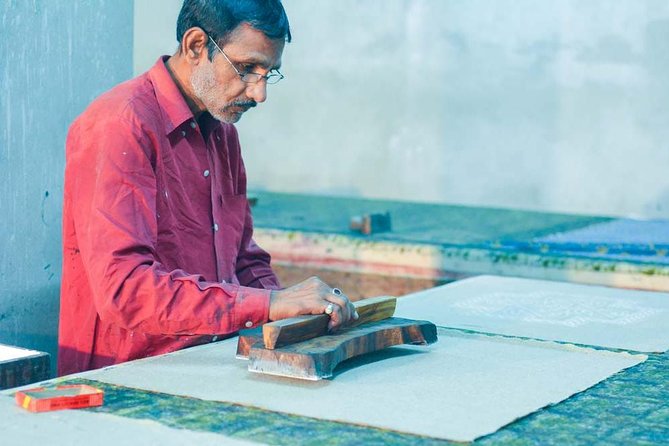
- Small group of up to 10 means you get hands-on help instead of watching from the sidelines.
- Gad, Rekh, Datte gives you a practical way to build a pattern in layers.
- Water-based pigments and layering let you experiment with motive designs or all-over looks.
- Sanganeri-inspired block designs help you create something authentically Indian without needing experience.
- Creators working nearby so you can watch pros at a small factory right next to the studio.
Why Rajasthan block printing is more than a souvenir workshop
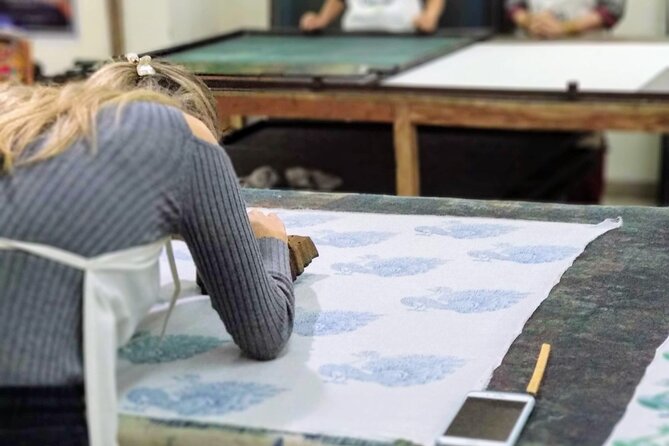
Rajasthan has a way of making crafts feel real. This workshop keeps it that way. You do not just paint. You print. That means your hands learn how designs move from wooden blocks to fabric, and you see how the craft works as a system.
This class is also a nice change of pace if you have been doing the usual sightseeing circuit. Block printing is slow, careful, and oddly satisfying. The best part is the payoff. By the end, you have a scarf or sarong that you helped create, not a mass-made item that looks like everything else.
And you get context along the way. You start with a basic overview of the craft, including its history and cultural significance, plus the tools and materials used in this traditional process. That background matters because it turns your finished piece from a nice day activity into something you actually understand.
A few more Jaipur days to compare
- Jaipur: Private Full Day Sightseeing Tour By Car with Guide
★ 4.9 · 1,839 reviews - 3-Hour Morning Bike Tour of Jaipur
★ 5.0 · 1,253 reviews - Jaipur: Private Full-Day Sightseeing Tour by Tuk-Tuk
★ 4.8 · 573 reviews
Your 2-hour rhythm: from tools and blocks to a finished scarf
The timing is tight but realistic. The workshop is built around a simple arc: intro, practice, then creation.
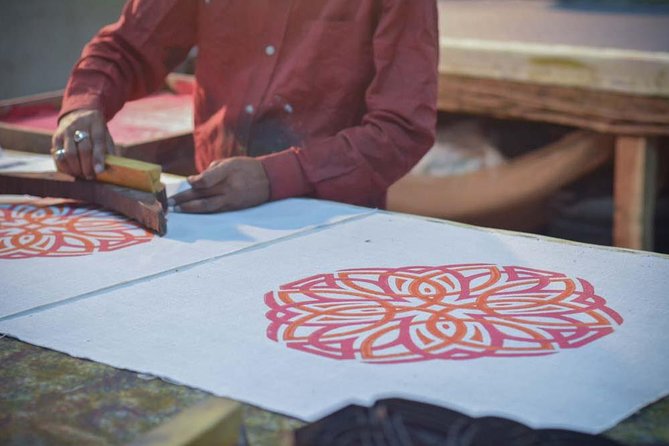
First, you get an introduction to block printing techniques. You learn what blocks are, how carving designs onto wood becomes a pattern, and how those patterns transfer to fabric using pigments. You also cover how designs are typically built, so you are not guessing what goes where.
Then comes the heart of the session, the part that turns theory into muscle memory. You practice printing with the wooden blocks, experiment with colors, and try layering. The workshop teaches you how to work with a motive design (a defined pattern area) or an all-over design that repeats across the fabric.
Finally, you create the piece you take home. You choose from a range of intricate designs inspired by Sanganeri prints, apply them to your fabric, and end with a pico stitch scarf or sarong included in the experience. You are not leaving empty-handed, and you are not leaving with something generic.
Gad, Rekh, Datte: the simple pattern system you actually use
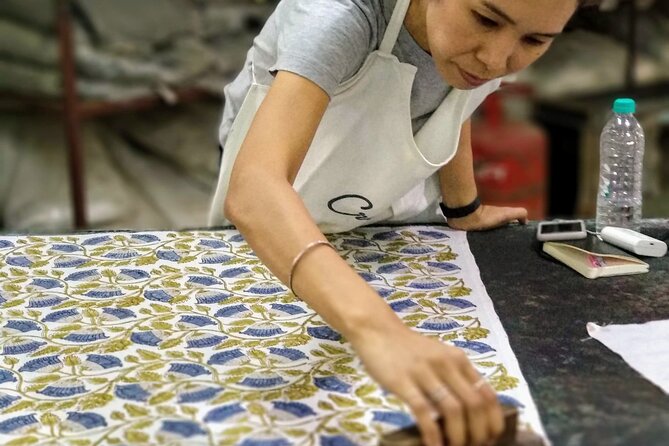
Most craft classes show the final result and hope you figure out the method. This one gives you a framework. It teaches three design parts using easy labels:
- Gad (Ground): the background or base fill.
- Rekh (Outline): the lines that define shapes and edges.
- Datte (Filler): the extra marks that complete the look.
Once you understand these roles, your printing becomes less random. You begin to see patterns as layers you build. That helps you when you are choosing designs and planning your color order. It also makes mistakes less scary, because you can often adjust by reprinting a section or rethinking the next layer.
This is one reason the workshop feels so rewarding. Even if you have never handled a block before, you can still follow a logic. And when you get guidance, it is guidance about process, not just what to do next.
Picking Sanganeri-inspired designs and making them yours
Your pattern choice matters. You are choosing from intricate options that draw from Sanganeri prints, which are known for detailed, repeating motifs. The workshop structure makes that choice feel doable, even in a short session.
You also get freedom with color. You experiment with mixing and matching colors to create dynamic patterns, rather than using a single set palette. In practice, this means you can aim for a traditional look or something more personal.
One helpful element is that you can work with both motive designs and all-over patterns. Motives are great if you want your scarf to feel like it has a focal point. All-over designs are great if you want the fabric to stay interesting no matter how it folds.
If you are picky about your end result, go in ready to decide quickly. The class moves at a studio pace, so you will want to pick your design and colors early, then commit to printing. That is where the calm, repetitive rhythm comes from.
Another way to spend a day in India:
- Jaipur: Full-Day City Tour with Car, Guide & Skip-the-Line
★ 4.8 · 512 reviews - Full-Day Jaipur Private Sightseeing Tour by Car with Guide
★ 5.0 · 472 reviews - Pink City Cooking Class
★ 5.0 · 452 reviews - Private Elephant Sanctuary
★ 5.0 · 390 reviews
Water-based pigments and layering: how your final look is built
Block printing is not just stamping. It is placement, timing, and layering.
You learn to layer a motive design or an all-over design using water-based pigments. Layering means you print one part of the pattern, then add another layer on top or around it. That is where your Gad, Rekh, Datte roles become practical.
Mixing colors is part of the workflow, not an optional extra. When you experiment with color combinations, you also learn how pigments behave in layers. Some colors pop more when placed on top of others. Some look softer against a lighter ground. The workshop gives you time to test, adjust, and see the pattern come alive.
And yes, it is repetitive. That is not a flaw. It is the point. The repetition is what lets you build consistency across the fabric. Several people describe the process as meditative and satisfying, and I get why. The best moments are when your hands start doing the work with less effort, while your mind goes quiet.
The studio experience at Creatis, with Mohit, Vivek, and Aftab
This workshop is organized like a craft session, not a rushed activity line.
You work with an instructor who speaks English and Hindi, and the group is limited to 10 participants. That small size shows up in how the session feels. You are not waiting for help. You get it when you need it.
From the team’s guidance, I also picked up one big practical truth: block printing has multiple levels of artistry, including the carving on the stamps, the pigments, and the way the block meets the fabric. You learn the workflow basics, but you also leave with more respect for what artisans do at a higher level.
The support seems especially strong. People noted guidance from professionals like Mohit and Vivek, plus extra patience from Aftab, including help fixing mistakes. That kind of reassurance matters. If you mess up a section, you are not stuck. You can correct and keep moving toward a final piece you are happy to wear.
There is also a nice bonus: the studio is right next to a small factory where you can watch pros at work. That changes the vibe from workshop to working craft environment. You see how your class fits into a larger production world.
What you take home: a pico stitch scarf or sarong with real character
The included item is a pico stitch scarf or sarong. That matters because you are not just making a sample. You are creating a wearable piece.
And since you choose designs and colors, your scarf will reflect your decisions. Even if two people pick similar inspired patterns, the layering and color choices shift the look. That means your piece will feel like yours, not like you followed a preset template.
Wearability is part of the value here. A lot of short workshops create something decorative that ends up in a drawer. This one gives you something you can actually use. You can wear it, gift it, or keep it as a souvenir you do not feel guilty about because it is not generic.
Price and value: why $24 is fair for a 2-hour craft session
At $24 per person for a 2-hour workshop, this is one of those deals that makes sense when you look at what is included.
You get:
- materials like wooden blocks, pigments, and fabric
- expert guidance throughout
- time to practice layering and color mixing
- and a finished scarf or sarong to take home
Craft workshops can be pricey when you are paying for instruction but not much material time. Here, the class is built around actual printing practice. You are using the tools, following a design system, and making a final product that is part of the price.
Also, the rating is strong, at 5 out of 5 across 12 reviews. That is not the only thing to trust, but it is a good sign that the experience matches what people expect: clear guidance, friendly support, and a satisfying result.
Who should book this block printing class (and who should reconsider)
This workshop is a great fit if you want a practical, off-the-beaten-track experience. It is hands-on. It is creative. And it is social enough to meet people without turning into a group scramble.
It also works well for solo travelers. Small group size plus instructor attention makes it easier to feel included. If you like doing activities where you can focus and still talk when you want to, this fits.
You might want to think twice if you are looking for a longer session. Two hours is plenty to learn the basics and produce a nice wearable piece, but it is not enough to explore advanced carving, multi-day production skills, or master repetition like an artisan.
If your main goal is photography and watching from the back, this is not that kind of workshop. You will be printing. That is the point.
Quick decision guide: should you book Creatis?
Book it if you want a craft experience with real output: your own scarf or sarong, printed by you using a clear design method. This is the kind of activity that makes your trip feel more textured than the standard photo stops.
Pass if you are short on time, because the value comes from practicing within the 2-hour flow. Also pass if you dislike hands-on activities or need a purely passive experience.
If you are in Rajasthan and you want one day to feel calm, creative, and grounded in a working skill, this is a smart pick. The small group, English and Hindi support, and the chance to watch pros nearby make it feel both personal and authentic.
FAQ
How long is the hands-on block printing workshop?
The workshop runs for 2 hours.
How much does it cost?
The price is $24 per person.
What will I make during the class?
You will create a pico stitch scarf or sarong, which is included.
Do I need prior experience with block printing?
No prior experience is mentioned. The workshop provides a basic overview and guidance so you can print with wooden blocks and build your design.
What languages are used during the workshop?
The instructor speaks English and Hindi.
Is it a large group or small group?
It is a small group, limited to 10 participants.
What should I wear?
Wear comfortable clothing suitable for a hands-on workshop.
What is the cancellation policy?
You can cancel up to 24 hours in advance for a full refund.
Is pay later available?
Yes, reserve now & pay later is available, so you can book your spot and pay nothing today.
Recently added around Jaipur
- Jaipur : Cultural & History Tour With Private Guide★ 5.0 · 8 reviews
- Jaipur: Chand Baori & Bhangarh Fort tour – All Inclusive★ 4.5 · 9 reviews
- From Ranthambore: Official Tiger Safari in Canter With Guide★ 3.4 · 12 reviews
- From Jaipur: Taj Mahal & Agra Private Guided Day Tour★ 4.9 · 68 reviews
- From Jaipur: Pushkar and Ajmer Private Day Trip★ 4.1 · 18 reviews
- From Jaipur: Taj Mahal, Agra Fort, Baby Taj Day Trip by Car★ 4.8 · 35 reviews
- From Jaipur: Private Taj Mahal Sunrise & Agra Fort Tour★ 4.8 · 24 reviews
- From Delhi: Private Jaipur & Amber Fort Guided Tour by Car★ 4.8 · 84 reviews
Workshops, compared.
5 Senses Tour – Old + New Delhi, Workshops, Lunch all inclusive
Read our review →
Veg and Non veg : Private Cooking Class in Delhi home (7 meal)
Read our review →
Indian Cooking Class in an Authentic Local Home – Learn 6 Dishes
Read our review →
Private Guided Cooking Workshop Experience in Jodhphur
Read our review →
Traditional miniature painting class at Pacific Art
Read our review →Browse the lists this tour appears in