
Reviewed · WORKSHOPS
Hands-on Block Printing Workshop
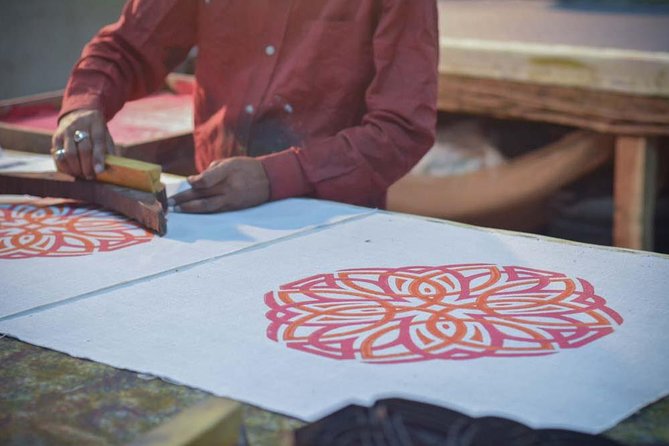
Sanganeri block printing feels like a calm superpower. In Jaipur, this hands-on class teaches the technique in the place it grew up, and you finish with two block-printed stoles you actually made. You’ll learn how designs get built piece by piece, using carved wooden blocks and layered water-based pigments.
What I like most is the small-group attention. The class is capped at six for more personalized tutoring, and that makes it easier to get your lines straight and your colors layered the way you want. I also love that the workshop focuses on process, not just product, so you understand terms like Gad (ground), Rekh (outline), and Datte (filler) as you print.
One thing to keep in mind: if your session ends up with a larger group, you may have less freedom on colors and stencil complexity. It’s still a good class, but your personalization can depend on how full that day is.
In This Review
- Key things I’d circle before you book
- Getting to Creatis: industrial Jaipur, easy enough
- What you learn in 2 hours: the Sanganeri method, step by step
- Blocks, terms, and what those German-sounding names actually mean
- Color layering and alignment: where the craft gets real
- Your design choice and the two stoles you take home
- Small-group tutoring at Creatis: calm, patient, and hands on
- Price and value: why $25.16 can feel like a bargain
- Who this is best for (and who should think twice)
- What to wear and how to prepare for a hands-on craft
- A realistic sense of difficulty: it looks easy, it takes focus
- Final verdict: should you book this Jaipur block printing workshop?
- FAQ
- How long is the block printing workshop in Jaipur?
- What does the workshop cost?
- How big is the class?
- What will I make during the class?
- Where is the meeting point?
- Is hotel pickup included?
- What is included in the price?
- What is not included?
- What are the age and dress code requirements?
- What is the cancellation policy?
Key things I’d circle before you book
- Sanganeri focus in Jaipur: you’re learning the local style where it was developed.
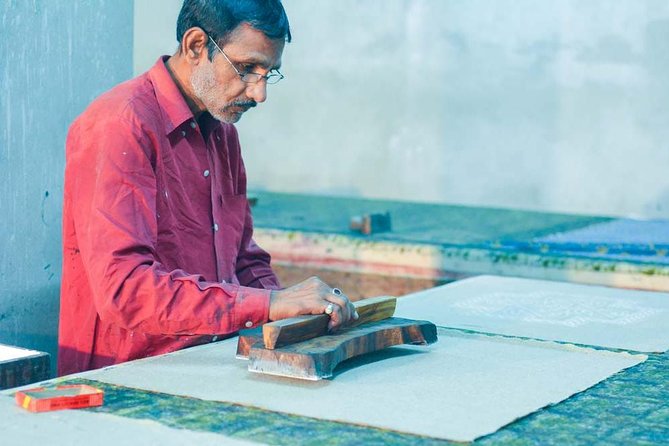
- Hands-on pigment layering: you apply water-based pigments in multiple passes to build the design.
- Two take-home stoles: your work becomes a finished souvenir, not just practice scraps.
- Small-group teaching: tutoring is geared for a class size of up to six.
- Calm studio setup: the workshop runs in a working textile space, not a tourist factory.
- Tools you learn by using: blocks, alignment, and layering make more sense when you do them.
Getting to Creatis: industrial Jaipur, easy enough
This workshop runs out of Creatis in Sudarshanpura, Jaipur. Your meeting point is CreatisA12, Sudarshanpura RIICO, behind Tata Motors Service Center, in the Industrial Area of Bais Godam (302006). The big practical point is that there is no hotel pickup, so you’ll want to plan your own ride or use local public transportation.
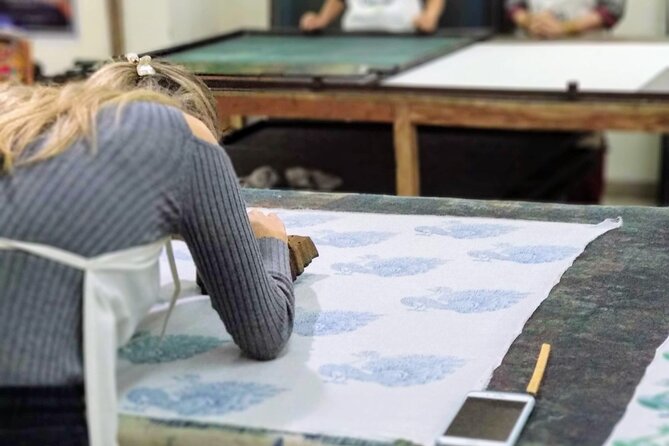
The studio setting matters more than you might think. You’re not crammed into a storefront workshop. People describe the space as calm, spacious, and part of an active textile business operation, which helps the class feel focused and not chaotic.
If you prefer quieter activities in India, this is a nice match. Two hours passes quickly when you’re learning a hands-on craft and you can ask questions between color layers.
A few more Jaipur days to compare
- Jaipur: Private Full Day Sightseeing Tour By Car with Guide
★ 4.9 · 1,839 reviews - 3-Hour Morning Bike Tour of Jaipur
★ 5.0 · 1,253 reviews - Jaipur: Private Full-Day Sightseeing Tour by Tuk-Tuk
★ 4.8 · 573 reviews
What you learn in 2 hours: the Sanganeri method, step by step
Sanganeri block printing is known for its crisp patterns and strong, clear color work. The workshop frames it as a centuries-old technique tied to the Jaipur region, often described as being around for about 500 years. The value for you is that you’re learning the style where it developed, instead of treating it like a generic craft demo.
The class is built around an idea that clicks fast: a print is not one stamp and done. Instead, you layer. You’ll work with water-based pigments and build a motif or all-over design through multiple passes, each with a different role in the pattern.
In practice, that means you start with structure, then add outlines and fillers, then finish with details. You also get a feel for how alignment affects the final look, especially in designs that use several colors.
Blocks, terms, and what those German-sounding names actually mean
You’ll get an overview of the tools and materials, then you move into using the block system. The workshop explains different kinds of carved blocks, so you understand what each one does in the pattern.
Here are the three that the class uses:
- Gad (ground) blocks help form the base coverage.
- Rekh (outline) blocks define the edges and main lines.
- Datte (filler) blocks add texture and spacing details.
This matters because beginners often think they are just choosing a design. After you learn these categories, you start thinking like a printer. Your choices become more intentional: you see where a pattern needs grounding color, where outlines must be clean, and where filler blocks create the rhythm of the whole print.
You’ll also learn about choosing and mixing pigments. The workshop describes experimenting with combining colors to create dynamic patterns, so you’re not locked into a single look from the start.
Color layering and alignment: where the craft gets real
This is the part you’ll feel in your hands. Layering designs with pigments is where the craft moves from simple stamping to real technique. If you’ve watched block printing videos, you may think it’s just pressing wood into fabric. It’s more about timing and placement than brute force.
The workshop supports that learning. One helpful detail mentioned by people who took the class is that you may start with a test piece for practicing alignment and placement. That’s not just busywork. With multi-color overlays, the success of the next layer depends on how you position the previous ones.
There’s also a practical color note that’s worth taking seriously. One participant shared that the colors picked from swatches may not match the final mixed outcome exactly. Their advice was clear: if the test piece doesn’t match what you expected, ask to adjust. That’s a smart move at the start, before your final prints are underway.
Also, don’t aim for speed. You’ll get better results by slowing down and taking a steady rhythm for each color layer. The class is built so you can learn without feeling rushed.
Another way to spend a day in India:
- Jaipur: Full-Day City Tour with Car, Guide & Skip-the-Line
★ 4.8 · 512 reviews - Full-Day Jaipur Private Sightseeing Tour by Car with Guide
★ 5.0 · 472 reviews - Pink City Cooking Class
★ 5.0 · 452 reviews - Private Elephant Sanctuary
★ 5.0 · 390 reviews
Your design choice and the two stoles you take home
You’ll choose from designs inspired by Sanganeri prints, and you’ll have access to designs from the studio fabric collection. This is a meaningful difference from a class that forces one option only. You’re aiming for a result that feels like yours, not a generic souvenir.
Your finished items are two block-printed stoles. That’s a great value payoff because you’re making something you can actually wear, gift, or use as decor. And it’s not entirely hand-done end to end. The workshop description notes that the borders of the two stoles are finished using machine embroidery.
That embroidery piece is practical. It saves time and gives the stoles a clean, durable finish without turning the workshop into a long, skills-heavy sewing session. You get a craft result, with a professional finish on the edges.
If you’re used to buying souvenirs in Jaipur, the take-home aspect is a major reason this class is popular. You’re not just purchasing a printed scarf. You’re taking home textile work where you learned the steps that create the look.
Small-group tutoring at Creatis: calm, patient, and hands on
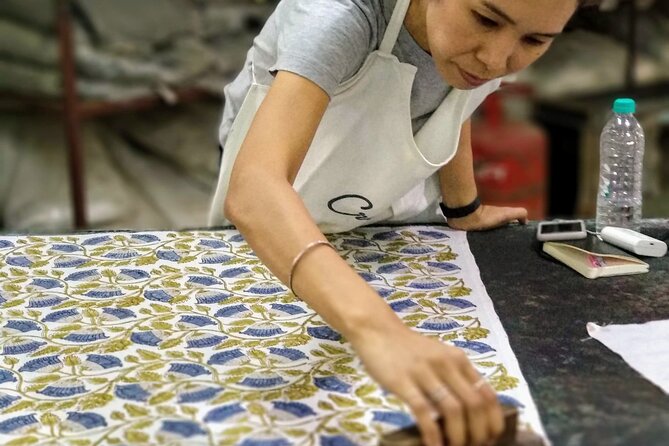
The class is designed for a small group, capped at six people. That number matters because block printing is detail work. When you have multiple students, someone will naturally spend more time with you on placement, pressure, and color order.
In the real world, that’s why people rate the workshop so highly. The staff is described as warm, patient, and helpful, and the mood stays relaxed. Several people specifically mention the owner, Mohit, and the way the team supports first-timers.
There’s also a flexibility element. People say you can choose your own level of difficulty based on the stencil and design. That helps if you’re confident and want a more complex pattern, or if you just want to learn the basics without getting overwhelmed.
One caution, based on feedback from a larger group visit: if the group is bigger than you’d expect, the shop may limit individual choices in colors and may steer people toward simpler patterns. If you want maximum personalization, pick a date that is likely to run as a smaller session.
Price and value: why $25.16 can feel like a bargain
At about $25.16 per person, this workshop is priced for access, not for exclusivity. The duration is about two hours, so you’re paying for a short, guided class with real materials and a real finished product.
What makes the price feel fair is what’s included. The class includes all taxes, fees, and handling charges, including GST. So you’re not hit with surprise add-ons at the end.
What’s not included is hotel pickup. That’s common for this type of workshop, and it’s really the main cost you may add yourself, depending on how you get there. If you’re already in or near the Bais Godam area, your transportation cost can be low.
The biggest value driver is that you make two stoles. Craft classes that end with a practice swatch or a tiny project often feel overpriced. Here, you’re leaving with usable textile items, and the experience teaches you enough technique that you can appreciate what you bought.
Who this is best for (and who should think twice)
This is best for you if you want a break from nonstop sightseeing. People describe it as a calm, low-stimulation activity in a hidden-away studio space. If you like learning by doing, this class gives you that hands-on satisfaction.
It’s also a good fit if you like understanding local craft. The workshop doesn’t treat block printing like a generic tradition. It connects the technique to the Jaipur region and the Sanganeri style, so you walk away with more than a souvenir.
You should think twice if you hate anything messy or hands-on. You will be working with pigments and fabric, and you’ll need a moderate physical fitness level. That doesn’t mean hard labor, but you should be comfortable standing, concentrating, and using your hands for a couple of hours.
Also, if you’re traveling in a large group, you may not get the same level of color choice or stencil complexity. The workshop is designed around the idea of close tutoring, so smaller groups support that goal better.
What to wear and how to prepare for a hands-on craft
The dress code is smart casual. Keep it comfortable enough for sitting and standing while you work. Since this is a pigment-and-fabric craft, wear clothing that matches smart casual but won’t stress you out if it picks up workshop residue.
You’ll want to keep your expectations realistic for timing. The activity is about two hours, and within that time you’ll learn the basic process, print your design, and leave with finished stoles that have been finished with embroidered borders.
One more practical note: you’ll receive a mobile ticket, and confirmation happens at booking. And the location is described as near public transportation, so you should be able to reach it without a special vehicle if you plan ahead.
A realistic sense of difficulty: it looks easy, it takes focus
The honest takeaway is that block printing is harder than it looks on social media. You’ll be doing repeated actions, and the design only looks good when the placement is accurate and the layering is ordered.
That’s why the test piece idea is so useful. If your stencil uses multiple color passes, you need a quick practice moment to learn how positioning affects the final print. If you don’t like how your early test piece looks, speak up early and adjust. One participant’s advice was basically to use that phase for course correction.
If you want a design that looks complex on the finished stole, you’ll likely need patience for multiple layers. The upside is that the class keeps things organized, and the staff helps you keep moving in the right order.
Final verdict: should you book this Jaipur block printing workshop?
If you want a meaningful Jaipur souvenir, I’d book it. The combination of small-group tutoring, hands-on Sanganeri technique, and taking home two custom stoles makes the value hard to beat. It’s also a great change of pace when Jaipur sightseeing feels like too much stimulus in one day.
I’d only hesitate if you’re expecting total freedom in colors and stencil complexity no matter what, or if you’re traveling with a big crowd that could shift how the class runs. Otherwise, this is one of those experiences that feels practical, calm, and satisfying because you leave with something you genuinely understand.
FAQ
How long is the block printing workshop in Jaipur?
The workshop lasts about 2 hours (approx.).
What does the workshop cost?
The price is $25.16 per person.
How big is the class?
The workshop is described as capped at six people for personalized tutoring, and it lists a maximum of 15 travelers for the overall activity.
What will I make during the class?
You’ll create two block-printed stoles that you take home. The borders are finished using machine embroidery.
Where is the meeting point?
It starts at CreatisA12 Sudarshanpura RIICO, behind Tata Motors Service Center, Industrial Area, Sudarshanpura, Bais Godam, Jaipur, Rajasthan 302006, India.
Is hotel pickup included?
No. Hotel pickup is not included.
What is included in the price?
The price includes all taxes, fees, and handling charges, including GST.
What is not included?
Hotel pickup is not included.
What are the age and dress code requirements?
The minimum age is 18. The dress code is smart casual.
What is the cancellation policy?
Free cancellation is offered. You can cancel up to 24 hours in advance for a full refund. If you cancel less than 24 hours before the start time, the amount paid is not refunded.
Recently added around Jaipur
- Abhaneri & Bhangarh Day Trip – Car, Guide, Lunch & Monkey Temple★ 5.0 · 12 reviews
- Block Printing & Village Stories: Discover Bagru’s Craft Legacy★ 5.0 · 42 reviews
- Jaipur Half Day Tour Experience for 5 Hours★ 5.0 · 31 reviews
- Unlock Hidden Amber! – Guided 2-Hour Heritage Tour in Jaipur★ 5.0 · 62 reviews
- Private Full Day Jaipur City Tour with Various Options★ 4.5 · 8 reviews
- Full-Day Private Tour Heritage of Jaipur with Amber Fort★ 4.5 · 21 reviews
- Taj Mahal Tour from Jaipur by Car – Private Day Trip★ 5.0 · 43 reviews
- Amber village heritage tour including Amber fort★ 5.0 · 10 reviews
Workshops, compared.
5 Senses Tour – Old + New Delhi, Workshops, Lunch all inclusive
Read our review →
Veg and Non veg : Private Cooking Class in Delhi home (7 meal)
Read our review →
Indian Cooking Class in an Authentic Local Home – Learn 6 Dishes
Read our review →
Private Guided Cooking Workshop Experience in Jodhphur
Read our review →
Traditional miniature painting class at Pacific Art
Read our review →Browse the lists this tour appears in