
Reviewed · GOLDEN TRIANGLE TOURS
Golden Triangle Agra Jaipur with Lalit Private Drivers India
Five days, one smooth Golden Triangle.
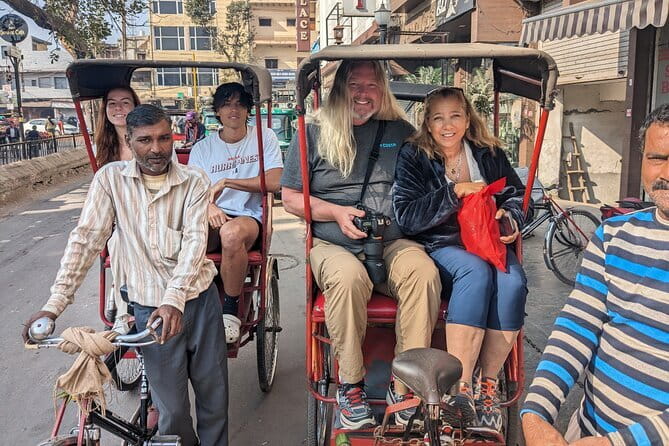
I like how this plan links Delhi, Agra, and Jaipur with a private driver and an air-conditioned vehicle, so the trip feels guided from the moment you land. You also get a licensed guide and practical add-ons like WiFi on board and bottled water, which matters when you are trying to cover a lot in a short time.
What I really love is the mix of classic monuments and everyday places, from Humayun’s Tomb to Chandni Chowk’s spice and silver stalls. I also like the feel of the day-to-day pacing, because safe, calm driving turns long transfers into something you can relax through, not something you dread.
One possible drawback is that several major sights have separate admission tickets, and some stops are timed tightly, so you need to keep your pace quick even if the experience itself is relaxed.
In This Review
- Key highlights you will feel right away
- Day 1 in New Delhi: Birla Mandir, Gandhi’s temple, and a gentle start
- Day 2 in Delhi: Humayun’s Tomb, Red Fort, Chandni Chowk, Lotus, and Qutub Minar
- Humayun’s Tomb: where the garden-tomb idea takes shape
- Red Fort and Jama Masjid area: Mughal power on display
- Chandni Chowk: spices, silver jewelry, and narrow lanes
- Lotus Temple: open to all, quiet without being remote
- Qutub Minar: a UNESCO victory tower you can see from far away
- Day 3 to Agra: Taj Mahal viewpoints and Mehtab Bagh across the Yamuna
- Taj Mahal view point near Mehtab Bagh
- Mehtab Bagh: the charbagh square aligned with the Taj
- Day 4 in Agra: the Taj Mahal inside, then Fatehpur Sikri’s red sandstone world
- Taj Mahal: the marble mausoleum with a personal story
- Fatehpur Sikri: red sandstone, Buland Darwaza, and Salim Chishti
- Day 5 in Jaipur: Amber Palace, Jal Mahal, City Palace, Jantar Mantar, and Hawa Mahal
- Amer (Amber) Palace: the hill fort that anchors the city story
- Jal Mahal: the palace in the Man Sagar Lake
- City Palace: royal residence and administrative headquarters
- Jantar Mantar: astronomical instruments, including a giant stone sundial
- Hawa Mahal: the palace of winds along City Palace
- Price and logistics: why $290.46 per group can be good value, and what to budget
- Your driver and guides matter more than you think
- Who should book this Golden Triangle private driver plan
- Should you book Lalit Private Drivers India for the Golden Triangle?
- FAQ
- What is the price for this Golden Triangle tour?
- How long is the tour?
- Where does the tour start?
- Is pickup included?
- Are entrance tickets included for all attractions?
- What is included in the tour price?
- Is there free cancellation?
Key highlights you will feel right away

- Airport pickup in New Delhi to start your Golden Triangle without the hassle of figuring out transport
- Licensed guide on board to connect what you see, from Mughal architecture to Rajput-era symbols
- A Taj Mahal viewing day that uses multiple riverbank perspectives around the Yamuna
- Old Delhi markets plus major Delhi monuments, including Red Fort, Chandni Chowk, Lotus Temple, and Qutub Minar
- Jaipur big hitters in one loop, from Amer Fort to City Palace, Jantar Mantar, and Hawa Mahal
Day 1 in New Delhi: Birla Mandir, Gandhi’s temple, and a gentle start
Day 1 is intentionally lighter, and I appreciate that. You start at Birla Mandir (Lakshmi Narayan), a Hindu temple in New Delhi known for its clean, orderly look compared with the older, more complex monuments you will see later. The temple was inaugurated by Mahatma Gandhi, and he ensured members of all castes would be allowed in the temple, which gives you more than postcard beauty to think about.
You should expect about 30 minutes here. That is enough time to look around, notice the symbolism around Laxminarayan (Vishnu with Lakshmi), and get oriented to the city’s pace. If you are jet-lagged, this first day structure is a nice way to ease into India without forcing a sprint on arrival.
Tip for your visit: wear something comfortable and modest, and plan for a quick stroll rather than a long sit-down. With tight scheduling later in the week, you will be grateful for the breathing room.
Golden Triangle tours readers book most in New Delhi:
- 3-Days Private Golden Triangle Tour: Delhi, Agra & Jaipur by Car
★ 5.0 · 1,107 reviews - 3-Days Private Golden Triangle Tour: Delhi, Agra & Jaipur by Car
★ 5.0 · 1,098 reviews - 3-Day Delhi, Agra and Jaipur Private Tour – India Golden Triangle
★ 5.0 · 812 reviews
Day 2 in Delhi: Humayun’s Tomb, Red Fort, Chandni Chowk, Lotus, and Qutub Minar
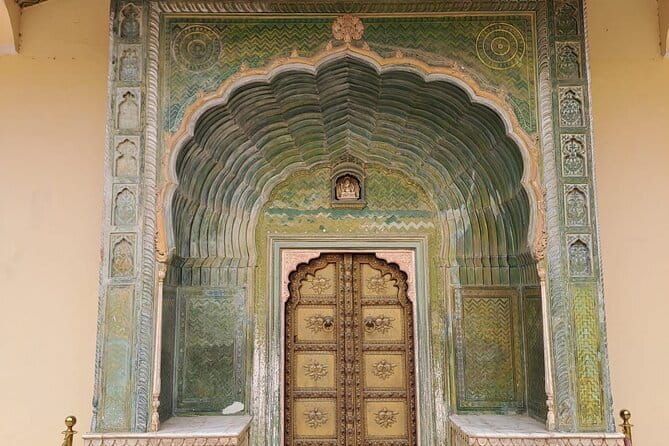
Day 2 is the heart of Delhi sightseeing, and it pays off because the stops cover different sides of the city in one loop.
Humayun’s Tomb: where the garden-tomb idea takes shape
You begin at Humayun’s Tomb, built in 1570. This site is special because it is described as the first garden-tomb on the Indian subcontinent, and it inspired major architectural innovations that later culminated in the Taj Mahal. Walking through the grounds, you get a clear sense of how symmetry, gardens, and tomb placement work together as a design language.
The timing is about 1 hour, which is right for absorbing the overall layout and then focusing on details. If you like architecture, this is one of the places where you can actually feel the “why” behind the style.
Red Fort and Jama Masjid area: Mughal power on display
Next comes Red Fort (Lal Qila), commissioned by Shah Jahan in 1639 when he shifted his capital from Agra to Delhi. Even with just 30 minutes allotted, the scale of the fort helps you understand why Mughal rulers needed a seat of authority this visible and this solid.
A key point for you: the fort is huge, and a short visit means you focus on the main impressions. If you want deeper exploration, you can always plan a return day on a longer trip, but for five days, this provides strong context.
A few more New Delhi days to compare
- Old & New Delhi City Tour – Half or Full Day Options Available
★ 5.0 · 4,811 reviews - Half Day Private Delhi City Tour
★ 5.0 · 4,474 reviews - Same Day Taj Mahal, Agra Fort & Baby Taj Tour from Delhi by Car
★ 5.0 · 4,304 reviews - Taj Mahal Day Tour from Delhi by Superfast Train – TOP RATED TOUR
★ 5.0 · 4,166 reviews
Chandni Chowk: spices, silver jewelry, and narrow lanes
From Mughal power to daily life, you head into Chandni Chowk, in the middle of Old Delhi. This area is known for markets selling spices, dried fruit, silver jewelry, and vivid saris, plus side streets with essential oils, stationery, and traditional sweets.
You get around 1 hour, and that is usually the sweet spot for absorbing the vibe without feeling trapped in the crowd for too long. I also like that the stop is free, so your money stays where it matters, like snacks or a small souvenir.
My practical advice: keep your phone secure, carry a little cash, and expect fast-moving foot traffic in narrow lanes. You will have a better time if you treat it like a guided sensory walk, not a slow shopping expedition.
Lotus Temple: open to all, quiet without being remote
Then comes the Lotus Temple, a Baháʼí House of Worship completed in December 1986. It is famous for its lotus-like shape and for being open to everyone regardless of religion or any other qualification. It gives you a calm visual pause after the intensity of Old Delhi.
The time here is about 20 minutes. That works because it is more about the architecture and atmosphere than long museum-style pacing. Admission is free, so it is also good value.
Qutub Minar: a UNESCO victory tower you can see from far away
Finish the Delhi circuit at Qutub Minar, part of the Qutb complex. Qutb Minar is a UNESCO World Heritage Site and functions as a minaret and “victory tower,” sitting in an area associated with Delhi’s oldest fortified city, Lal Kot, founded by the Tomar Rajputs.
Plan for about 1 hour. It is one of those monuments where being outdoors helps, because you notice how the structure dominates the skyline. If you time your photos right, you can capture strong angles even with limited time.
Day 3 to Agra: Taj Mahal viewpoints and Mehtab Bagh across the Yamuna
On Day 3, you transition from Delhi’s monument density to Agra’s river geometry. This is the day where the Yamuna River starts doing a lot of visual work for you.
Taj Mahal view point near Mehtab Bagh
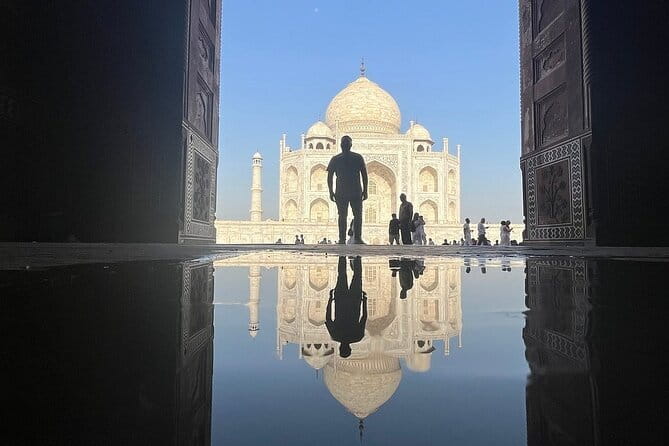
You go to an official-feeling Taj Mahal view point developed near the Yamuna River bank, close to Mehtab Bagh. The idea here is simple: get a panoramic look before you enter the main Taj area. Even if you have seen photos, the way the Taj sits in the landscape lands better when you have a wide perspective first.
This stop is about 1 hour. You do not rush it, and the river setting helps you shift from “sightseeing mode” to “slow looking mode” for a moment.
Mehtab Bagh: the charbagh square aligned with the Taj
Next is Mehtab Bagh, a charbagh garden complex located north of the Taj Mahal complex and on the opposite side of the Yamuna from the Taj and Agra Fort. It is laid out as a square garden, about 300 by 300 metres, and it is aligned with the Taj Mahal across the river.
You get around 30 minutes. This short time is enough to understand the design and see how alignment is the whole point. If you love the logic of Mughal gardens, this is where it becomes more than “pretty.”
Day 4 in Agra: the Taj Mahal inside, then Fatehpur Sikri’s red sandstone world
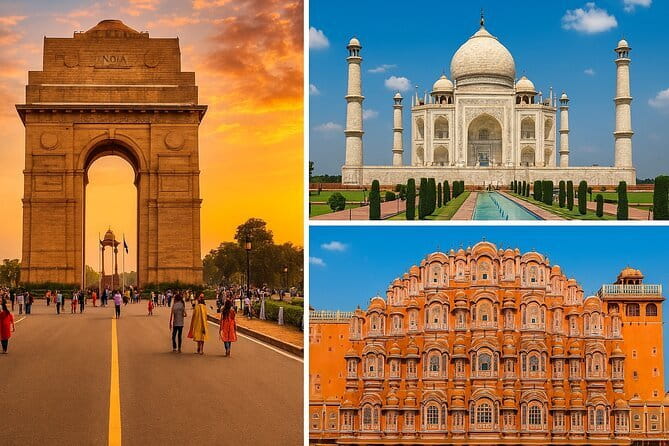
Day 4 is built around the main event: Taj Mahal day, plus an excursion that keeps things from feeling repetitive.
Taj Mahal: the marble mausoleum with a personal story
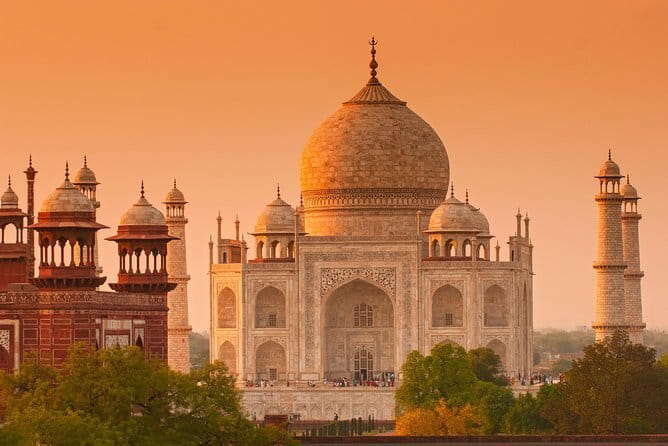
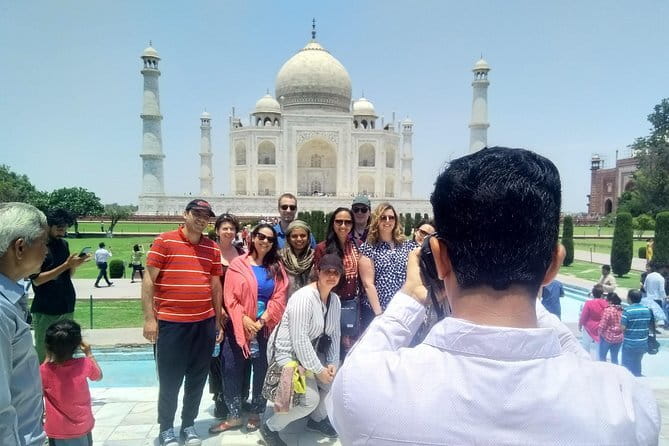
You visit Taj Mahal, the ivory-white marble mausoleum commissioned in 1631 by Shah Jahan for Mumtaz Mahal, with Shah Jahan’s tomb also included. The story is personal, but the experience is physical. You will notice how light changes over the surface, and how the building’s geometry guides your path.
The visit time is about 2 hours. That is enough to see the main parts without feeling like you are being herded. If your legs are tired from earlier days, plan your photos for short bursts, not long wandering.
Fatehpur Sikri: red sandstone, Buland Darwaza, and Salim Chishti
After Agra, you go to Fatehpur Sikri, a Mughal-era city just west of Agra. It is known for red sandstone buildings grouped around the center. The entrance includes Buland Darwaza, leading into the Jama Masjid mosque area, and nearby is the marble Tomb of Salim Chishti.
Time here is about 2 hours, and admission is listed as free. This stop is a great way to broaden your Mughal context beyond one single landmark. You get to see a whole complex instead of only one architectural masterpiece.
Practical note: Fatehpur Sikri can feel big even when you do not cover every corner. With a limited day, focus on the most important structures and use your guide to keep your bearings.
Day 5 in Jaipur: Amber Palace, Jal Mahal, City Palace, Jantar Mantar, and Hawa Mahal
Day 5 is where the itinerary leans harder into Rajput Jaipur. You get multiple iconic sights, with a mix of fort views, palace design, and science-in-stone.
Amer (Amber) Palace: the hill fort that anchors the city story
You visit Amber Palace (Amer Fort), located in Amer, about 11 kilometres from Jaipur, set high on a hill. It is the principal tourist attraction in Jaipur, and for good reason. The fort gives you a dramatic sense of how power and protection were built into the landscape.
You get about 2 hours. That is a comfortable amount to look at architecture and enjoy viewpoints without feeling rushed.
Jal Mahal: the palace in the Man Sagar Lake
Next is Jal Mahal, a palace in the middle of Man Sagar Lake. It was constructed around 1699 and later renovated and enlarged in the early 18th century by Maharaja Jai Singh II of Amber. Even with a shorter stop, it helps you see Jaipur not just as forts and streets, but as designed water-and-palace scenery.
The listing does not specify time for Jal Mahal in the same way as other stops, so you may find this is more of a viewpoint and photo break than a deep interior visit.
City Palace: royal residence and administrative headquarters
You then move to City Palace of Jaipur, the royal residence and former administrative headquarters of Jaipur’s rulers. Construction started after the establishment of Jaipur, under Maharaja Sawai Jai Singh II, who moved his court from Amber to Jaipur in 1727.
Time here is about 1 hour. With that amount, you can focus on the central parts and grasp how palace life and governance overlapped.
Jantar Mantar: astronomical instruments, including a giant stone sundial
After that you go to Jantar Mantar, a collection of 19 astronomical instruments built by Sawai Jai Singh and completed in 1734. It includes the world’s largest stone sundial and is a UNESCO World Heritage Site. It is located near City Palace and Hawa Mahal, which keeps the logistics simple.
You get about 1 hour. This is a fun counterpoint to pure architecture. Even if you are not a science person, you can appreciate how practical observation tools became public symbols of knowledge.
Hawa Mahal: the palace of winds along City Palace
Finally, you visit Hawa Mahal, a palace made from red and pink sandstone, built on the edge of City Palace. It extends to the zenana, or women’s chambers, and its design, called the palace of winds, is famous for the window-like façade.
Time is not listed as a specific number here, but it is typically a shorter architectural walk. Still, it is one of Jaipur’s most recognizable silhouettes, and it is a great last stop because it feels very “Jaipur.”
Bonus you might like: the tour overview also includes time for Jaipur local bazaar shopping for handmade artifacts. If you want a chance to buy textiles, crafts, or small gifts, build in a little energy for that, because it is easy to spend all your energy on forts and then skip the fun part.
Price and logistics: why $290.46 per group can be good value, and what to budget
At $290.46 per group (up to 2) for about 5 days, this is priced like a private, driver-led Golden Triangle with included on-the-ground support. The best value part is not just the car. It is the combination of an air-conditioned vehicle, bottled water, WiFi on board, parking fees, and a licensed guide, plus arrival and departure fees.
That said, you should budget separately for admissions. Many stops list admission tickets as not included, including major monuments like Birla Mandir, Humayun’s Tomb, Red Fort, Qutub Minar, Taj Mahal, Amber Palace, and City Palace. Some are listed as free, like Chandni Chowk, Lotus Temple, and Fatehpur Sikri, which helps keep your total costs down.
Also note: alcoholic beverages are not included, and tipping the driver is not included. That is normal for private tours, so plan to carry some cash or small change.
Your driver and guides matter more than you think

In this kind of short Golden Triangle trip, the biggest quality difference usually shows up in how smoothly you move through traffic, how clearly you understand timing, and how calmly someone handles the city when plans meet real life.
This tour is built around a private setup, and the reviews attached to this provider repeatedly describe drivers who are calm, attentive, and good communicators, with specific names like Mr. Rohit, Mr. Pawan, Mr. Jile, Mr. Azad, and Mr. Vinesh Kumar showing up. Even if your specific driver is different, you can still use that as a clue: you are likely to get a thoughtful driver-host experience, not a rushed, hands-off transfer.
Licensed guides also help a lot. When you see places like Humayun’s Tomb and Qutub Minar, good guidance makes the architecture click, instead of staying a set of impressive photos.
Who should book this Golden Triangle private driver plan
I think this tour fits you best if:
- You have only a few days and want Delhi, Agra, and Jaipur without independent driving stress.
- You care about seeing the major monuments, but you still want market time and real city texture.
- You value safe, organized movement between stops, especially on transfer-heavy days like Delhi to Agra.
It might not be your best match if you hate early starts, want long unstructured time in each site, or prefer to build your own route and choose your own pace every hour.
Should you book Lalit Private Drivers India for the Golden Triangle?
If you want an efficient Golden Triangle with private transport, licensed guidance, and a tight plan that still covers serious highlights, I would book it. The structure is smart: Delhi layers in Old Delhi and South Delhi classics, Agra adds both panoramic and garden alignment views, and Jaipur finishes with the big names across forts and palaces.
Just be honest about the trade-offs. Admissions are often on you, and several stops are time-boxed. If you arrive with realistic expectations and comfortable shoes, this is a very solid way to see India’s most famous triangle of sights without turning your vacation into a logistics project.
FAQ
What is the price for this Golden Triangle tour?
The price is $290.46 per group, up to 2 people.
How long is the tour?
The tour is listed as approximately 5 days.
Where does the tour start?
The start is at Indira Gandhi International Airport in New Delhi, India.
Is pickup included?
Yes. Arrival and departure fees are included, and the meeting point is the airport.
Are entrance tickets included for all attractions?
No. Many stops list admission tickets as not included, while some are listed as free such as Chandni Chowk, Lotus Temple, and Fatehpur Sikri.
What is included in the tour price?
Included items are arrival and departure fee, all fees and taxes, parking fee, WiFi on board, an air-conditioned vehicle, bottled water, and a licensed guide.
Is there free cancellation?
Yes. There is free cancellation if you cancel up to 24 hours in advance for a full refund.
Recently added around New Delhi
- Golden Triangle: Private Delhi Agra Jaipur Tour 3 Nights 4 Days★ 5.0 · 12 reviews
- Golden Triangle Tour 03 Nights 04 Days : Delhi, Agra and Jaipur★ 5.0 · 6 reviews
- 3 Days Golden Triangle Private Tour★ 5.0 · 45 reviews
- 6-Days Private Luxury Golden Triangle Tour from Delhi★ 5.0 · 12 reviews
- 6-Days Golden Triangle New Delhi Agra Jaipur Private Tour★ 5.0 · 12 reviews
- 5-Day Golden Triangle Private Tour in Delhi, Agra and Jaipur★ 5.0 · 34 reviews
- 3-Day Private Golden Triangle Tour to Agra and Jaipur from Delhi★ 5.0 · 16 reviews
- 5-Day Private Golden Triangle Tour with Udaipur & Pushkar by Car★ 5.0 · 7 reviews
Golden Triangle Tours, compared.

3-Days Private Golden Triangle Tour: Delhi, Agra & Jaipur by Car
Read our review →3-Days Private Golden Triangle Tour: Delhi, Agra & Jaipur by Car
Read our review →
3-Day Delhi, Agra and Jaipur Private Tour – India Golden Triangle
Read our review →
Four-Day Private Luxury Golden Triangle Tour to Agra and Jaipur From New Delhi
Read our review →
5 Nights 6 Days Private Golden Triangle Tour – Delhi Agra Jaipur
Read our review →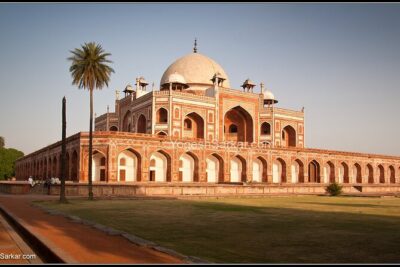

Private Car and Drive for Golden Triangle (4N/5D)
Read our review →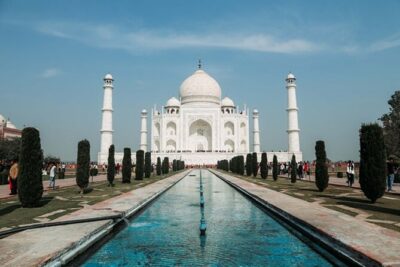
Private Golden Triangle Tour Delhi Agra Jaipur ( Top Rated )
Read our review →Browse the lists this tour appears in