
Reviewed · GOLDEN TRIANGLE TOURS
From Delhi 2 Nights 3 Days Golden Triangle Tour Delhi Agra Jaipur
Three days, three icons, one tight route. This Delhi to Agra to Jaipur Golden Triangle tour strings together major Mughal and Rajput landmarks, with a guide and an air-conditioned ride handling the between-city logistics. I like how the plan mixes big-ticket sights with free cultural stops, so your day feels rich without you constantly paying at the door.
I especially like the balance of architecture across religions and eras, from Jama Masjid in Old Delhi to the Lotus Temple’s flowerlike Bahai design. And the guide factor seems to matter a lot, including examples like Faizan staying patient at the Taj Mahal while fog lifted, then helping with explanations and photography timing.
The main consideration is pace. Day 1 is full, then you transfer to Agra by car for an overnight stay, and you’ll want to confirm whether monument entry tickets are included under your chosen option.
In This Review
- Quick highlights
- The real value: highlights across Delhi, Agra, and Jaipur with less planning
- Price and what’s actually included at about $186.14 per person
- Delhi Day 1, Old Delhi icons, spiritual landmarks, and the ride to Agra
- Jama Masjid, a Mughal monument with scale you feel instantly
- Chandni Chowk area, Pasar Chandni Chowk and Moonlight Square
- Humayun’s Tomb, Mughal design shaped by family and power
- Qutub Minar, Delhi’s famous tower and a time marker
- Gurudwara Bangla Sahib, free kitchen culture you can watch in action
- Lotus Temple, the Bahai temple shaped like petals
- India Gate, a short memorial stop with a big number attached
- Transfer to Agra, then sleep in a new base
- Agra Day 2, Taj Mahal and Agra Fort with time to actually enjoy
- Taj Mahal, your two-hour anchor
- Agra Fort, Mughal residence turned power and then conquest
- Itmad-ud-Daula, the Baby Taj and the “jewel box” vibe
- Jaipur Day 3, palace viewpoints, astronomy in stone, and Hawa Mahal
- Jal Mahal, the quick look across Man Sagar Lake
- City Palace of Jaipur, where the royal court lived
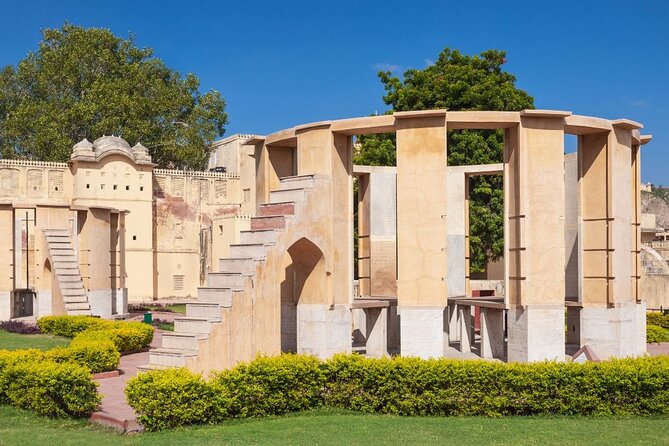
- Jantar Mantar, 19 astronomical instruments completed in 1734
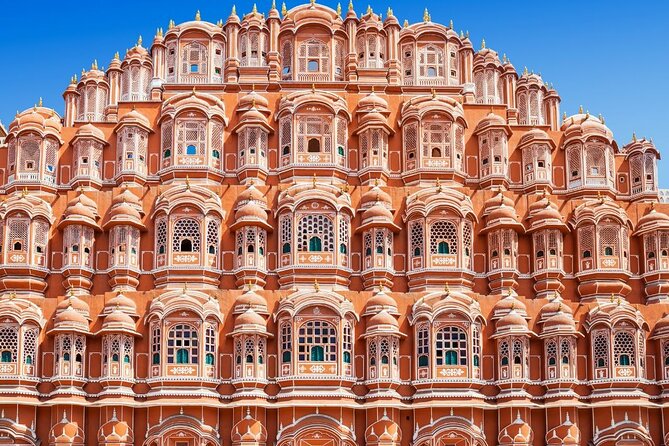
- Hawa Mahal, the Palace of Wind with beehive design
- Back to New Delhi for drop-off
- Guides matter, especially when conditions change
- Who this Golden Triangle tour suits best
- Should you book this Delhi-Agra-Jaipur Golden Triangle tour?
- FAQ
- How long is this Delhi to Agra to Jaipur Golden Triangle tour?
- Which cities are included?
- Is hotel accommodation included?
- Are breakfast meals included?
- Are monument entry tickets included?
- Is lunch or dinner included?
- Is pickup included?
- Is this tour private?
- What is the cancellation policy?
Quick highlights
- Jama Masjid built by Shah Jahan (1650 to 1656) with ticket entry included on this tour route
- Free stops that add major value, like Gurudwara Bangla Sahib’s free kitchen serving about 50,000 meals daily
- Taj Mahal pacing with real-time flexibility, with guides like Faizan known for waiting until fog lifted
- Agra Fort fits a relaxed visit style, with time to enjoy the fort at your own pace
- Private setup for your group, not a mixed bus tour with strangers
- Breakfast at hotels included, while lunch and dinner are on you
The real value: highlights across Delhi, Agra, and Jaipur with less planning
If you have limited time, the Golden Triangle is a smart way to see the headline sights of North India in a compact loop. This one is built around three major bases, New Delhi, Agra, and Jaipur, with overnight stays so you are not trying to do everything in a single marathon day.
What makes this plan work for you is the variety of what you’ll actually see. Day 1 in Delhi jumps across very different worlds, including Mughal-era landmarks like Jama Masjid and Humayun’s Tomb, then moving into iconic Delhi stops like Qutub Minar, plus major faith sites such as Gurudwara Bangla Sahib and the Lotus Temple. You also get a quick hit of a colonial-era memorial at India Gate. It is not just one “theme,” and that helps if you want more than one kind of experience in a short trip.
In Agra, you get the Taj Mahal plus two other archaeology-and-architecture heavyweights: Agra Fort and Itmad-ud-Daula. Then Jaipur brings in Rajput-era grandeur through City Palace, Jantar Mantar, and Hawa Mahal, with a quick photo stop at Jal Mahal. You end each city day feeling like you saw what matters, without needing to build your own route and coordinate separate tickets.
Golden Triangle tours readers book most in New Delhi:
- 3-Days Private Golden Triangle Tour: Delhi, Agra & Jaipur by Car
★ 5.0 · 1,107 reviews - 3-Days Private Golden Triangle Tour: Delhi, Agra & Jaipur by Car
★ 5.0 · 1,098 reviews - 3-Day Delhi, Agra and Jaipur Private Tour – India Golden Triangle
★ 5.0 · 812 reviews
Price and what’s actually included at about $186.14 per person
At $186.14 per person, the value depends on how your booking option is set, especially for hotel and entry tickets. The tour includes all fees and taxes, fuel surcharges, an air-conditioned vehicle, and a tour guide. It also includes hotel accommodation if you select that option, plus breakfast at the hotel.
Monument entry tickets are tricky in a good way. The package says monument tickets are included if option selected, while the itinerary also marks several stops as admission free. That means even if you choose not to include paid entries, you can still enjoy a lot of the trip through free sites like Pasar Chandni Chowk (Moonlight Square), Gurudwara Bangla Sahib, Lotus Temple, India Gate, Jal Mahal, and Hawa Mahal.
Two costs to budget for up front: lunch and dinner are not included, and tips and gratuities are not included. If you prefer to minimize surprise spending, this is one of the most practical reasons to pick the right ticket option in advance, so you know what you’re paying before you arrive.
Delhi Day 1, Old Delhi icons, spiritual landmarks, and the ride to Agra
Day 1 is a full day in New Delhi, then you head to Agra by car for your first overnight. The structure here matters, because it packs a lot into one day while still giving each stop a reasonable visit window, usually around an hour.
Jama Masjid, a Mughal monument with scale you feel instantly
You start at Jama Masjid, one of India’s largest mosques, built by Mughal Emperor Shah Jahan between 1650 and 1656, at a reported cost of one million rupees. Admission is included and the time window is about an hour. This is the kind of site where the big details matter, the courtyard scale, the symmetry, and the way the Mughal style shows up in practical design, not just decoration.
A few more New Delhi days to compare
- Old & New Delhi City Tour – Half or Full Day Options Available
★ 5.0 · 4,811 reviews - Half Day Private Delhi City Tour
★ 5.0 · 4,474 reviews - Same Day Taj Mahal, Agra Fort & Baby Taj Tour from Delhi by Car
★ 5.0 · 4,304 reviews - Taj Mahal Day Tour from Delhi by Superfast Train – TOP RATED TOUR
★ 5.0 · 4,166 reviews
Chandni Chowk area, Pasar Chandni Chowk and Moonlight Square
Next is Pasar Chandni Chowk, also known as Moonlight Square, near the Old Delhi Railway Station. Admission is free here, and the time allotment is about an hour. This is the part of the day that makes the trip feel lived-in, a historic market area that’s described as one of the oldest and busiest in Old Delhi. If you like seeing how people actually move through a neighborhood, this stop gives you that without turning it into a museum-like experience.
Humayun’s Tomb, Mughal design shaped by family and power
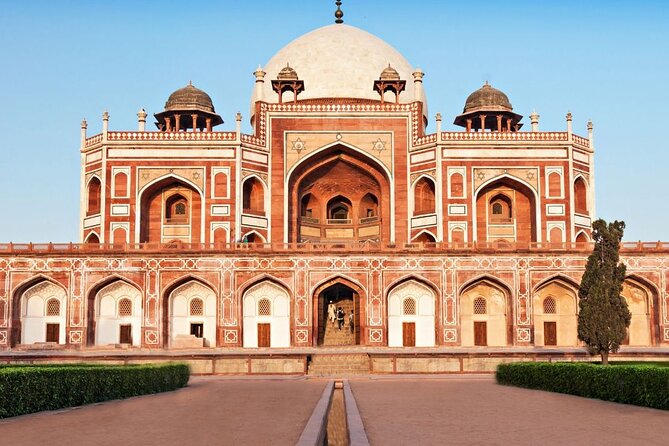
Then you move to Humayun’s Tomb, the Mughal emperor’s tomb in Delhi. It was commissioned by Humayun’s first wife and chief consort, Empress Bega Begum (also known as Haji Begum). Admission is included, and you get about an hour. The value here is not only architectural, but also human, because the story behind the commission connects the monument to Mughal court life.
Qutub Minar, Delhi’s famous tower and a time marker
At Qutub Minar, admission is included and you’ll have about an hour. The big selling point is its stature, described as the tallest monument in Delhi for many centuries. It’s a landmark that helps you orient your understanding of Delhi’s layered past, from earlier Sultanate-era architecture to later Mughal influence that you’ll see elsewhere on the route.
Gurudwara Bangla Sahib, free kitchen culture you can watch in action
You then visit Gurudwara Bangla Sahib, a major Sikh temple with free admission. The standout detail is the free kitchen, where every day about 50,000 people receive meals without paying anything. Admission is free and the stop lasts about an hour. Even if you’re not religious, this kind of stop changes how you think about travel, because it shows hospitality at real scale, not as a staged performance.
Lotus Temple, the Bahai temple shaped like petals
Next is the Lotus Temple, also free. It’s known for its flowerlike form, created by 27 marble-clad “pedals” arranged in clusters of three to form nine sides. Your visit window is about an hour. The value is the contrast it offers after dense Old Delhi street scenes and Mughal tomb design. It feels more open, more modern in materials and form, and it gives your eyes a break.
India Gate, a short memorial stop with a big number attached
Finally in Delhi, you stop at India Gate, with about 30 minutes allocated. Admission is free. The memorial is for 84,000 soldiers of the British Indian Army who lost their lives between 1914 and 1921. This is a quick stop, but it helps the day feel balanced, not only religious and imperial, but also tied to 20th century conflict memory.
Transfer to Agra, then sleep in a new base
After the Delhi sightseeing, you transfer to Agra by car, about 4 hours, and you’ll do your first overnight there. This is where the pace can feel intense, so the best way to handle it is to keep expectations simple: Day 1 is about variety, Day 2 is about the main stars.
Agra Day 2, Taj Mahal and Agra Fort with time to actually enjoy
Agra is the day most people come for, and this plan gives you the core sequence without skipping the “supporting” monuments.
Taj Mahal, your two-hour anchor
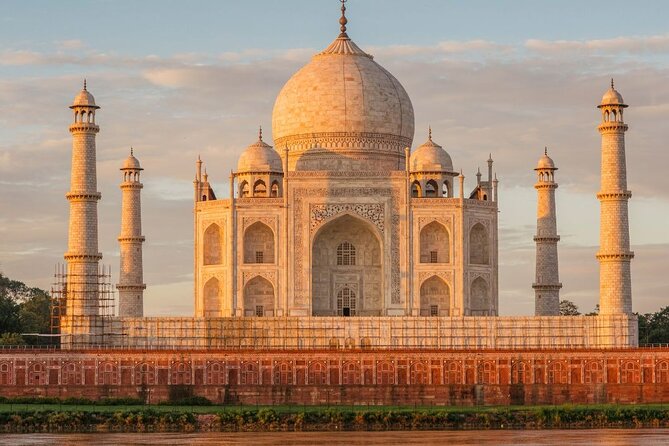
At Taj Mahal, admission is included and you get about two hours. Built between 1631 and 1653 by Shah Jahan, with assistance from about 20,000 workers, it’s an ivory-white marble tomb on the south bank of the Yamuna. What helps you here is not just the building, it’s how the visit can be guided around conditions.
Guides in past groups have been praised for patient flexibility, like Faizan who waited at the Taj Mahal while fog lifted, helped with many photos, and explained things thoroughly and enjoyably. You should still treat Taj Mahal as a place where weather can affect visibility, so a guide who stays calm and adjusts the plan can change the whole feeling of the visit.
Agra Fort, Mughal residence turned power and then conquest
Next is Agra Fort, with about an hour and admission included. The fort was the main residence of Mughal dynasty emperors until 1638, when the capital shifted from Agra to Delhi, and later it was captured by the British. This is an important counterpoint to Taj Mahal. The Taj is iconic and romantic, while Agra Fort is structural and political. Seeing both in one day helps you connect art to authority.
The most useful detail for you is pacing. Some guides have been described as giving visitors a relaxed style at Agra Fort, allowing you to enjoy it at your own pace. That matters because forts are large, and a strict, rushed sweep can make the place feel exhausting.
Itmad-ud-Daula, the Baby Taj and the “jewel box” vibe
You finish Agra with Itmad-ud-Daula, also called the Tomb of Itimad-ud-Daulah. Admission is included, and the visit lasts about an hour. It’s often described as a “jewel box,” and also nicknamed the “Baby Taj.” The practical value is that this monument can feel more intimate than Taj Mahal while still giving you that Mughal marble finesse.
Then you transfer to Jaipur by car, around 4 hours, and you overnight in Jaipur.
Jaipur Day 3, palace viewpoints, astronomy in stone, and Hawa Mahal
Jaipur day is designed around classic Rajput-era highlights, with a mix of fast stops for iconic views and longer stops for context.
Jal Mahal, the quick look across Man Sagar Lake
You start with Jal Mahal, a palace located in the middle of Man Sagar Lake. It was originally constructed in 1699 and later renovated. Admission is free and the time is short, about 15 minutes. This is a “blink and you’ll remember it” stop. You get the signature look of the palace rising from the water, and then you move on.
City Palace of Jaipur, where the royal court lived
Next is the City Palace of Jaipur, admission included, with about two hours. It was established in the same era as the city, when Maharaja Sawai Jai Singh II moved his court to Jaipur in 1727. Jaipur is today the capital of Rajasthan. This is your longest history-heavy stop of the day besides Jantar Mantar.
Why it works: City Palace gives you the sense of lived power, how the court shaped the city. Compared with a single tomb or a single monument, a palace complex helps you understand space and governance, not just design.
Jantar Mantar, 19 astronomical instruments completed in 1734
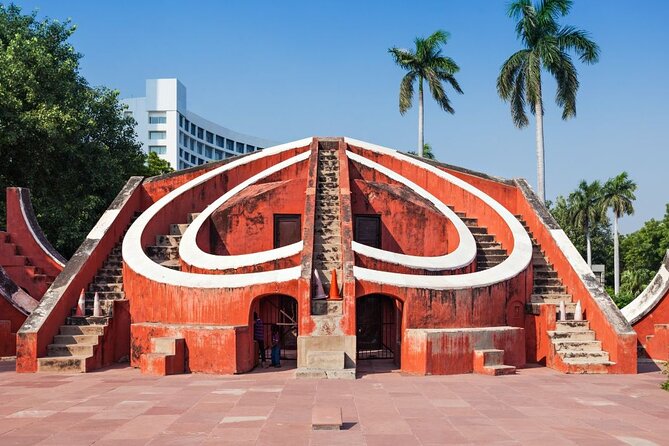
Then you visit Jantar Mantar, admission included, about 45 minutes. It’s a collection of nineteen architectural and astronomical instruments built by Sawai Jai Singh, completed in 1734. If you like science made visible, this stop is worth your time. The value is seeing how rulers used observation and measurement as part of their intellectual image.
Hawa Mahal, the Palace of Wind with beehive design
You wrap Jaipur sightseeing with Hawa Mahal, also free, about 30 minutes. It is famous for its beehive design, built so royal ladies could observe daily life in the streets. This is a quick, high-impact stop, and it’s one of those places where the exterior form tells a story about daily use.
Back to New Delhi for drop-off
After Jaipur, you head back to New Delhi for drop-off by car, about 5 hours. This is the end of the loop, so your last day is mostly about finishing strong with the big Jaipur icons rather than adding extra detours.
Guides matter, especially when conditions change
In a tour like this, the guide can make the difference between seeing monuments and understanding them. The names shared in past group experiences give you a clue about what good guidance feels like.
- Faizan was praised for being patient at the Taj Mahal while fog lifted, and for explaining things thoroughly and enjoyably while still helping people get good photos. That’s a real skill, timing and comfort.
- Akash was described as brilliant, attentive, and helpful with strong English and German. If you care about clear explanations and responding to your requests, that style is a big plus.
- Vipinn was noted as funny and professional, which is a good combo for a long day packed with stops.
- Arif Khan was credited as proactive in arranging wonderful guides at each place, described as being at a good price. If you like a guide who coordinates details smoothly, this is the kind of support to look for.
- Hemant and Zeeshan were also praised for dedication and for making the trip one of the best experiences, with great transportation and good food noted.
You might not meet the same guide names, but the pattern is clear: the strongest tours are the ones where your guide reads the room, handles timing calmly, and keeps the information flowing without turning it into a lecture.
Who this Golden Triangle tour suits best
This tour fits best if you:
- want a first trip to Delhi, Agra, and Jaipur and prefer a plan that hits the classics
- like a mix of monumental architecture and cultural stops, not just one type of sightseeing
- appreciate a guide and air-conditioned transport, especially on long drive days
- want a private setup for your group rather than a large mixed crowd experience
It may feel less ideal if you:
- prefer slower days and deep museum time, because Day 1 and Day 3 are packed
- want total flexibility to skip stops, because the route is structured around major icons
- are price-sensitive and not sure which ticket option you’re choosing, since paid monument entries depend on your selection
Should you book this Delhi-Agra-Jaipur Golden Triangle tour?
I’d book it if you want an efficient, well-rounded Golden Triangle overview that covers the major Mughal and Rajput highlights, plus Delhi’s big spiritual sites and India Gate, with a guide and AC transport doing the heavy lifting. At around $186.14 per person, the math only works when you take advantage of what’s included: guide time, hotel breakfast, and free admission stops that keep your spending under control.
I’d hesitate if you know you dislike tight schedules, or you want every stop to be a half-day deep dive. This tour is designed for momentum, not slow wandering.
If you do book, do one smart thing: confirm your option for monument entry tickets and your hotel inclusion before you pay, so there are no surprises when you arrive.
FAQ
How long is this Delhi to Agra to Jaipur Golden Triangle tour?
It runs for about 3 days.
Which cities are included?
You visit New Delhi, Agra, and Jaipur.
Is hotel accommodation included?
Hotel accommodation is included if you select that option.
Are breakfast meals included?
Yes, breakfast at the hotel is included.
Are monument entry tickets included?
All monument entry tickets are included if you select the option. The itinerary also includes several stops that are marked as free admission.
Is lunch or dinner included?
No. Lunch and dinner are not included.
Is pickup included?
Pickup is offered.
Is this tour private?
Yes. It is a private tour or activity, and only your group participates.
What is the cancellation policy?
You can cancel for a full refund if you cancel up to 24 hours in advance of the experience start time. If you cancel less than 24 hours before, the amount paid is not refunded.
Recently added around New Delhi
- Private Same day Jaipur Tour from New Delhi★ 5.0 · 82 reviews
- Private Agra Day Tour★ 5.0 · 14 reviews
- Taj Mahal,Agra fort and Baby Taj tour from Delhi by Express train★ 5.0 · 7 reviews
- From Delhi: Full Day TajMahal & Agra Fort with 5 Star Lunch★ 5.0 · 64 reviews
- Taj Mahal & Agra City Private Tour from Delhi by Car – Fast Entry★ 5.0 · 13 reviews
- All Inclusive: Same day Taj Mahal Tour From Delhi★ 5.0 · 111 reviews
- Same Day Tour of Taj Mahal with Our Real Historical Experience★ 5.0 · 42 reviews
- Same Day Agra/Taj Mahal Tour from Delhi : Private & all inclusive★ 5.0 · 38 reviews
Golden Triangle Tours, compared.

3-Days Private Golden Triangle Tour: Delhi, Agra & Jaipur by Car
Read our review →3-Days Private Golden Triangle Tour: Delhi, Agra & Jaipur by Car
Read our review →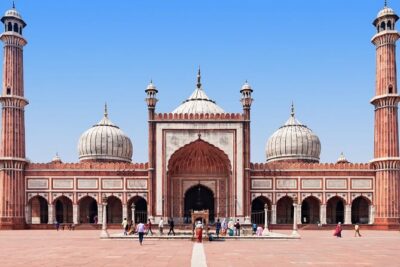
3-Day Delhi, Agra and Jaipur Private Tour – India Golden Triangle
Read our review →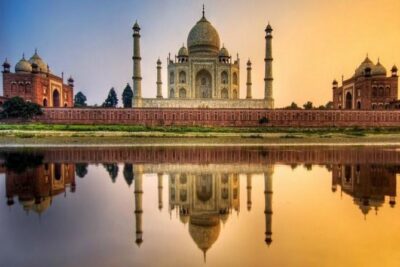
Four-Day Private Luxury Golden Triangle Tour to Agra and Jaipur From New Delhi
Read our review →
5 Nights 6 Days Private Golden Triangle Tour – Delhi Agra Jaipur
Read our review →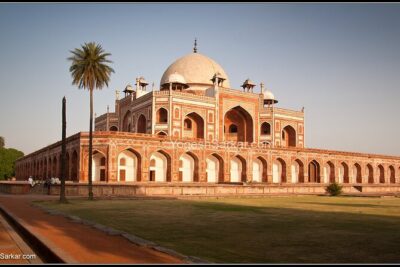

Private Car and Drive for Golden Triangle (4N/5D)
Read our review →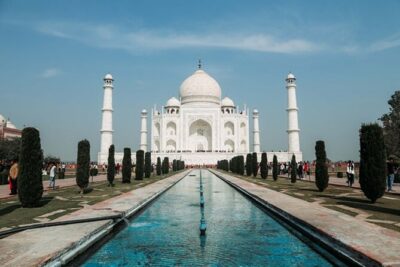
Private Golden Triangle Tour Delhi Agra Jaipur ( Top Rated )
Read our review →Browse the lists this tour appears in